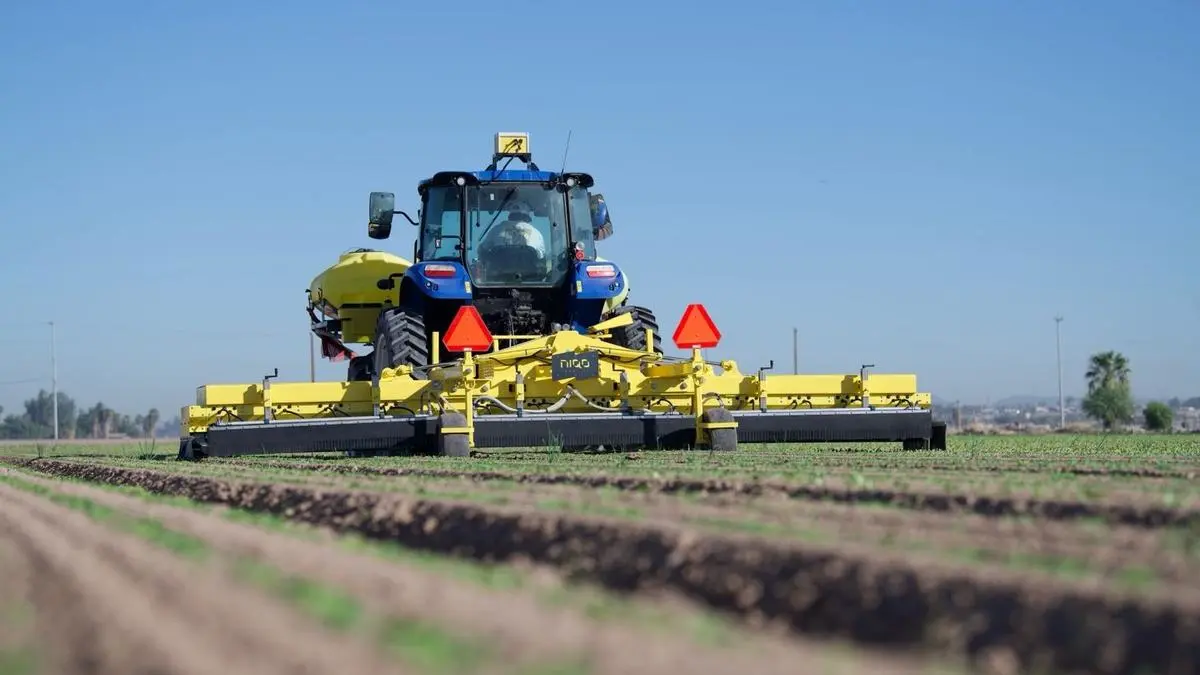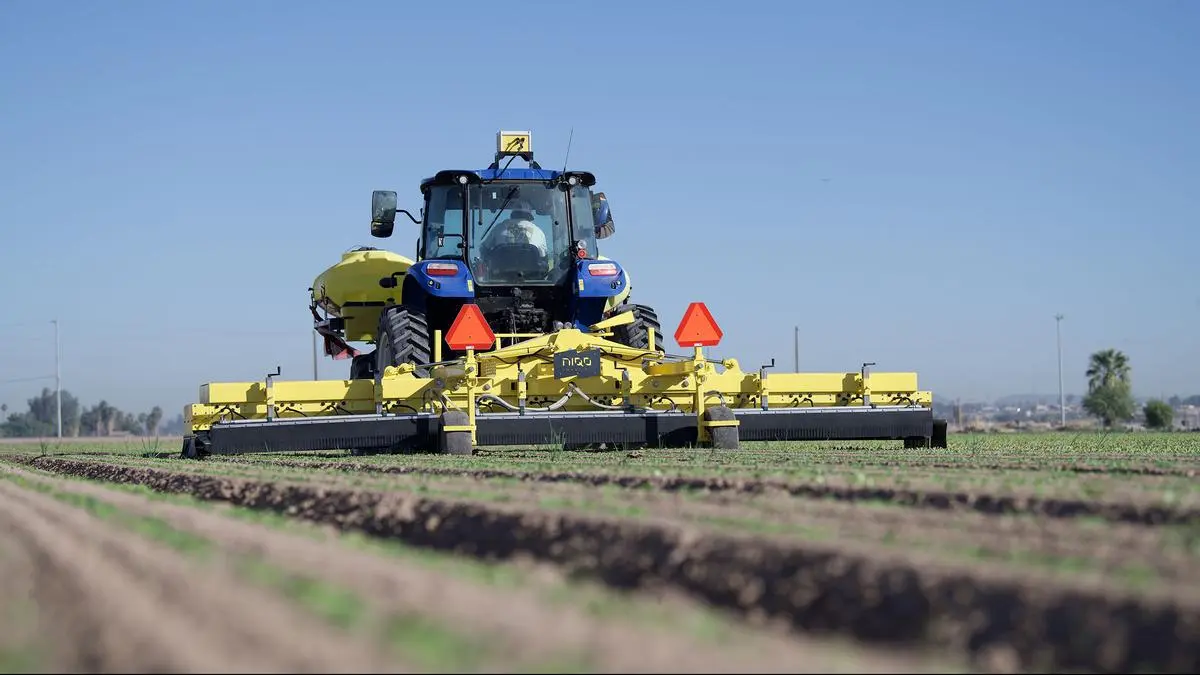
FIELD VISION. The RoboWeeder developed by Niqo Robotics
Bengaluru-based Niqo Robotics is taking its agri robotics technology beyond India — after commercialising its flagship AI-powered RoboWeeder in the US, it recently ventured into Australia.Founded in 2015 by Jaisimha Rao, Niqo Robotics began by solving a fundamental challenge in robotics — enabling machines to understand unstructured physical environments and take precise action in real time. Agriculture emerged as one of the toughest use cases because of the variations in crop conditions, weather, lighting and terrain, says Rao.The company uses computer vision, edge AI and robotics to identify weeds for selective application of herbicides, instead of blanket spraying an entire field. Mounted on tractors, the RoboWeeder captures plant imagery through AI-enabled cameras, processes the information onboard, and classifies crops and weeds in real time before carrying out the targeted spraying.
Jaisimha Rao, founder of Niqo Robotics
This reduces herbicide usage, lowers input costs, improves weed control and reduces dependence on manual labour, while protecting crop yields, Rao says.The startup next plans to take the RoboWeeder to Europe and other mechanised agricultural markets. “We are building towards profitability in the near future,” Rao says.In focus are cultivators of speciality crops, for whom labour shortage and rising operating costs have accelerated the adoption of precision agriculture technologies.Rao describes the US as an attractive commercial market because the growers there increasingly evaluate technologies based on the measurable productivity gains and return on investment.“The two markets (India and the US) have played complementary roles. India supported product development and real-world learning, while the US provided an adoption-ready market for successful commercialisation. These learnings are now supporting our expansion into Australia and other international markets,” Rao says.Full-stack advantageWhile hardware sales dominate the startup’s revenue, its AI capabilities are embedded into the equipment rather than sold as separate software subscriptions. Depending on the geography, Niqo sells directly to growers or through agricultural equipment dealers. It is also developing multiple variants of the RoboWeeder for varied farm sizes and operating conditions.Rao says Niqo’s competitive advantage lies in its full-stack ‘physical AI’ platform, which combines proprietary cameras, lighting systems, machine vision, edge computing, crop-specific AI models and precision actuation into a single commercial product.“We have accumulated several years of plant data with a high degree of variability. As more commercial units operate across more acres, they generate additional field data to enhance the system’s performance,” he explains.Manufacturing specialised hardware calls for sustained investment in creating a resilient supply chain and hiring talent that understands both software and physical systems, he observes.“Any fresh capital would primarily support taking our proven commercial product into new geographies and scaling up Niqo as a global physical AI company originating from India,” he says.Published on August 3, 2026