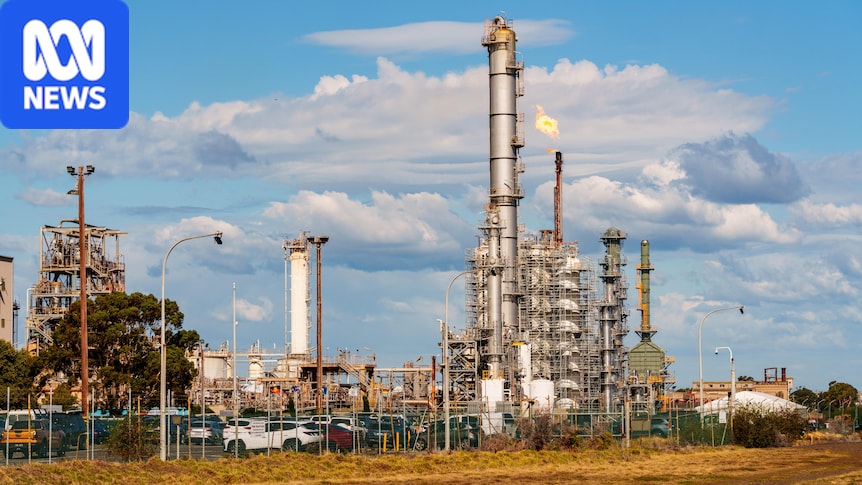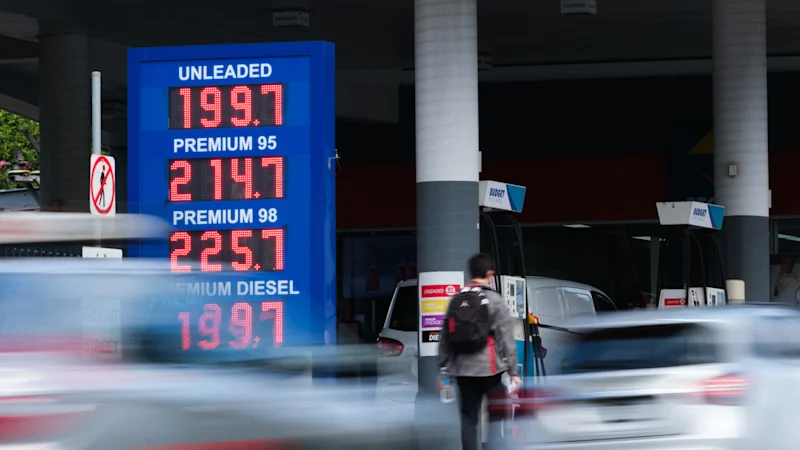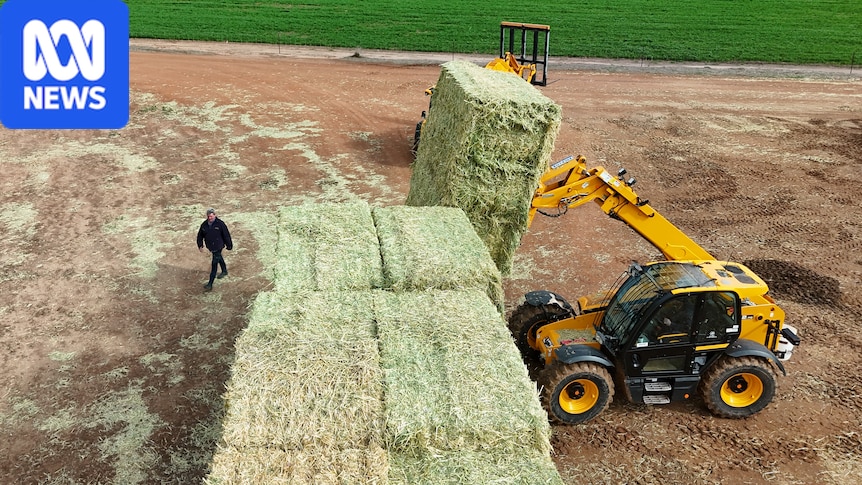
Motorists will today go back to paying full price at the bowser after the four-month excise relief period runs out. Despite repeated attempts at ceasefire agreements, the US-Iran conflict is still causing significant global oil price fluctuations, leaving Australia vulnerable and its drivers out of pocket. One West Australian business says it is ready to pull Australia's fuel reliance away from the Middle East, and onto a new and environmentally friendly homegrown product.Glas Energy is planning a $400 million commercial-scale renewable diesel refinery based in Narrogin, 180 kilometres south-east of Perth. The site of the proposed renewable diesel processing plant, south of Narrogin. (ABC Great Southern: Mark Bennett)Glas Energy's Nathan Carbone said while the product was organically sourced, it was equally efficient."[We are] looking to turn roughly 70,000 tonnes of straw and straw residuals into about 20 million litres of low-carbon liquid fuels," he said.Nathan Carbone says the fuel product can operate independently of regular diesel. (ABC Great Southern: Mark Bennett)"This is not the biodiesel of the 1990s. It burns clean. It is 100 per cent drop-in fuel."You can blend it with existing diesel at any rate." While the product is not yet ready to hit the market, developers have asked the state and federal government for support.Making the switchWhile the plan looks environmentally sound, business owners do not want to be left short-changed. WA trucking company KTrans operates a fleet of 150 heavy haulage trucks across the state, with the estimated fuel usage up to 1 million litres a month. Executive general manager Daniel Burrows said renewable fuel was the next big thing for the company, but the numbers needed to line up. Daniel Burrows says renewable fuel options need to match fossil fuel prices. (ABC Great Southern: Mark Bennett)"All of our trucks come with renewable diesel in their tanks when we first purchase them," he said. "We can swap tomorrow. We could replace our conventional diesel with renewable and wouldn't have to touch anything."[But] it's got to be commercially viable. It's got to be comparable to what we're paying now for diesel fuel."To do this, developers and interested parties have applied for the Clean Energy Future Fund, along with rallying state government representatives."It does finance up to 50 per cent and we will contribute the other 50, so it's by no means a handout," Mr Carbone said."We're quite confident that we'll be seen in a positive light and we'll get a successful outcome out of that."Keeping local Beyond the environmental benefits, the initiative could bring tangible economic benefits to the regions. Shire of Narrogin President Leigh Ballard said the project would benefit the local economy. "One of the biggest things about this project is its circular economy," he said. Leigh Ballard says the project will bring plenty of benefits for the region. (ABC Great Southern: Mark Bennett)"It's going to be taking bioproducts from a farm, turning it into a fuel product and other farming products as well, which can then go back into the farming system." Mr Carbone said the project would need to stay in the regions."We need to be near the feedstock purely because the amount of feedstock you need is significantly more than the fuel," he said. "It doesn't really make much sense to source something, ship it hundreds of kilometres and then turn it into a low carbon fuel."The developer is already looking at other locations across the state, with the Narrogin site acting as the central refinery.Mr Ballard said producing these vital energy commodities would ensure Australia was not left as a victim of foreign conflicts. Oil tankers stuck in the Strait of Hormuz are driving global fuel prices up.
Company wants to turn straw into fuel to ease reliance on Middle East
Glas Energy is planning a $400 million renewable diesel refinery, south-east of Perth, which will turn thousands of tonnes of straw into millions of litres of fuel.
662 words~3 min read