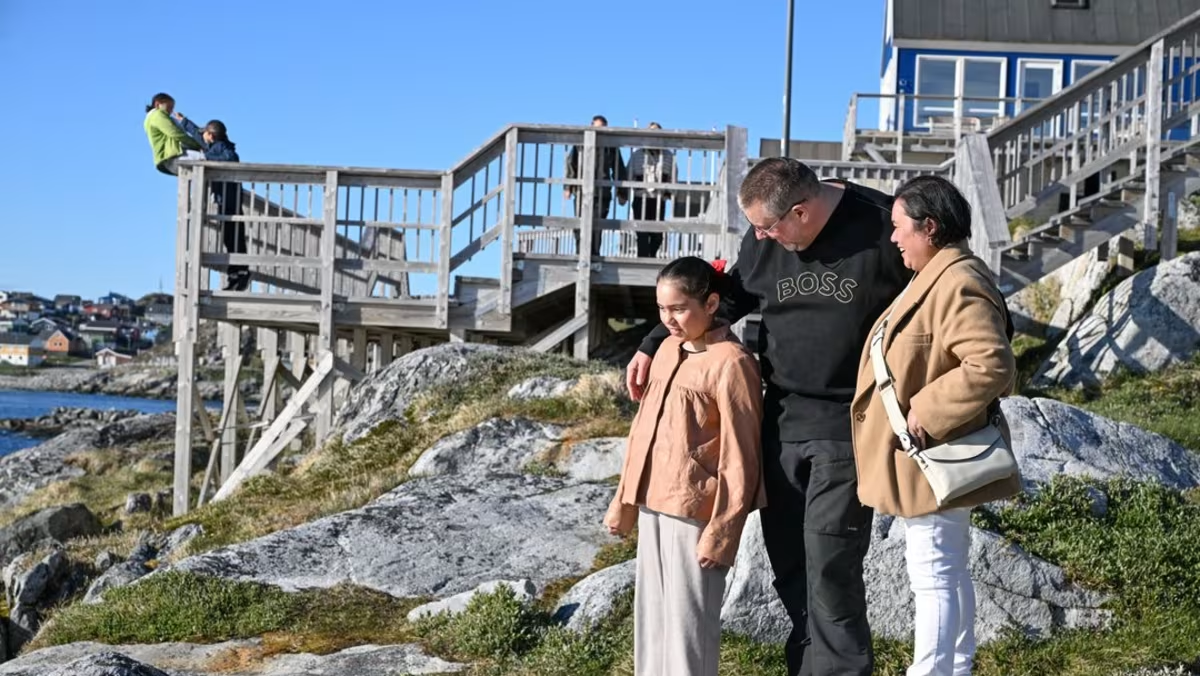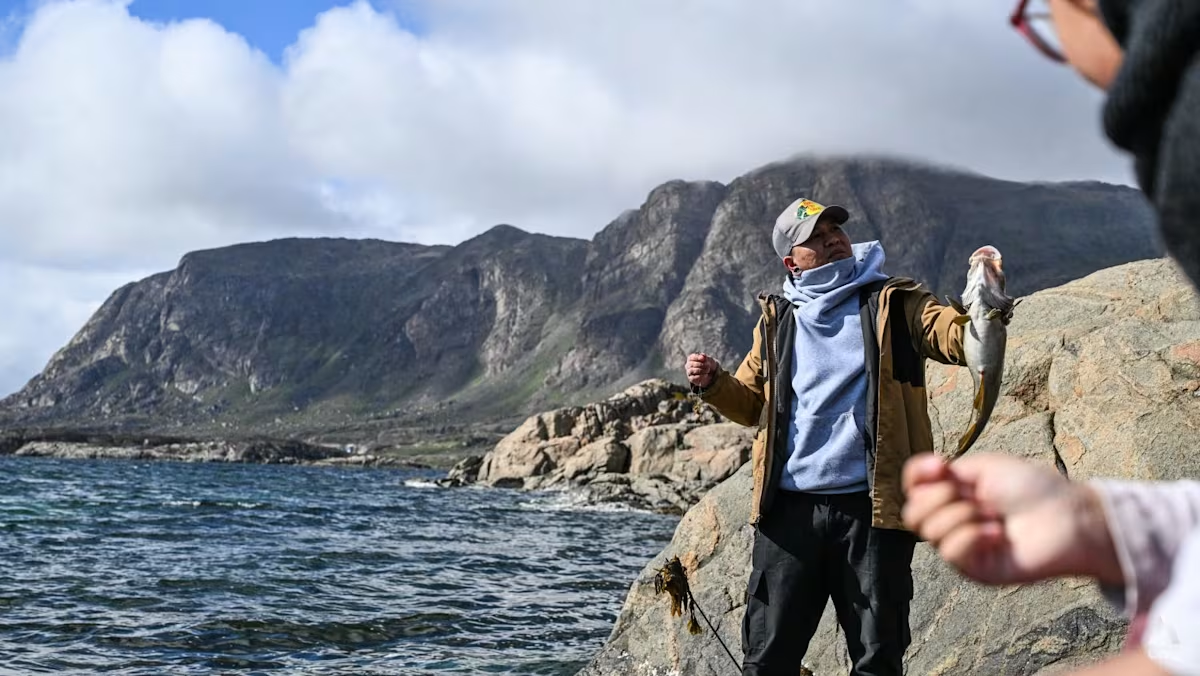
SISIMIUT, Greenland: The summer sun is on its endless orbit above the horizon as Rid Mondejar, her friends and a gaggle of their children clamber onto rocks facing west into the fjords that feed the northern Atlantic Ocean.This is trout season and there is a tasty prize for those willing to test their rod skills in the shifting waters off Sallinnguit, a tiny island connected to Sisimiut, Greenland’s second largest city and oldest continuously inhabited settlement.The group of Filipinos has come to picnic and fish into the late evening. High above the Arctic Circle, this is now home for Mondejar, her family, and around 50 fellow compatriots.“I found my peace here. Back home it's busy all the time, and here you can appreciate the slower pace of life,” said the 37-year-old native Cebuan, as her nine-year-old son Neo climbed and collected tiny seasnails along the boulders.
“If Neo was in the Philippines right now, I think he would just be sitting and watching television, maybe most of the day. So, I love it here because he can go out like this on a very sunny day and just enjoy being outside,” she said.
Filipino Rid Mondejar, 37, moved to Greenland in 2015. (Photo: CNA/Jack Board)
More and more Southeast Asian individuals and families are building new lives in Greenland's remote communities.The world’s largest island is experiencing one of the fastest demographic shifts in its modern history. Its small population, the steady outmigration of young people and a growing economy have created an unexpected migration corridor for workers from Southeast Asia.The two largest foreign migrant groups in Greenland today are from the Philippines and Thailand; with approximately 1,300 and 460 people respectively out of a total population of 57,000.The number of Filipinos has risen from about 270 five years ago, while the Thai population has roughly doubled in the same time.On long summer days, the allure is apparent. The landscape is unique and striking, shaped by light and shadow.