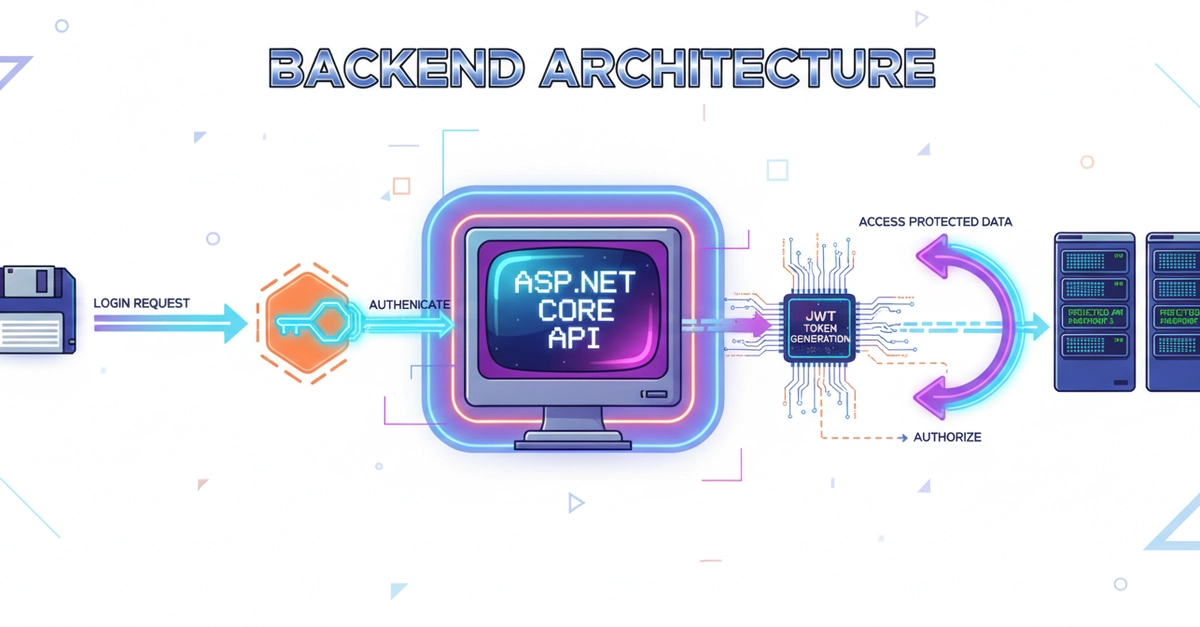
Authentication is one of the most important parts of any application that integrates with external services. While many modern platforms expose OAuth APIs or SDKs for third-party developers, there are situations where an application needs to interact with an authentication flow that is primarily designed for browser users.
Recently, while building a mobile application that integrates with an external football management platform, I needed to design an authentication architecture that was both reliable and efficient. Rather than focusing solely on obtaining an access token, the bigger engineering challenge was ensuring that users were not repeatedly authenticated on every request.
This article explains the architecture I adopted and the design decisions behind it.
The Problem
The mobile application communicates with an ASP.NET Core backend, which in turn communicates with an external service requiring authenticated requests.