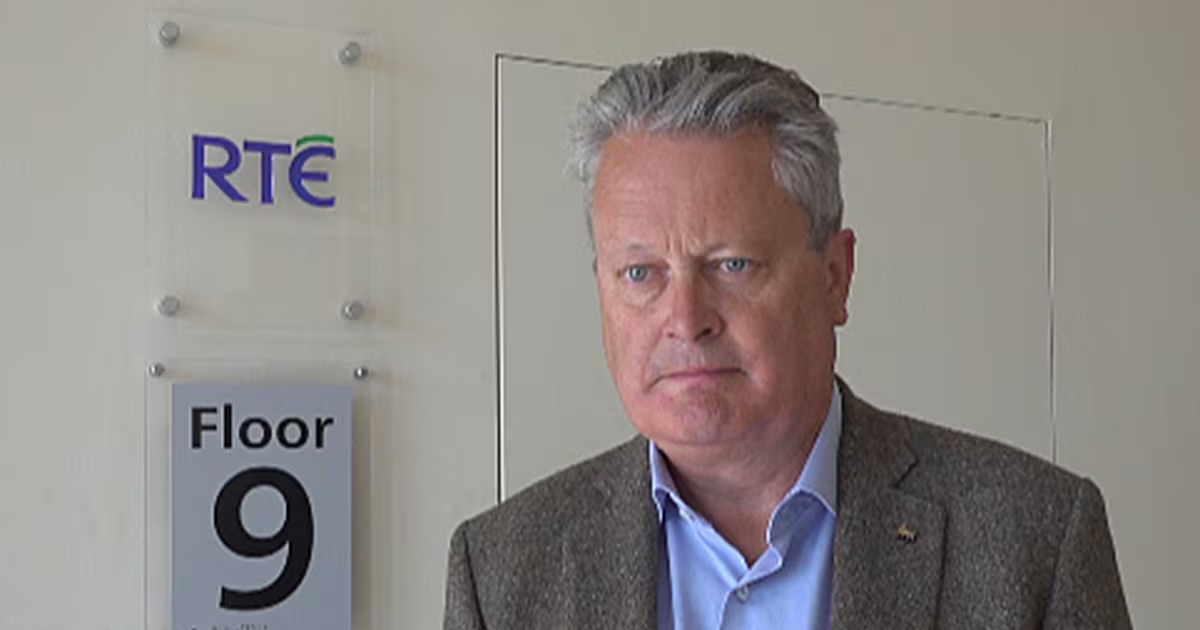
The latest revelations about the unlawful attempts by the PSNI and MI5 to identify journalists’ sources in Northern Ireland are concerning.In a recent judgment the Investigatory Powers Tribunal (IPT), which primarily investigates cases against UK intelligence agencies, ruled that the surveillance of journalist Vincent Kearney by the PSNI, MI5 and the London Metropolitan Police was “not in accordance with the law and disproportionate”. This spying took place between 2006 and 2018 when Kearney, now RTÉ’s Northern Editor, worked for the BBC in Belfast, chiefly reporting about security matters. The IPT ordered that MI5 and the PSNI each pay Kearney £10,000 in compensation.There is a disturbing pattern here. Kearney, an experienced journalist, was alerted to the surveillance two years ago after the IPT, in a separate case, ruled that the PSNI and the Metropolitan Police unlawfully spied on Belfast-based journalists Trevor Birney and Barry McCaffrey. They had made a film about the 1994 Loughinisland massacre in which the UVF murdered six Catholics. Information from that case indicated that Kearney’s phone was being monitored.Now, following on from the Kearney case and as reported by the BBC Spotlight programme last Thursday night, it has emerged that the PSNI allegedly accessed the phone of former BBC security editor Brian Rowan. This was after he wrote for the Belfast Telegraph about the 2006 murder of Denis Donaldson who, while a senior official within Sinn Féin, was acting as a police and MI5 agent.The PSNI chief constable Jon Boutcher accepted the IPT ruling in relation to Kearney. He referred to how last year an independent review found that the PSNI’ s surveillance of journalists was not “widespread or systemic” and said since legislative change in 2015 there has been no unlawful interference with journalists’ phone data.This is not completely reassuring, especially as the surveillance of Kearney ran until 2018. A judge-led inquiry, as called for by the National Union of Journalists, may now be a necessary step.
The Irish Times view on the surveillance of journalists: worrying trends
A series of cases in Northern Ireland give cause for concern
321 words~1 min read