The big change from regular GPTs is that these agents are built for teams rather than individuals. Workspace agents can pull context from different systems, follow a team's workflow, ask for approvals, and move tasks forward across multiple tools.
Each agent has its own workspace with access to files, code, tools, and memory. Agents can write and run code, use connected apps, retain information across sessions, and handle multi-step tasks. Teams can also put them on a schedule or hook them into Slack, where they pick up requests on their own.
Building an agent in minutes with ready-made templates
Setting up a workspace agent is supposed to be quick. Users describe a recurring workflow or upload a file, similar to custom GPTs, and ChatGPT turns it into an agent, defining steps, connecting tools, adding skills, and testing the result. OpenAI also offers templates for finance, sales, and marketing.
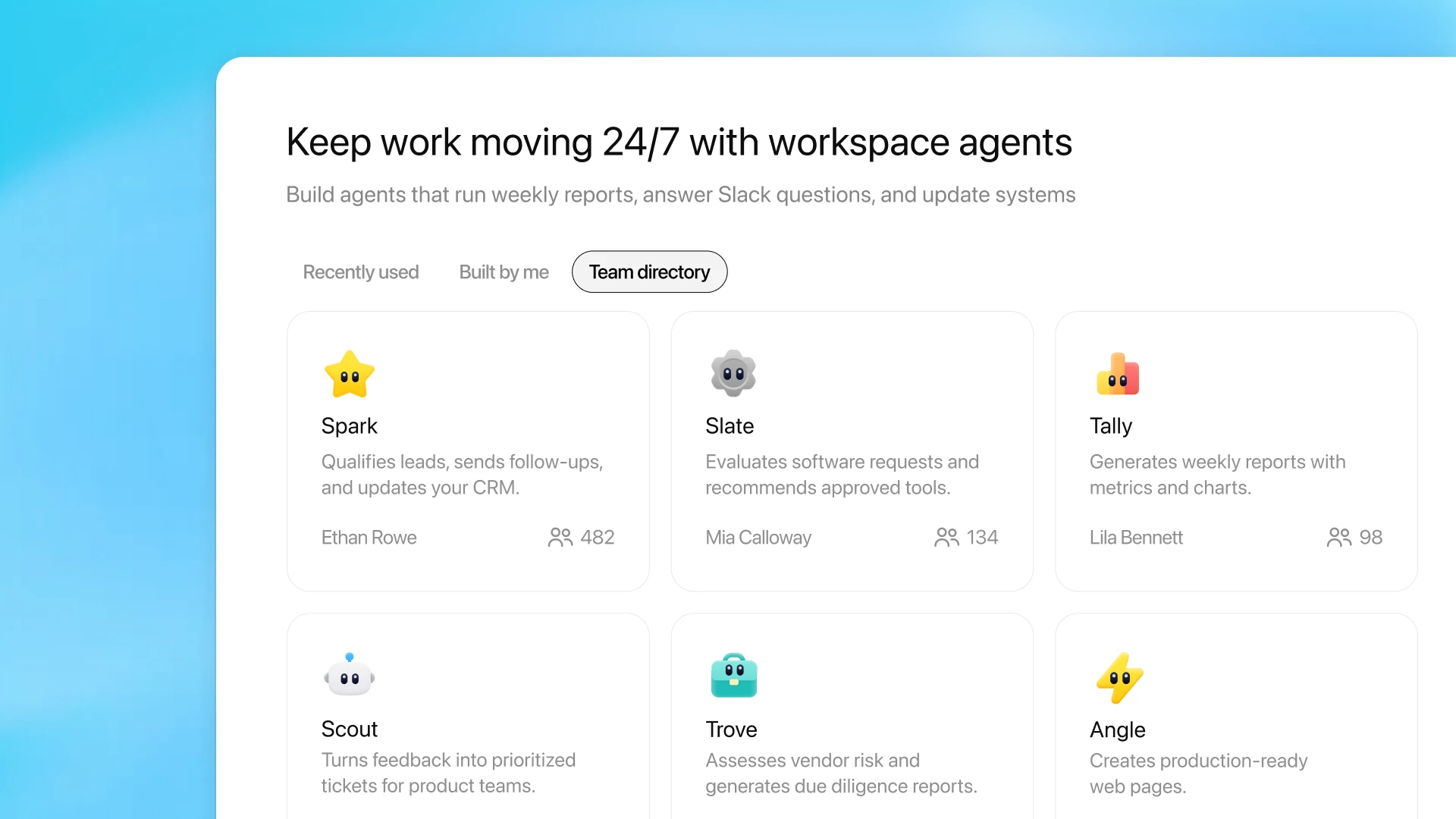
OpenAI shared a few examples already running internally. A "Software Reviewer" checks employee software requests against approved tools and policies, creating IT tickets when needed. A "Product Feedback Router" watches Slack, support channels, and public forums, turning feedback into prioritized tickets and weekly summaries. A "Weekly Metrics Reporter" pulls data every Friday, builds charts, and shares a report with the team, and a "Lead Outreach Agent" researches incoming leads, scores them, drafts personalized follow-up emails, and updates the CRM.