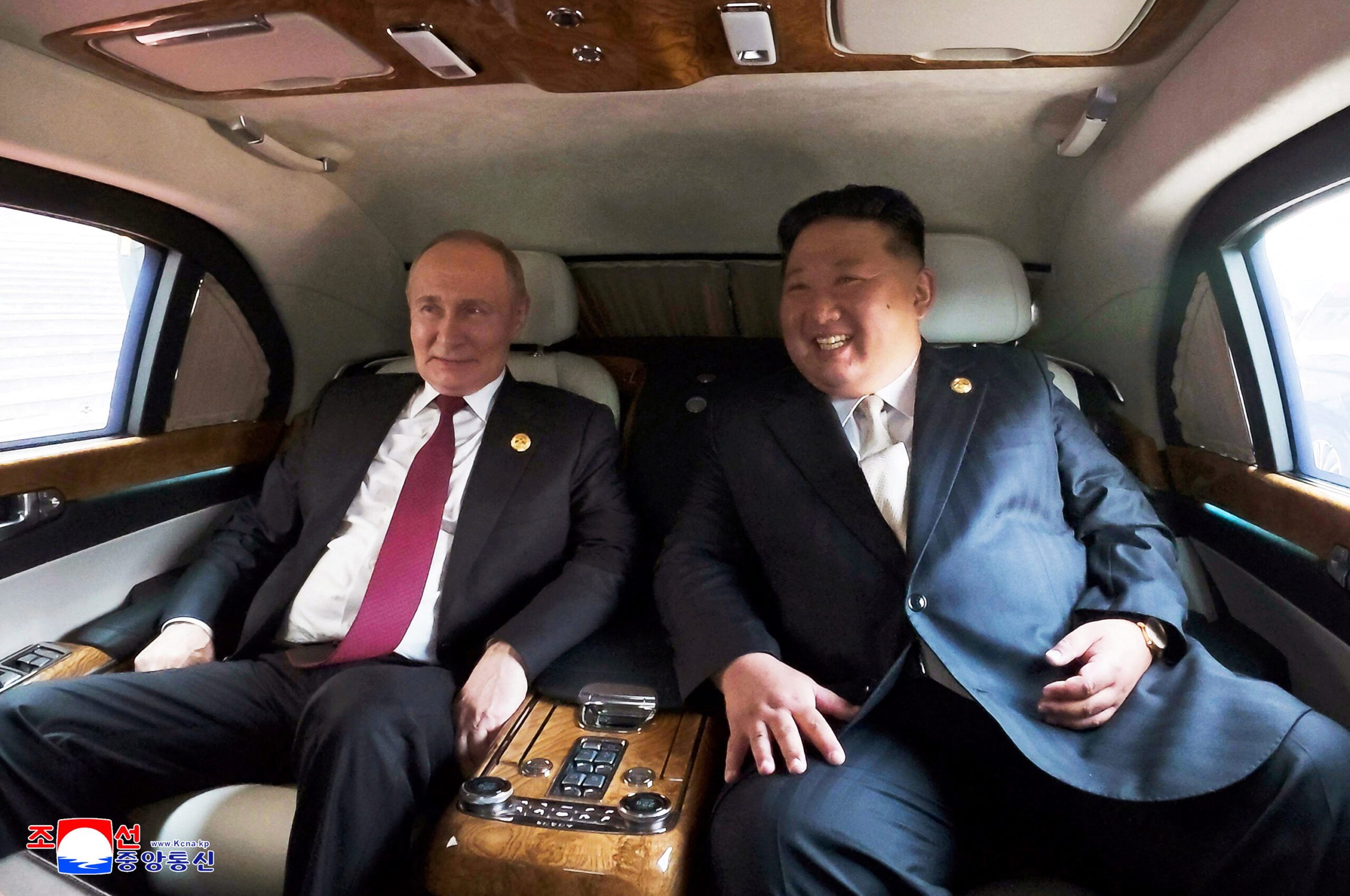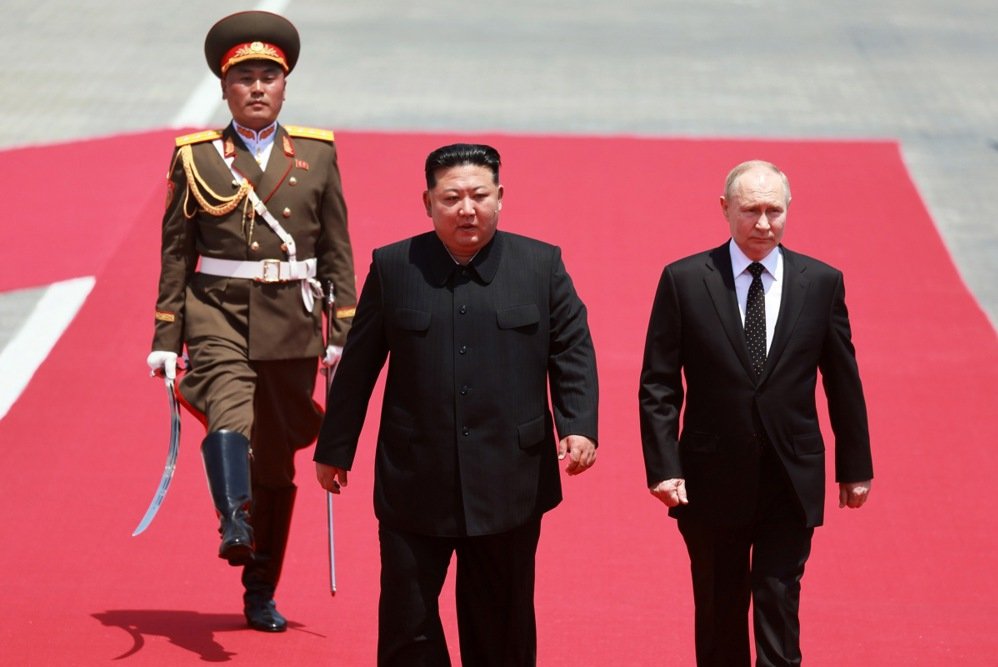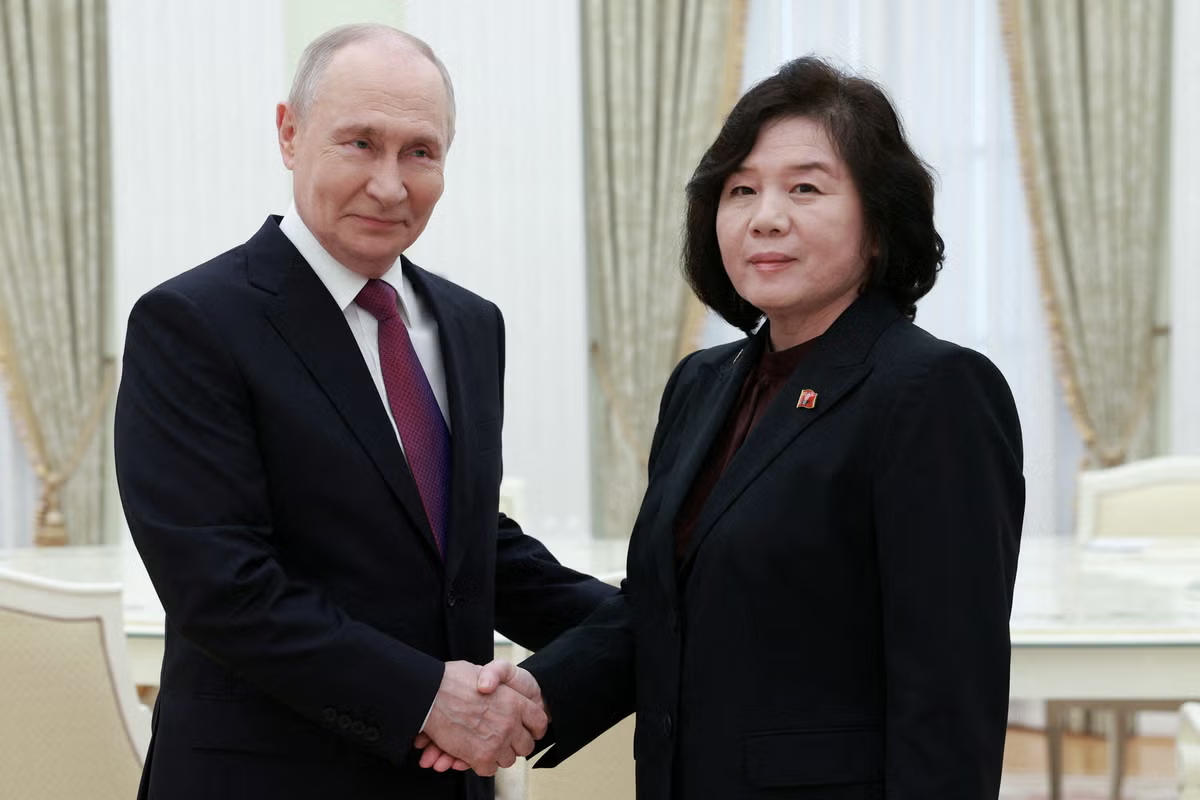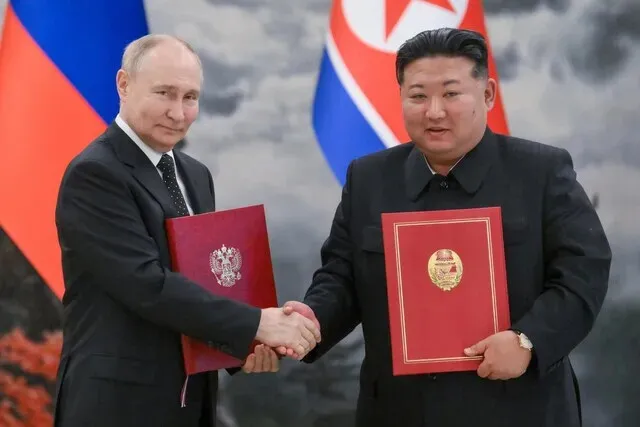
Russian President Vladimir Putin (left) and North Korean leader Kim Jong-un shake hands while holding copies of their newly signed pact establishing a comprehensive strategic partnership between their two nations following their summit in Pyongyang, North Korea, on June 19, 2024. (TASS/Yonhap)
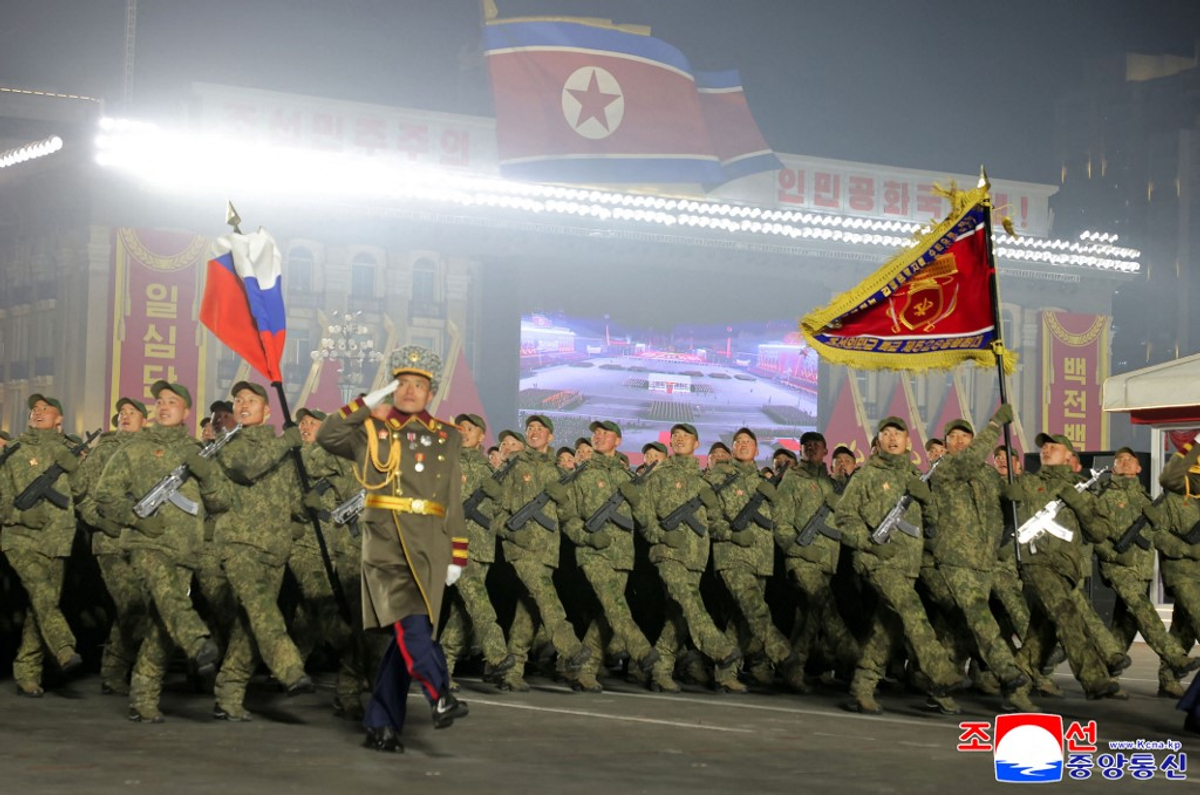
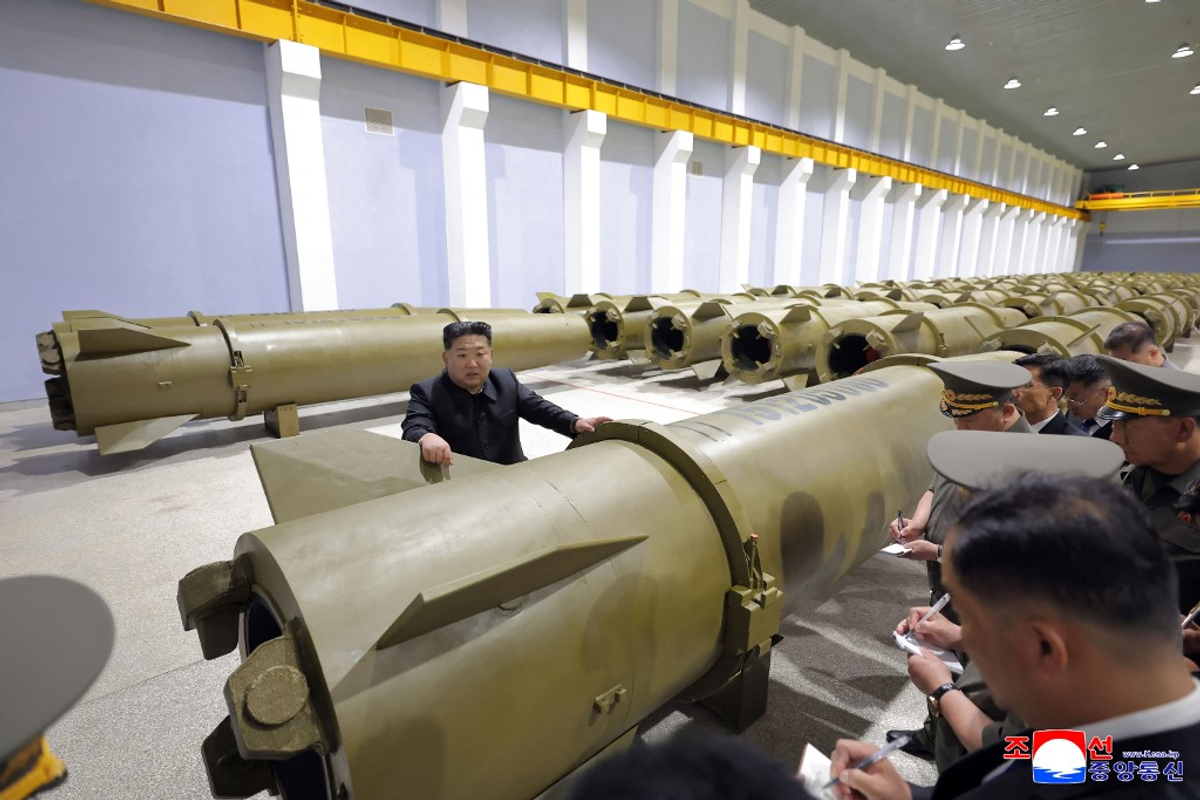
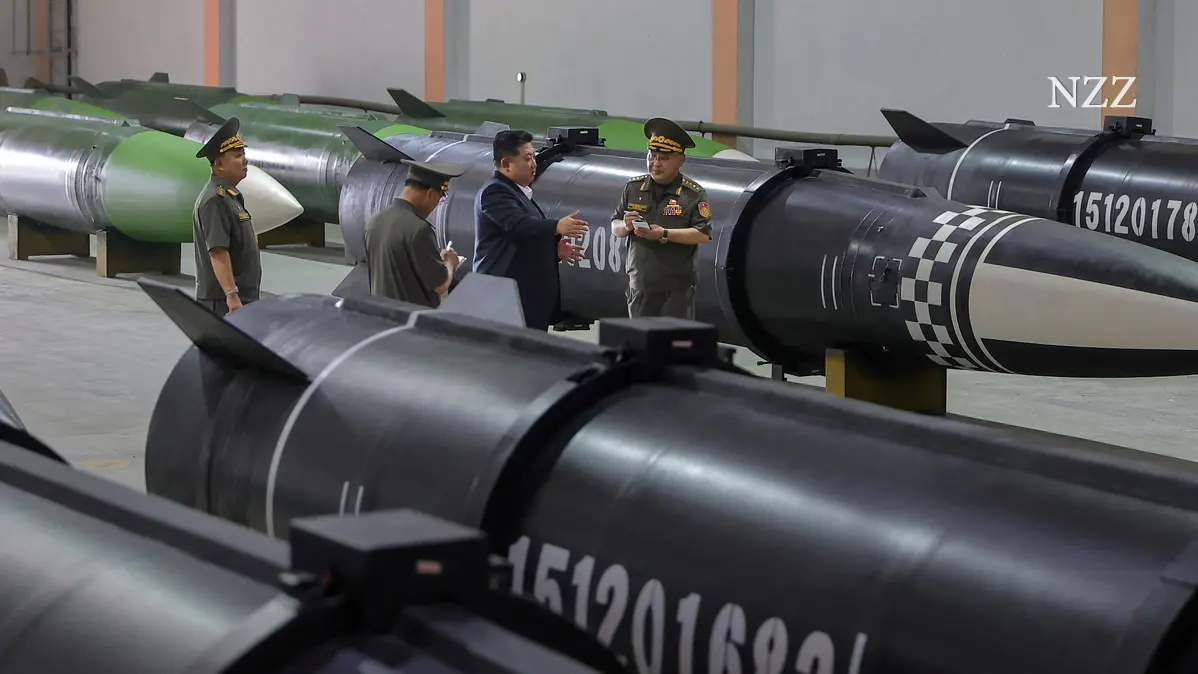
North Korea provided 9 million artillery shells and over 100 ballistic missiles to Russia last year, a new report has revealed. In return, Moscow provided Pyongyang with its Pantsir mobile air defense system, a Pantsir-class combat vehicle, and electronic warfare jamming equipment.A report was authored by the Multilateral Sanctions Monitoring Team (MSMT), which includes South Korea, the US and Japan, and offers a relatively detailed update on recent military cooperation between Russia and North Korea by collecting cases of sanctions violations. The MSMT was launched in October 2024 to monitor the enforcement of sanctions on North Korea following the disbandment of the UN Security Council’s Panel of Experts in April 2024, which was caused by Russia’s veto in March 2024. The MSMT report offers a detailed overview of North Korea-Russia military cooperation that violates UN Security Council sanctions, including Russian supplies of refined petroleum products to North Korea that far exceed the annual cap designated by the United Nations UNSC; dispatches of North Korean laborers to Russia; and financial transactions between the two countries. The report notes that since September 2023, North Korea has sent “over 20,000 containers of munitions and related materiel to Russia in support of its war against Ukraine.” This includes 82mm, 122mm, 130mm, 152mm, and 170mm munitions. The report also states that Russian-flagged cargo vessels delivered “as many as 9 million rounds of mixed artillery and multiple rocket launcher ammunition from North Korea to Russia in 49 shipments from January 1 to mid-December 2024.”Those munitions were then sent via rail from Russian Far East ports to ammunition depots in southwestern Russia, for use by Russian military forces against Ukraine, the report adds. North Korea also delivered elements of “three brigade sets of heavy artillery, including DPRK-origin 170mm long range self-propelled artillery pieces, 240mm long-range multiple rocket launchers, more than 200 total vehicles, self-propelled guns, multiple rocket launchers, and reload vehicles for both types of weapons.” DPRK stands for Democratic People’s Republic of Korea, the formal name of North Korea. The report also contained a detailed analysis of Russian weapon systems provided to North Korea. Since November 2024, Russia has delivered “short-range air defense systems and advanced electronic warfare systems, including jamming equipment, using Russian cargo aircraft.” Moscow also transferred “operational knowledge,” the report added. The report states that Russia has transferred “at least one Pantsir-class combat vehicle” to North Korea. The Pantsir is a mobile air defense system. Russia also has “supported North Korea’s ballistic missile programs by providing data feedback on ballistic missiles, leading to improvements in missile guidance performance.” The MSMT also noted that North Korea sent over 11,000 troops to aid Russia’s war effort in Ukraine in late 2024, and recently sent an additional 3,000 troops “between January and March 2025.”“These DPRK soldiers were trained by Russian forces in artillery, UAV, and basic infantry operations including trench clearing, which are critical skills for frontline operations,” the report concludes. The report includes information on vessels and aircraft used to transport weapons between the two nations. It also names individuals and groups that have contributed to sanctions evasion activities. In addition to the laborers already sent to Russia, the report states that North Korea applied for work visas for 8,000 laborers in 2024 and that Pyongyang is “planning to send thousands more laborers in the first half of 2025 to work in the construction and forestry sectors in Russia.”“North Korea also intends to send information technology (IT) workers and medical personnel to Russia,” the report continues. “North Korea possibly dispatched 481 workers to Russia (198 people in the construction industry and 283 people in the textile industry) from December 2024 through the end of February 2025,” the report says. South Korea’s Ministry of Foreign Affairs issued a statement calling the report “significant” because it “reveals concrete data about weapons shipments, their timeline, the amount of supplies, the supply routes, and the methods of transfer, thereby confirming what has only been conjectured.”Regarding the first MSMT report focusing on military cooperation between Russia and North Korea, the Foreign Ministry said, “Military cooperation is the most flagrant violation of UN sanctions resolutions, and MSMT nations are in consensus that these violations need to be thoroughly covered.” The report utilized intelligence provided by MSMT nations. It also quoted intelligence and analyses from private think tanks. The Foreign Ministry stated that the report “clearly shows that sanctions violations and evasion regarding North Korea cannot escape the scrutiny of the international community.” “The report will help remind the international community to exercise vigilance regarding the illegality and injustice of military cooperation between Russia and North Korea, and it will inspire us to remain alert,” the ministry said. The MSMT is expected to continue monitoring violations of sanctions against North Korea and publish subsequent reports. In addition to the US, South Korea and Japan, the MSMT membership includes the UK, France, Germany, Italy, the Netherlands, Australia, New Zealand and Canada. These 11 nations issued a joint statement on Thursday saying, “We will continue our efforts to monitor the implementation of UNSCRs on the DPRK and raise awareness of ongoing attempts to violate and evade UN sanctions.”“With the release of the first MSMT report, we underscore once again our shared determination to fully implement relevant UNSCRs. We urge the DPRK to engage in meaningful diplomacy, and call on all states to join global efforts to maintain international peace and security in the face of ongoing threats from the DPRK and those that facilitate its illicit activities in contravention of relevant UNSCRs,” the monitoring team said. By Park Min-hee, senior staff writerPlease direct questions or comments to [english@hani.co.kr]