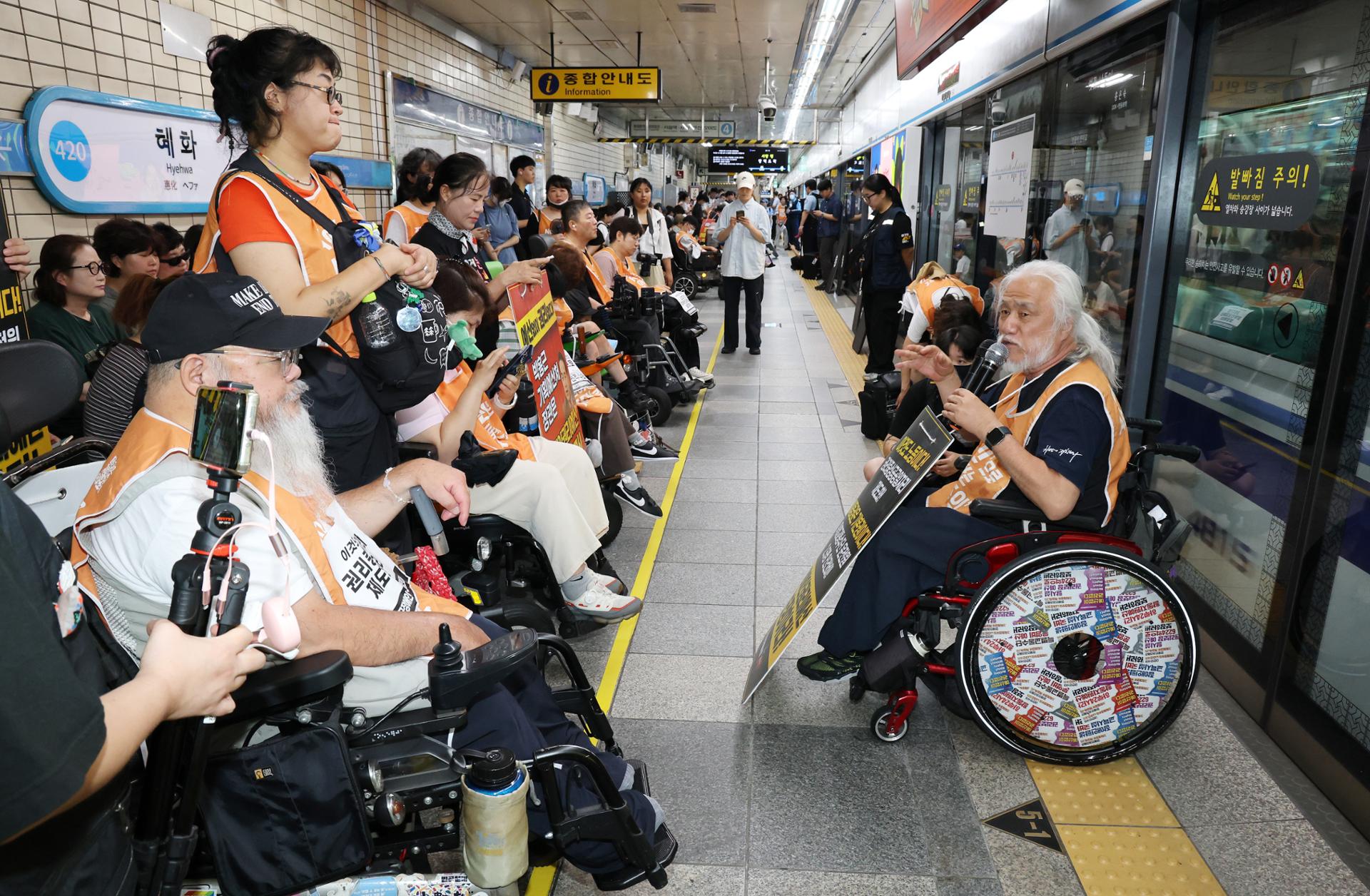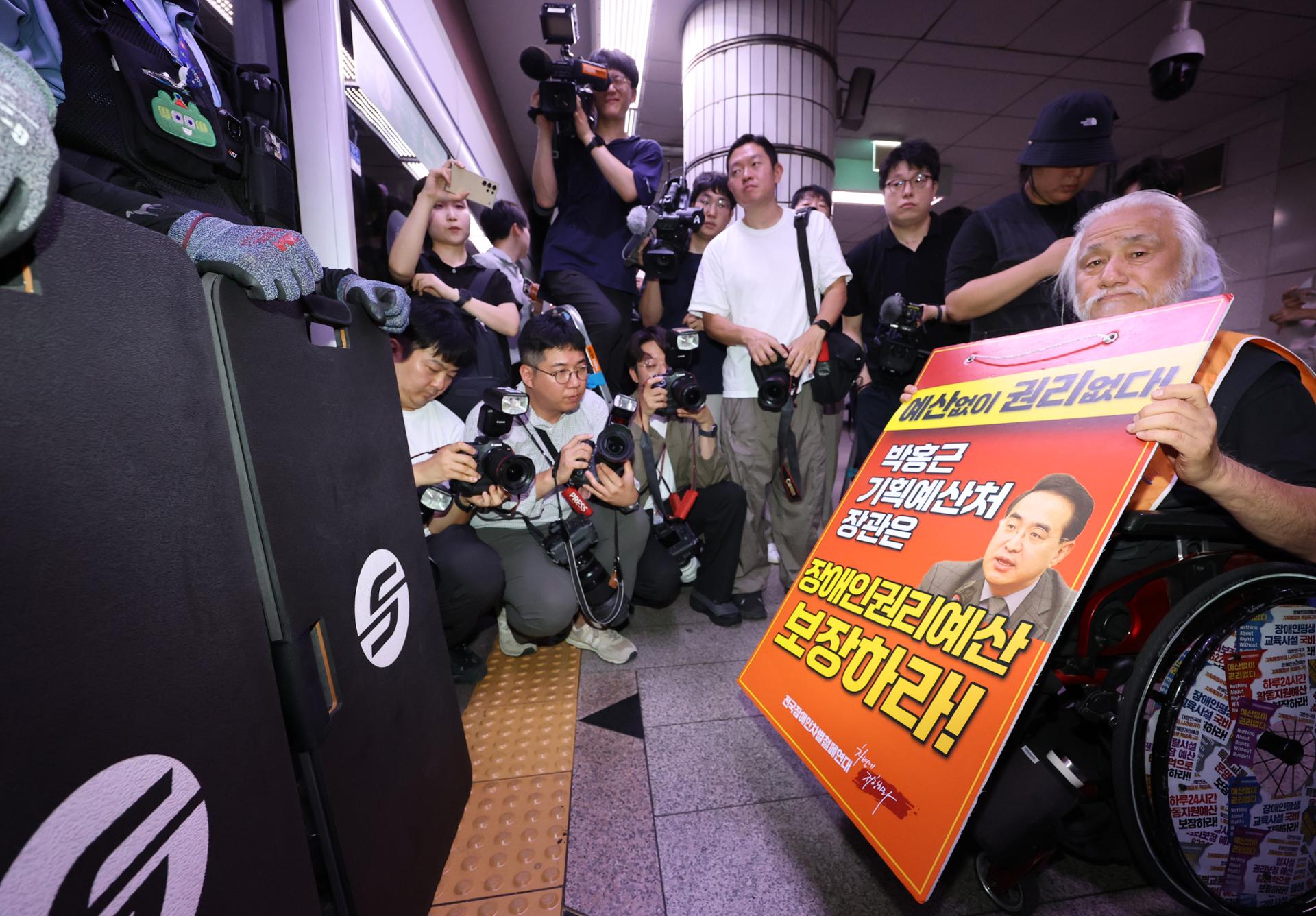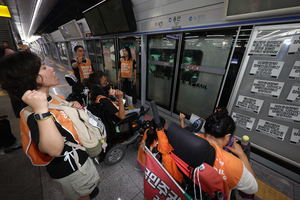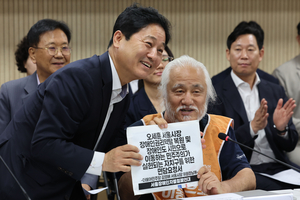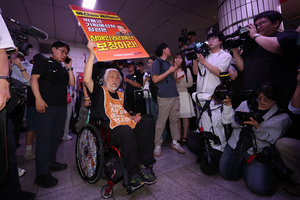
SADD leader Park Kyoung-seok holds a placard during the group’s 69th rush-hour subway protest at City Hall Station in central Seoul on July 2. (Newsis) Disability rights activists will board a Line 4 train at Hyehwa Station at 8 a.m. Monday, beginning a month of weekly rush-hour protests timed to coincide with the government's vote on the 2027 budget bill.Solidarity Against Disability Discrimination, or SADD, said Sunday that activists will board a train bound for Dongdaemun, ride six stops to Seoul Station and march to the Korea Public Finance Information Service in Jung-gu.The group plans to carry out the same action on Aug. 10, 18 and 24, before the budget bill is put to a vote at the National Assembly in September.At issue is what SADD refers to as a "disability rights budget," its own shorthand for spending on transport, personal assistance, education, employment and support for disabled people living outside institutions.SADD says the government has expanded spending across the board while leaving its demands unanswered, and that the ministry promised by end of July to respond to its calls for a budget covering the basic rights of disabled people to live in the community, but has not done so.Planning and Budget Minister Park Hong-keun told a national fiscal strategy meeting on July 13 that the 2027 budget had been set at more than 800 trillion won ($554.4 billion), over 10 percent above this year's and the largest ever, with tax revenue projected to top 500 trillion won against an earlier forecast of 412 trillion.Monday's rally will also press Seoul Mayor Oh Se-hoon to reinstate about 400 severely disabled workers who lost positions when the city ended a program that paid them for advocacy and awareness work rather than conventional output. Seoul says 285 of them later moved into other publicly funded jobs.Seoul Metro treats the boarding protests as unlawful disruption and has pursued civil and criminal cases against the group since SADD intensified its subway campaign in late 2021, with nine legal cases currently ongoing. When SADD returned to the subway on July 2 after a six-month pause, roughly 60 activists filled six cars, though boarding began closer to 8:50 a.m. and commuters saw little delay.The campaign traces back to a 2001 accident in which a wheelchair lift at Oido Station killed an elderly woman, galvanizing Korea's disability mobility movement. Seoul says elevators now reach nearly every station on its network. SADD argues installation figures say nothing about breakdowns, transfers or waiting times.
Disability rights group to stage rush-hour subway protest Monday
Disability rights activists will board a Line 4 train at Hyehwa Station at 8 a.m. Monday, beginning a month of weekly rush-hour protests timed to coincide with
415 words~2 min read