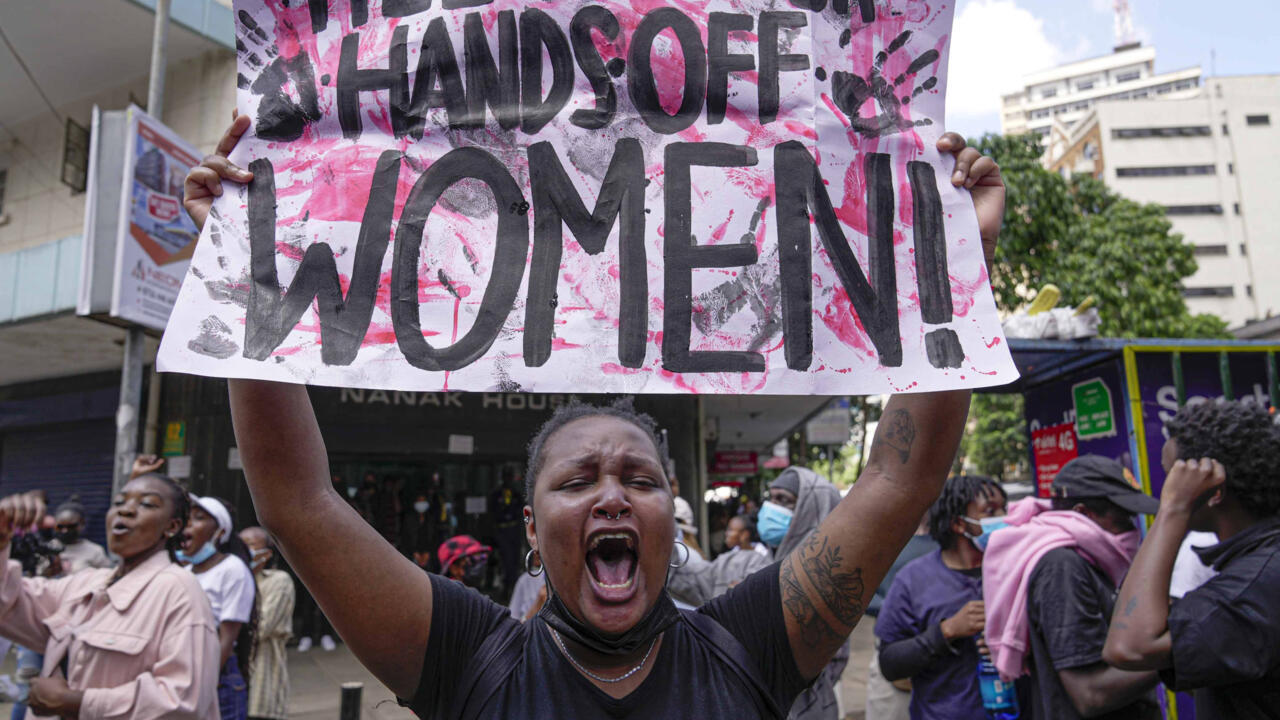
Mauritius's parliament has unanimously voted to criminalise marital rape and impose harsher sentences for femicide, after a spate of violent attacks against women exposed serious gaps in protection. New reforms aim to improve safeguards for victims who have long gone unheard and unprotected.
"We are refining the law, thereby ensuring that the most horrific and despicable crimes are punished for what they are," Gavin Glover, the country's attorney general told parliament last week. Nine women were killed in 2025 by a partner, former partner or family member. Four more have died this year. One in four Mauritian women has experienced gender-based violence, according to government figures. United Nations figures show the African continent has the world's highest rate of intimate partner and family-related femicide, at three victims per 100,000 women – double the rate in the Americas and six times that in Europe. "The situation in Mauritius left us with no alternative but to bring stronger laws to protect victims of domestic abuse. This is about the most brutal form of oppression there is: violence, rape, killing – and more importantly about the place where it hides best, the family unit," Glover told RFI. Kenya’s silent tragedy: a woman killed every two days but justice is nowhere in sight 'Horrifying case' On 10 December, 2025, the Supreme Court sentenced the husband of 24-year-old Sheena to life imprisonment for her killing, describing her death as "a horrifying case of femicide" and noted "a deeply troubling rise in violent attacks on women by partners or former partners". Sheena had left her violent husband and rebuilt her life, taking a job at a hotel. He followed her and harassed her there. She sought police help several times – the last time on 5 November, 2019, just three days before he abducted, brutalised and raped her, then stabbed her 22 times in a sugarcane field. The Minister of Gender and Equality noted that of 10 women killed by their partners over a 15-month period, seven had held a police protection order. "Clearly there was a flaw in the system. We have somehow failed these women. If they were protected, then how come they were killed?" asked Najah Ahmed, deputy chairperson of the National Human Rights Commission of Mauritius. "A protection order that is not enforced is a mere piece of paper," Glover said. He explained that the three new amendments to the 1838 Criminal Code – covering marital rape and femicide – work hand in hand with the Domestic Abuse Act passed on 10 July. “Together they ensure our criminal law names, confronts and punishes violence committed by those closest to a victim: in the home, in the family, in a relationship,” he said. Harsher sentences The amendments, voted through on 21 July, address marital rape and femicide. The sentence for murder "in aggravating circumstances where the victim was, inter alia, subject to acts of domestic abuse" is now 15 years to life. Marital rape carries a sentence of 10 to 45 years. For Passerelle, an organisation which supports female victims of domestic violence and human trafficking, the reforms empower them to tell victims the system is listening, and that the law will protect them. “A 29-year-old victim came to our shelter a few weeks ago. She said her husband regularly forced her to have sex. She thought it was something normal, something she had to accept,” said Kashif Imambaccass, Passerelle’s legal advisor. "Rape is rape, and consent means the same thing inside a marriage as outside it. Marriage, civil or religious, is no longer a shield," said Glover. “If anyone has non-consensual sex with his lawful wedded wife, companion, partner, girlfriend, he can no longer tell the police, the prosecutor or the judge: 'we are together, we live together, its normal'. No, it’s not normal – it is in fact, worse.” The new Domestic Abuse Act also provides for protection for those in same-sex relationships, widening the definition of who can be an offender – "one of the most noteworthy changes", according to Ahmed. Economic abuse and coercive control are now also clearly defined under the new law. Glover has also announced an upcoming revision of the country's definition of rape, towards an approach centred on positive consent. 'Every time there's a big rape case in France, it's like we're just discovering it'