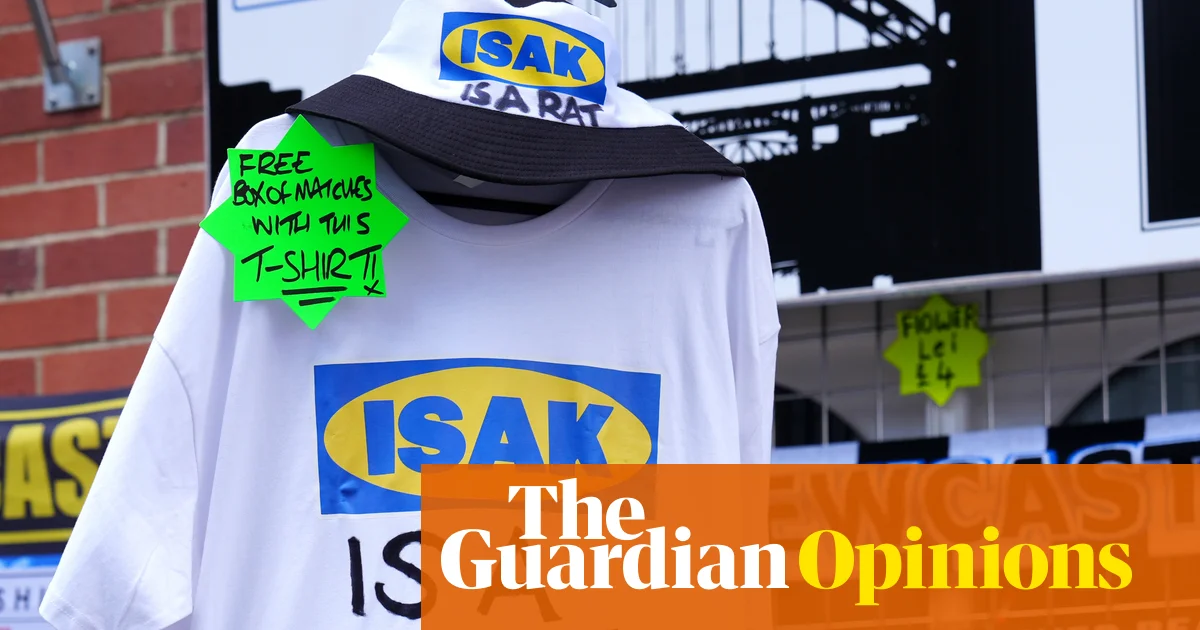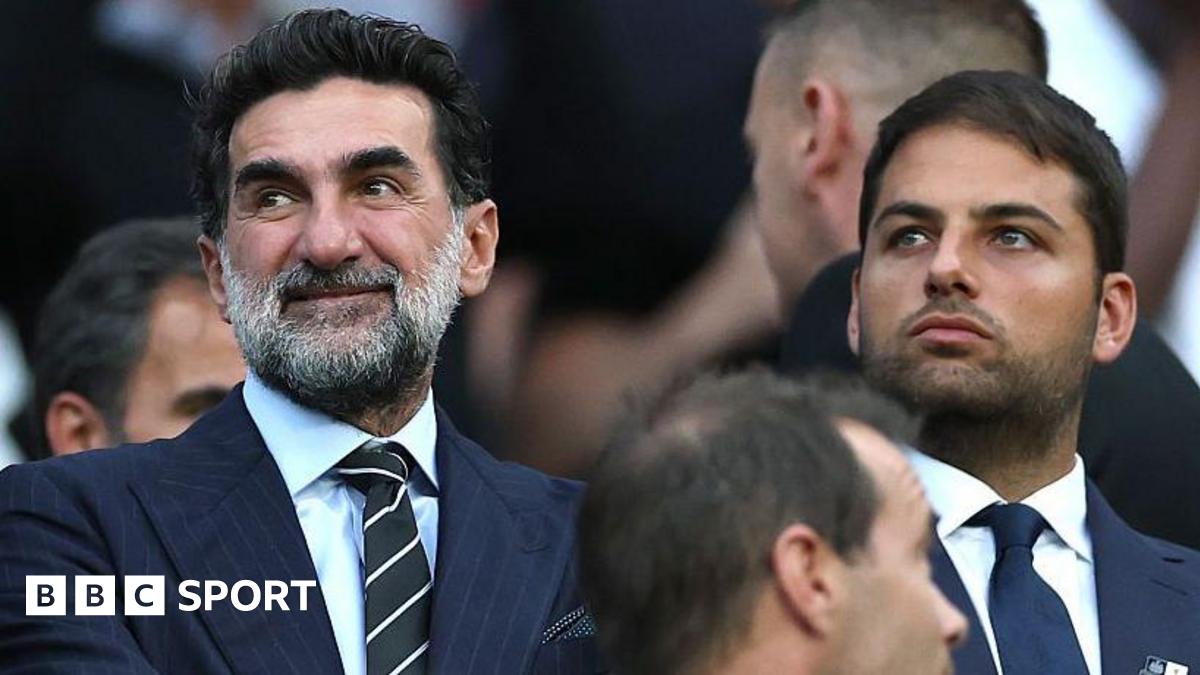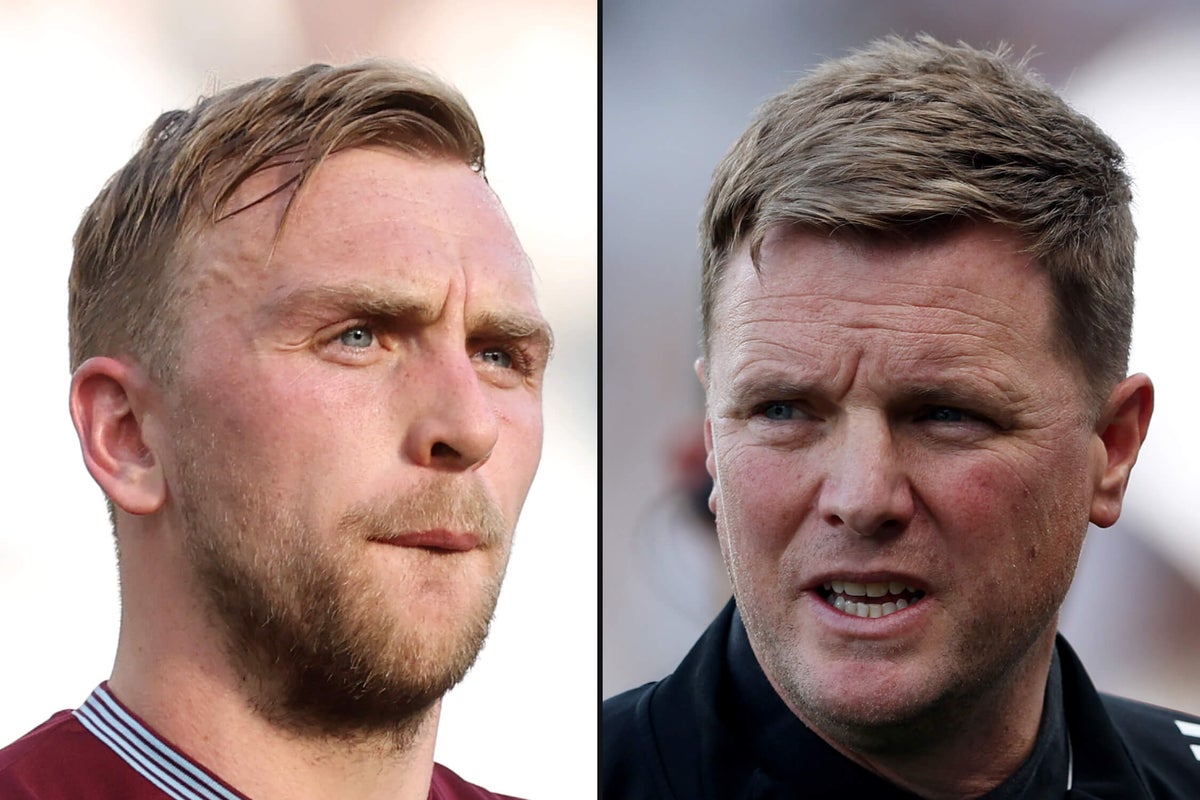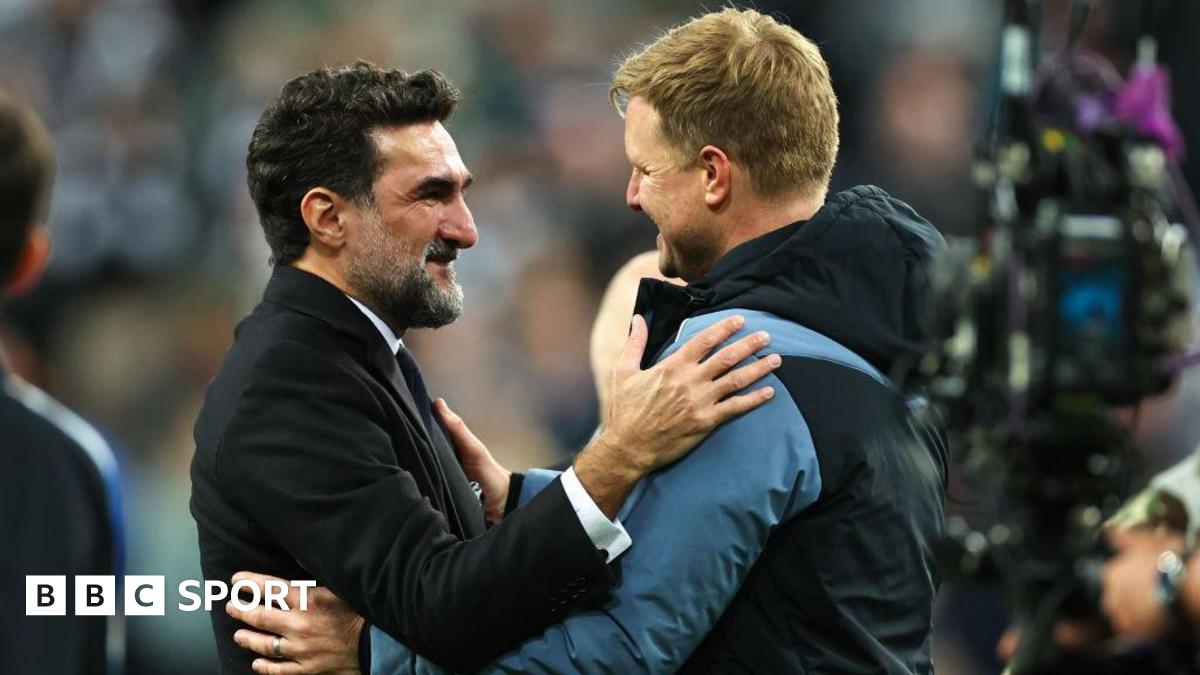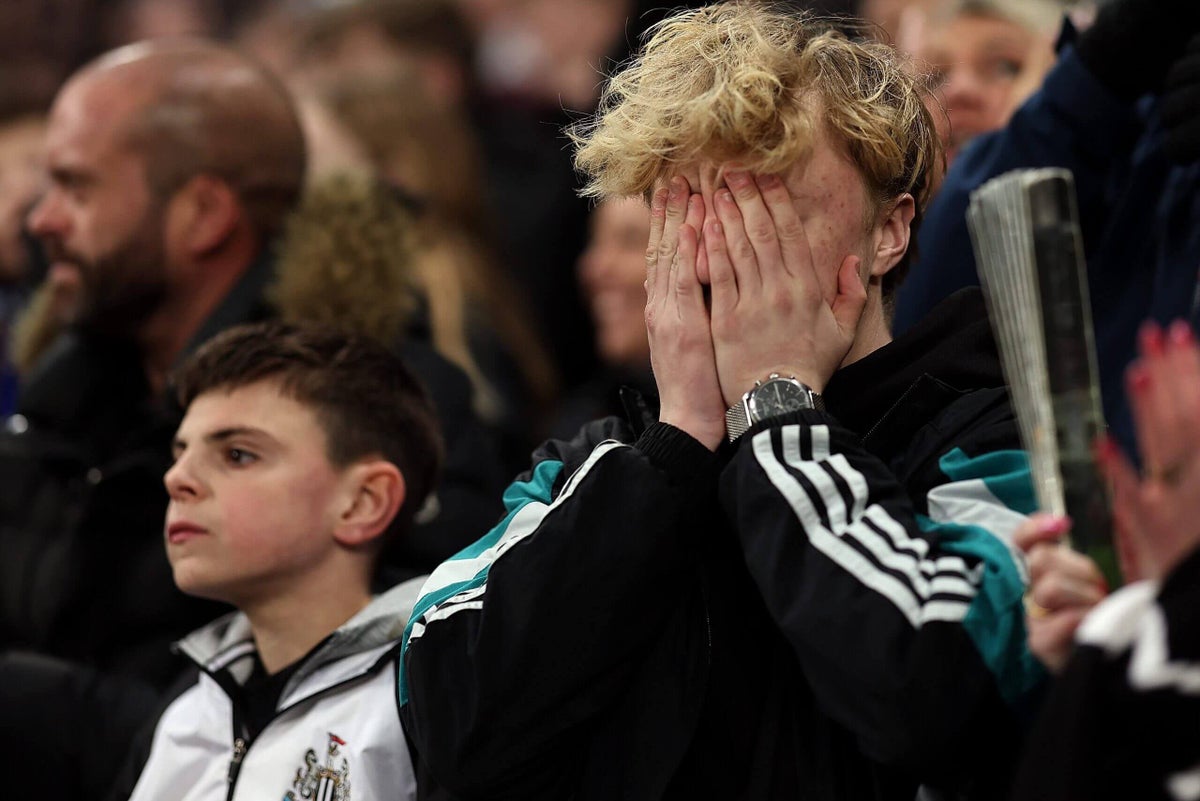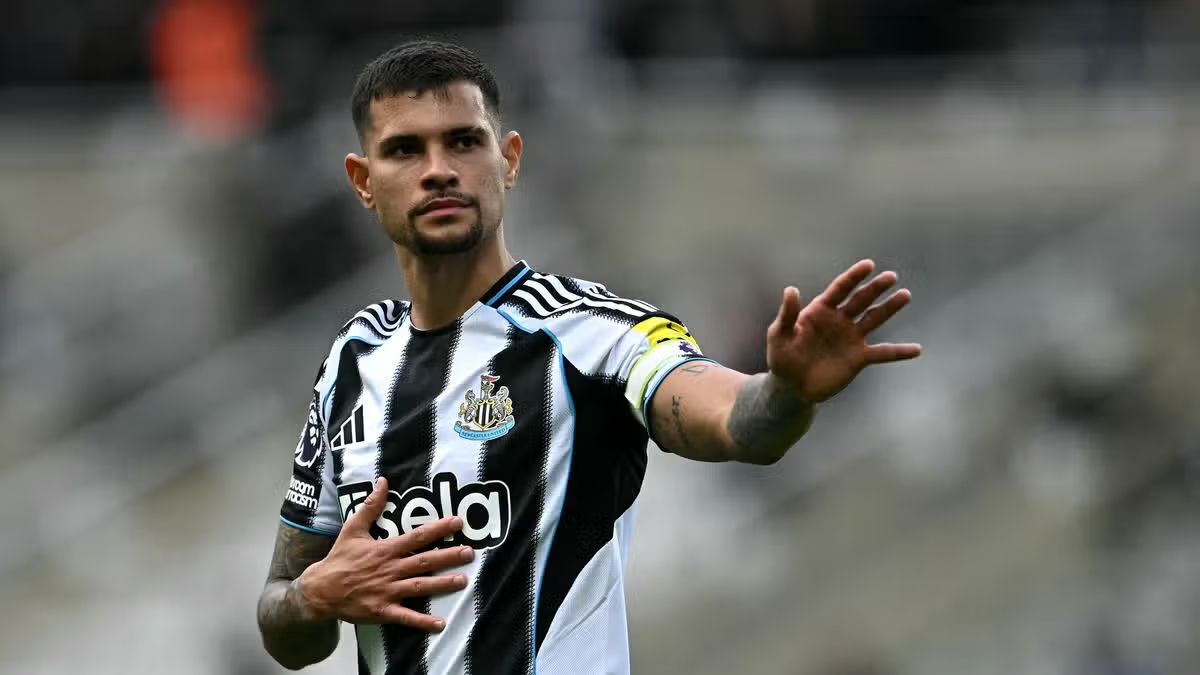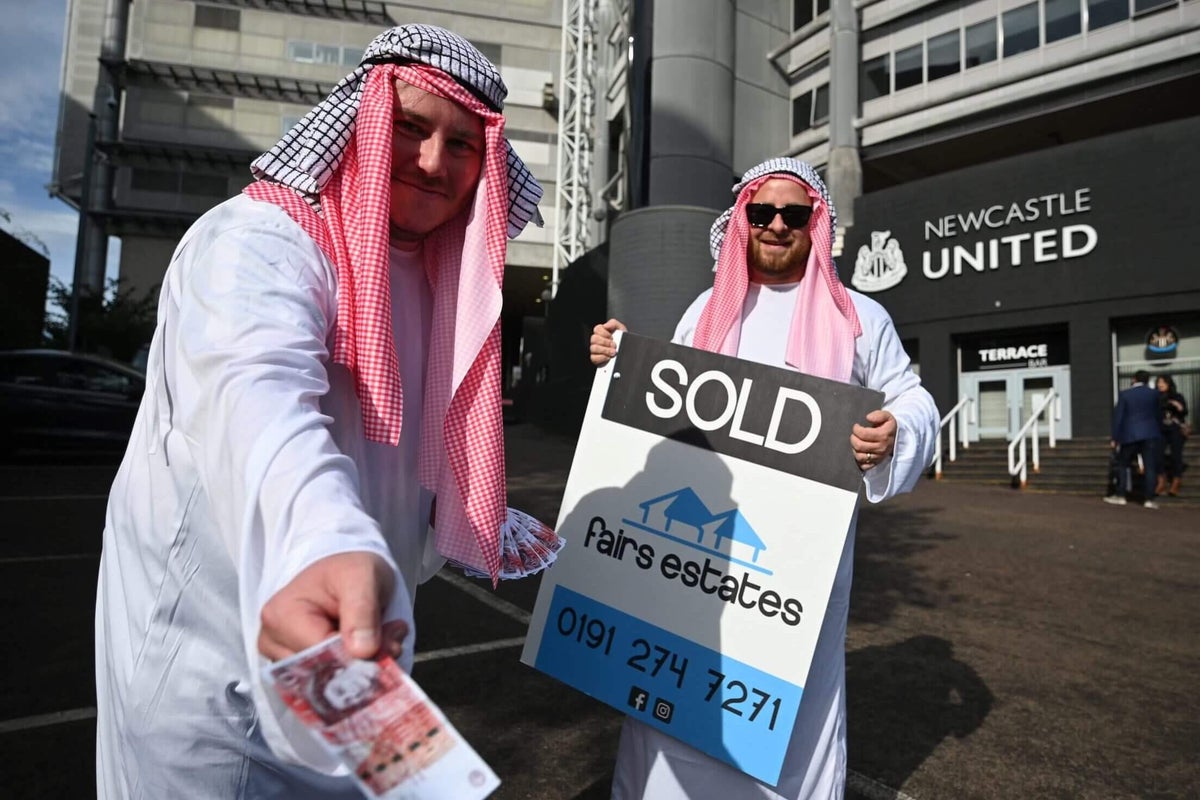
To wander past St James’ Park on the morning of October 8, 2021, glimpsing workers and fans cleaning up the debris of 12 hours earlier, was to observe the aftermath of an awakening. It was the morning after the night before, the first day of the rest of Newcastle United’s life.Newcastle’s home had been the scene of raucous celebration that Thursday evening, a reaction to the news the penny-pinching Mike Ashley era was over and, more notably, that he had been replaced by the richest sovereign wealth fund on Earth.The Public Investment Fund (PIF) of Saudi Arabia was in and, 1,256 days after that takeover went through, Newcastle had their first trophy in 70 years. Under PIF, the club has returned to the Champions League twice. A side mired in a relegation battle when PIF arrived have spent the past half-decade nudging at the door to the elite, finishing ahead of Liverpool, Chelsea, Manchester United (twice) and Tottenham Hotspur (three times).Back in those early days there was talk of Newcastle winning the Premier League in the next five to 10 years, principally from the mouth of Amanda Staveley, a 10 per cent minority partner of PIF who sold her stake and left Tyneside in July 2024.Yet it is another departure that has provided the clearest sign yet that the Newcastle United of the near future is not the one many hoped for five years ago.The shock resignation of Eddie Howe, revealed by The Athletic on Thursday, underlines the reality: Newcastle’s strategy has shifted. Even as PIF remain in situ, the goal of quickly becoming a sustained, dominant force in the Premier League is fading with each day of this transfer window.The summer of 2025 was consumed by Newcastle (unsuccessfully) staving off interest in Alexander Isak. A year on, they have been swamped by high-profile departures. Howe’s quitting came on the back of Anthony Gordon and Sandro Tonali being sold. Club talisman Bruno Guimaraes has informed executives he would like to join Arsenal. Manchester United have their eye on Lewis Hall. This is exodus territory.Are Newcastle still a stepping-stone club?Kaya Kaynak and Carl AnkaBetween the takeover and the end of June 2024, when a frantic few days saw them rush to sell Elliot Anderson and Yankuba Minteh to avoid breaching profit and sustainability rules (PSR), Newcastle spent more than £450million ($606.7m) on new players with little coming the other way. Their largest departures in that time were Allan Saint-Maximin, who left for PIF-owned Al Ahli for £19.5m, and Chris Wood, whose move to Nottingham Forest generated £10m less than Newcastle had paid for him just 18 months earlier.Even with those sales of Anderson and Minteh, Newcastle’s net spend across 2021-22 to 2023-24 was £408m, the fifth-highest in England and ahead of Liverpool and Manchester City. On a gross basis, they were the sixth-highest spenders on players. The wage bill jumped from 12th-highest in the division to eighth.A fallow year followed before spending ramped up again last season, in what now looks like the final salvo of the post-takeover era. Even with the British record sale of Isak, Newcastle spent £141m net on transfers in the summer of 2025, or an estimated £280m gross, comfortably a club record. Signing Ewen Jaouen in mid-June 2026 pushed the 2025-26 accounting period figure to around £300m, though the sale of Gordon to Barcelona for £69m reduced the net spend.Big sales are becoming a trend. Once agent fees and other costs are factored in, July’s spending exceeded the £92.5m received from Spurs for Tonali, but not by much. More pertinently, Newcastle’s largesse has tapered even as Premier League clubs are spending ever more. Since June 2024, using Transfermarkt figures, 10 English clubs have spent more, net, on transfers.If selling stars has taken the headlines, this summer has also seen an abrupt change in Newcastle’s buying plans. In the first five seasons under PIF, Newcastle spent around £75m on players aged 20 or younger, and the bulk of that went on two highly rated English full-backs — Tino Livramento and Hall.This summer, they’ve already spent more than £100m on players in that age bracket: Sean Steur is 18 while Bazoumana Toure, Aladji Bamba and Jaouen are 20. The origin of signings has altered, too. Other than Minteh, who came from Odense in 2023 but was immediately shipped out on loan, the previous youngest signing from abroad was a 22-year-old Sven Botman. Among English clubs, only Chelsea (£168m in 2025-26) and Brighton & Hove Albion (£128m in 2024-25) have ever spent more on under-21s in a single season than Newcastle have in the current transfer window.Eleven months ago, Newcastle had just parted with over £50m for the 28-year-old Yoane Wissa. Now they’re stacking the squad with youth, even as their most senior players are heading for the exit. It is a surprising development that gives ballast to the theory Howe felt he was ill-equipped to tackle a season he was already starting under pressure following last year’s underwhelming showing and wasteful summer.The volte-face in transfer strategy is not necessarily negative.Several Premier League clubs, including local rivals Sunderland, have shown the merits of buying youngsters from abroad and developing them. Brighton, Brentford and Bournemouth offer successful case studies. There is much to be said for buying low and selling high, particularly in an age of financial regulation. The hiring of Matthias Jaissle as Howe’s replacement tracks too: the Red Bull Salzburg side he successfully managed before moving to Saudi Arabia was one of the youngest in Europe.But the problem on Tyneside is none of those clubs listed are aiming to be what Newcastle fans were promised earlier this decade or even nine months ago, when CEO David Hopkinson said that he saw “this club being in the debate about being the top club in the world” by 2030.Buying low and selling high is fine for some, but it’s not what was offered in 2021 and it’s not, you suspect, what PIF intended. Last year’s Carabao Cup win was meant to be the start of something, not the high-water mark.Why the change?For some, the culprit is obvious: football’s financial rules. PIF’s abundant wealth was welcomed by most fans even as it was known football was no longer the lawless land that welcomed Roman Abramovich to Chelsea in 2003 and Sheikh Mansour to Manchester City five years later.Optimism that Newcastle could spend was hardly unfounded. PIF inherited a club from Ashley where revenues had stalled and would take time to build. The solution was to pour money in at speed, almost all of it going on transfers.Based on publicly known amounts, only Chelsea and Everton have received more than Newcastle’s £492m in net owner funding since October 2021. That has fuelled the club’s improvement in recent seasons.Yet that funding might have been more were it not for football’s rules and Newcastle’s owners’ unwillingness to exploit them. Until the June 2025 sale of St James’ Park to a fellow group company, Newcastle did not employ any of the regulatory circumnavigation seen elsewhere.That is commendable but has also put them at a competitive disadvantage, not least when they were racking up losses in an attempt to break the glass ceiling. Remove the paper profit from that St James’ Park ‘sale’ and Newcastle lost £254m in four seasons.Now regulatory reality is biting.PSR has received much criticism from Newcastle fans but squad cost ratio (SCR), which tethers club spending limits to revenues, is even worse for competitive balance. The frequency with which the Premier League’s richest are now pilfering the best players from fellow English clubs is no coincidence.Inherently, it allows the biggest earners to spend more. Newcastle have narrowed the salary gap, most notably with respect to Spurs and Manchester United, but four clubs still spent over £100m more than them on wages in 2024-25. Clubs trying to locate a seat at the top table find themselves more susceptible to revenue drops when Champions League football is missed, stuck between domestic and continental rules regimes. Player sales, one way to bridge the revenue gap, are averaged over three years and less immediately effective than under PSR. Newcastle’s revenues are growing steadily, but so are the incomes of the Premier League’s ‘Big Six’.Moreover, Newcastle are now in a settlement agreement with UEFA that aims to reduce those losses. Breaching it confers a European ban. It is a further restraint and while the near-£300million in player sales of the past year will help a long way toward compliance, their margin for error — like, for example, misfiring on big signings a year ago — is much lower than those very clubs they hoped to dislodge.Not all of the blame can be pointed at football’s strictures. For one, PIF knew those rules when it arrived. Newcastle spent heavily in the early days and quickly used up the headroom they were left by Ashley. Signing Matt Targett for £15m was wasteful, as was the hit taken on Wood. Splurging £38m on Harvey Barnes a year after spending more on fellow left-winger Gordon was a curious choice. Wages soared to 95 per cent of revenue immediately following the takeover. Signing Wissa for double their original bid smacked of panic. Two consecutive summers of very public misses on key targets does not befit a serious operation.Revenue has jumped impressively but even more ambitious moves that might turbocharge it, and the club’s appeal, have been lacking.Five years on, progress regarding redeveloping St James’ Park remains glacial, even as Newcastle purchased a slew of Grade I-listed houses abutting their home ground in May. A site for a new state-of-the-art training ground has been selected but construction is yet to begin.Infrastructure investments sit outside football’s financial regulations, so the lack of movement on the stadium cannot be attributed to rules-based fears and actually serve as a restraint in an era where club spending limits are dictated by income. Indeed, Aston Villa, who have frequently danced with the regulatory devil, have shuttered their North Stand for redevelopment and expansion this season, taking a hit to income now in exchange for bigger returns in the future.Plans for St James’ Park redevelopment have stalled (Paul Ellis/AFP via Getty Images)Little at Newcastle screams long-term and, allied with the redrawing of transfer blueprints, it is reasonable to wonder what exactly PIF and minority partner Jamie Reuben intend for the club.When it became clear in April that PIF would cut funding for LIV Golf and there were fears about Saudi sports investments generally, no comment was offered either way on Newcastle, though sources familiar with their thinking suggested it was business as usual. Newcastle have been heavily reliant on their majority shareholder, with injections of equity cash arriving, on average, every five months during the first four years under PIF. Last season, £156.5m was provided (£5m of it to the women’s team). There has been no owner funding since the decision was made to pull back from LIV, albeit those big player sales have reduced the club’s cash need in the short term. But it is easy to speculate that a move to a youth-focused transfer model, rather than plug-in-and-play stars, could be linked to PIF’s broader retreat from overseas spending.Most importantly for Newcastle, this fresh approach must work. Putting aside PIF’s earlier promises, there is plenty of logic in Newcastle’s recent transfer activity. Signings from afar come with risk, but they backed Premier League experience last season, bringing in Anthony Elanga and Wissa at great expense, and saw little return.Spending has hardly stopped, and an imminent deal for 24-year-old goalkeeper Lukas Hornicek will bump it up further. Newcastle are mirroring other clubs in targeting foreign youngsters but doing so with a thicker wallet. Finishing 12th with 17 league defeats last season was a gross underachievement. Fans will expect a better showing, even with an inexperienced squad.Plenty of legitimate reasons help explain why Newcastle have changed strategy, but it is increasingly unlikely that the dreams of those 2021 revellers will be realised any time soon. As for the aim of being the “top club in the world” by 2030, that is looking like a complete fantasy.
Newcastle’s transfer strategy has shifted: What does it say about PIF and where does it leave the club?
A range of internal and external factors have caused the club's owners to turn off the spending taps on Tyneside
2,017 words~9 min read