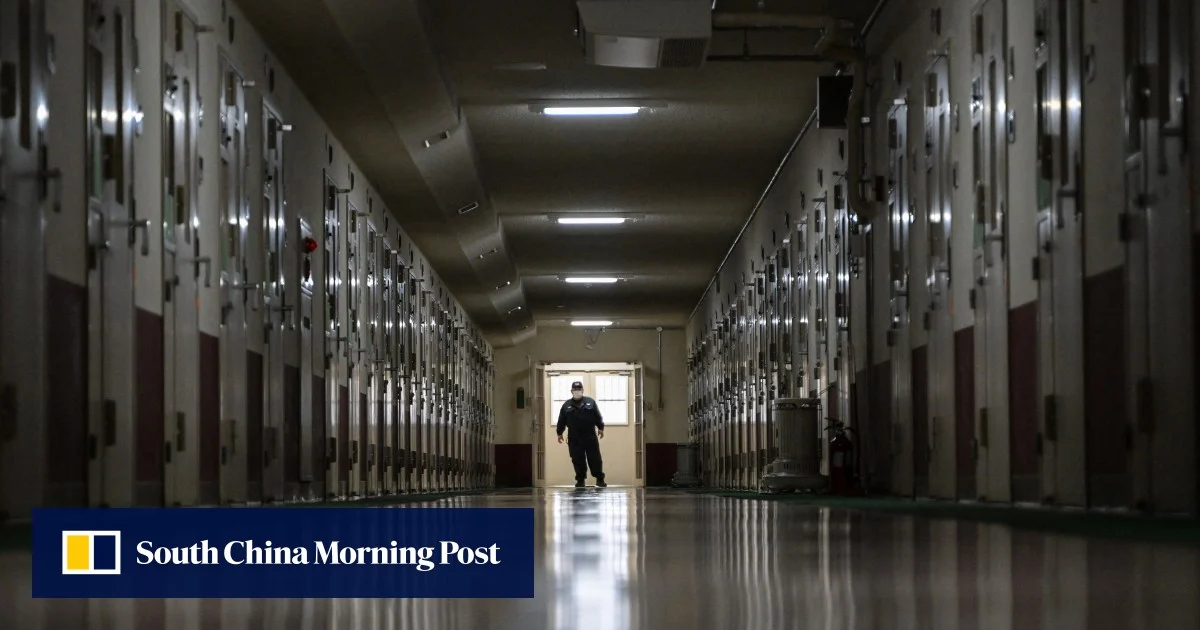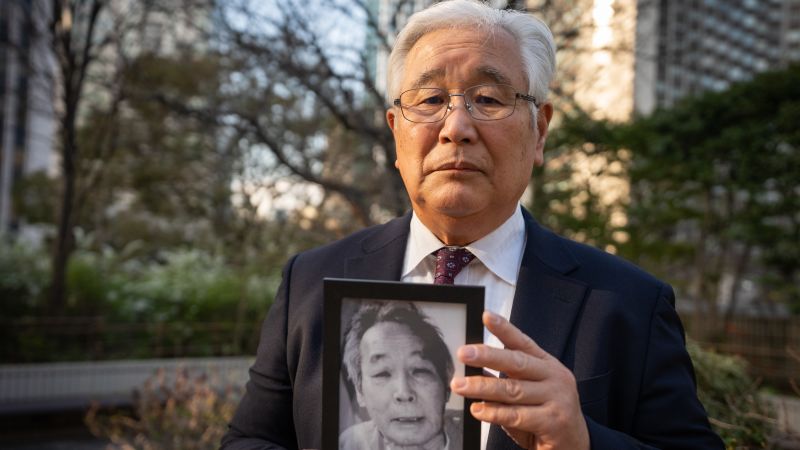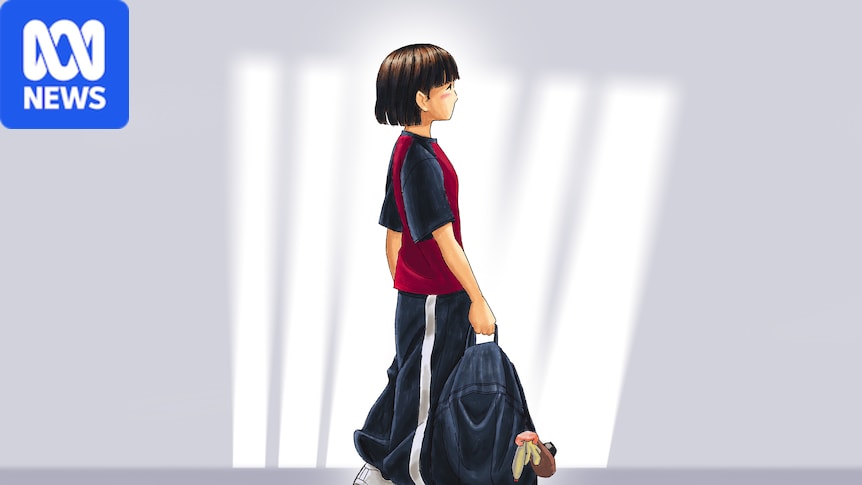
On an early morning last June, Nami* got a call telling her police were taking in her 16-year-old daughter, Runa*. It would be 18 days before she saw Runa again."I told the police that I'd be there within 30 minutes and asked them to wait for me," recalled Nami, a mother from the Hyogo region of Japan."The police officer said they understood, but by the time I rushed to the scene, my daughter was already gone. They'd taken her away."When Runa was released by police, she was emaciated and "unrecognisable", Nami said. Within five months, Runa was dead.Runa's time in detention and her death is now the focus of court action alleging she was a victim of Japan's "hostage justice" system, a term used by critics to describe the practice of holding suspects in prolonged detention while trying to secure a confession.The family alleges Runa's arrest was unlawful, and that she was so traumatised during her 18 days in a police cell she lost almost 10 kilograms and developed an eating disorder. She weighed just 20 kilograms before her death.Runa weighed just 20 kilograms before her death. Her family allowed this image to be released because it says she is unrecognisable at this weight. (Supplied)The case has now prompted a member of Japan's government to speak out, describing it as "unthinkable"."They detained her, extended her detention, extended it again … only for it to turn out she was innocent," MP Mori Masako, a lawyer and former justice minister, told the ABC.She is calling for reform, saying the country's 99 per cent conviction rate is "a lie"."Just think how many innocent people are included in that figure," she said. "I think [hostage justice] is a problem. I really do."'Mum, I want to see you'Last June, Runa, who worked at a disability care centre run by her mother, was arrested and accused of assaulting one of the clients four months earlier. Runa maintained she had gently pressed her hand against the person's chin to stop them biting and pinching others.Her mother was shocked by the accusation. "I told [police] … 'There's absolutely no way she did that,'" Nami said.Nami said she took evidence, including photos and witness statements, to the police station and "pleaded" with them to release her daughter, or "at least" let her see her. She called a lawyer to meet with and advise Runa. Runa was not allowed to see her mother, or her family, for the 18 days she was detained.In Japan, defence lawyers are not allowed to sit in on police interviews with their clients. Suspects are given a notebook, where they can write details for their lawyer to review.A page from Runa's suspect's notebook, in which she repeatedly writes about wanting to see her mother. (Supplied)The 16-year-old's notebook, seen by the ABC, sheds some light on her time in detention."I'm so shocked I can't eat, even though I haven't done anything," Runa wrote."Can things really turn out like this when I haven't done anything?"In her "suspect's notebook", Runa wrote down exchanges from her interrogations, as well as her own longings."Mum, I want to see you. I'm sorry. Thank you for everything," she wrote."I want to eat with you. I want to sleep with you. I want to go shopping too. I want to hug you."Japan's justice system allows for a person to be detained without charge for 10 days, if a judge finds there is a probability they have committed a crime and there may be a risk of them destroying evidence or fleeing justice. A judge can then extend the detention by another 10 days.Runa's notebook, her lawyer says, shows she was regularly pressured to confess during interviews."Do you want to go to a juvenile detention centre? How long are you going to keep this up?" she was allegedly asked."It's not like I'm trying to take down your mother's business. Don't cause your mum any trouble."Even though she couldn't see Runa, Nami visited each day, bringing books for her daughter."No matter how much we kept saying, every single day, that the child hadn't done anything and asking whether she was mentally OK in these circumstances, the police station refused to do anything about it," Nami alleges.The family says Runa was barely eating while she was detained. At one point, they say, she collapsed. The 16-year-old was briefly taken to hospital before being returned to custody."I headed straight for the hospital, thinking I'd be allowed to see her," her mother recalled."But even then, they wouldn't let me see her."After 18 days, the case against Runa was dropped and she was released.'Nothing but bones'Nami hugged her daughter when they were finally reunited."When I held her, she felt like nothing but bones," she said through tears."To be honest, when I held her, I genuinely thought she might die."Runa's sister, Mariko*, said: "When she came out, she was just crying her eyes out.""She'd been longing to see us," Mariko said. "She kept saying, 'I wanted to see Mummy.'"Notes from Runa's suspect's notebook, in which she wrote about wanting to see her mother. (ABC News)Runa's family said before being detained, she was a "very cheerful girl" who loved to crack jokes."She used to laugh so much, chuckle heartily and chatter away," Nami said. "But [after her detention] she'd stopped doing any of that."Mariko said her little sister had stopped smiling and struggled with eating. The family tried to get Runa to go hospital, but the 16-year-old pushed back."When I asked, 'Why don't you want to go?' she said, 'It's like a detention centre, so I'm scared; I might be restrained,'" Mariko said."No matter how much I told her, 'No, no, it's not like that at all,' it was completely hopeless."Court documents say before being detained in June, Runa had weighed 37.5kg. When she was released, they say, she weighed 27.7kg. Her weight dropped further in the months that followed.Runa was receiving home care, but in mid-December she lost consciousness. By then, the family says, she weighed just 20kg. She was taken by ambulance to hospital, but died the next day of cardiac arrest."I'd always believed she'd overcome it, as she's a stubborn and strong-willed child by nature," Mariko said wistfully.The family firmly believes if it weren't for her treatment in police custody, Runa would still be alive.Family suing over daughter's deathThe family is now suing the state for 109 million yen ($987,000), alleging Runa's arrest and detention were unlawful. Their lawyer, Sasaki Masahiro, said they would argue there was not sufficient grounds for Runa's arrest.He said the case was based on a single statement and "investigating authorities made no attempt" to gather any other "objective evidence".He also argues Runa did not meet the requirements for being detained: being at risk of absconding or destroying evidence."If a 16-year-old were to run away, where would she live? She simply couldn't do that, could she?" he said."When you consider whether there is any evidence that could be concealed or destroyed, the answer is no."Questions police allegedly asked Runa, as recorded in her "suspect's notebook". (ABC News)The statement of claim has been submitted to the court, but still needs to be processed before being delivered to the relevant agencies.Both the Kobe District Public Prosecutors' Office and the Hyogo Prefectural Police said they could not comment because they had not received the family's complaint yet.Hyogo's chief inspector General Hamada Kazuki was recently asked about the case by a prefectural government committee."As soon as we receive it [the complaint], we will carefully examine its contents and, after confirming the facts, present the prefecture's position in court," he said.Critics say it's time for reformHostage justice has been an issue in the country "for decades", according to Doi Kanae, the Japan director of Human Rights Watch.She said the 99 per cent conviction rate meant "the court is just a ritual" in Japan and "the investigative authority is the real decision maker".In 2023, Human Rights Watch released a report into the system, which found "suspects are frequently detained prior to trial for long and arbitrary periods, sometimes for up to several months or over a year, to obtain their confessions".It called for laws to be changed and an independent commission of inquiry into alleged cases of miscarriage of justice."Japan's criminal justice system is far behind what Japan should have as a very mature democracy," Ms Doi said."It is really the time for Japan to reform its system."There have been several high-profile allegations of hostage justice, including from former Nissan CEO Carlos Ghosn, Australian grandmother Donna Nelson, and former boxer Hakamata Iwao, who was acquitted in 2024 and awarded a 217 million yen payout ($1.96m) after spending 50 years on death row.Former Japanese justice minister, Mori Masako, has joined the calls for reform.She is still a MP and a member of the country's ruling party. But when she stood up in a recent parliamentary committee meeting, she spoke from a place of opposition.She said Runa "felt afraid", was "pressured to confess" and the "conduct was utterly inappropriate during the interrogation". She added that Runa's lawyer had lodged repeated concerns about her detention and the "prosecutor was fully aware" of concerning "interrogation conditions"."An innocent 16-year-old girl was arrested and detained on false charges, and lost her life," she told the meeting.Japan's Ministry of Justice has repeatedly rejected accusations of hostage justice and said it did "not force confessions by unduly holding suspects and defendants in custody"."In Japan, there are strict requirements and procedures stipulated in law with regard to holding suspects and defendants in custody, with due consideration given to the guarantee of human rights," it said in an online Q&A that addressed many criticisms of the justice system.Mori Masako, a former justice minister, has called for reform. (ABC News: Natalie Whiting)It said people had a right to remain silent in interviews, and that they could consult with a lawyer confidentially. In response to criticism of the country's 99 per cent conviction rate, it pointed to the fact Japan has a low indictment rate — about 37 per cent."In order to avoid imposing an undue burden on innocent people for being involved in a trial, prosecutors, in practice, bring indictments only if there is a high probability of obtaining a conviction," it said.When serving as justice minister, Mori Masako had defended the system against allegations of hostage justice, saying there were "appropriate procedures" and "basic individual human rights" were guaranteed.But she told the ABC her attempts to enact change while she was minister were stymied. She has broader concerns about harassment and influence in the justice system and has submitted a proposal to her party to establish a review team."I have consistently raised concerns about the way the prosecutor's office operates," she said.'It's not about the money'It could take years for the civil case regarding Runa's detention and death to make its way through the courts.But lawyer Sasaki Masahiro says the family and the legal team are prepared for that and aren't interested in settling."It's not about the money," he said.Excerpts from Mori Masako's speech to a parliamentary committee meeting. (ABC News)Mr Sasaki described the case as "the epitome of hostage justice" and said they wanted authorities to concede the prosecution and police acted unlawfully."Unless that happens, I'm absolutely certain we won't agree to a settlement, no matter how much money they offer," he said.Runa's family is still struggling to come to terms with her death. Her mother's only hope is that the legal action will "ensure that such things never happen again"."I truly believe that this trial will convey the message that the entire country and all its citizens must be protected," she said.*Names are pseudonyms.Illustration by Dylan Goolagong.
Teenage girl's death sparks calls to change 'hostage justice' in Japan
A 16-year-old girl's family alleges she was so traumatised by her time in a police cell, it killed her. Her case is now the focus of court action alleging she was a victim of Japan's "hostage justice" system.
1,939 words~9 min read