After having a full household for almost two decades, it can take parents years to adjust to an empty nest when their children leave for university or a first job. Even those who miss the bustle and company may at least rejoice when the grocery bills plummet, they have more space for hosting and there’s no further need to nag an adult to do their own laundry.But in a worrying phenomenon, many are seeing their 20-something children forced to move straight back in after graduation.Sky-high house prices, climbing unemployment and sticky inflation have left hundreds of thousands of young adults with little choice.One in three 18- to 34-year-olds were living with their parents last year, equivalent to almost five million young people, according to official figures.Last week, Prime Minister Andy Burnham pledged to curb the rise in young Neets – those not in education, employment or training – which stands at more than one million.However, even those who have managed to bag one of the rare graduate jobs on offer are often working from their childhood bedrooms to save money, as first-time buyers now shell out £226,000 for their home on average, according to comparison website Finder.While some parents may be delighted to have their children back, others may long for a quiet home and want their children to stand on their own two feet.The finances can become a minefield, and it can be difficult to start demanding rent from grown-up children for the first time. Many parents are seeing their children return to the nest straight after graduating from universityBut how much extra does it really cost to have them at home, what rent would be fair to charge and what is the best way to help them start living independently? Wealth & Personal Finance crunches the numbers and asks professional financial planners. Work out how much it costs to keep them at homeCalculations for The Mail on Sunday by wealth manager Quilter found that it costs £3,246 a year in food, energy and water bills to have an adult child living at home.This includes an extra £2,421 a year on food, including groceries, takeaways and meals out.Water bills vary by region but the number of people living in a home can have an impact, too.The average two-person household spends £832 a year on water, which rises to £988 with one extra person at home, according to data from Southern Water.Parents will also fork out an extra £669 a year on energy bills, under the current Ofgem energy price cap rates. This is based on a household moving from medium energy usage to high when a child moves back home.It means that if one child lived at home from ages 18 to 34, you’d spend an extra £55,187 over that time. So where should parents who want to address this cost start?Time for a difficult conversationAsking your child to think seriously about their next steps can be a thorny conversation, but there are ways to make it easier. Having an adult child at home requires an extra £2,421 a year on food, including groceries, takeaways and meals out, according to wealth manager QuilterCatherine Morgan, a financial coach who hosts the It’s Not About The Money podcast, says: ‘Timing is really important. In an ideal world, you would start having these conversations a good period of time before they actually need to happen, so it’s not a surprise.‘Park the conversation for the weekend when you’re not rushing around and feeling stressed. Money is very emotive, naturally, so you need to make sure you’re chilled out over dinner, perhaps.’In this conversation you can assess your child’s appetite for moving out, and talk to them about how to get there.They will need to save up enough for a deposit to rent a property or to buy one. This may involve a combination of savings products, including cash individual savings accounts (Isas).Savers can funnel as much as £20,000 a year into one of these wrappers – £12,000 from next April if you’re under 65 – and earn interest free of savings tax.Or if your child plans to buy a property for less than £450,000, they can take advantage of the Lifetime Isa.These allow first-time buyers to funnel up to £4,000 a year into cash or investments and reap the benefits tax-free. Plus, the Government tops up their annual saving by 25 per cent, which helps them reach their goal faster.A stocks and shares Isa is unlikely to be the best option. While long-term investment growth typically far exceeds the returns you receive on cash, investments should be left alone for least five years to ride the waves of the stock market.If they don’t have much saved, it may be a while before they can buy their own home – unless you help with a deposit or a mortgage.Even then, you should aim to set a clear timeline with specific goals or there is a risk your child will get used to a free ride at home.Nicholas Mendes, of broker John Charcol, says: ‘The most successful cases I see aren’t ultimatums – they are a plan the whole family signs up to, usually six to 12 months out.‘The plan can break down if parents keep paying for everything indefinitely instead of directing that support towards a deposit or a mortgage structure that moves things forward.’Savers may need to be encouraged to moveChildren who are saving may still need encouragement – just in a different way.Morgan says: ‘Natural savers struggle with making the decision to move out. They might say, “It’s not the right time to be buying.” ’In this case, they need permission to move rather than pressure, so Morgan says to try using phrases like: ‘You’re closer than it feels. Shall we put an actual date in to start viewing places?’Or even try, ‘What’s stopping us aiming for the spring? You may already have more than you think.’In the meantime, charging rent makes sense if you need to. But if your finances are buoyant, charging rent for a young adult who is saving could hinder their plans.Morgan says: ‘If they are already doing the work, adding rent on principle can work against the goal you both share.’Charging rent may give the right pushFor children who aren’t keen to move out, charging rent may be the push they need.If you charge £300 month in rent while they could rent a room in a shared house with a friend for £500, they may feel that the extra £200 a month is worth it for their own space and independence.You could go a step further if your child is working in a full-time, well-paid job by asking for market rate rent, which is likely to push them to get their own place.One option that could help them in the long run is to charge rent and stash all or some of it in a savings account to give them when they are ready to move out.Morgan says: ‘Charging rent works best with a plan and conversation. On its own it can create a resentful tenant.’Try dipping in to your own pocketIf you want your home back as soon as possible, or your child is planning to buy in London or the South East, you may need to dip into your bank account to speed things up.Gifting money for a deposit is the most common way parents and grandparents help young adults on to the property ladder.The average first-time buyer deposit in England is £63,855, so it’s no wonder over half of first-time buyers were given money to get on to the property ladder, according to estate agency Savills.Take a young adult who wants to buy a home worth £200,000. They’ll need £20,000 for a typical 10 per cent deposit.But if they have just £10,000 saved and can only afford to put aside £300 a month, then it would take more than two-and-a-half years to save enough.You can gift money to speed this up – and in most cases it does need to be a gift rather than a loan, says David Hollingworth, of broker L&C Mortgages.Some lenders may be more forgiving, he explains, but a loan can affect how much your child can borrow. As your child will need to make repayments to you, the lender will factor these in when it calculates their affordability, which means they may not be able to borrow as much.Lenders typically require a letter to confirm that the sum is a gift and that it doesn’t give you any rights over the property. You’ll need to declare that you don’t expect the money to be paid back.Morgan isn’t a fan of gifted deposits, as she says it doesn’t teach young adults about the reality of money. She adds: ‘The implications of this financial rescuing are that it removes personal accountability. You want to do the best for them. But gifting the deposit removes the ability to build financial resilience.’Or you can help by joining their mortgageIf your child manages to build a deposit but still doesn’t earn enough to meet a lender’s strict affordability assessments, then you could consider helping with their mortgage.This is different to gifting money and typically involves you joining the mortgage in some way – but it can be a risky option for parents.The most common is a so-called joint buyer, sole proprietor (JBSP) mortgage, which means your income can be considered as part of your child’s assessment.A buyer can typically borrow around five times their income.It means that on a £300,000 house, they need a £30,000 deposit (10 per cent). To borrow the remaining £270,000, they’ll typically need to earn around £54,000 – a high sum for a young adult.If they earn £30,000, they may only be able to borrow as much as £150,000 for their first home. But if they sign a JBSP mortgage with a parent who earns £40,000, they may be able to borrow £350,000.But if your child stops making payments, you’ll be liable – and you still won’t gain any ownership in the property, so it’s vital you take legal advice.Mendes says you should agree an exit plan from day one. ‘This should never be treated as permanent but you should factor that liability into your own future borrowing or retirement plans.’ Our daughter pays us £50 a week Paul O’Brien, 50, and his wife Lorraine, 45, of Uxbridge in west London, have plenty of experience of adult children living at home.The close-knit family were brought closer by the tragic death of their son Jake, 26, who died last October after battling cancer for a decade.Their youngest child, Lily, 22, lives at home after completing qualifications to become a dental nurse. Their son Adam, 25, is posted abroad in the British Army, while Ellie, 23, joined the RAF following a degree at the University of Bristol.Civil servant Paul says he didn’t hesitate to ask for rent from Lily. He says: ‘Family is everything to us, but we want the children to stand on their own two feet. When I asked Lily to contribute £50 a week for bed and board, she was not happy. Many of her friends do not pay to live at home so she thought it unfair.’He adds: ‘We chose £200 a month because it is just enough for her to know that rent and meals are not free. But even though she is only starting on a basic wage of £25,000 a year she still has enough left to go out and enjoy herself and save for the future. She is also no longer grumbling as she understands the cost of living in London.’The couple have arranged for Lily to pay the money as a monthly standing order, so she is used to cash leaving her account automatically.Paul adds: ‘If we go out for a meal as a family there is no question of splitting the bill. They know we are happy to support them. But they need to understand there are bills that must be paid and learn the challenges of budgeting.’The O’Brien family say the support of the Teenage Cancer Trust and Great Ormond Street Hospital were vital in supporting Jake in his fight against lymphoma. The O’Briens, from left, Adam, Jake, Lorraine, Ellie, Lily and Paul, in one of their last photos togetherOther readers, such as Sam McHugh, say they too asked their children for a contribution. Sam says her two eldest moved back home after university and her daughter paid £200 a month while working and saving to live with her partner. Sam’s son, who wasn’t working and was on universal credit, paid a lower amount, £120.‘You do what you can for your children but without them my food and utility bills were lower,’ she says.Another reader, Tracey Suckling, wrote: ‘I couldn’t think of anything worse than still living at home in my 30s – and was gone by my late teens. But up until a couple of years ago I had both adult sons living at home, now aged 33 and 30 – plus the younger son’s girlfriend.‘The youngest and his girlfriend paid £200 a month while my eldest insisted on £200 as he earned more. They bought and cooked their own food. Now both have saved to buy their own homes.’And reader Diane Dingle wrote: ‘When my son got his first job in 1998, I said to pay £10 per week [for living at home] and to save £50. When he got a pay rise, he raised the amount he saved. Thanks to this he saved enough for a deposit on a shared ownership house at age 27.‘Budgeting should be taught at school and parents must help their children.’ What is your experience of living with grown-up children?Let us know: lucy.evans@dailymail.co.uk
How to get your grown-up kids OFF the family finances
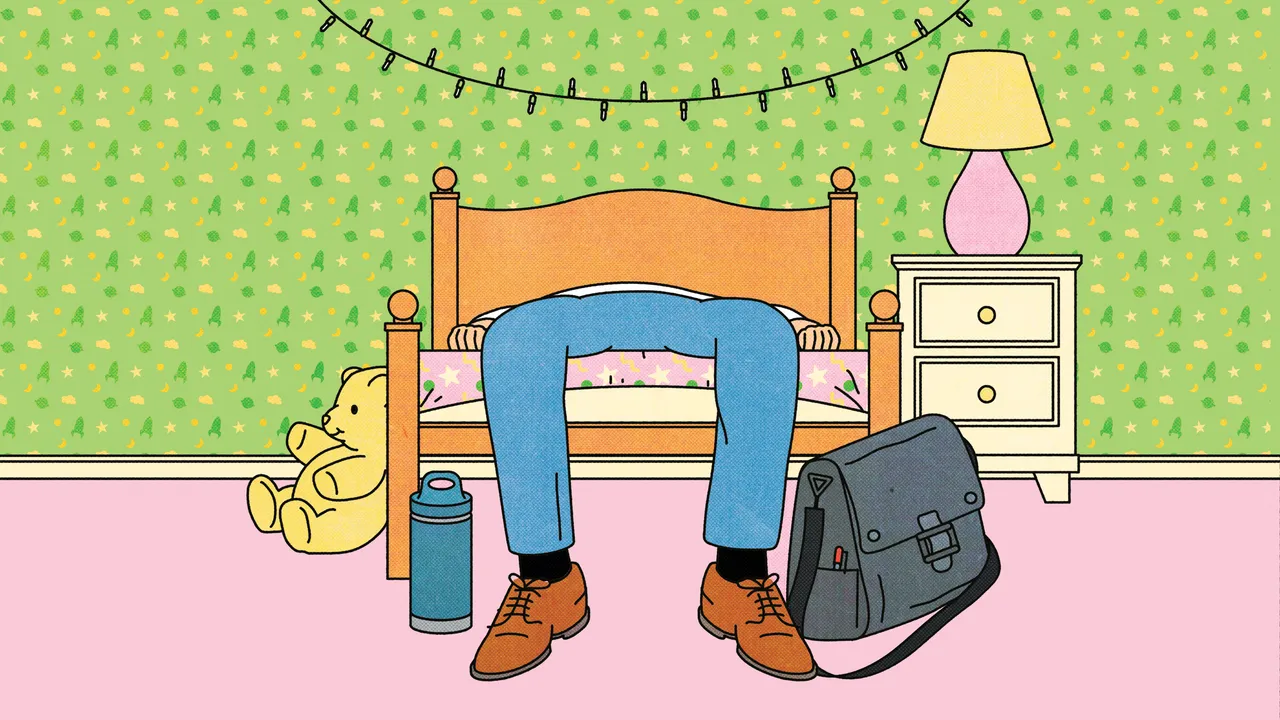
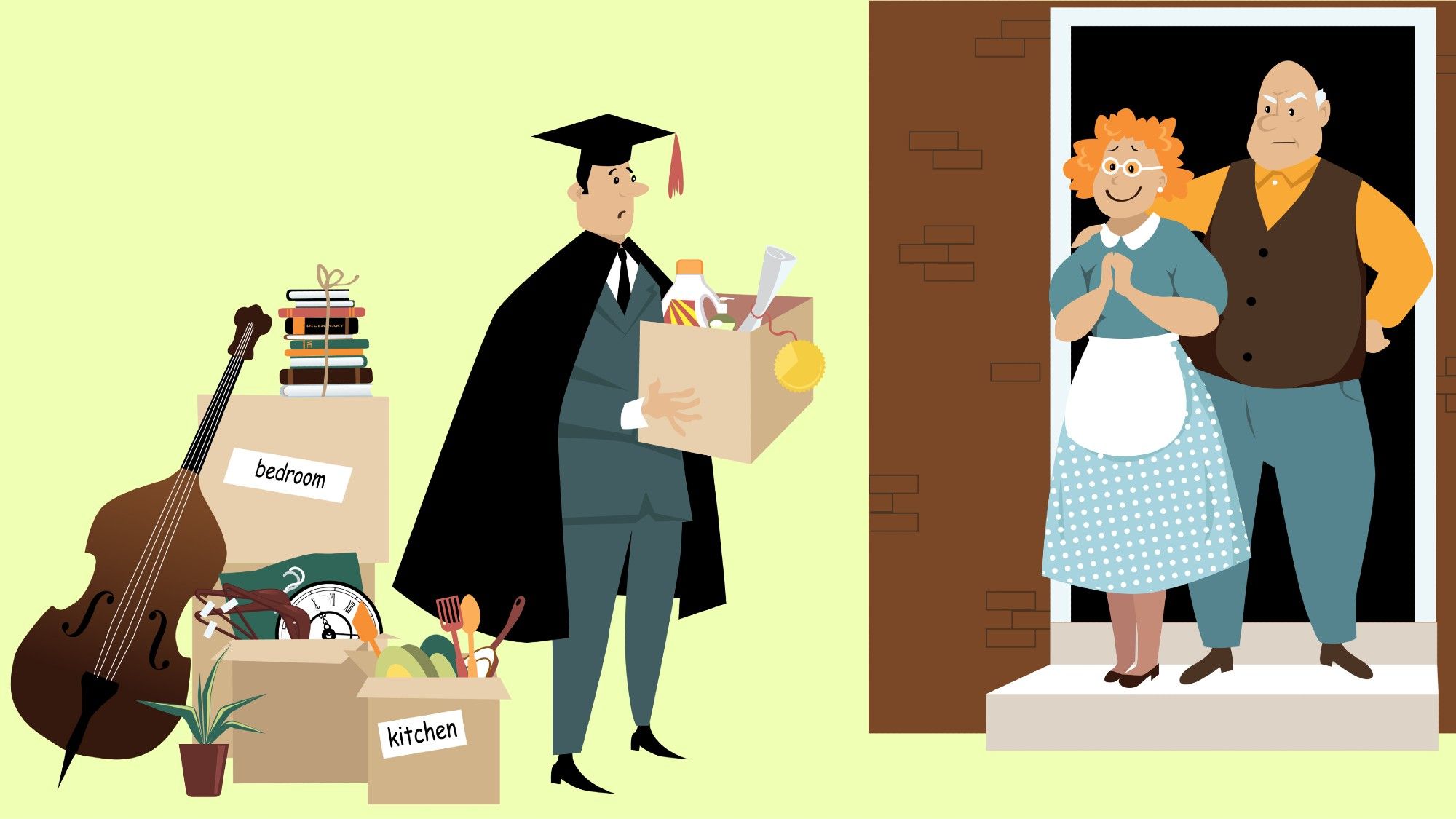
In a worrying phenomenon, many parents are seeing their 20-something children forced to move straight back in after graduation.
2,290 words~10 min read