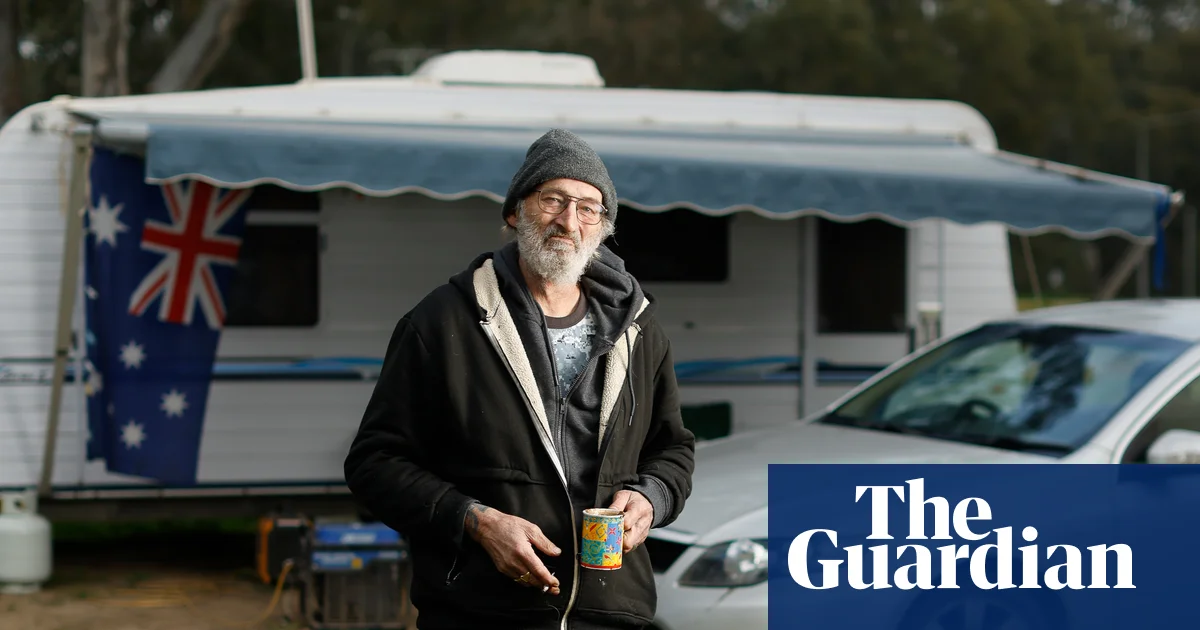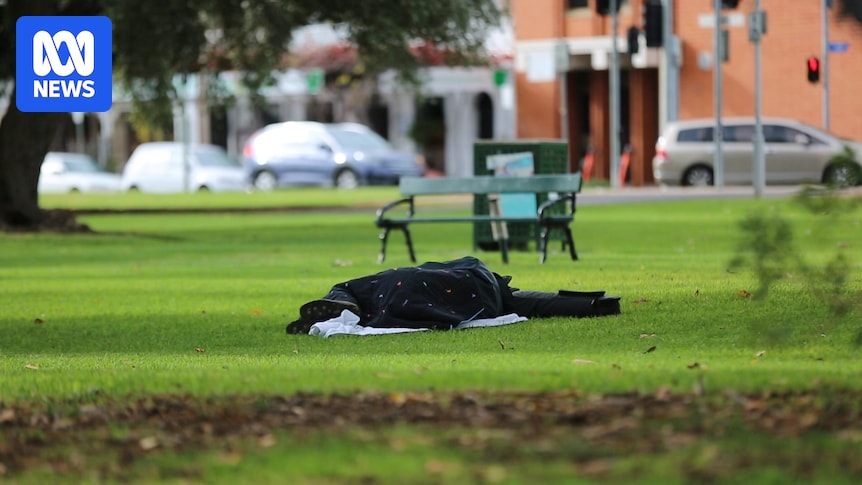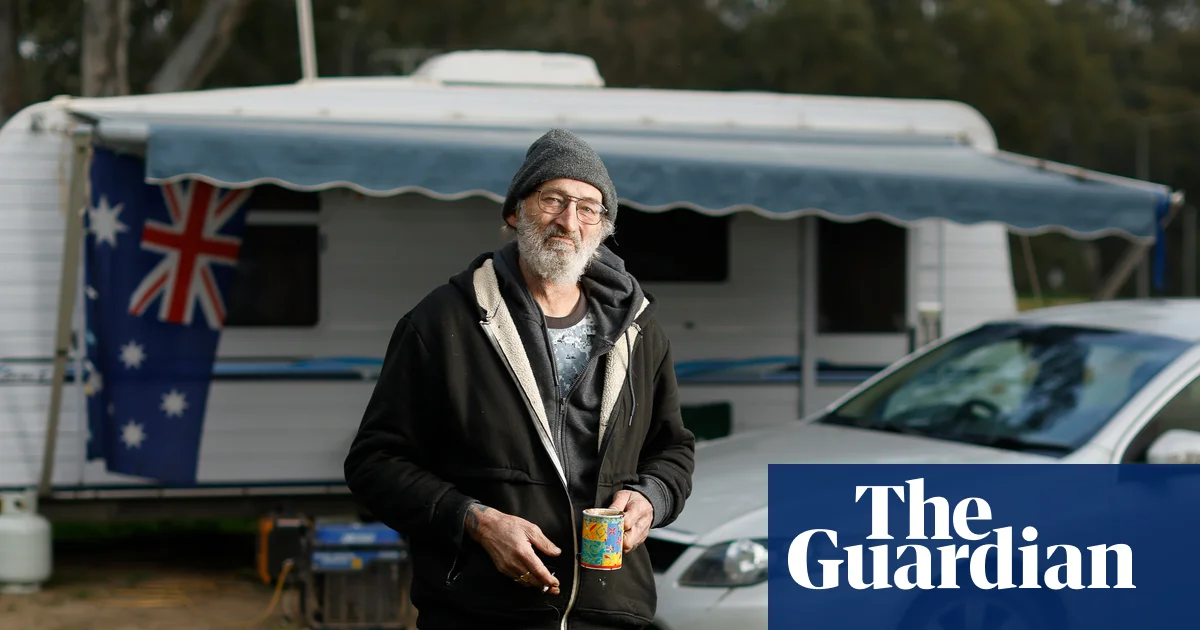
Leigh Swansborough has just pulled into Wilks Park, one of the biggest homeless encampments in regional New South Wales.“You would think that people would be here today,” says Swansborough, an advocate for the people at Wilks Park. “But no one has shown up.”Tuesday was meant to be D-day for residents at the camp in Wagga Wagga. Compliance action requests – eviction notices by another name – had been given out by the council, asking those living there to move by 28 July or face a $1,100 fine.The encampment has been in the headlines since May, when a newborn baby died just 300 metres away on the riverbank after their mother gave birth in a tent.Almost three months later, the response to the growing crisis is fractured and confusing. The community is divided over how to manage the camp. Some, like Swansborough, have jumped in to help. Others side with the council: clear them out.This is the housing crisis in regional Australia. Once-affordable towns and regional centres have drawn in newcomers escaping the soaring house prices of the cities, in turn driving up local prices. Rents have soared, vacancy rates have plummeted, homelessness has grown and services are stretched to breaking point.Council reprieve and community helpIn Wagga Wagga, a small group of concerned citizens have stepped in to help – effectively acting as quasi social workers. They’re dropping off food, making sure people get to medical appointments, setting up meetings with Centrelink, visiting people in hospital, and one is even housing a resident.“We had hoped that there’d be a definitive moratorium on not moving people on,” Swansborough says. “But we still aren’t sure or positive that they would keep their word. So we all showed up.”Instead of a moratorium, the residents of Wilks Park who had been issued with a move-on notice were granted a brief reprieve. At a council meeting on Monday night, less than 12 hours before the residents were due to be kicked out, Councillor Richard Foley successfully moved a motion to delay the evictions.‘We all showed up’: advocate Leigh Swansborough speaks at Wilks Park. Photograph: Hilary Wardhaugh/The GuardianSo on Tuesday morning the handful of people left in the park were going about their business. Kim, an 82-year-old with dementia, was feeding the birds. Lincoln had started a fire for some to sit around. One young woman, in severe distress, was calling her mother, the police, an ambulance, anyone for help. Swanborough was with her, doing what she can.JJ was cooking up a meal with food dropped off from OzHarvest. She and her partner had lived in the camp for 14 months before they moved a week ago.“I packed up because I don’t want to have any problems,” she says.The 68-year-old has been homeless and living on the road for six years after rental prices in Sydney started going up beyond what she could cover with cleaning and kitchen work. They moved across regional NSW, eventually making Wilks Park home.JJ was a long resident sleeping rough at Wilks Park and now visits residents to help them. Photograph: Hilary Wardhaugh/The GuardianLike many former residents, JJ moved out of the park to avoid the fine. She’s now parked at Narrandera, about 100km away, paying $300 a week to camp.At Wilks Park, JJ was known as the manager. You needed a cup of tea? A meal? Help late at night? To know the right person to call? She had it covered.“We’d call it JJ’s kitchen,” she joked. “Some people come from Canberra, some people come from Brisbane, for the cup of coffee – but it was only in my tent.”Between cutting up meat and putting out bread rolls, she explained that she comes back to help. She was the only resident from the camp to speak at the council meeting on Monday night – and not a single councillor asked her a question. Another woman, who told the meeting she was worried about parking on her street if a church developed their Sunday school, was asked seven.“I want to fight with the council,” JJ says. “Housing NSW, they say they’ve got a house for these people, but so far they’ve got nothing for them. They are all talk, no action.”Life at Wilks ParkJohn, 38, is staying put, undeterred by the council’s repeated eviction notices. Because of his dog, 18-month-old YouWin, he can’t get into a motel.“I feel like I can stand my ground, or go into a motel, but if I do, what happens to little miss? She goes into a home or possibly gets put down,” he says. “She’s my support animal, therapy, the whole nine yards.”John with his dog YouWin at Wilks Park. Photograph: Hilary Wardhaugh/The GuardianAsked what would help, John says flatly, “more homes”. But until they arrive, he’s stuck waiting on the social housing list, hoping not to be moved on.“They said they had something for everyone. I’m part of everyone. Indefinite [accommodation] for people with dogs? Yeah, great. But otherwise, don’t pull wool over people’s eyes.”A few tents down, Mark has set up his caravan. He is tall and articulate; between puffs of his rolled cigarette, he punches the air with jokes, winking when they land.Asked if he would go into a motel, he says he would prefer to “die on my feet with a smile on my dial, and be beholden to nobody”.“I don’t like to ask for help because I have in the past and been knocked back,” he says.Cockatoos perch on trolleys at the encampment. Photograph: Hilary Wardhaugh/The GuardianHis dog is walking around his legs, waiting patiently for him to kick a toy. She also wouldn’t be able to go into the motel. And Wilks is close to central Wagga, where Mark, who is on the disability support pension, can get to his medical appointments.“If it’s offered, that’s lovely, that’s wonderful. I’ve got the option of politely declining, which I’ve done. I don’t need assistance as long as I can get to my feet and get to that car.”‘A desperate shortage of homes’The expected wait time for social housing in Wagga is now between five and 10 years, and the town’s biggest social housing project – Tolland estate – won’t be completed until 2030. The number of dwellings went from 1,449 in 2021, to 1,310 in 2025, while priority waitlist applicants went from 17 in June 2021 to 102 in June 2025.Dom Rowe, the CEO of Homelessness NSW, said Wagga was “suffering from a desperate shortage of homes”.“The city has recorded the fastest increase in priority social housing demand anywhere in NSW, rising 500% in just four years, while median rents increased by 41%,” Rowe says.“That is what happens when the cost of private housing races ahead but the social housing safety net does not grow with it.”The NSW housing minister, Rose Jackson, who visited Wagga and set up an emergency taskforce after the baby’s death in May, promised the delivery of 12 prefabricated modular homes starting in June 2026. Four have arrived.Instead, the government’s “last resort”, putting people up in motels, has become its only answer.Lived experience helper Angelo visits Wilks Park. Photograph: Hilary Wardhaugh/The GuardianThe messaging is confusing. Council has said the state government has temporary accommodation for everyone. But while they have also said they won’t move on anyone who doesn’t have stable housing, they have sent out eviction notices.“The decision to live in accommodation which is being provided by the government is ultimately a matter for the individual, however the public park is everyone’s space and at some stage Council will look to exercise the regulatory provisions which apply to these public places,” the Wagga Council general manager, Peter Thompson, said.“It has, however, made it clear that this will not happen if the person sleeping rough has no government provided accommodation to go to and it will also not happen if those people are engaging with government to identify accommodation which is actively being provided to them.”But some have been knocked back from motels, community organisers say. Angelo drove one man to a motel where he was turned away, because he “had too many bags”.“He had four little half-full shopping bags,” Angelo says. “He was ecstatic in the vehicle as I was driving him out there, that he was going to get to have a hot shower and jump straight into a warm bed.“And then looking at him as the person from the hotel was saying no, seeing him break. It was terrible to watch.”Others are grateful to be in a motel, imperfect though it may be. Young couple Krystal, 20, and Jamie, 24, are paying about $180 a week for Ubers back and forth from their new motel room to town; the microwave doesn’t work so they’re stuck with two-minute noodles, and it’s small for two. But it saved them from being in the park.“If it didn’t happen, honestly, we would have just sat at hospitals,” Krystal says.“Because after my terrifying experience last year … where I spent seven months homeless on the river … I would never, never, ever do that again.”Jamie and Krystal outside their motel room. Photograph: Hilary Wardhaugh/The GuardianIn the past five weeks, the pair say they have applied for 600 private rentals across the country, but haven’t got a single one. Jamie is on jobseeker and looking for work; Krystal has a casual job in town. With no rental history and small incomes, the pair can’t get into the private market.The average weekly rent in Wagga has jumped 59.3% in the past decade to $550 – while jobseeker pays as low as $740 a fortnight.“We’ll work our asses off,” Jamie says. “And own a house, eventually. Our kids will never have to deal with this type of situation because I would hate for them to go through this.”Jackson told Guardian Australia the state government was “addressing growing homeless encampments in the community because of the clear evidence they weren’t safe – for the people living there and the broader community”.“I’ve always said that hotels and motels should be a last resort,” she said. “Purpose-built crisis accommodation is always preferable, because it comes with those wraparound supports that help people get back on the path to stable housing.She added that the government had allocated a combined $230m to responding to homelessness and “have actively invited Wagga community organisations to be partner with us in accessing this funding”.Back at Wilks Park, Swansborough has spent the day making calls to the hospital to check on the distressed young woman who left the camp in an ambulance.The next morning, she has a long list of things to do: locate that young woman, who police took from the hospital and dropped off outside Wagga’s only homeless shelter at midnight; check in on another young woman who is pregnant; organise a food drop; give someone a lift to a medical appointment; and check on a man living further in the bush because no one has heard from him.“Homelessness is a serious issue in Wagga,” she says. “It hasn’t been addressed. It’s been disregarded and dismissed. And the response from council and the state government has been one that’s more punitive than therapeutic and leading with compassion.”
At Wagga’s camp for rough sleepers, locals step in to help as authorities flounder
People at the Wilks Park encampment were told to leave or be fined $1,100. But their only option is indefinite stay in local motels – and the social housing wait list keeps growing
1,857 words~8 min read