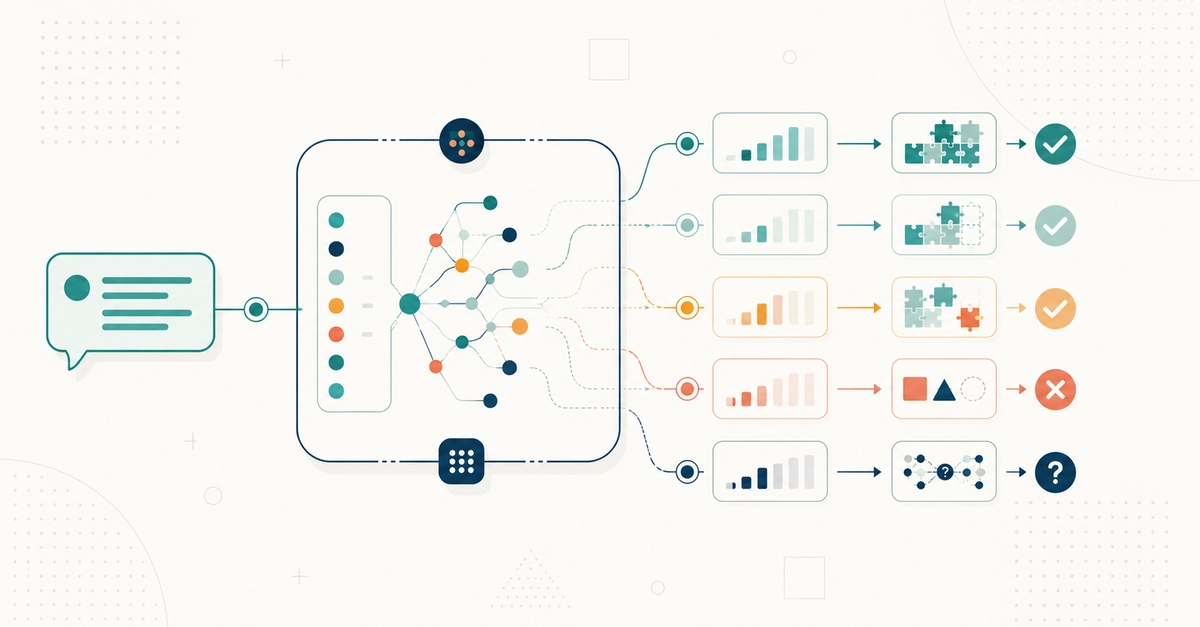
As we have seen, models are conceptually quite simple: a list of input messages goes in and the model predicts the next token repeatedly to form the output message. It can't reach the internet or your database or Slack. And it cannot reliably do arithmetic or (cringe example incoming) tell you the number of r's in 'strawberry' - remember from part 1 that it never sees the letters, only token IDs.
In that sense, the model is like a brain without a body. It can reason through a problem, describe the steps to take, even recite all of Shakespeare. But without a body, the model cannot perform any action. This is where tools come in, and making them is very much like normal software engineering.
What a tool actually is
Tools are just functions or methods in a programming language. How tool use works under the hood depends on the model, but let's walk through it conceptually. It starts with a catalog of tools that the model can use, often a json list. In the API you pass this catalog as a separate tools parameter and the provider injects it for you:
[