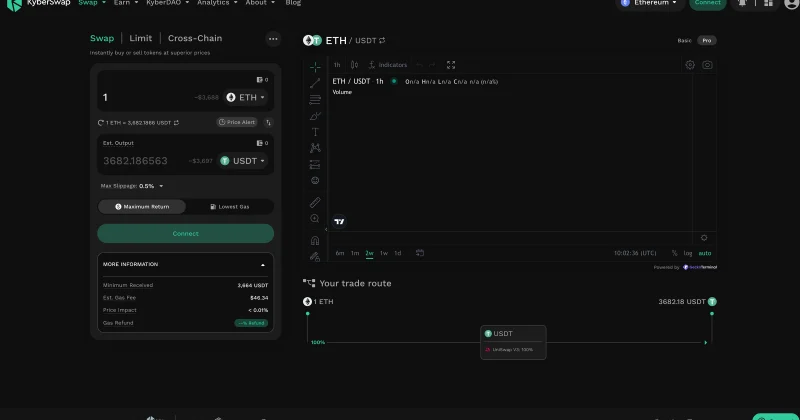
Across the Decentralized Finance (DeFi) ecosystem on Layer 2 networks (such as Base, Arbitrum, and Optimism) and the Ethereum Mainnet, the vast majority of DEX aggregators suffer from the exact same architectural flaw: the code that prices your trade is NOT the code that executes your trade.
Quoting is typically generated by off-chain TypeScript approximation formulas or math SDK replicas. Execution, on the other hand, runs directly against the live smart contract bytecode of liquidity pools. The moment a dynamic fee changes, a Stableswap curve shifts its invariant, or a concentrated liquidity tick exhausts its book, simulation diverges from on-chain reality.
The user pays the difference in execution drift and hidden slippage.
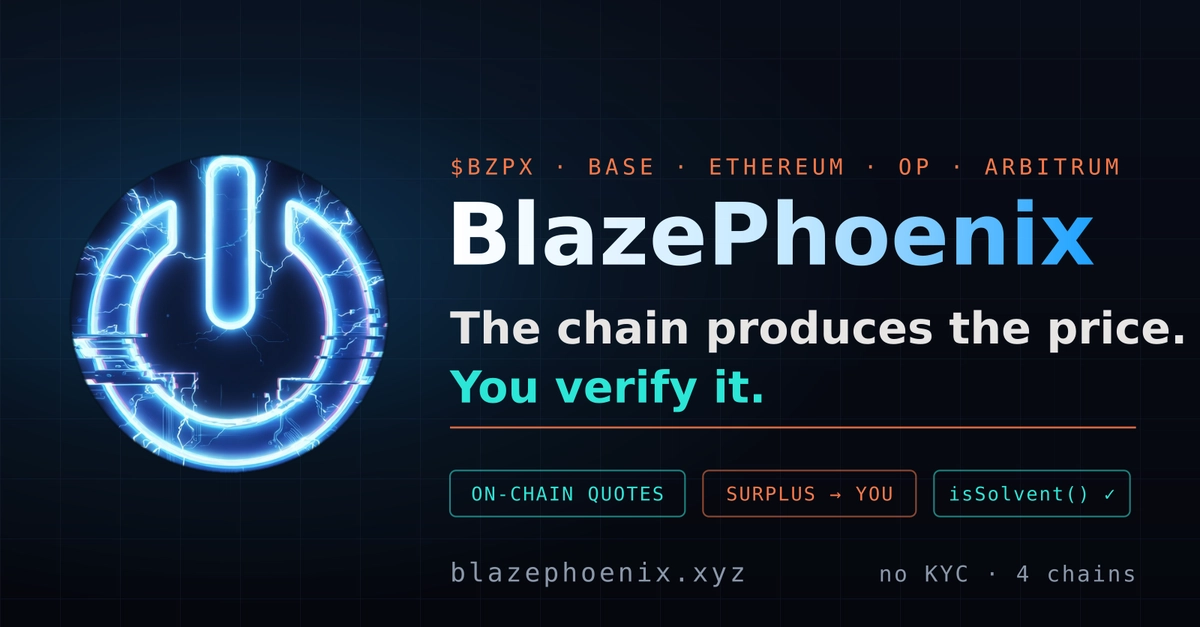
With the BlazePhoenix protocol, we structurally deleted this entire class of bugs. Below, we break down the mathematical and computational architecture of our smart contracts
(BlazePhoenixCore, BlazePhoenixSolver, BlazePhoenixRouter, BlazePhoenixQuoter, and BlazePhoenixHub).