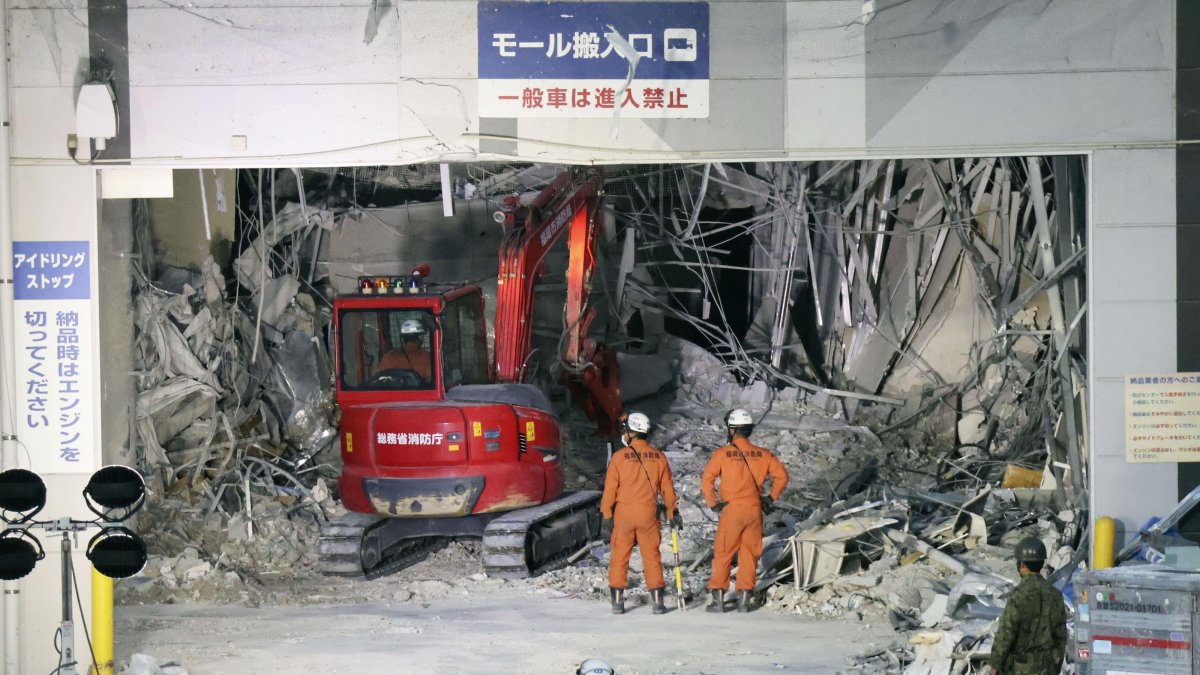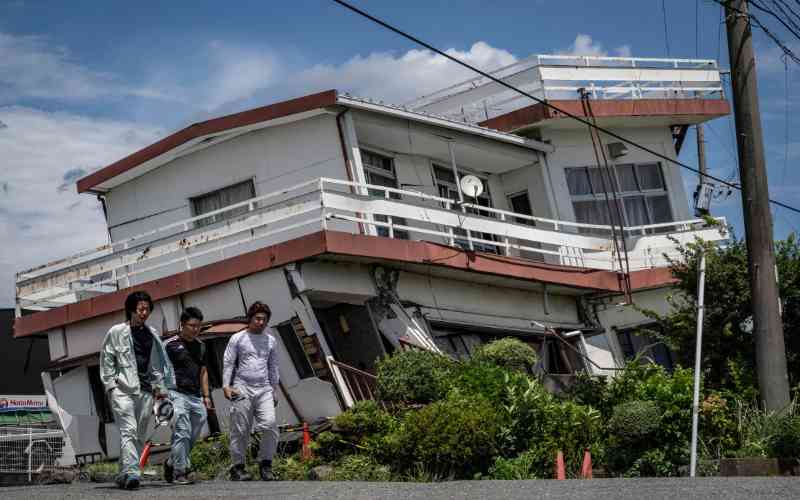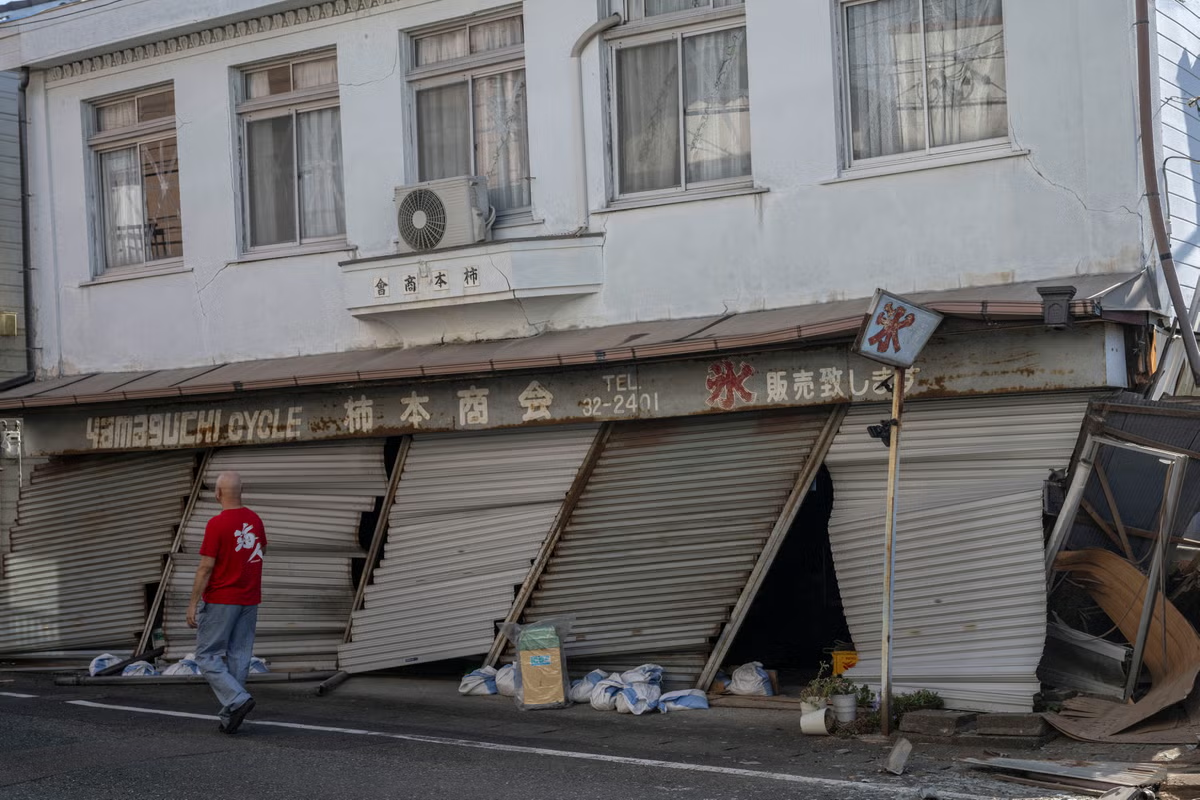
Thousands of survivors of a powerful earthquake in southwestern Japan spent Friday in crowded shelters or sleeping in cars as they faced shortages of water and fuel, and punishing summer temperatures that stoked fears of heat-related illness.The death toll rose to 34, the Kumamoto prefectural government said, as rescuers raced to find those still missing after the quake triggered a mall explosion, toppled a factory chimney and flattened homes.Japanese Prime Minister Sanae Takaichi said authorities must secure water supplies by doing “whatever it takes” and called for close coordination with the military and other relevant agencies.
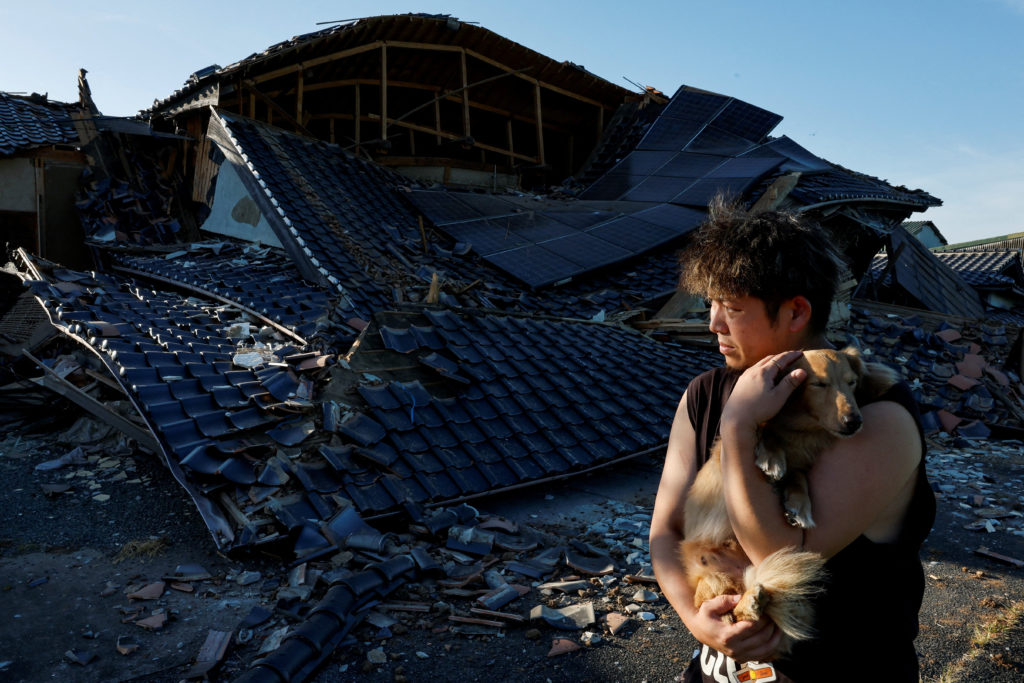
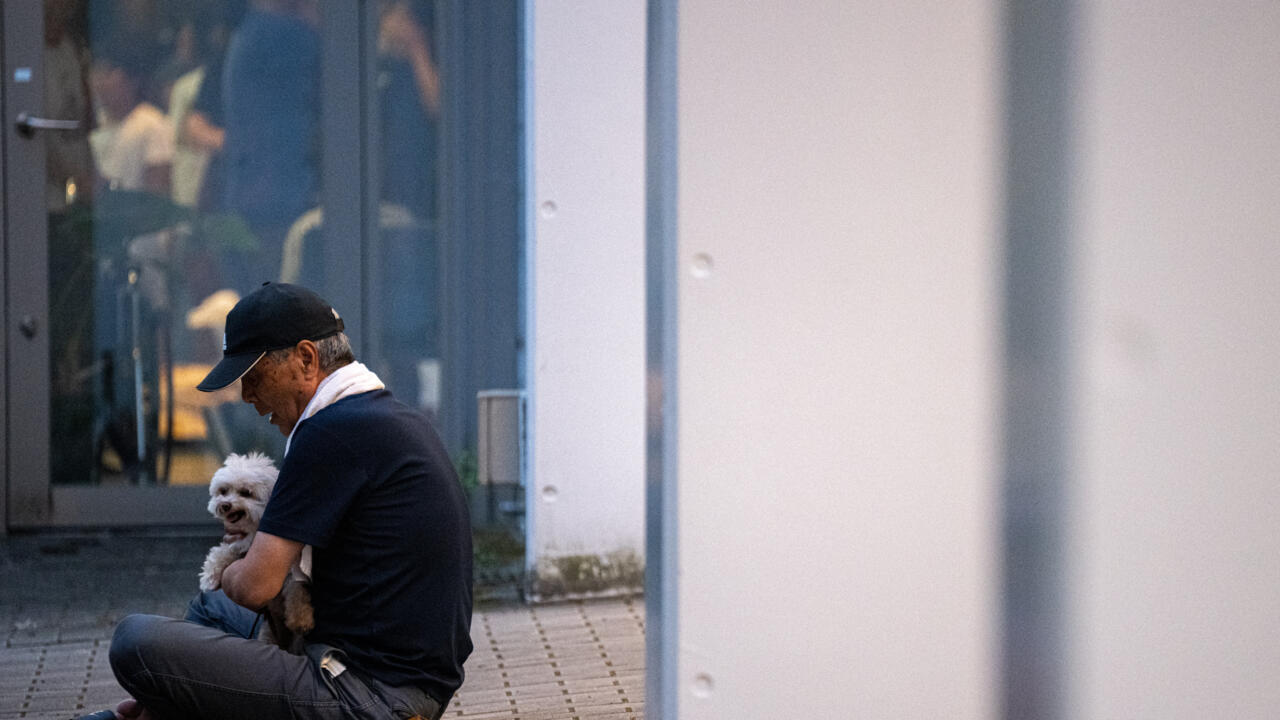
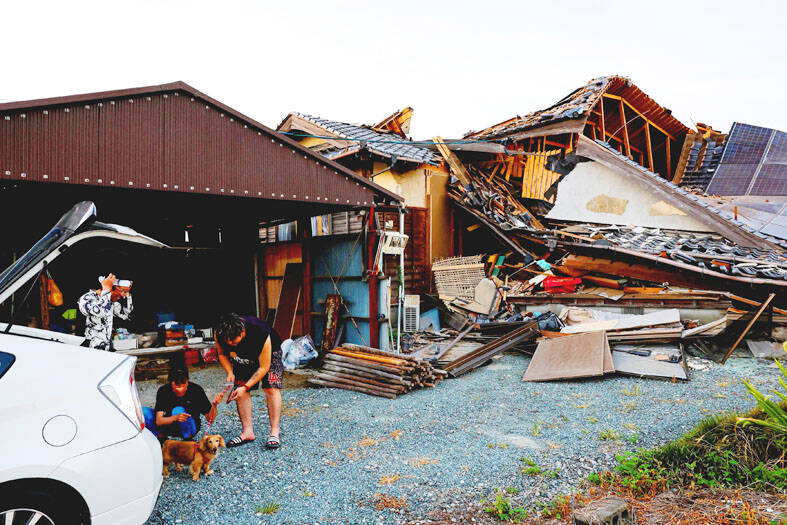
The Kubo family on Friday groom their dog, Miku, next to their car, in which they currently reside, after their house collapsed in an earthquake that struck Kumamoto Prefecture, Japan, this week.
The earthquake left thousands of homes without power, but electricity was fully restored by Friday evening. The local power company said there were no immediate reports of remaining outages.
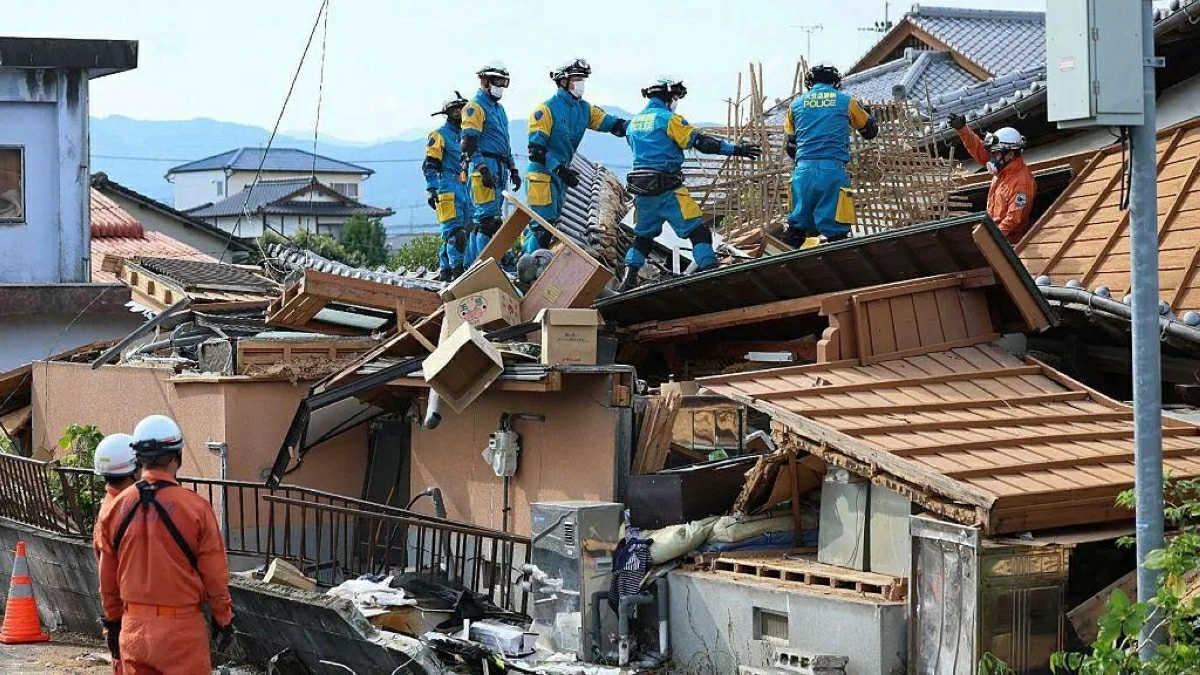
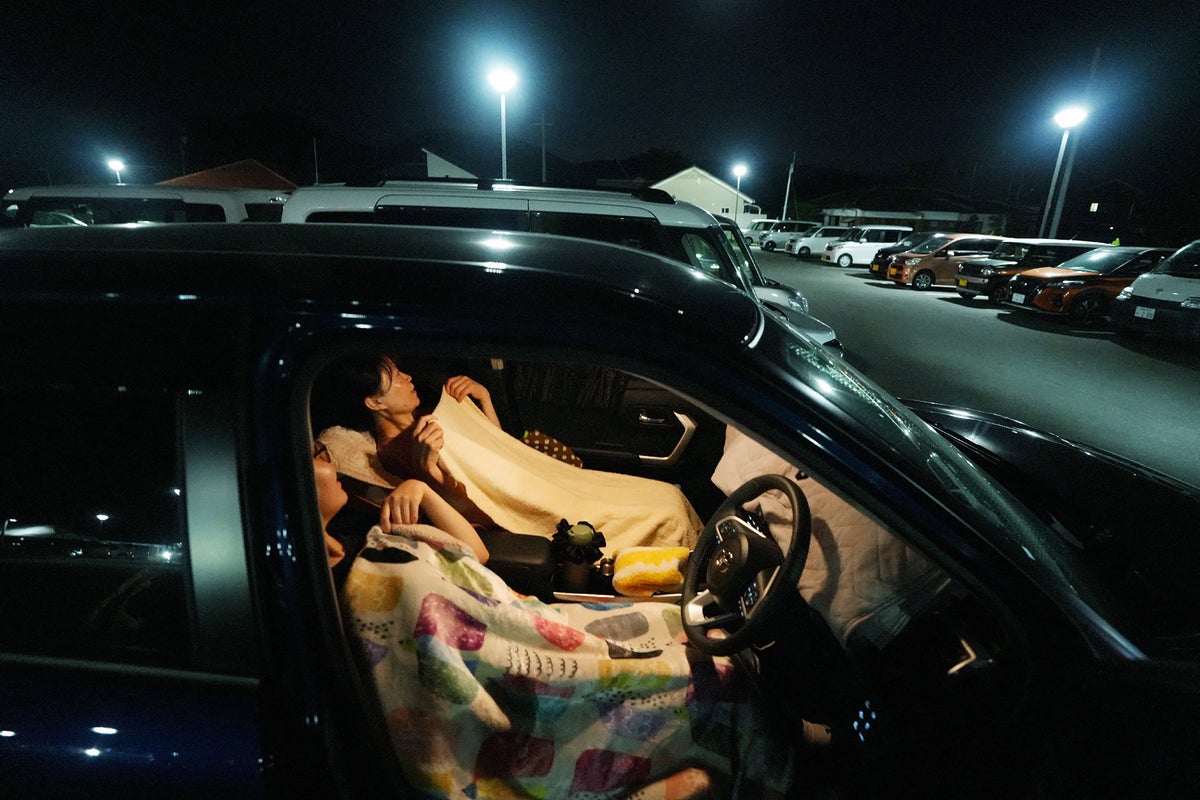
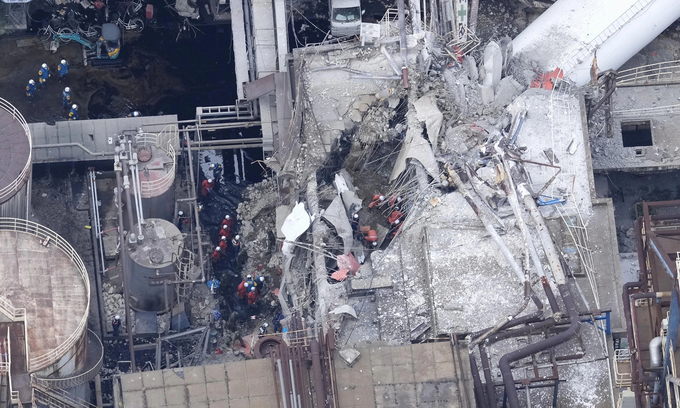
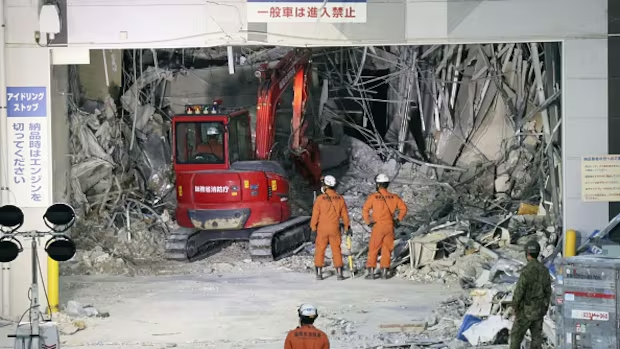
The magnitude 7.1 earthquake hit Japan’s southern main island of Kyushu on Tuesday. As search operations entered a fourth day, it was not known how many people remained missing.More than 1,500 buildings were damaged, including 179 that were destroyed, Kumamoto officials estimated.At least 96 people were injured, including six seriously.Kumamoto authorities said nearly 80,000 homes remained without water. More than 9,000 people were staying in shelters, where power sources were being added to provide air-conditioning.Fuel has also become scarce as power outages disabled gas stations and quake damage disrupted deliveries from other regions. Many have resorted to sleeping in their cars for privacy, but with the fuel shortage, they struggle to keep the air conditioning running in sweltering temperatures.Japan’s weather agency and its Ministry of the Environment issued an extreme heat alert for Kumamoto city on Friday as temperatures peaked at 36°C.Hirokazu Sato, who lost his home in the earthquake, said he and his wife and three children would remain in their car until they can move into temporary housing.“I don’t know how soon I’d be able to move in,” said Sato. “We need to have the air-conditioning on throughout the day and night, which uses up gas.”Japanese officials had described Friday afternoon as a crucial point for rescue efforts as some experts say survival chances decline after the first three days.With search dogs, rescuers continued looking for survivors across the Kumamoto area, including at the collapsed Aeon Mall in the town of Kashima, one of the hardest-hit sites. The complex was bustling with thousands of people when the quake happened.The company said about 3,000 shoppers were evacuated to a parking lot before an explosion happened in another part of the mall, where some staff remained working. The mall’s second floor collapsed, trapping people. Seven of the 11 rescued were confirmed dead, but officials did not say if anyone else is missing.A search operation had ended at a Nippon Paper Industries factory in the Yatsushiro city, where a chimney collapsed in the quake, officials said. Of the 11 people dug out there, nine were confirmed dead.Smaller-scale searches continued at the sites of collapsed houses in badly hit towns in southern Kumamoto, but authorities have not supplied a firm figure for how many people are missing.