August 1, 2001, marked a turning point: with the Civil Partnership Act, same-sex couples in Germany got a legal framework for the registration of their partnerships. However, another 16 years would pass before marriage itself became an option.
"The Civil Partnership Act was a milestone for the legal recognition of same-sex couples in Germany and laid the foundation for opening up marriage," Alexander Vogt of the national board of "Queere Vielfalt e.V." (Queer diversity) told DW.
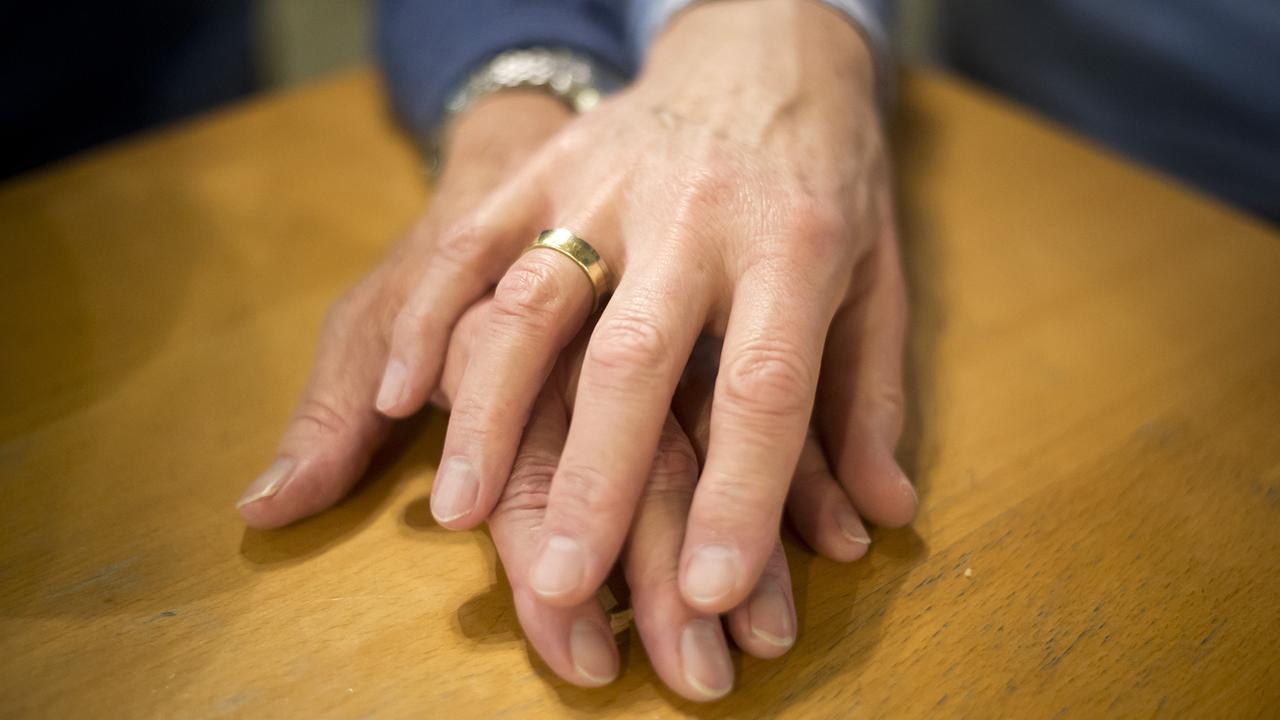
"It introduced a legally secure partnership with rights similar to those of marriage — such as inheritance, maintenance, and residency rights — though it remained discriminatory in many areas – like adoption or tax law. Nevertheless, it gave us a foot in the door — a solid base from which further rights could be secured, usually by appealing to the Federal Constitutional Court."Reinhard Lüschow (r) and Heinz-Friedrich Harre were the first same-sex couple in Germany to register under the new Civil Partnership ActImage: picture alliance/dpa
Public opinion was ahead of the political establishment
The legislation was preceded by a fierce political debate. The opposition bloc of conservative parties, the Christian Democratic Union and the Christian Social Union (CDU/CSU), denounced it as an "unconstitutional attack on marriage and the family." Lawmakers from the ruling center-left Social Democratic Party (SPD), however, described the law as "a long-overdue act of redress."