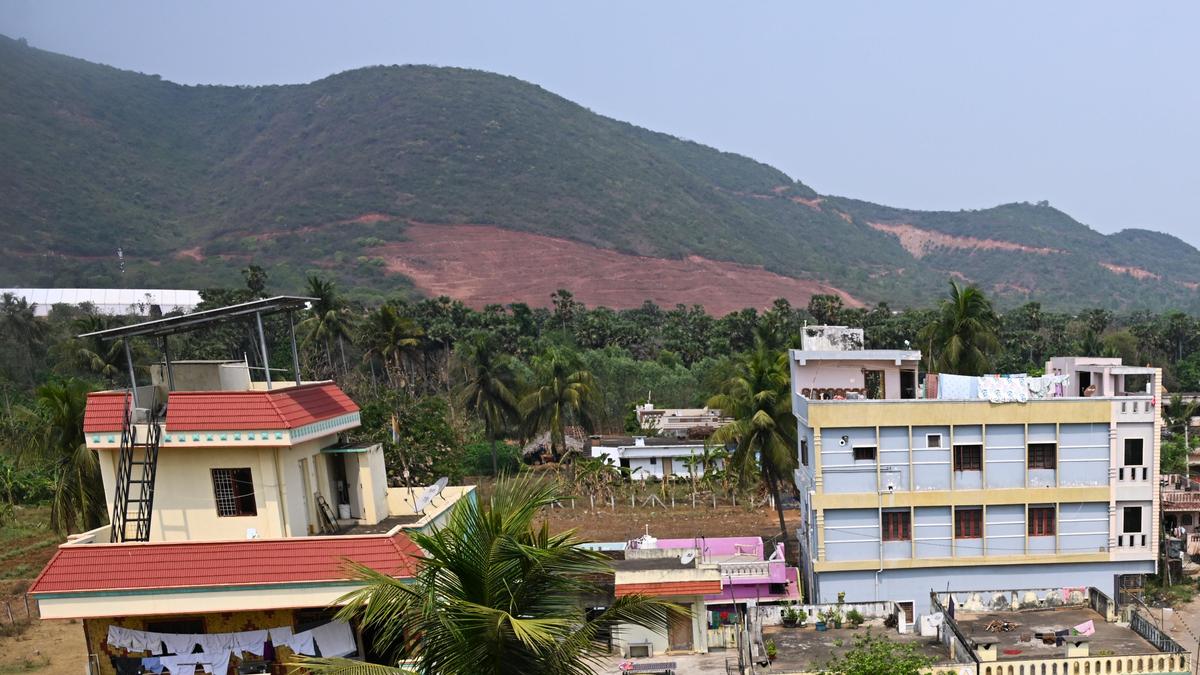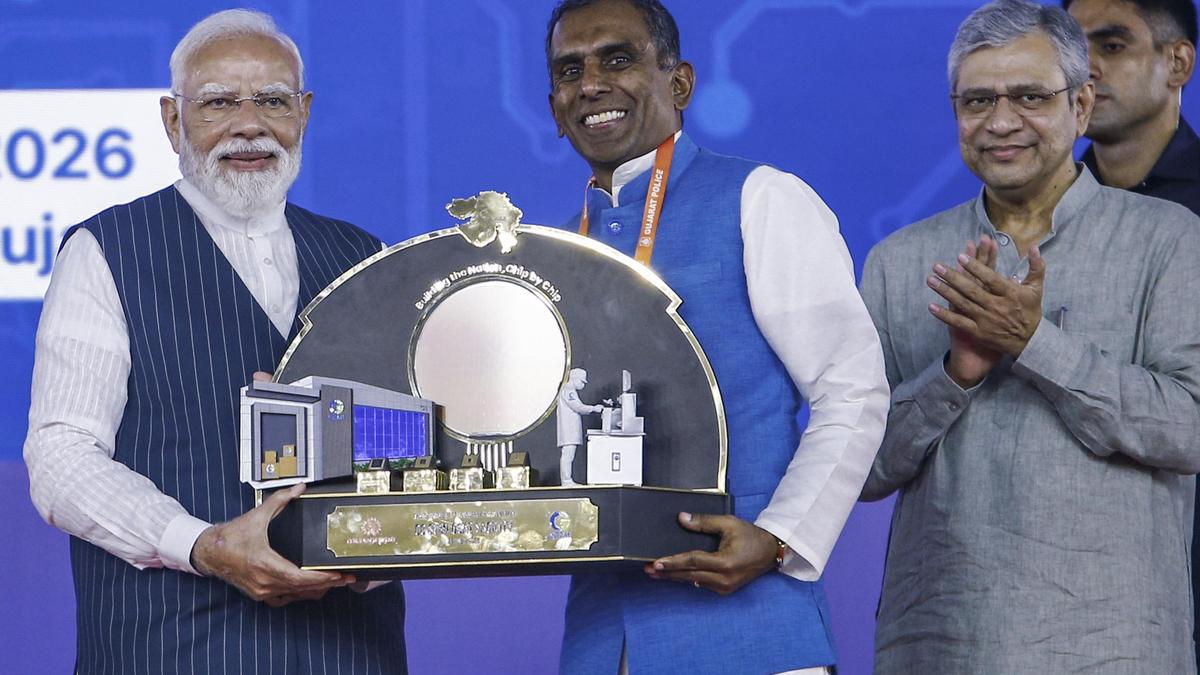
/VISAKHAPATNAMPrime Minister Narendra Modi on Saturday virtually laid the foundation stone and unveiled the plaque for ASIP Technologies’ semiconductor manufacturing facility at Tarluvada in Visakhapatnam. The ₹2,500 crore Outsourced Semiconductor Assembly and Test (OSAT) project is Andhra Pradesh’s and South India’s first semiconductor manufacturing facility approved under the India Semiconductor Mission (ISM 1.0). Mr. Modi was accompanied by Chief Minister N. Chandrababu Naidu and other dignitaries.Chief Executive Officer of the India Semiconductor Mission Amitesh Kumar Sinha, Andhra Pradesh IT, Electronics and Communications Secretary Bhaskar Katamneni, Special Secretary of the ITE&C Department Mallavarapu Surya Teja, senior government officials, industry leaders and global partners were present at the ceremony.The 30-acre facility, being established with an initial investment of over ₹460 crore in partnership with South Korea-based APACT Co. as the technology partner, will have an annual production capacity of 96 million chips. It will cater to high-growth sectors such as artificial intelligence, high-performance computing, data centres and high-speed communications.ASIP plans to expand the facility with an additional investment of over ₹2,000 crore to scale up its advanced semiconductor packaging operations. The project is expected to generate more than 1,000 direct high-skilled jobs and 1,600 indirect jobs.The facility will initially commence production using wire-bond and Flip-Chip Ball Grid Array packaging technologies, with advanced 2.5D and 3D packaging capabilities to be introduced within two to three years.ASIP Managing Director and Chief Executive Officer Venkata Simhadri said the collaboration with APACT would help establish advanced semiconductor assembly, packaging and testing capabilities in India while promoting skill development, supply chain localisation and the growth of Andhra Pradesh’s semiconductor ecosystem.APACT President and Chief Executive Officer Seong Dong Lee said the global semiconductor industry was increasingly seeking resilient and diversified supply chains. The partnership with ASIP, he said, combined Korean technology expertise with India’s engineering talent and manufacturing capabilities, and would strengthen India’s Semiconductor Mission by providing advanced packaging and testing solutions to global customers.India currently imports almost all the semiconductor chips used by its electronics industry. The OSAT facility addresses a key gap in the country’s semiconductor value chain, where packaging and testing account for about 30% to 40% of a chip’s manufacturing cost.The company expects to localise a significant part of its supply chain over the next three to five years and establish partnerships with institutions such as IIT Tirupati and IIT Hyderabad. The facility will also house an in-house semiconductor training centre to develop a skilled workforce for the sector. Sustainability measures, including solar power generation and water recycling systems, will be integrated into the project with the aim of creating an environmentally responsible manufacturing facility. Published - August 01, 2026 07:29 pm IST
Prime Minister lays foundation for A.P.’s first semiconductor manufacturing facility
Prime Minister Modi inaugurates Andhra Pradesh's first semiconductor facility in Visakhapatnam, boosting local jobs and advanced technology.
439 words~2 min read