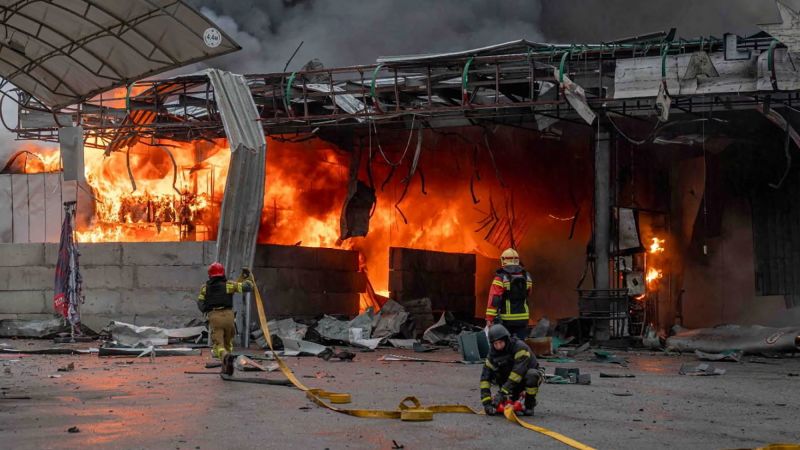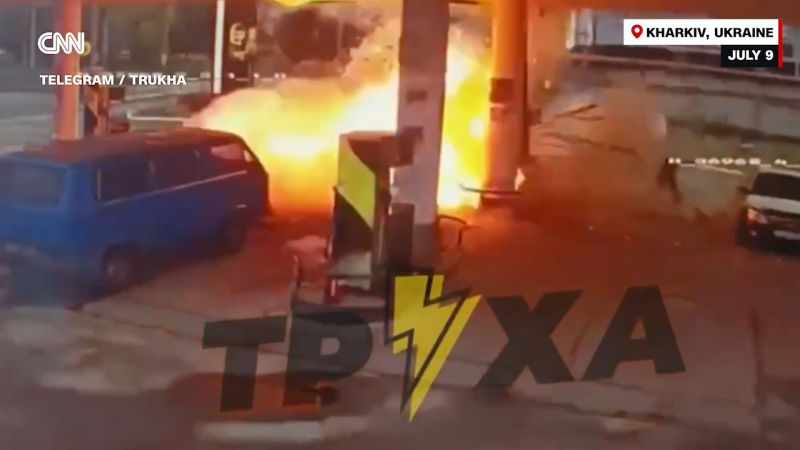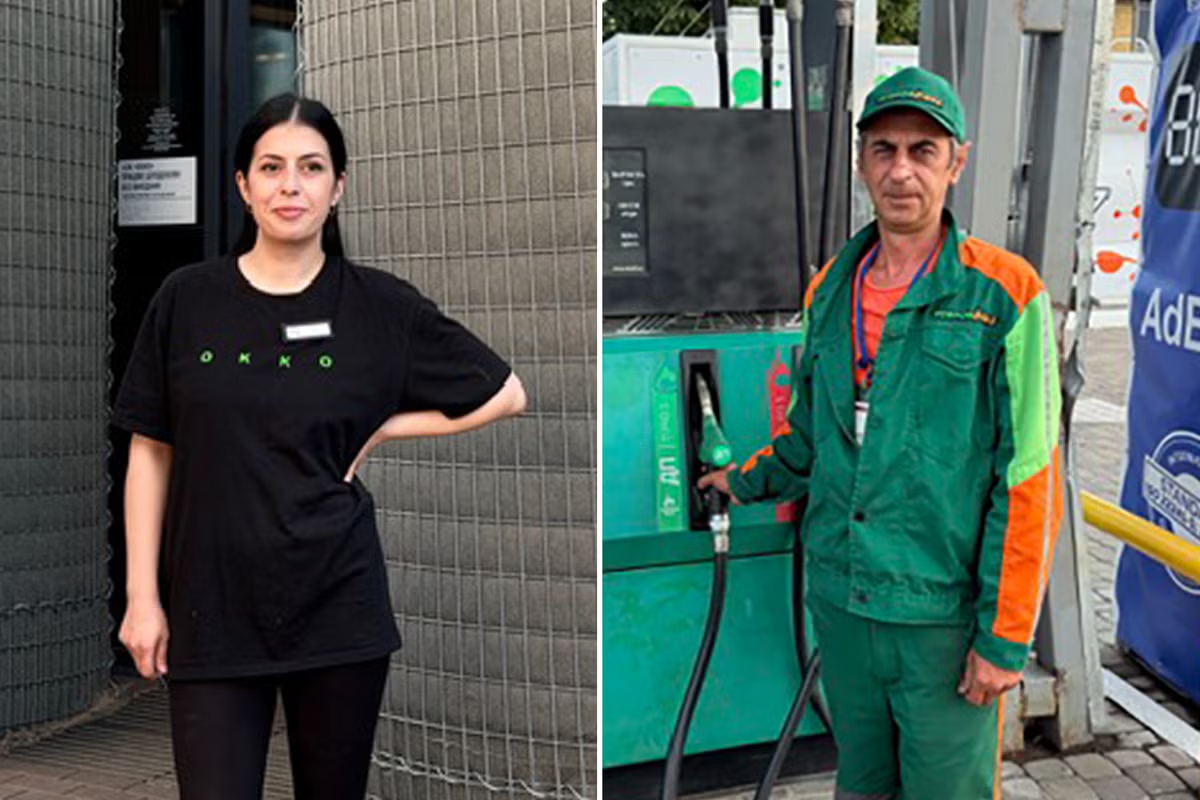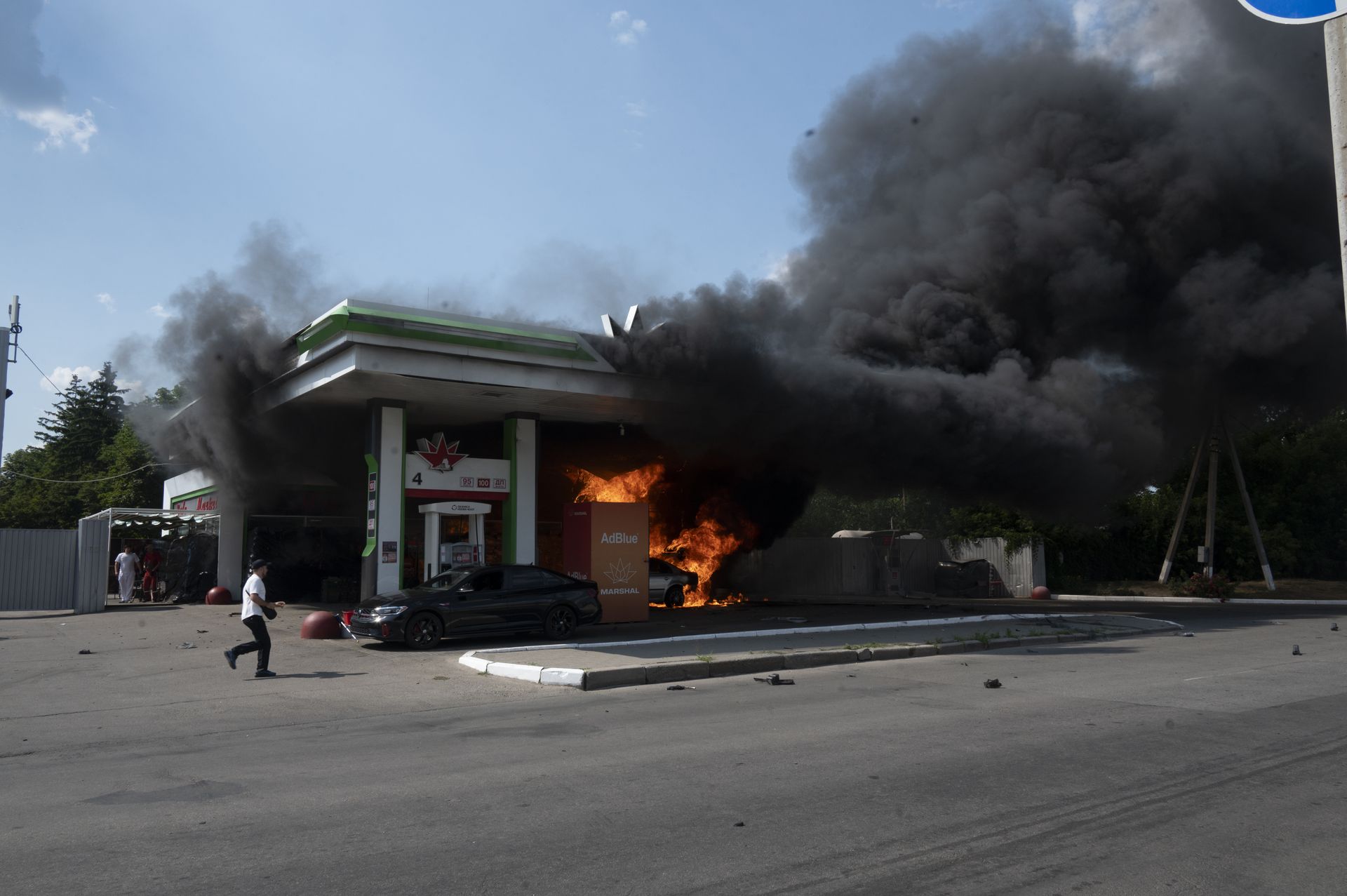
Flames rise from a car and a fuel dispenser following a Russian drone attack on a gas station near the city center of Kharkiv, Ukraine, on July 3, 2026. (Serhii Masin / Anadolu / Getty Images)The drive back from Ukraine's front line had become familiar to Frida Stoltz. After another aid mission, the 37-year-old Swedish volunteer and her team stopped to refuel in the town of Pyriatyn in Poltava Oblast, hundreds of kilometers from the fighting.Stoltz was sitting in the car, waiting for her turn at the pump, when the loudest explosion she had ever heard tore through the station."I saw a gas station employee suddenly start running right in front of my car. And he was running away from the station itself," she told the Kyiv Independent. "Then there was a really loud bang and a lot of light — I could feel the window on my side start to shatter."A Geran drone weighing about 200 kilograms slammed into the roof of the gas station, damaging its equipment and several vehicles on the forecourt. The July 3 strike injured six people, including Stoltz, according to local authorities.It was one of a growing number of Russian attacks targeting gas stations across Ukraine this summer. What began as strikes concentrated in the east and south has expanded into central Ukraine, leaving more towns and stretches of highway without a functioning gas station.The widening campaign has raised concerns that sustained attacks on fuel infrastructure could eventually disrupt supplies across the country. Yet for officials and fuel retailers, the more pressing challenge is how to defend thousands of gas stations spread across Ukraine — a network too vast to shield in its entirety."Of course we're worried (about these strikes)," Valerii, an employee at a gas station belonging to one of Ukraine's largest fuel chains in Kharkiv, told the Kyiv Independent. "We're worried about everything."No safe stopAfter the attack, Stoltz said she would plan her journeys more carefully and avoid stopping to refuel whenever possible. But unlike the Swedish volunteer, who returns home after each mission, Ukrainians cannot opt out of the danger. For them, stopping for fuel has become another routine task that can turn deadly in an instant.The Center for Information Resilience (CIR), a nonprofit that investigates human rights abuses and war crimes, recorded 66 Russian attacks on gas stations across Ukraine in June, up 340% from 15 in May.French open-source researcher Clément Molin said on X that he has mapped 160 gas stations hit across Ukraine in recent months, including at least 23 in Kharkiv Oblast, 19 in Sumy Oblast, and 15 in Zaporizhzhia Oblast.
Russian drone attacks make stopping for gas in Ukraine a deadly gamble
The drive back from Ukraine's front line had become familiar to Frida Stoltz. After another aid mission, the 37-year-old Swedish volunteer and her team stopped to refuel in the town of Pyriatyn in Poltava Oblast, hundreds of kilometers from the fighting. Stoltz was sitting in the car, waiting for her turn at the pump, when the loudest explosion she had ever heard tore through the station. "I saw a gas station employee suddenly start running right in front of my car. And he was running away fro
1,563 words~7 min read