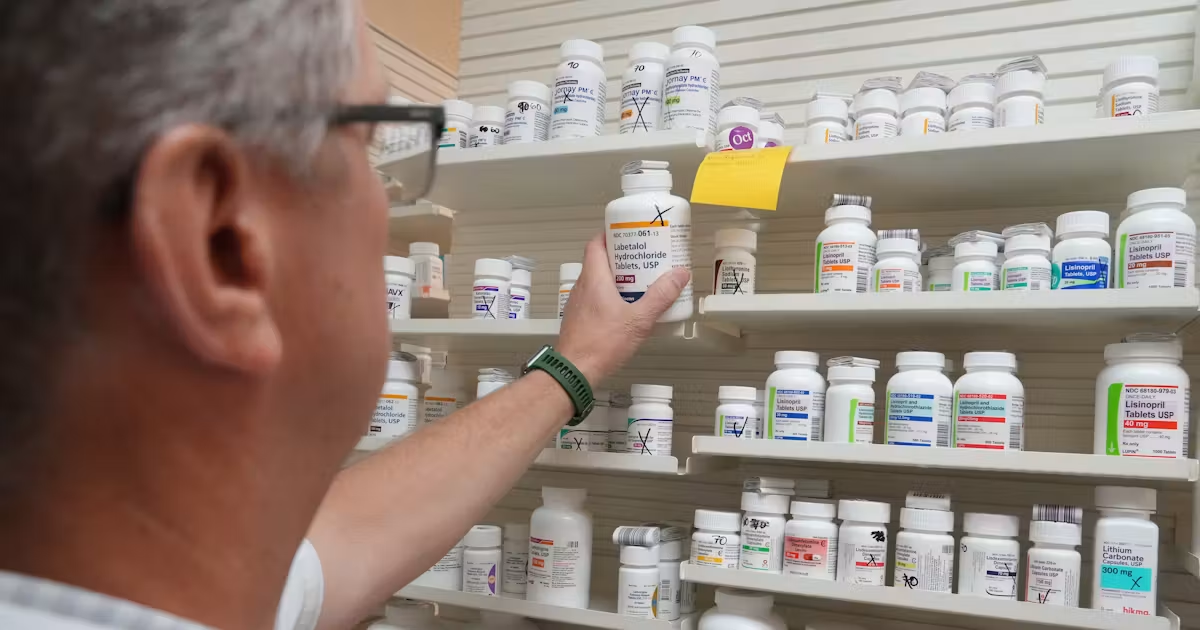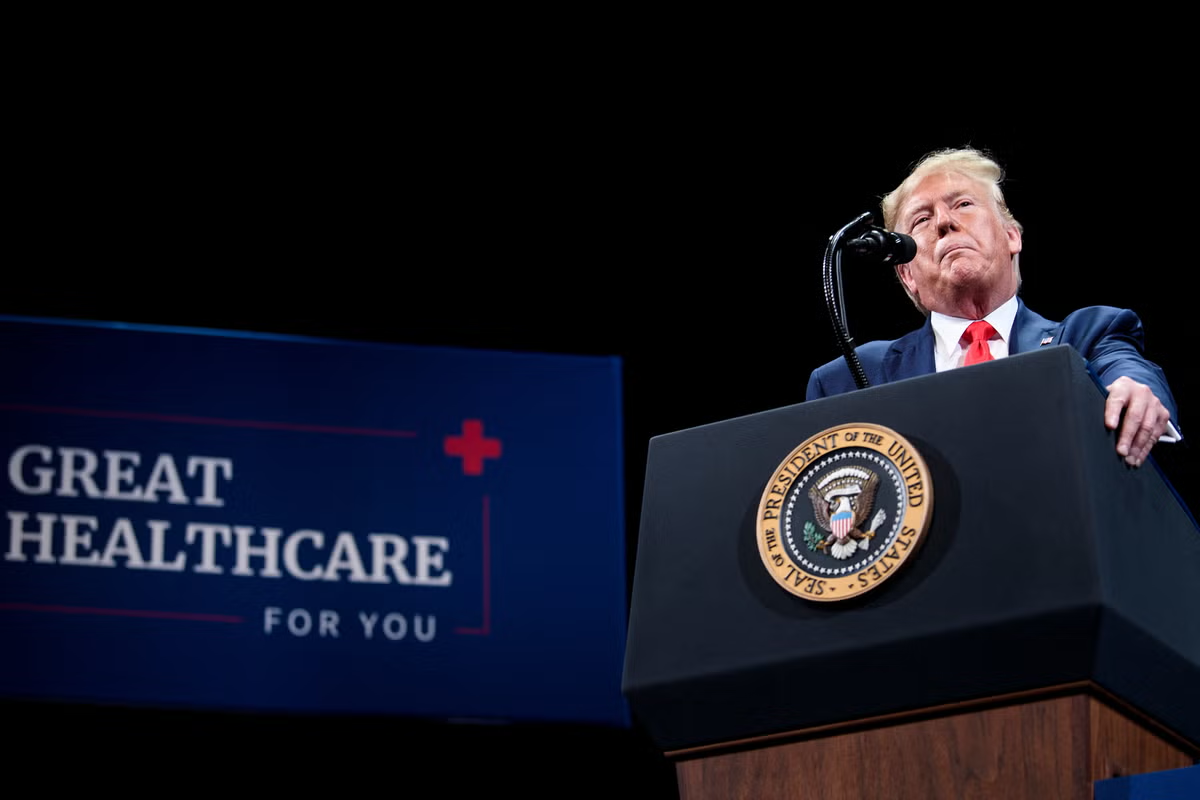
The Trump administration is ending a Medicare premium subsidy demonstration program that was intended to stabilize the market for standalone prescription drug plans for seniors. This will likely greatly increase the premiums Medicare beneficiaries pay for prescription drug coverage plans.gettyThe Wall Street Journal first reported this week that the Trump administration is ending a subsidy program that was intended to help stabilize Medicare beneficiary premiums for prescription drug plan coverage. This decision could leave many enrollees facing substantially higher premiums for their prescription coverage next year. The precise impact will be known once open enrollment begins this fall.Roughly 25 million Medicare beneficiaries are enrolled in plans supported by the subsidies. They currently pay on average $36 per month for their medication coverage.The Centers for Medicare and Medicaid Services said that approximately 25% of enrollees in Medicare’s outpatient drug program called Part D would see premiums for their plans stay flat or decrease in 2027, with around 30% seeing an increase of less than $10 to their monthly bill. But for the remaining 45%, the increases are in the $11 to $20 range a month.The Biden administration first announced the premium stabilization program in July 2024. It was created to address volatility and variation in standalone prescription drug plan premiums, specifically to prevent major spikes in rates for seniors and an exodus of plans from the market. Standalone Part D plans offer pharmaceutical coverage that Medicare beneficiaries can buy separately from other traditional Medicare health insurance. As such, it supplements hospital and physician services, Parts A and B, respectively.A provision contained in the Inflation Reduction Act that redesigns Part D was causing a shift in cost liability towards plans managing the benefit. This has led to some plans deciding to no longer participate in the drug benefit.The impetus for restructuring Part D was the lack of a cap on patient out-of-pocket costs for prescription medicines. Financial hardship has been a major problem for certain Medicare beneficiaries for decades, particularly for those prescribed expensive, often life-saving medicines. The redesign of Part D capped annual out-of-pocket costs for beneficiaries at $2,000 in 2025 and $2,100 in 2026.MORE FOR YOUWhile the restructuring of Part D included a cap on patient out-of-pocket drug expenses, it imposed a much greater responsibility for cost management onto insurers. And so, the federal government acted to stabilize the situation by subsidizing plans to the tune of $9.8 billion in 2025 and 2026 combined.The subsidy program reduced the average Part D plan premium by about 40% in 2025. This year, it cut the average rate by an estimated 27%.But now the demonstration will end. CMS is defending its decision as it maintains that “bid analysis indicates that Part D plan sponsors had sufficient experience under the redesigned Part D benefit.” The agency’s bid analysis reflects a process in which each Part D sponsor that wants to offer a standalone plan submits a bid to CMS every year, outlining the insurer’s benefits, costs and list of reimbursable medicines. CMS reports that plan sponsors “have gained enough data and experience under the new rules to price their bids independently without extra federal bailouts.” Nonetheless, without these subsidies it’s expected that standalone prescription drug plans will have to raise premiums for at least 11 million Americans.The ending of the subsidies could also reignite the problem of exiting standalone plans as they will be less able to handle the cost increase. Higher premiums for the Part D plans could then push more enrollees into Medicare Advantage.Medicare-eligible folks, who include seniors over 65 and some disabled individuals, can opt for coverage by Medicare Advantage plans. Private insurance companies administer these plans. Attracted by low premiums and supplemental benefits, Medicare Advantage now enrolls more than 54% of the Medicare-eligible population.
Trump Administration Ends Program that Kept Medicare Premiums Down
By ending subsidies to standalone prescription drug plans, it’s expected they will have to raise premiums for at least 11 million Medicare beneficiaries.
624 words~3 min read