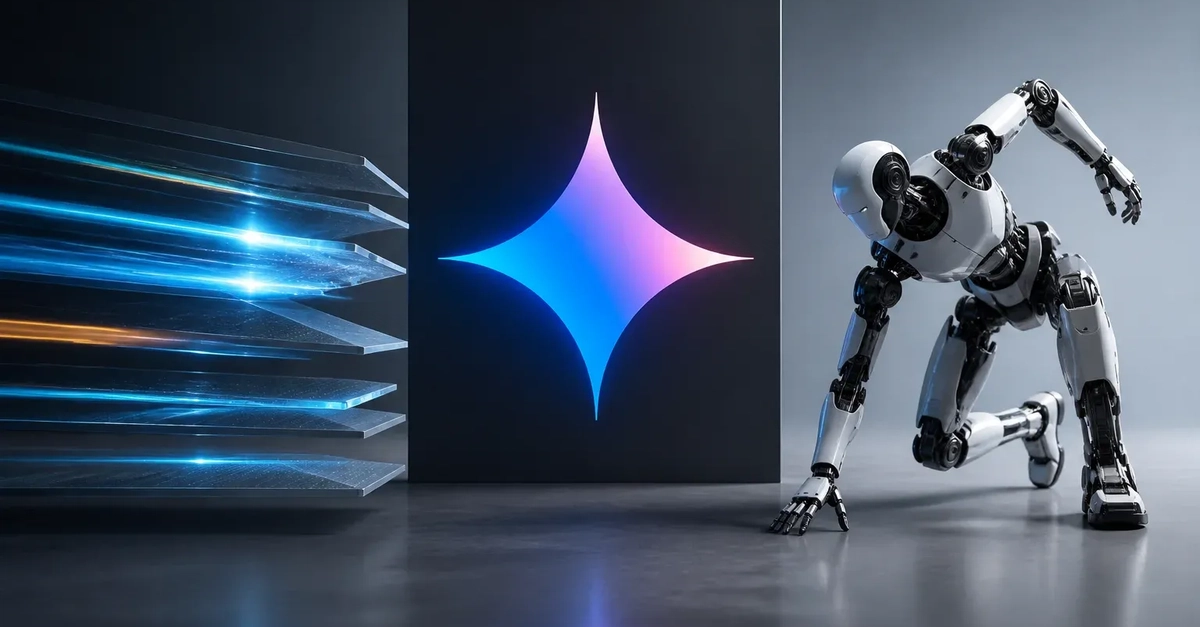
Google is expanding Gemini on two fronts at once: faster, lower-cost models for software and enterprise workflows, and a new robotics family designed for embodied, cross-robot control. The releases include Gemini 3.6 Flash, Gemini 3.5 Flash-Lite, Gemini 3.5 Flash Cyber, and Gemini Robotics 2 with related embodied-reasoning and on-device variants.
The clearest immediate enterprise story is the widening choice of models for agentic work. In its official Gemini Flash announcement, Google positions 3.6 Flash as a general workhorse for coding, knowledge work, and multimodal tasks, while 3.5 Flash-Lite is aimed at workloads where response speed and cost efficiency are decisive. The robotics update extends the same broader push beyond software agents into systems that must reason about and act in physical environments.
A broader Gemini stack for agentic workloads
Gemini 3.6 Flash is generally available through Google's developer, enterprise, and consumer channels. Google says it improves on 3.5 Flash for coding, knowledge-work, and multimodal tasks, while producing around 17% fewer output tokens than 3.5 Flash. That token-efficiency claim matters because output tokens are a material part of both latency and inference spending in multi-step agent workflows.