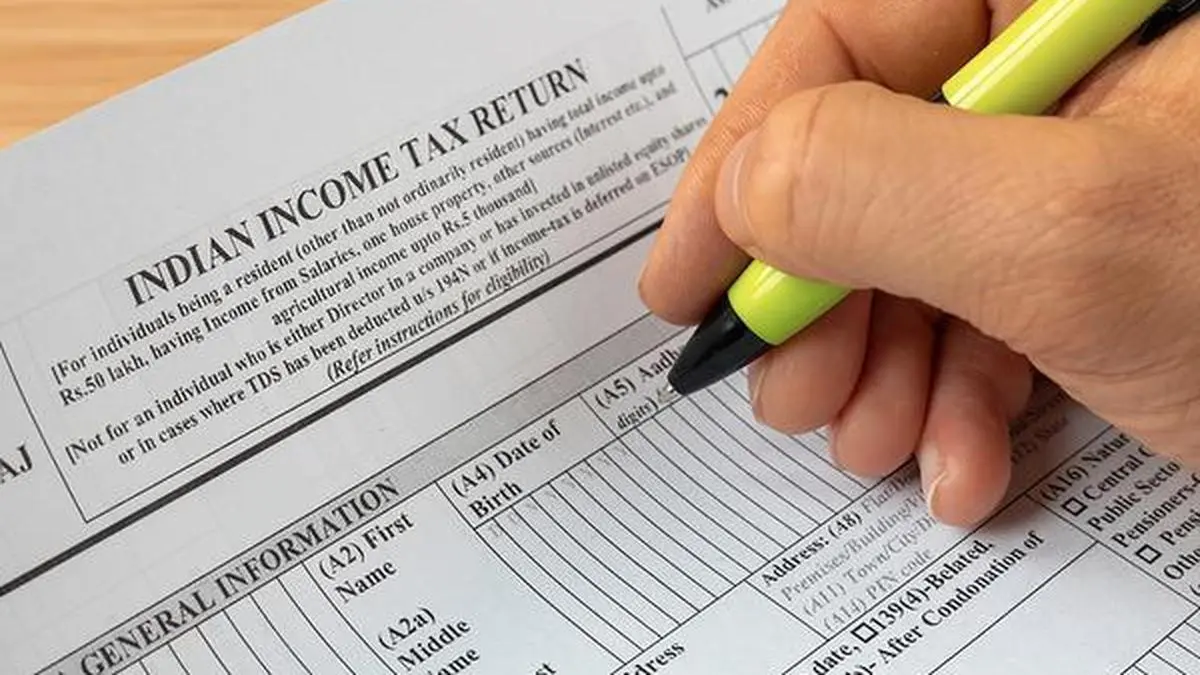
The Income Tax Department said more than 5.9 crore income tax returns were filed by the July 31 deadline for ITR-1 and ITR-2.
| Photo Credit:
/iStockphoto
The Income Tax Department on Saturday said that over 5.9 crore returns had been filed by July 31. It was the last date for filing ITR1 and ITR2, and those eligible who have not filed will now have to pay a late fee of up to ₹5,000 to file on or before December 31.Since August 31 is the due date for taxpayers filing ITR-3 and ITR-4 and not requiring tax audit, figures for return filers cannot be compared with the previous year. Until last year, the due dates for all these assessments used to be July 31. According to the e-filing portal of the IT department, out of over 5.92 crore returns filed, over 5.47 crore have already been verified, while around 2.38 crore (over 40 per cent) have been processed. As of now, the Department has not provided form-wise details.Why ITR-1 filings may have declinedHowever, it appears that the number of ITR1 filers has come down due to zero tax liability for individuals earning up to ₹12 lakhs annually. According to Sandeep Sehgal, Partner-Tax at AKM Global, there could be multiple reasons behind the reported dip in ITR-1 filings. Part of it is simply a timing effect. After witnessing an extension last year, many taxpayers appear to have delayed filing in anticipation of similar relief this year. As the July 31 deadline approached, however, filing numbers began to catch up meaningfully.More fundamentally, “ITR-1’s share of total filings has been declining for several years as an increasing number of salaried taxpayers earn capital gains from equities and mutual funds—income that ITR-1 cannot accommodate—requiring them to shift to ITR-2. The expansion of the Demat account base from about 4 crore to over 17 crore underscores this structural trend,” he said.Another, less-discussed but equally important, factor is the sharp rise in retail participation in Futures & Options (F&O). Under Section 43(5) of the Income-tax Act, income or loss from F&O trading is treated as non-speculative business income. Consequently, even a single derivative trade—irrespective of its size or whether it results in a profit or loss—renders a taxpayer ineligible to file ITR-1 or ITR-2, necessitating a shift to ITR-3, whose due date has been extended to August 31 from this year onward.Consequences of missing the July 31 deadlineNow, those who have missed the July 31 deadline, a late filing of up to ₹5,000 is only part of the story. “A more significant cost is often the loss of the option to elect the old tax regime, which under the current framework can be exercised only through a return filed within the original due date and cannot be restored through a belated return,” Sehgal said.Further, equally consequential is the loss of the ability to carry forward business losses, capital losses, and F&O losses—a significant setback for the growing community of retail traders, as only losses under the house property head remain eligible for carry forward after a delayed filing, he added.Published on August 1, 2026