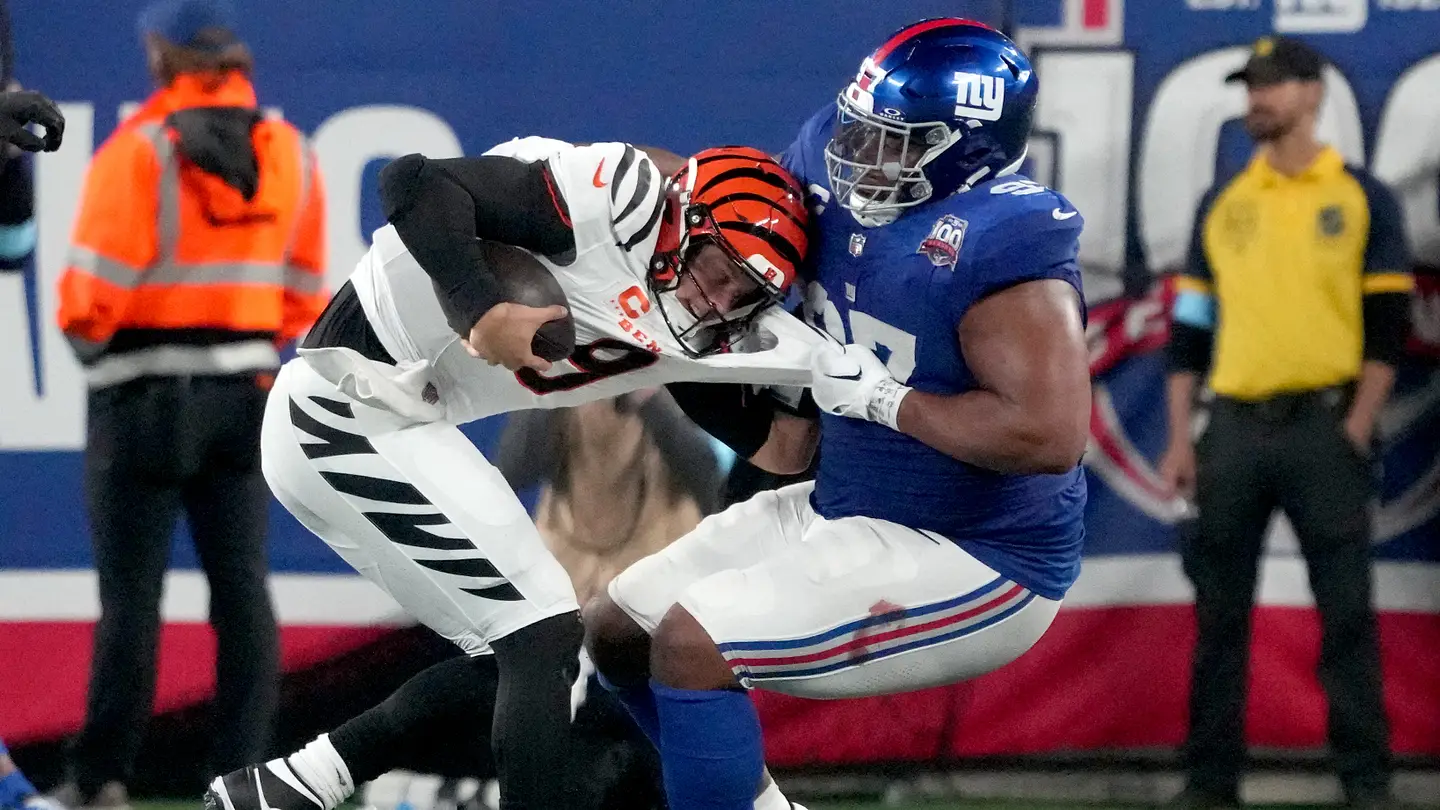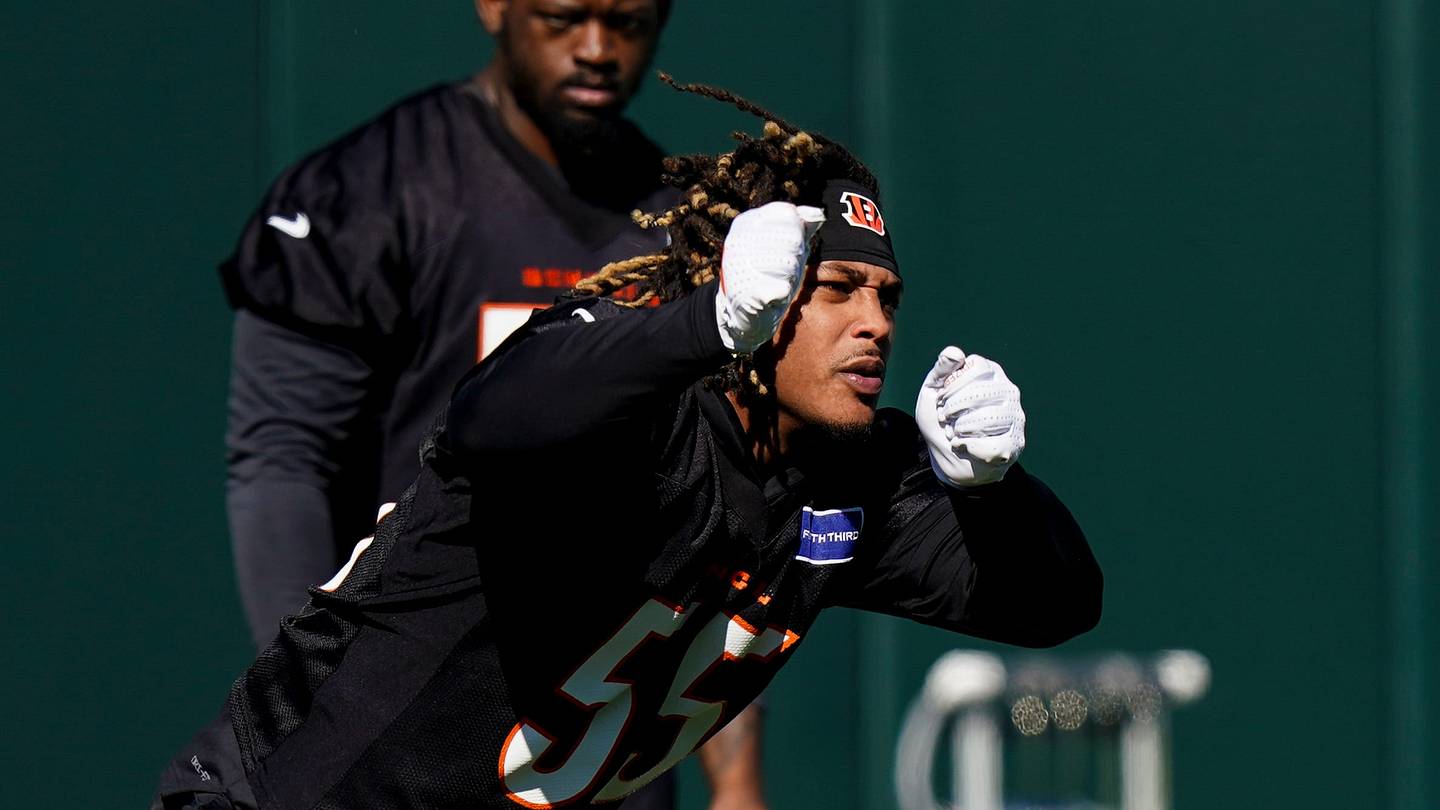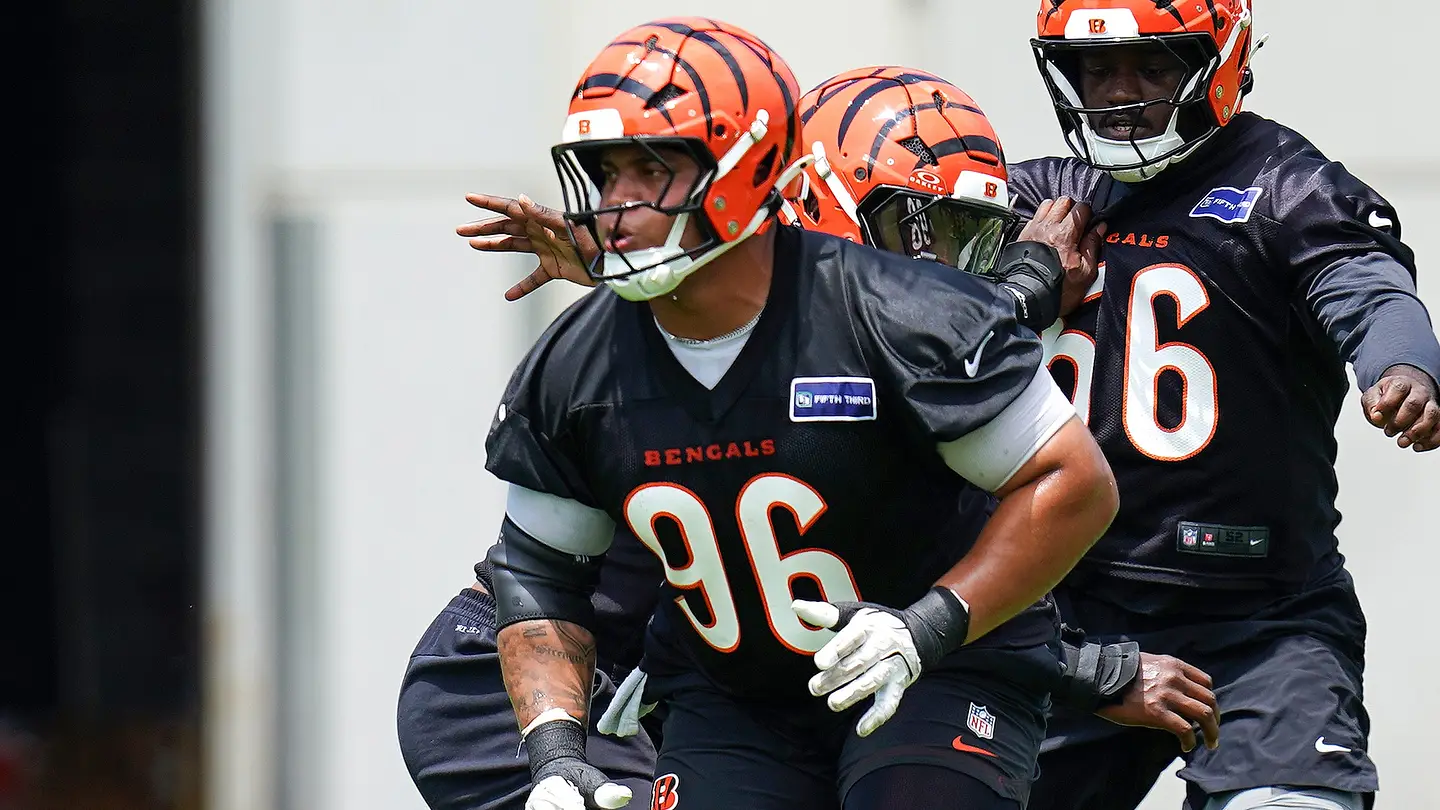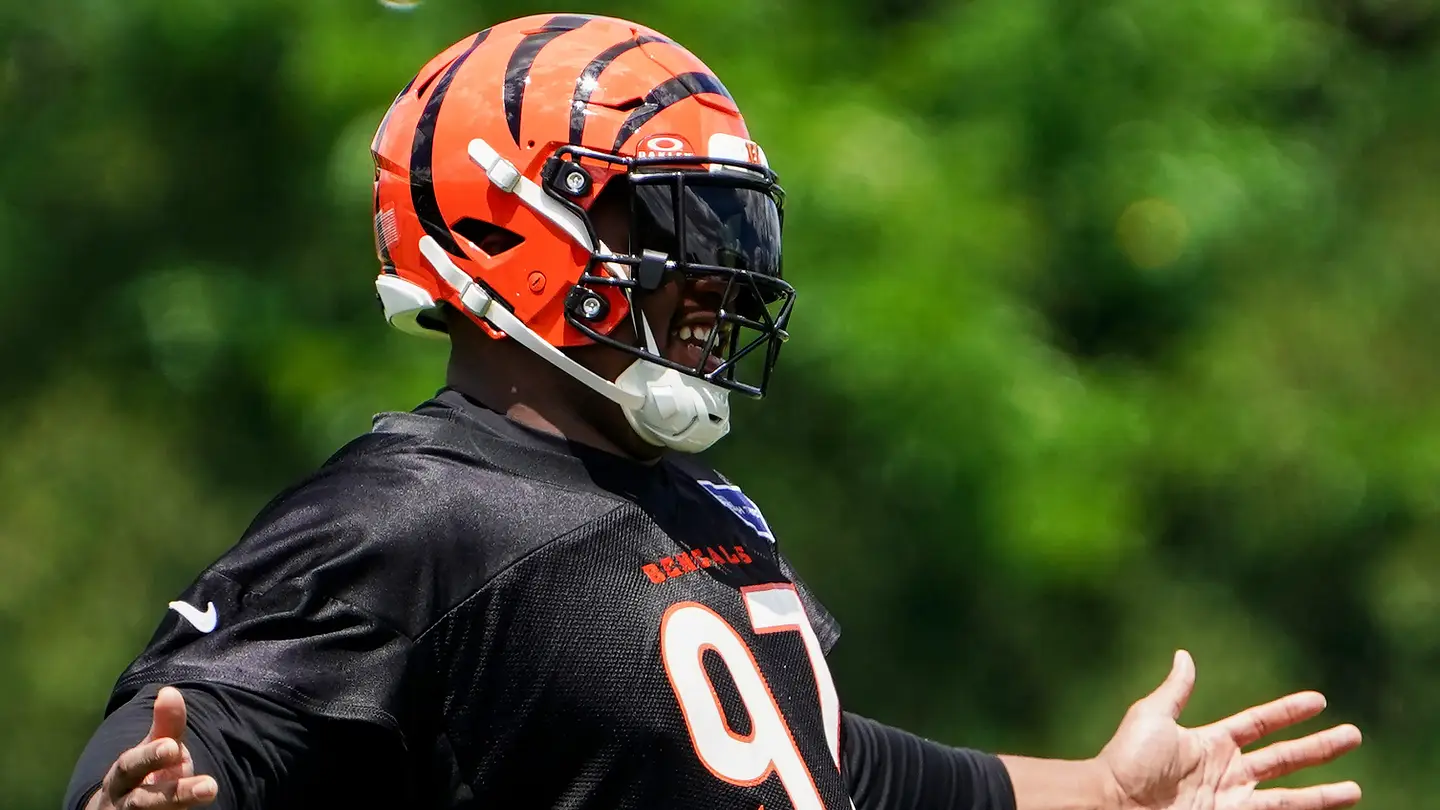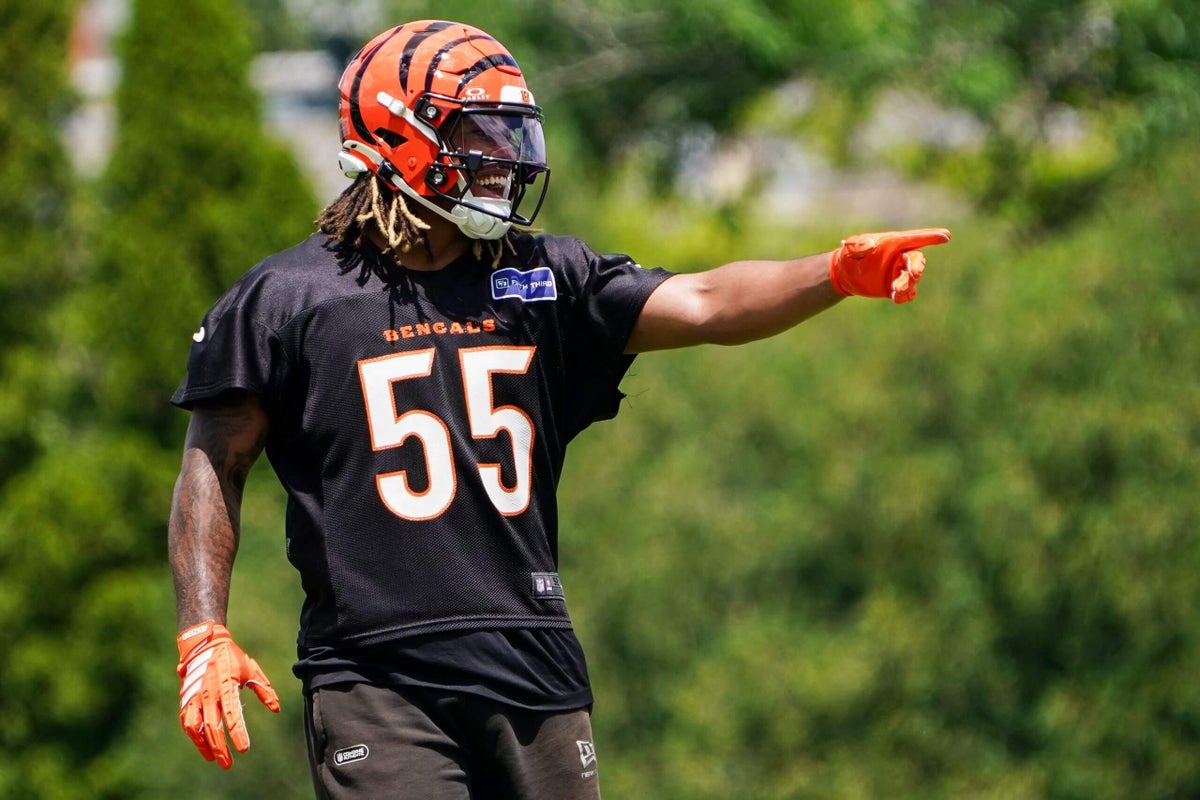
CINCINNATI — When Boye Mafe dropped into coverage during an 11-on-11 practice session on Thursday, he looked up and saw a sight that strikes fear into most NFL cornerbacks, much less 265-pound edge rushers.Ja’Marr Chase was coming right at him.“I don’t wish that upon no man,” Mafe said. “But, hey, that’s a thing that happens.”These things that keep happening have quickly become a fascinating development of the 2026 Bengals’ training camp.Bengals LBs offer encouraging start to training campPaul Dehner Jr.Defensive coordinator Al Golden and his staff are experimenting with a rebuilt defensive line group that looks notably different than those in recent Bengals’ history.They are tinkering with the exciting possibility of morphing schemes between 3-4, 4-3, nickel or any defensive disguise capable of weaponizing versatility, creating one-on-ones and keeping offenses guessing where the pressure will come from.Or more simply, they are taking the expensive new toys for a test drive.“That’s what these next six weeks are about,” Golden said. “That’s what (head coach Zac Taylor) has challenged us with. Find the strengths of — especially the new guys we don’t know as well — and let’s capitalize on what they do best. Yeah, I do think there is a segment of our growth and development over the next six weeks that is going to involve a little flexibility and see what direction those guys take us with their talents.”During one of the initial individual periods of the first training camp practice of the year, Shemar Stewart wasn’t sure where to go.In a new twist, the defensive line group was splitting off to separate the interior defenders from the hybrid edge rushers. Stewart, who, when he returns from a knee injury, will be tasked to play up and down the front, started to run to the third field with Mafe, Cashius Howell, Myles Murphy and Cedric Johnson before turning back around. Turns out this time he would be sticking with Dexter Lawrence and the big boys.A day later, Howell could be spotted jogging across practice fields alone as he switched between pass-coverage reps in 7-on-7 one minute and pass-rush drills with the defensive line the next.“I try to make sure beforehand I check in with the coaches,” Howell said about plotting his individual course through the practice periods.Many of the new pieces on this Bengals defense don’t always know where they will be. And that’s sort of the point.Golden’s defense lived in a traditional four-down front last season, but used 3-4 defenses with two edge rushers standing outside at times. The defensive coordinator liked the idea of shifting in and out of different looks before the snap to keep offenses off-balanced pre-snap.He just never had the personnel to execute it. As with most aspects of the Cincinnati defense this year, that dynamic has changed.“If you are leaning into where our personnel people have acquired guys, where we have weighed in during the process, it’s leveraging talent,” Bengals defensive consultant Sean Desai said. “This is a talent-based business. Whatever the guys are good at, you are going to leverage that and let them be good at that. That’s what in Year 2 of the system we can really do at a high level.”Boye Mafe has plenty of experience dropping into coverage from his time with the Seahawks. (Carolyn Kaster / Associated Press)Desai, a former defensive coordinator for the Bears and Eagles, got his start as a graduate assistant and eventually outside linebackers coach for Golden at Temple from 2006 to 2010. He came up in the NFL under the Vic Fangio, 3-4 coaching tree and personally oversaw Khalil Mack wreck the league as an outside edge in Chicago. Under the guidance of defensive line coach Jerry Montgomery and assistant Mike Moon, he’s been deployed to help develop this corner of the Bengals’ defense.Edges in a 3-4 are built on ripping around the edge for sacks, but also asked to periodically fall off and cover in space. The Bengals didn’t want to ask linebacker Demetrius Knight to play that edge anymore. After this offseason, they won’t have to.Mafe and Howell are at the center of the equation. Howell, the SEC Defensive Player of the Year at Texas A&M with 11.5 sacks, wasn’t drafted because of his coverage ability, but tapping into the rare athleticism that enables him to do so was part of the allure.He’s been working on drops since he first arrived at rookie minicamp with hopes it will keep doubt living in the head of the offensive tackle in front of him every time he steps on the field.“That’s something I am trying to work on to get more comfortable with,” Howell said. “My primary thing is rushing the passer and playing on the line of scrimmage, but that is something I am trying to actively work on and actively make sure I’m getting better at day by day.”He doesn’t need to look beyond Mafe for a mentor. Mafe dropped into coverage 169 times over his four seasons with the Seahawks, third-most of any NFL defensive lineman during that span. That doesn’t mean he expects to be shutting down Zay Flowers consistently, but he understands the value in showing he can occasionally do so.“It’s a unique thing,” Mafe said. “There’s not a lot of D-linemen that drop in this game. It’s something that is going to become a new thing and new staple for the position. It’s a new world.”And sometimes in that world, you are asked to cover Chase.“I told him, ‘That’s great, bring it on,'” Desai said. “Where you going to get a better rep in the world? Everybody else you are going to go against, it is going to be easy for you. That’s what practice is for. We are growing it and building it. Put all our guys in hard situations. Then when it comes to game plan, to manage those situations and limit those.”One of the most obvious differences when the Bengals work in the 3-4 alignment is as basic as how they stand. They rise up in a two-point stance rather than putting a hand in the turf across from the tackle.Mafe rarely put his hand down in Seattle, almost always rushing standing up on the outside. What’s the advantage of standing up versus a three-point stance? He snapped off an answer faster than his electric get-off at the snap.“Vision,” he said. “Purely vision.”That vision is helping Murphy see the light. At 6-5, 275 pounds, he might not be traditionally viewed as a 3-4 outside edge, but the Bengals have him standing out there as well when they shift to that alignment.The fourth-year pro who broke out in 2025 likes what he sees.“The more ball I play, the more comfortable I am with two-point, mainly because I can see more in the backfield,” Murphy said. “Matching patterns in the backfield and the recognition helps a lot knowing what’s coming. If I can know what’s coming, you are going to play faster.”Early in his career, Murphy didn’t comprehend everything he was seeing. As the game slowed down, vision became a more devastating weapon. And if there’s a request for him to drop in coverage, he can always point to the pass breakup he notched in the end zone in 2024 against David Njoku and the Browns.Dexter Lawrence’s ability to command attention in the middle is expected to free up others on the edge. (Kareem Elgazzar / Associated Press)The biggest difference, if asked to play outside in a 3-4 more often, would go back to the biggest difference in the Bengals’ defense. With all the attention expected to be placed on all 6 feet 5 and 350 pounds of Dexter Lawrence eclipsing the center, the uncertainty around what all these edges will be doing could produce a much higher percentage of one-on-one opportunities.Lawrence’s gravity makes rushing from the outside all the more devastating, doubly so if linemen are unsure who is coming or dropping.“It brings so much confusion with the O-line; it kind of motivates you because you know you are going to get opportunities,” Murphy said. “Now that I got Dex, Jonathan Allen, B.J. (Hill) and them inside, they are going to have to pick someone to double in there. It doesn’t do anything but help us edges.”Inevitably, great defenses can come together in any structure and live in a four-down nickel defensive alignment the vast majority of snaps anyway.The Texans play out of four down. It worked great for them. The Seahawks and Eagles won Super Bowls by confusing teams from multiple alignments. The Steelers have been doing it for decades.The Bengals are seeking a new option to create hesitation for the offense and an increased opportunity to find one-on-one opportunities for their well-paid front. One second of uncertainty is the advantage every NFL coordinator desperately wants.“The benefit is you are able to create different match structures and one-on-ones when you can change your front up,” Desai said. “You are just trying to entice protection and do some different things to create some stress on them.”What’s happening on the practice fields over the first few days of camp won’t necessarily be what’s happening over the first few weeks of the regular season.All part of the schematic experiment.Golden is merely seeing what direction the talent takes it.
How Cincinnati Bengals’ new edges are sparking DC Al Golden’s schematic change
Newcomers Boye Mafe, Cashius Howell and Dexter Lawrence are among the pieces that allow new looks for the defense.
1,541 words~7 min read