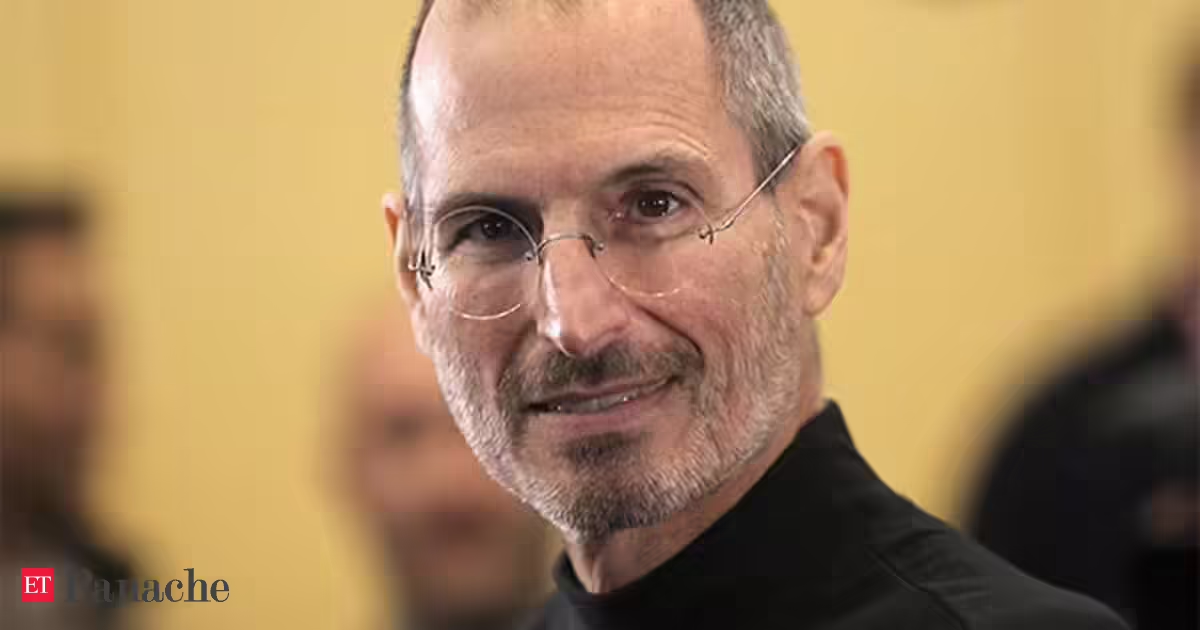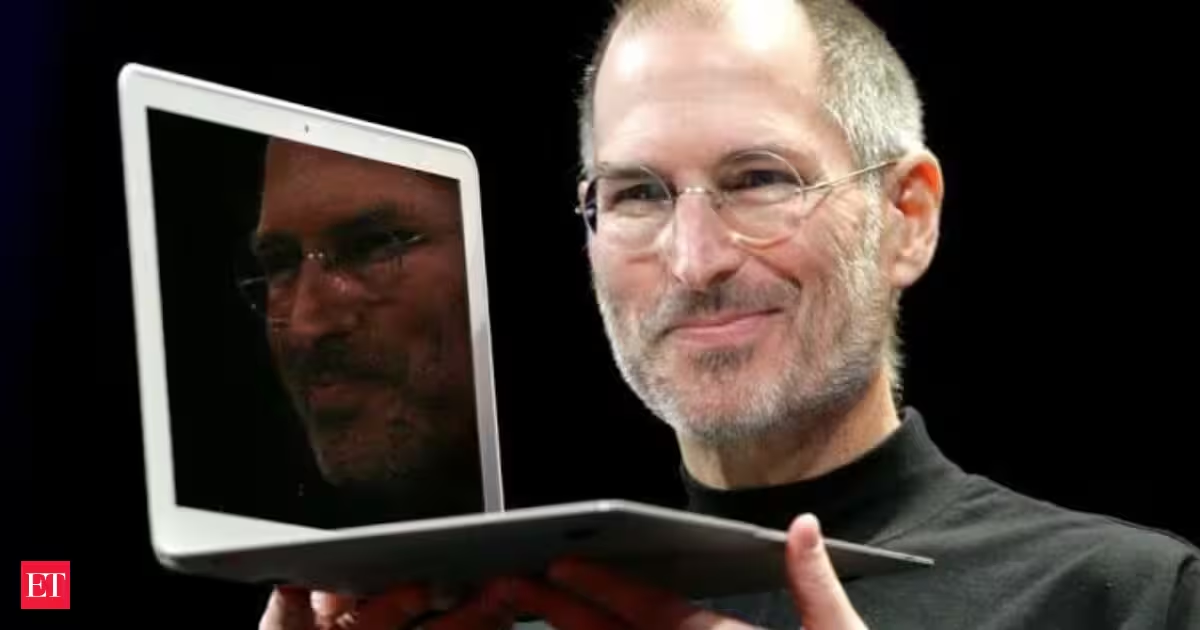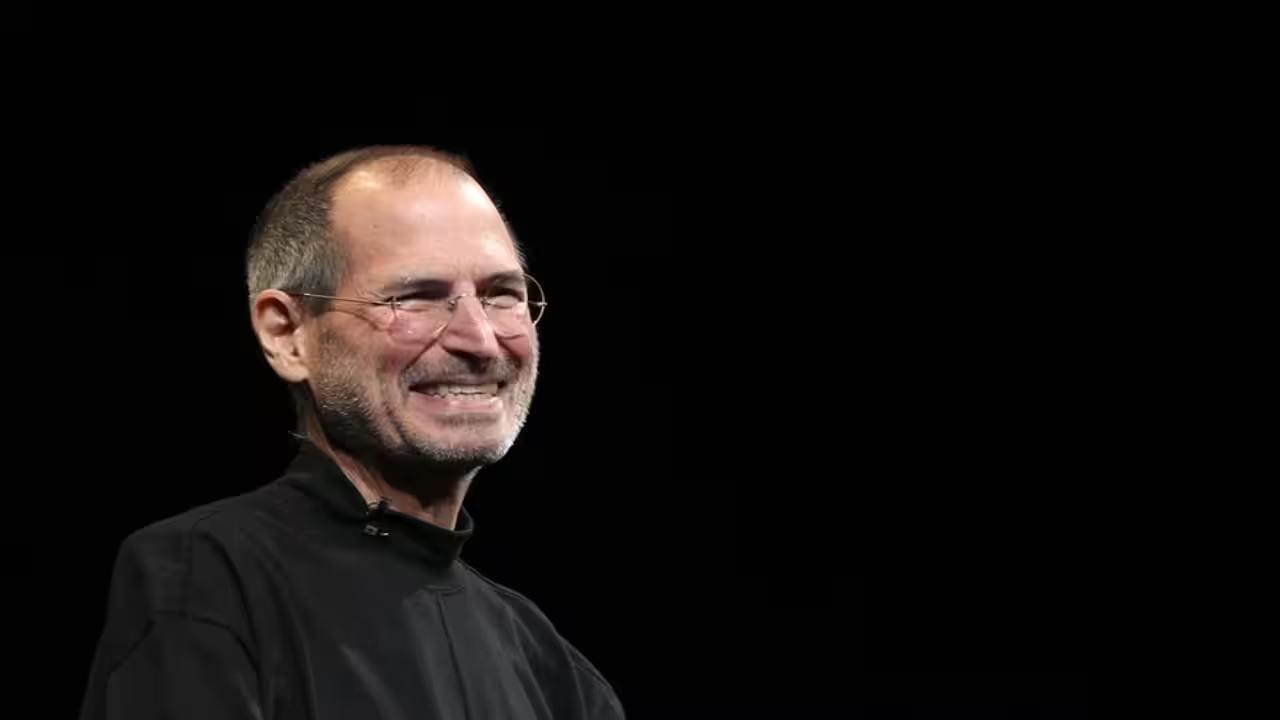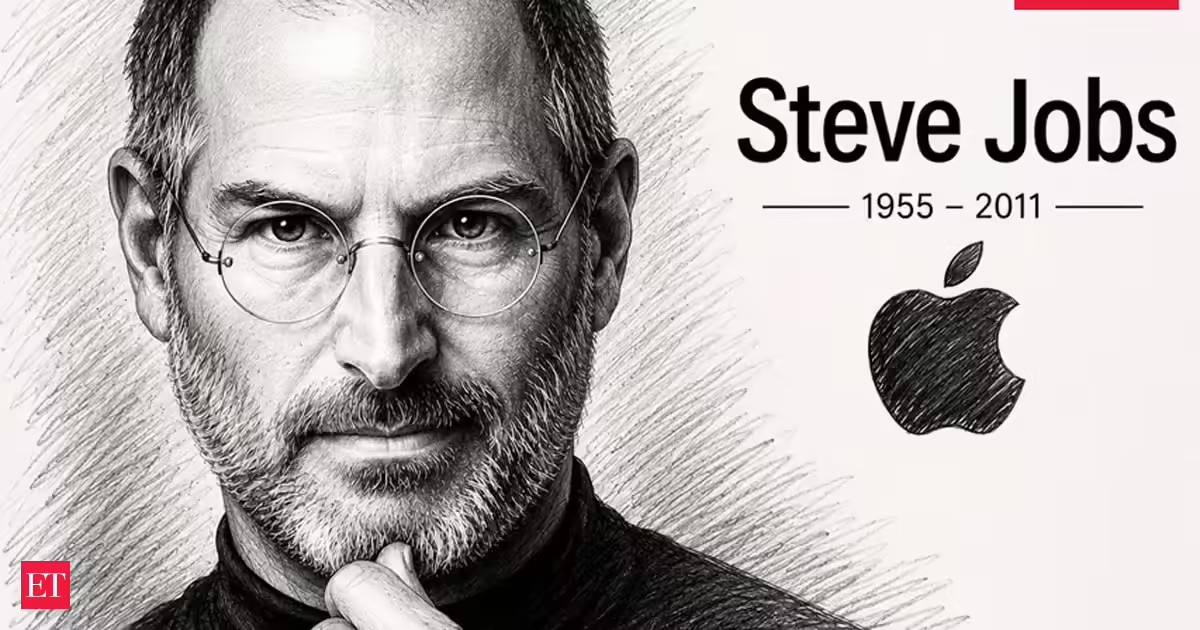
Quote of the day by Steve Jobs: Have you ever felt paralyzed by the fear of making the wrong choice, terrified of what others might think if you fail? It is so easy to drift through life weighed down by arbitrary expectations, holding back our truest passions to avoid temporary discomfort. Yet, when we strip away the daily noise and confront our finite time, the trivial anxieties that keep us small suddenly dissolve. True clarity arrives when we realize that our time here is limited. Today’s quote of the day by Apple founder Steve Jobs echoes this exact sentiment, urging us to unlock our true purpose.Quote of the day Steve Jobs: Remembering that I’ll be dead soon is the most important tool I’ve ever encountered to help me make the big choices in life. Because almost everything, all external expectations, all pride, all fear of embarrassment or failure—these things just fall away in the face of death, leaving only what is truly important. Remembering that you are going to die is the best way to avoid the trap of thinking you have something to lose. Quote of the day by Steve Jobs: ContextSteve Jobs delivered these iconic words during his famous Commencement Address at Stanford University on June 12, 2005. Speaking to a crowd of graduating students, Jobs shared deeply personal stories about overcoming adversity, including his recent diagnosis with pancreatic cancer. Facing his own mortality firsthand transformed his perspective on ambition, work, and legacy. He wanted young graduates to understand that life is far too short to live according to someone else's expectations. By sharing his vulnerable encounter with death, Jobs offered a timeless lesson on how mortality serves as the ultimate tool for stripping away life's illusions.You Might Also Like:Steve Jobs quote of the day: Deeper meaningAt its core, this Steve Jobs quote is a powerful reminder that ego, fear of failure, and social approval are purely self-imposed illusions. When viewed against the backdrop of mortality, human pride and the anxiety of embarrassment quickly lose their grip on us. Steve Jobs emphasizes that we come into this world with nothing and leave with nothing, meaning we actually have nothing to lose by pursuing our true passions. Remembering our temporary nature acts as a mental catalyst—it strips away unnecessary distractions, clarifies what truly matters, and empowers us to live courageously without the burden of external judgment.Why Steve Jobs quote matters todayIn today’s hyper-connected world, we are constantly bombarded by social media comparison, societal pressures, and the endless search for external validation. It has never been easier to lose sight of our authentic purpose while trying to fit into curated expectations. The Steve Jobs quote is a much-needed antidote to modern distraction and burnout. It challenges us to pause, reevaluate our daily priorities, and stop letting fear dictate our career and life choices. By embracing the reality of our finite time, we regain the urgency needed to build meaningful lives, pursue bold ideas, and focus on what genuinely fulfills us.Life lessons from today’s Steve Jobs quoteConquer the fear of failure: Understand that temporary embarrassment is meaningless in the long run, giving you the freedom to take bold risks without fear.Focus on what truly matters: Use the awareness of life’s brevity to filter out trivial noise, petty drama, and empty distractions that drain your energy.Follow your authentic path: Stop living to satisfy external expectations; instead, align your everyday choices with your personal values and core purpose.Embrace healthy urgency: Realize that time is your most precious non-renewable resource, driving you to act today rather than endlessly postponing your dreams.Let go of pride and ego: Recognize that pride often holds you back from learning and growing, while humility allows you to start fresh without hesitation.All about Steve JobsSteve Jobs, born on February 24, 1955, in San Francisco, California, grew into one of the defining visionaries of the digital age. He spent his childhood in Cupertino, where his fascination with electronics began at an early age. Although he enrolled at Reed College, he left before completing his studies, choosing instead to explore unconventional opportunities. He later worked at Atari and embarked on a journey to India, where he sought spiritual growth and a deeper understanding of life.In 1976, Steve Jobs joined hands with his close friend Steve Wozniak to establish Apple Computer from the garage of his family home. Their first creations, the Apple I and the hugely successful Apple II, played a pivotal role in bringing personal computers into homes and businesses, according to Britannica. Jobs believed technology should combine cutting-edge functionality with elegant, user-friendly design. This philosophy inspired the Macintosh, a groundbreaking computer that introduced millions of users to the graphical user interface, making computing more intuitive and accessible.Following his departure from Apple in 1985, Steve Jobs launched NeXT and purchased Pixar, which he transformed into a powerhouse in computer animation. The studio went on to release Toy Story, the world's first feature-length film created entirely through computer animation, setting a new benchmark for the entertainment industry.Steve Jobs returned to Apple in 1997 when the company was struggling financially and spearheaded an extraordinary revival. During his second tenure, Apple unveiled a series of landmark products, including the iMac, iPod, iTunes, iPhone and iPad, innovations that reshaped consumer technology and established Apple as one of the world's most influential companies.Even while dealing with prolonged health challenges, Steve Jobs remained actively involved in guiding Apple until he resigned as chief executive in 2011. He died on October 5 that year, but his ideas, products and design philosophy continue to influence technology, business and innovation across the globe.
Quote of the day from Steve Jobs: ‘All pride, all expectations, all fear of embarrassment just fall away in the face of death. Remembering that you are going to die is the best way to avoid the trap of thinking you have something to lose,’ Apple founder on life’s focus and purpose
Steve Jobs Quote of the Day: Steve Jobs' Stanford speech emphasized mortality's role in life decisions. In the quote, he stated that death removes external expectations and fears, revealing true priorities. This perspective helps avoid the trap of thinking one has something to lose. Jobs's life journey included founding Apple and leading Pixar's animation success. His enduring influence continues to shape technology and innovation globally.
933 words~4 min read