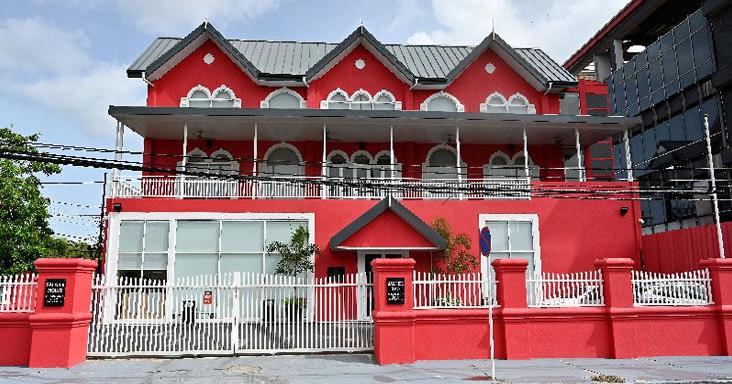
THE conduct of People’s National Movement (PNM) chairman and attorney Marvin Gonzales when he publicly burned a High Court order served on the party has been formally referred to the Law Association of Trinidad and Tobago (LATT).The referral came from attorney Aaron Mahabir, who urged the body’s disciplinary committee to determine whether Gonzales’ actions had breached the ethical standards expected of members of the legal profession.In a six-page letter issued yesterday to LATT president Lynette Seebaran-Suite, SC, Mahabir said the incident “has gone unanswered for too long” and raises issues that extend beyond politics to the administration of justice itself.The complaint stems from events at Balisier House, Port of Spain, on July 23, when Gonzales set fire to a court order obtained by the Trinidad and Tobago Police Service (TTPS) as part of its unexplained wealth investigation into the financing of the PNM’s headquarters.Before igniting the document, Gonzales declared that the party would not be intimidated and would not allow the order to “desecrate the grounds” on which the PNM was built.Mahabir, a former member of LATT’s council, said the question of whether Gonzales’ actions amounted to contempt of court was one for the Judiciary, Director of Public Prosecutions (DPP) and the police.However, he argued that the issue of whether the conduct met the standards expected of an attorney-at-law belonged squarely within the Law Association’s remit.“A Court Order is not a trophy and it is certainly not kindling,” Mahabir wrote. “It is one of the plainest expressions we have of the State’s judicial authority and whatever quarrel a litigant has with it, that quarrel belongs in Court, not on a stage.”He continued, “To burn one in public, while declaring that the party will not be afraid of it, sends an unmistakable message. A message that a Court Order is worth exactly as much as the goodwill of whoever it happens to be served upon.”Mahabir said that was a “troubling message for anyone to send,” but added that it was “graver still when it comes from an Attorney-at-Law, an officer of the Court bound by the Code of Ethics and by the ordinary decencies of the profession to uphold the authority of the Courts, not to set it alight for effect.”He said while the courts may determine whether contempt had been committed, “the question of what this conduct says about Mr Gonzales’ standing and by extension ours, as members of a profession sworn to serve the administration of justice, belongs to this Association.”Mahabir also questioned the Law Association’s silence in the week since the incident.“I do not for one moment suggest that this reflects any deliberate reluctance on the Association’s part,” he wrote. “But silence, however innocently arrived at, is easily misread, particularly where the member concerned holds high political office, as indifference, or worse, as the selective application of a standard that ought to apply to all of us equally.”He reminded the association that during his own six years on its council, it had not hesitated to act where members’ conduct threatened public confidence in the administration of justice.Standards expected of lawyersIn support of his position, Mahabir cited disciplinary decisions from England and the United States where attorneys faced professional sanctions for conduct that undermined respect for the courts, even after separate court proceedings had concluded.He also referred to recent disciplinary referrals in this country involving fabricated AI-generated legal authorities and allegations surrounding the preparation of fraudulent legal documents.According to him, those matters demonstrated that disciplinary action serves a different purpose from criminal or contempt proceedings.“The Courts, the Director of Public Prosecutions, or the Police Service may deal with the contempt,” he wrote, “and the question of what it says about a member’s standing as an Attorney-at-Law is ours to answer.”Mahabir said he was not asking the association to prejudge Gonzales or conduct disciplinary proceedings in public.Instead, he said he wanted the association to “use its public voice to tell the country where the profession stands”.He called on LATT to issue a public statement on whether publicly burning a court order was conduct consistent with the standards and ethics expected of lawyers, reaffirm the profession’s position on the sanctity of court orders and attorneys’ duty to uphold the authority of the courts, and consider whether Gonzales’ conduct warrants examination through the association’s disciplinary or complaints mechanisms.“I make this request...in the genuine belief that a timely statement would serve both the profession’s standing and the public’s confidence in the administration of justice,” Mahabir wrote.—Rickie Ramdass
LATT urged to review Gonzales’ conduct in burning court order
THE conduct of People’s National Movement (PNM) chairman and attorney Marvin Gonzales when he publicly burned a High Court order served on the party has been formally referred to the
744 words~3 min read