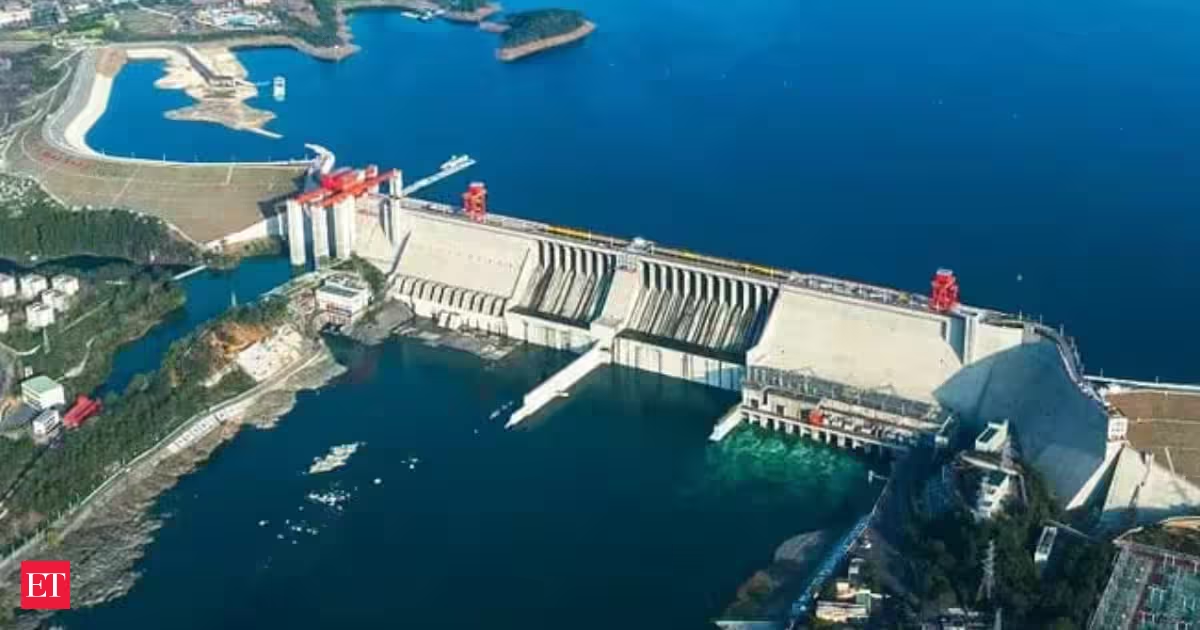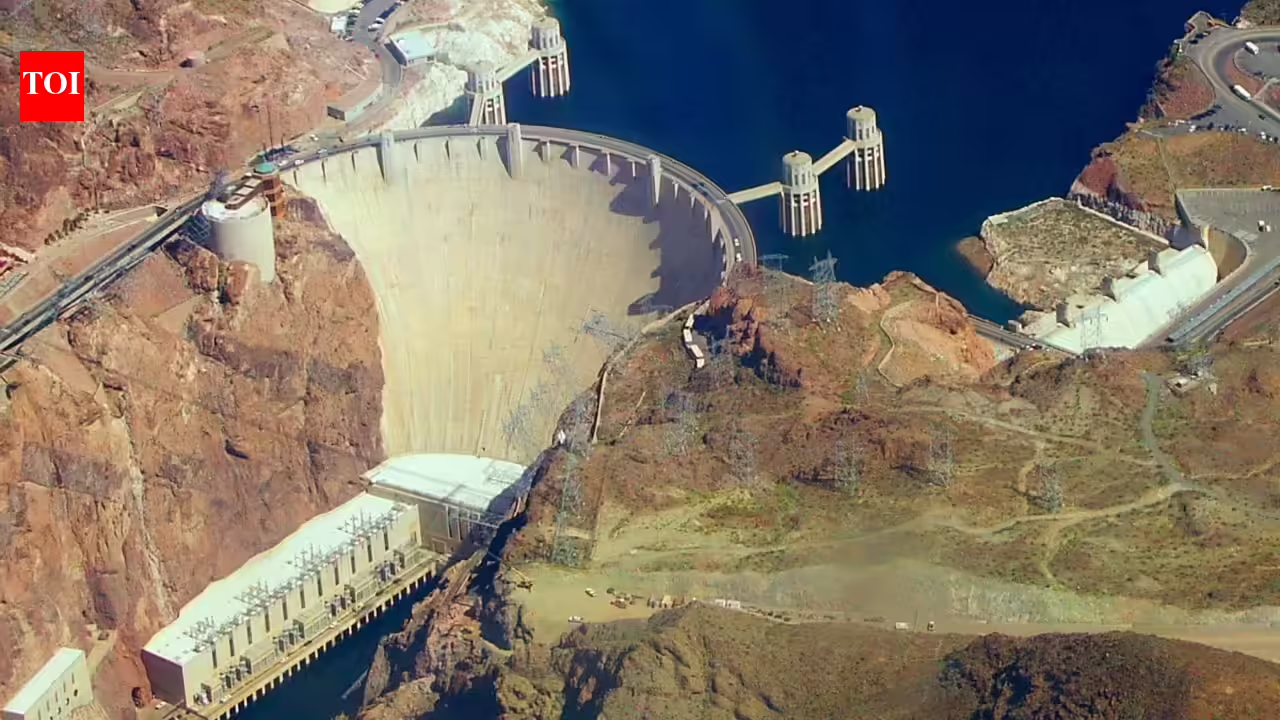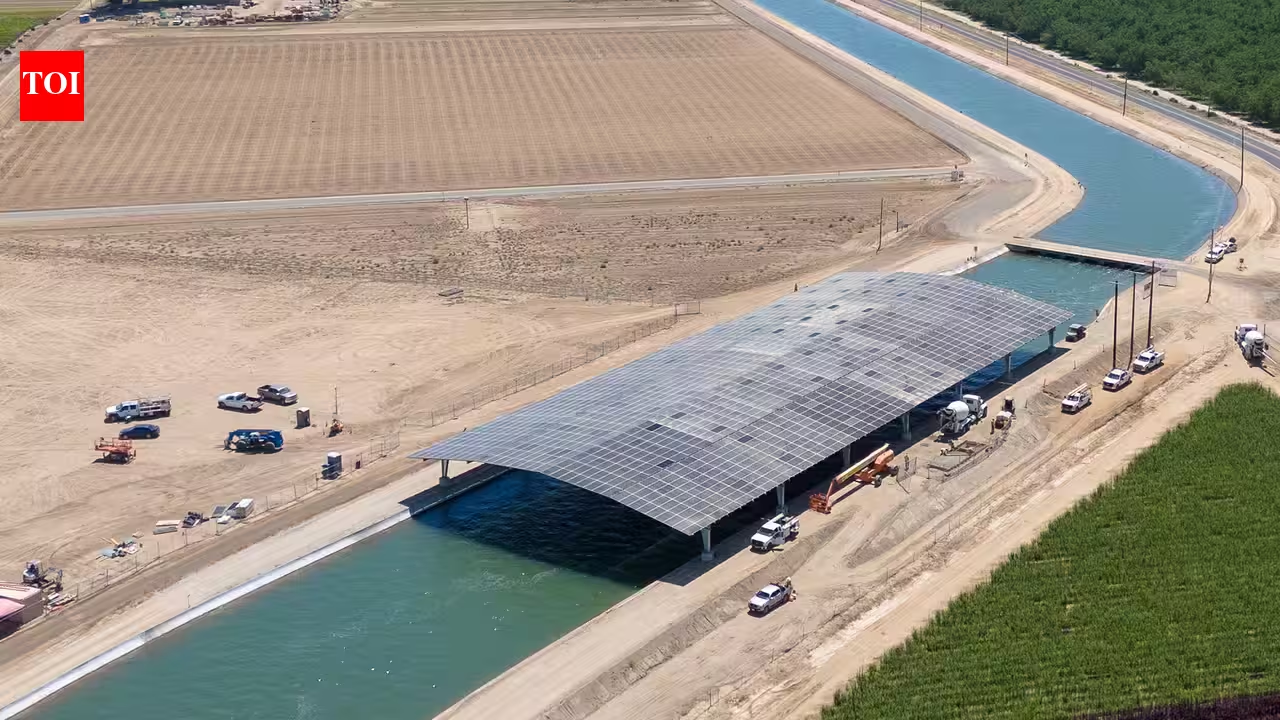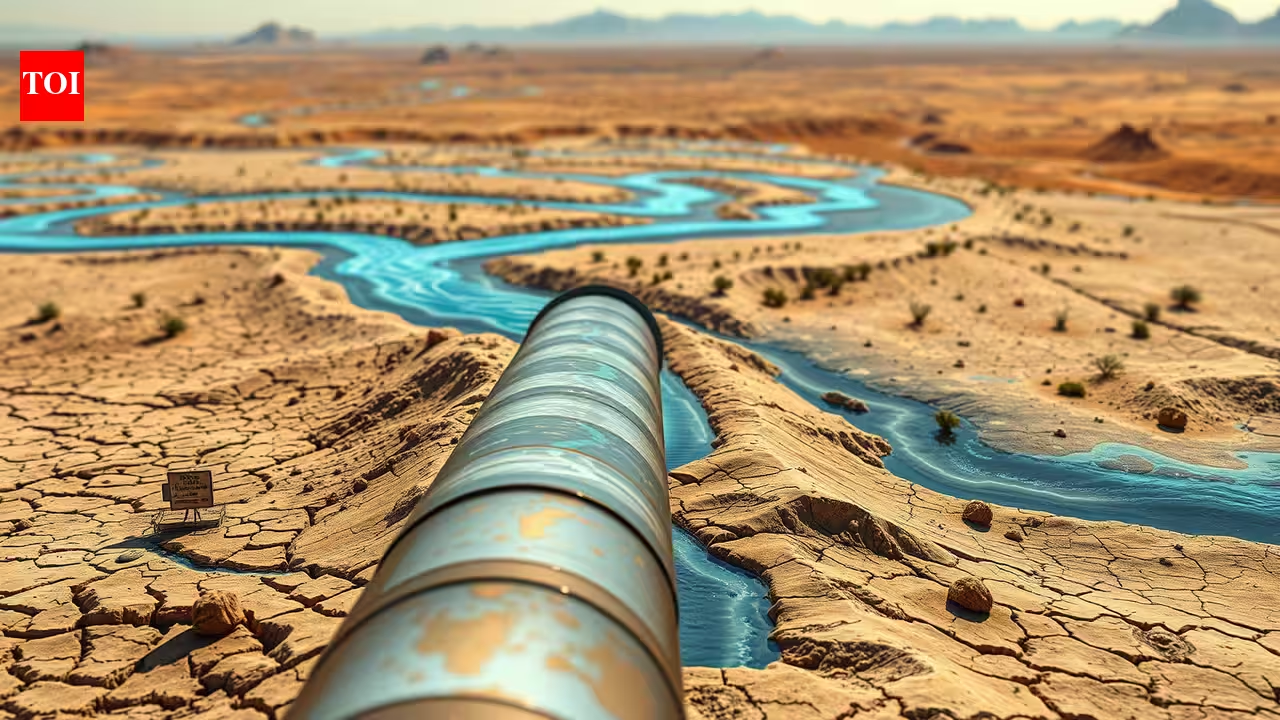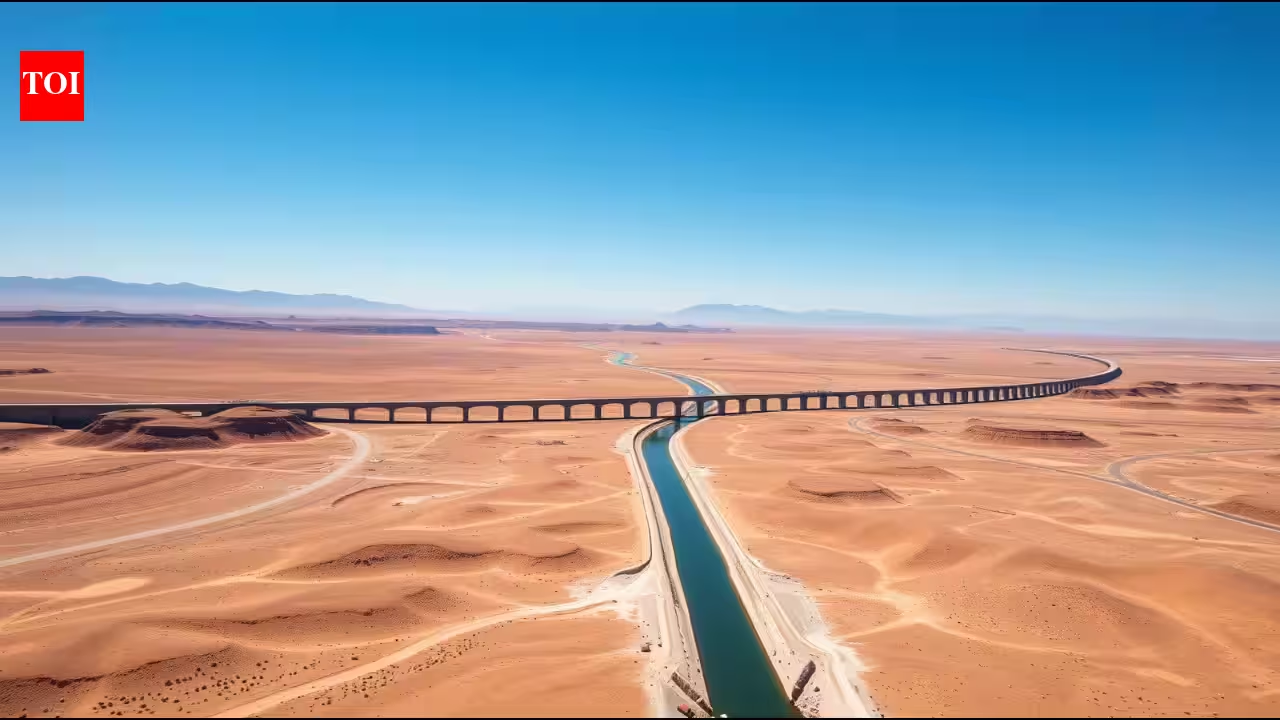
Representative Image of the Colorado River Aqueduct carrying water across mountains to Southern California (AI-generated image)In 1933, construction crews began work on the Colorado River Aqueduct, an engineering project designed to solve a problem that had been building for years: Southern California's rapidly growing coastal cities were running out of local water. The plan called for pulling water from the Colorado River near the California-Arizona border and pumping it uphill a total of 1,617 feet, roughly 493 metres, using a series of pumping stations, before letting gravity carry it the rest of the way across 242 miles, or 389 kilometres, of open desert to a reservoir near Riverside. Financed through a Depression era bond measure and completed in 1941, the aqueduct went on to supply the water that helped fuel decades of explosive urban growth across coastal Southern California.Why California needed a second major aqueductBy the mid-1920s, Los Angeles and its surrounding cities were already grappling with the limits of their existing water supply, despite having completed the Los Angeles Aqueduct from the Owens Valley more than a decade earlier. According to Metropolitan Water District of Southern California's own account, the district's founding engineer, William Mulholland, who had also driven the earlier Los Angeles Aqueduct project, turned his attention to the Colorado River as the region's next major water source, launching a four-year series of surveys beginning in 1923 to identify a viable route.According to the Water Education Foundation, this search for a new supply led directly to the creation of the Metropolitan Water District of Southern California in 1928, a special district formed under an act of the state legislature specifically to plan, fund and build the aqueduct on behalf of a coalition of Southern California cities.How the aqueduct was financed and builtVoters within the newly formed district approved a 220 million dollar bond measure in 1931 to pay for construction, a sum that would be worth roughly 3.5 billion dollars today. According to the American Society of Civil Engineers, which later recognised the completed aqueduct as a National Historic Civil Engineering Landmark, the project's scale was unprecedented for its time in terms of length, cost, pumping rate and total lift, built across some of the most severe desert climate and terrain conditions in the American Southwest.Construction ran from 1933 to 1941 and employed roughly 30,000 people over its eight-year duration, with as many as 10,000 workers active on the project at any single time, according to the Metropolitan Water District. The timing mattered enormously, since the project launched at the height of the Great Depression, offering a significant source of employment across the region at a moment when jobs were extremely scarce nationwide.What it actually took to move water across the desertMoving water from the Colorado River to coastal Southern California required overcoming serious engineering obstacles. According to the Water Education Foundation, the finished aqueduct included 92 miles of tunnels, 63 miles of concrete canals, 54 miles of concrete conduits, 29 miles of siphons and five separate pumping stations, using electricity generated in part by the newly completed Hoover Dam to lift water a combined total of more than 1,600 feet over several desert mountain ranges along the route.The tunnelling work alone presented major challenges, requiring crews to blast passages directly through the solid rock of multiple mountain ranges, including the San Jacinto Mountains, with individual tunnel sections ranging from as short as 338 feet to as long as 18.3 miles, according to the Metropolitan Water District's own project history.What the completed aqueduct delivers todaySince its completion in 1941, the Colorado River Aqueduct has carried water from Lake Havasu, near Parker Dam, to Lake Mathews in western Riverside County, where it enters the broader distribution network supplying Southern California's coastal cities. According to the Water Education Foundation, the aqueduct is capable of delivering more than 1.2 million acre-feet of water annually, more than a billion gallons a day, making it one of three major imported water systems serving the region, alongside the California Aqueduct and the original Los Angeles Aqueduct.Today, the Metropolitan Water District, the agency originally formed specifically to build this aqueduct, has grown well beyond its original mandate, now serving as a wholesale water supplier to a much larger network of member agencies across the region, a direct legacy of the infrastructure first envisioned by Mulholland in the 1920s.Why the Colorado River Aqueduct remains historically significantNearly a century after construction began, the Colorado River Aqueduct is still regarded as one of the defining infrastructure achievements of early 20th-century California, both for its engineering scale and for what it enabled. By securing a large, reliable supplemental water source beyond what local groundwater and the Los Angeles Aqueduct alone could provide, the project removed one of the fundamental constraints that would otherwise have limited how large Southern California's coastal cities could grow.Its recognition by the American Society of Civil Engineers as one of history's landmark civil engineering achievements reflects not just the scale of what was built, but the fact that the aqueduct's basic design, gravity fed canals combined with mechanical pumping over mountain ranges, has continued operating largely as originally engineered for more than eighty years, still delivering Colorado River water to millions of Southern California residents today.
How a 242-mile aqueduct carried Colorado River water across mountains and transformed Southern California
In 1933, construction crews began work on the Colorado River Aqueduct, an engineering project designed to solve a problem that had been building for years: Southern California's rapidly growing coastal cities were running out of local water. The plan called for pulling water from the Colorado River near the California-Arizona border and pumping it uphill a total of 1,617 feet, roughly 493 metres, using a series of pumping stations, before letting gravity carry it the rest of the way across 242 miles, or 389 kilometres, of open desert to a reservoir near Riverside.
871 words~4 min read