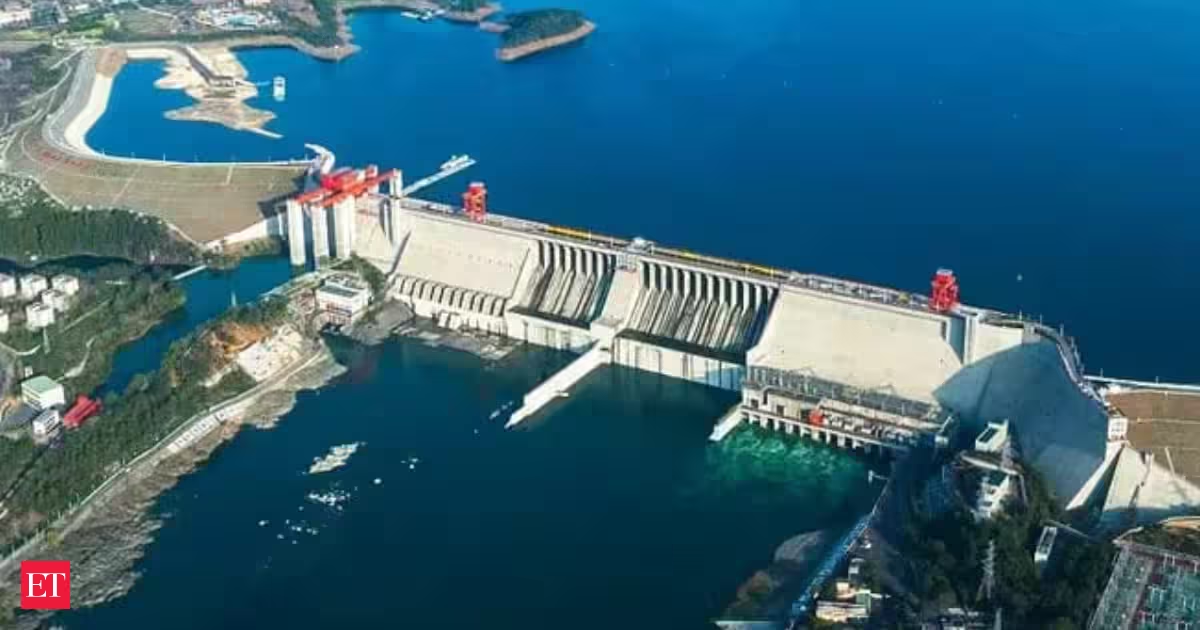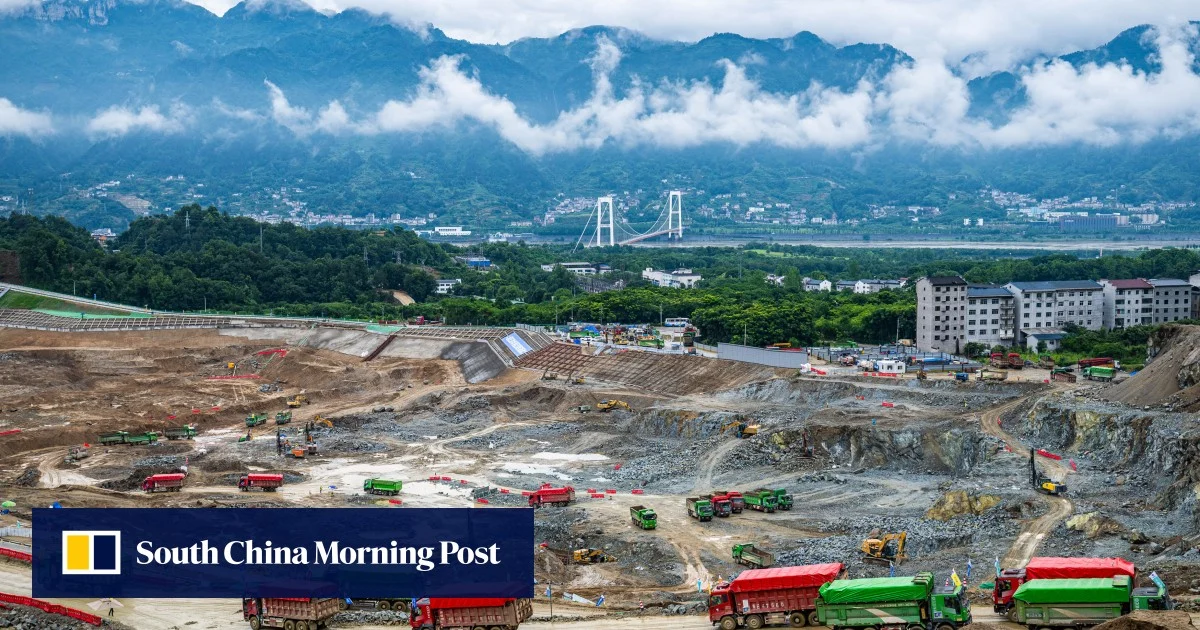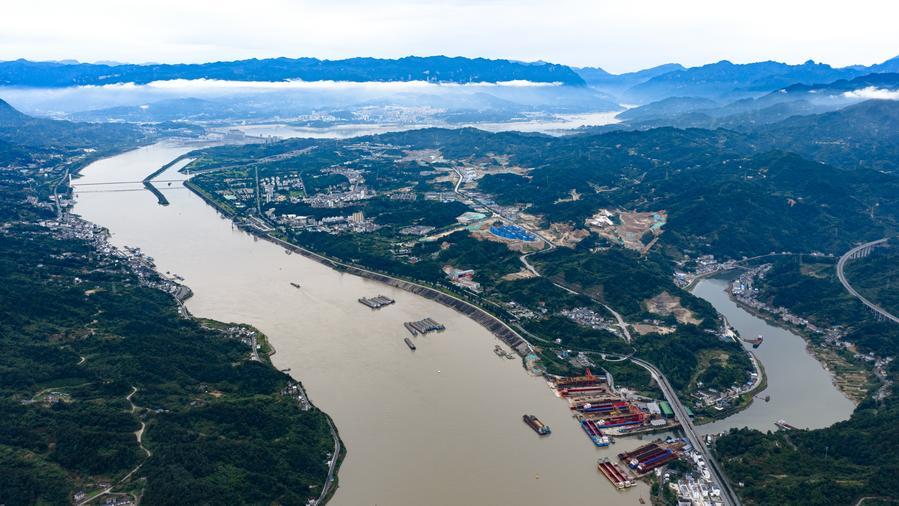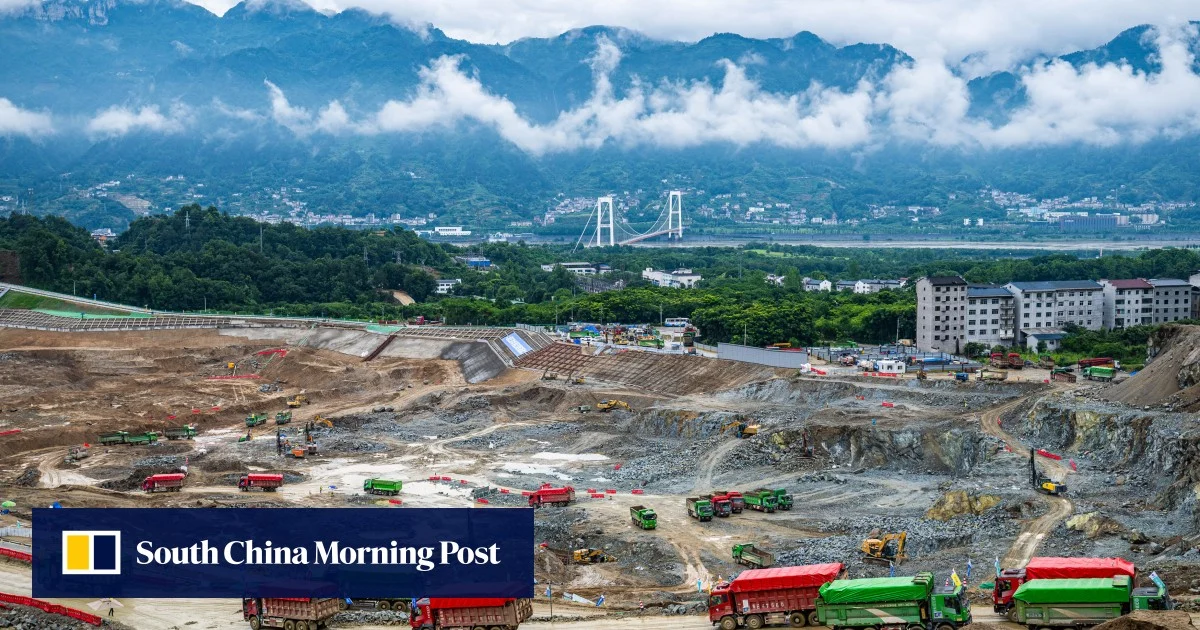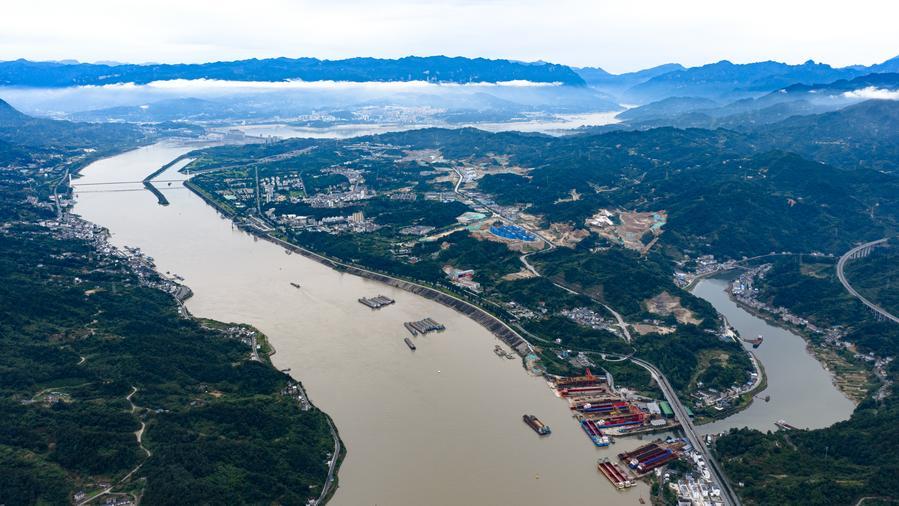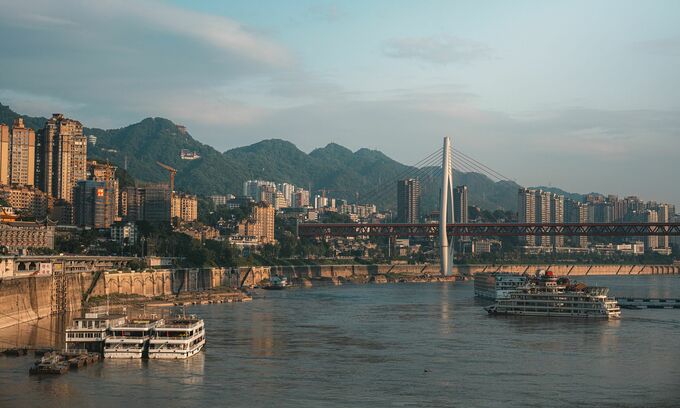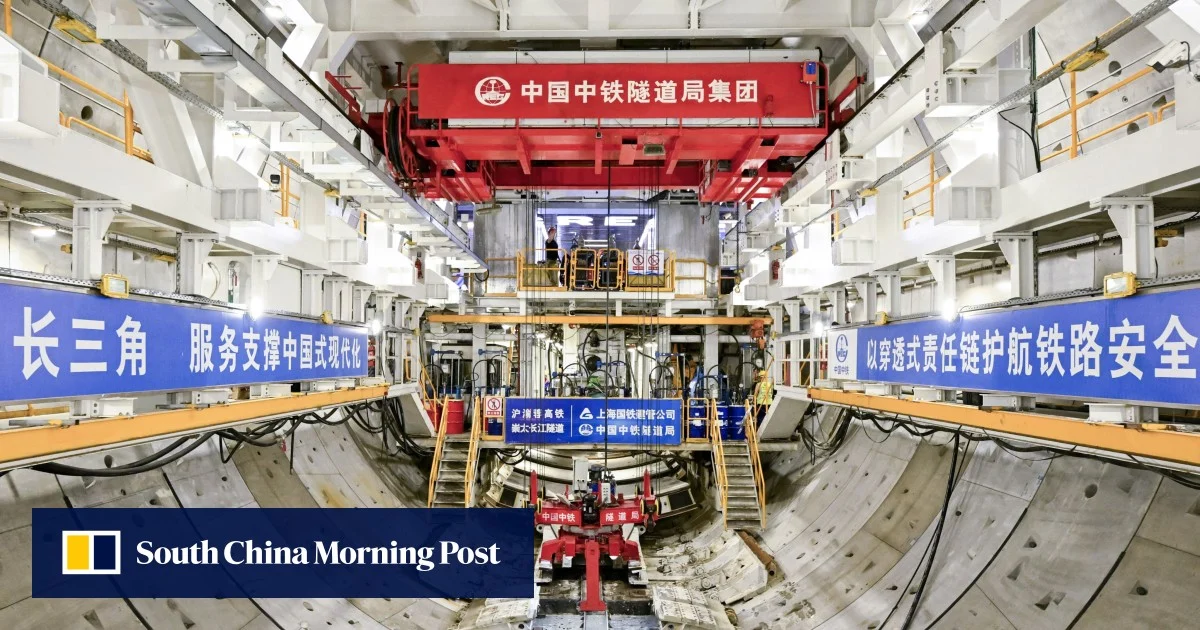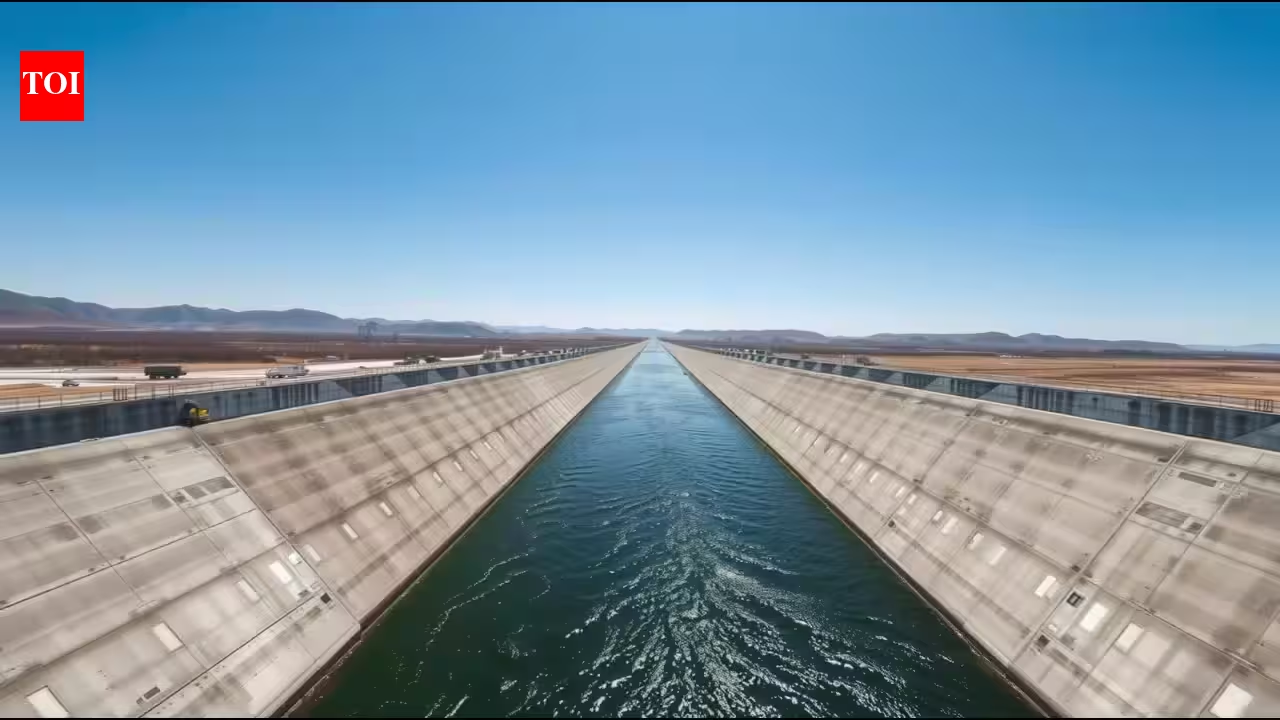
Representative Image of China's South-to-North Water Diversion Project (AI-generated image)In 2002, China's State Council formally approved construction of the South-to-North Water Diversion Project, an engineering undertaking designed to move water from the relatively water-rich Yangtze River basin in the south to the chronically dry cities and farmland of northern China, including Beijing. More than two decades later, the project stands as the largest water transfer scheme ever built anywhere in the world, moving tens of billions of cubic metres of water annually through thousands of kilometres of canals, tunnels and aqueducts. According to Chinese authorities, more than 185 million people across northern China have directly benefited from the water it now delivers. Achieving that scale came at a high human cost, with at least 330,000 residents relocated from their homes to make way for the project's reservoirs and canals.Why China decided to move water across the countryNorthern China, including the capital Beijing, is home to roughly half the country's population but only a small share of its water resources, a structural imbalance that has driven chronic water scarcity across the region for decades. According to a comprehensive review published in the peer-reviewed journal Water, the idea of transferring water from the south to the north was first proposed by Chairman Mao Zedong in 1952, though the government lacked the financial resources and engineering capability to act on it for decades. It was only after extensive feasibility studies through the 1990s that the State Council formally approved the project's master plan in 2002, with construction beginning that same year.The project was designed around three separate routes, the Eastern, Central and a still incomplete Western route, each drawing water from a different point along the Yangtze River basin and channelling it north through a combination of new canals and, in the case of the Eastern route, sections of the centuries-old Grand Canal.How much water the project actually movesAccording to an official statement from the Chinese government, released by China's Ministry of Water Resources in December 2024, the project's middle and eastern routes had by that point diverted more than 76.7 billion cubic metres of water to northern China over the preceding decade, directly benefiting over 185 million people. The ministry credited the project with supporting more than 16 trillion yuan, or roughly 2.23 trillion US dollars, in GDP growth across northern China's water-dependent regions.The Central Route, sometimes referred to as the Grand Aqueduct, draws water from the Danjiangkou Reservoir on a tributary of the Yangtze and channels it more than 1,200 kilometres north, largely using gravity rather than mechanical pumping, reaching Beijing after its completion in 2014. The Eastern Route, built partly along the historic path of the Grand Canal, moves water toward Tianjin and other cities in the country's northeast.Why the project required relocating hundreds of thousands of peopleRaising the water level of the Danjiangkou Reservoir to supply the Central Route required flooding land across parts of Hubei and Henan provinces, forcing the relocation of communities that had lived along the reservoir's edges for generations. Roughly 330,000 people were relocated as part of this process, described at the time as one of the largest engineering-driven resettlements in China's modern history.According to the Water journal review, this resettlement effort brought significant disruption to displaced communities, many of whom had to abandon established livelihoods such as fruit farming and fishing for new occupations in unfamiliar locations. Reports from residents in subsequent years pointed to ongoing frustrations, including disputes over compensation, housing quality and lost income, with some displaced families formally petitioning local authorities over these grievances well after their initial relocation.What environmental concerns the project has raisedBeyond the human cost of relocation, researchers have also flagged a range of environmental consequences tied to the project's scale. According to the Water journal review, these include altered river ecology along the Yangtze and Han river systems, concerns over water quality and pollutant transfer between river basins that were never naturally connected, and risks to biodiversity in areas affected by reduced downstream flow, particularly along the Han River, which feeds the Central Route's main reservoir.The review also notes that the project's total projected cost, once fully completed, is expected to run into the tens of billions of dollars, making it not only the largest water transfer scheme in the world by volume, but also among the most expensive single infrastructure projects China has ever undertaken.What the project's completion is expected to look likeChina's Ministry of Water Resources has stated that the full three-route system is intended to transfer roughly 44.8 cubic kilometres of water annually once completed, with a target completion date set for 2050. The still unfinished Western route, intended to draw water from the upper reaches of the Yangtze basin across difficult, high-altitude terrain, remains the most technically and environmentally challenging phase of the project and continues to be studied rather than actively constructed.More than two decades after ground was first broken, the South-to-North Water Diversion Project stands as a striking example of the scale modern infrastructure can reach when a government commits to fundamentally reshaping a country's water geography, delivering measurable benefits to hundreds of millions of people in the water stressed north, while leaving a lasting and still unresolved legacy for the hundreds of thousands of residents who were displaced to make it possible.
China spent decades moving water across a continent. The world's largest diversion project now serves 185 million people
In 2002, China's State Council formally approved construction of the South-to-North Water Diversion Project, an engineering undertaking designed to move water from the relatively water-rich Yangtze River basin in the south to the chronically dry cities and farmland of northern China, including Beijing. More than two decades later, the project stands as the largest water transfer scheme ever built anywhere in the world, moving tens of billions of cubic metres of water annually through thousands of kilometres of canals, tunnels and aqueducts.
882 words~4 min read