The Bottleneck of Traditional CRUD
When you build a standard Laravel application, you typically follow the CRUD (Create, Read, Update, Delete) paradigm. You have a single User model and a single UserController. This controller handles writing data (creating a user) and reading data (fetching a list of users). Under the hood, both the read and write operations interact with the exact same MySQL or PostgreSQL database table.
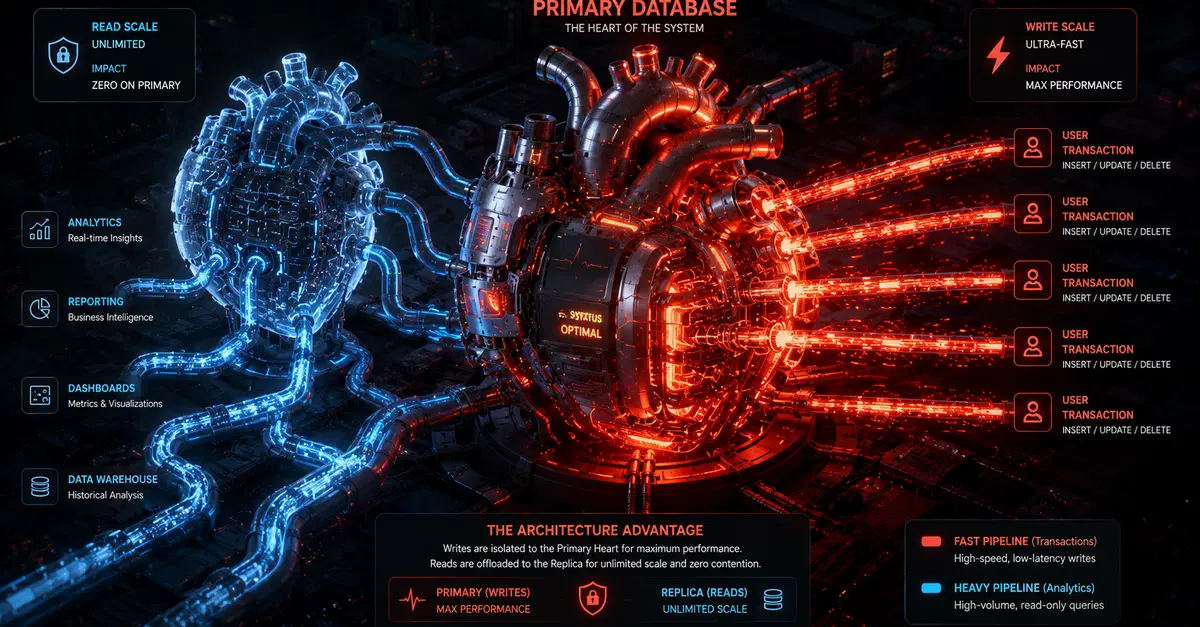
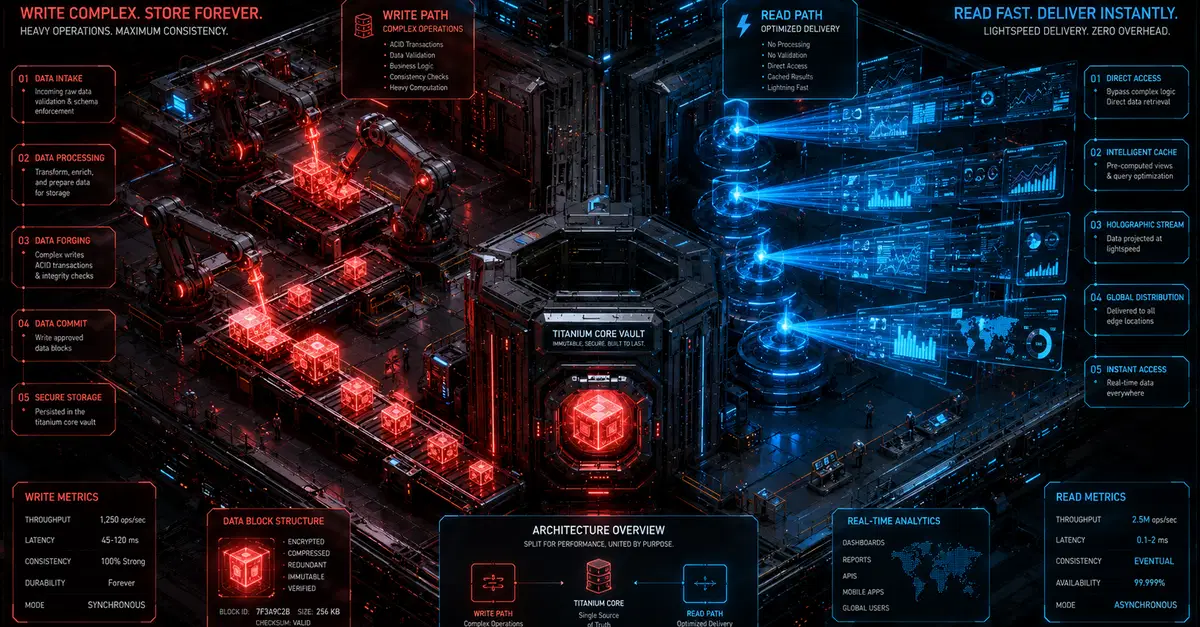
For most applications, this is perfectly fine. However, in high-traffic enterprise systems, the workload is rarely symmetrical. In a reporting dashboard or an e-commerce platform, your application might execute 1,000 "Read" queries for every 1 "Write" query. If you use the exact same database and the exact same Eloquent models for both, your heavy write operations (which lock rows and require transaction integrity) will start blocking your lightning-fast read operations, bringing your application to a crawl.
At Smart Tech Devs, when we architect platforms that demand massive scalability, we implement CQRS (Command Query Responsibility Segregation). CQRS is an architectural pattern that strictly separates the operation that mutates data (the Command) from the operation that reads data (the Query).