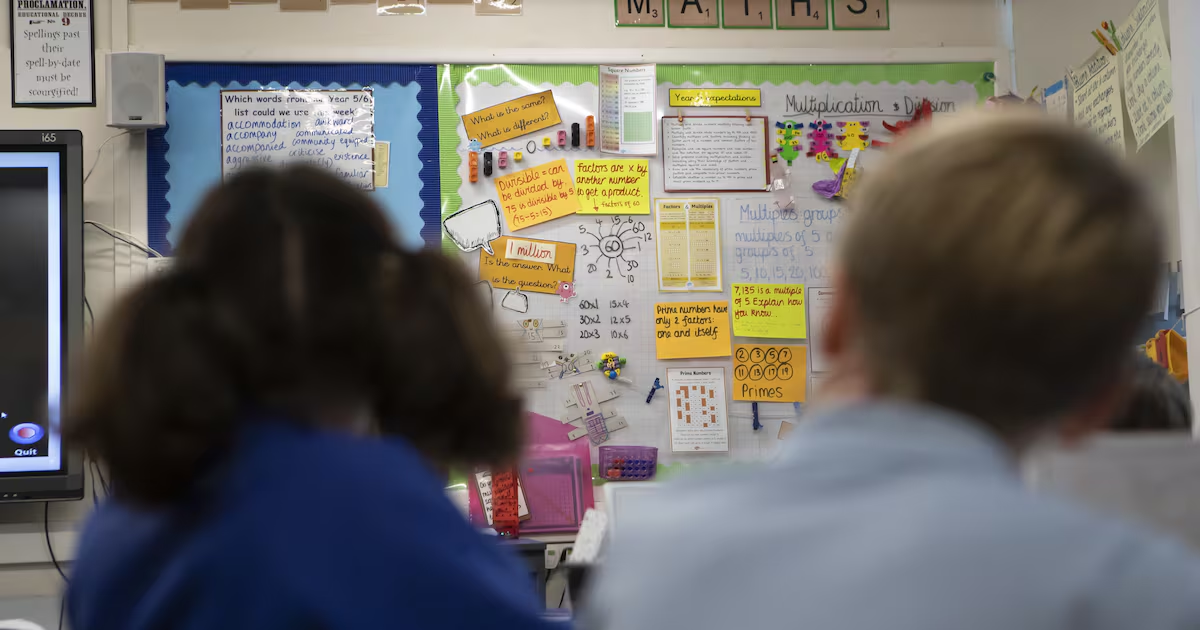
Sir, – I wholeheartedly echo Paul Gillespie’s sentiments in last weekend’s World View (Why do Irish people speak so few languages?“, July 25th).The old excuses of “The whole world speaks English, why should I bother?” and “I can do my translation using AI” are just not valid in this internationally competitive world.In continental Europe, the average age at which children start learning a foreign language is between six and eight years old. In some countries, they even start in kindergarten. Learning languages this early strengthens cognitive flexibility in young brains and enables children to excel at tasks requiring focus and adaptability.They can process information more efficiently, thus supporting literacy and academic success. My own children grew up in a multilingual environment, so I can definitely substantiate this.AI will never entirely replace human translators. It may handle repetitive tasks swiftly, but humans will always be required to review and edit. AI will always struggle with issues such as cultural nuances, localised content and creative writing. Communication will always require facets such as tone, emotion and culture. AI cannot match the empathy and judgment that human interpretation provides.Modern-day French, for example, contains roughly 150,000 words. Modern-day English comprises approximately one million. Quite a bit of overlap there. Machines will never provide the 100 per cent correct translation between the two. In the economic world, it is estimated that Irish SMEs lose 11 per cent of actual or potential export contracts due to language barriers. To quote Enterprise Ireland, “The lack of language skills is a significant trade barrier, with Ireland lagging when it comes to language proficiency, especially when compared with other EU member states”.So, by all means promote Irish in schools but do not forget we are part of Europe. We like to holiday there, buy their products and sell them ours. Imagine if they stopped learning our language. There would be a communication breakdown. We would be reduced to sign language, charades and guesswork. Not a happy thought.Our European neighbours are teaching English to five-year-olds. I’m not suggesting that we bottle-feed foreign tongues to our offspring, but at least instil in them an interest in learning a foreign language from a relatively early age. – Yours, etc,PAUL CLEARY,Castleknock,Dublin 15.
Promote Irish in schools, but remember we are part of Europe
In continental Europe, the average age at which children start learning a foreign language is between six and eight years old
369 words~2 min read