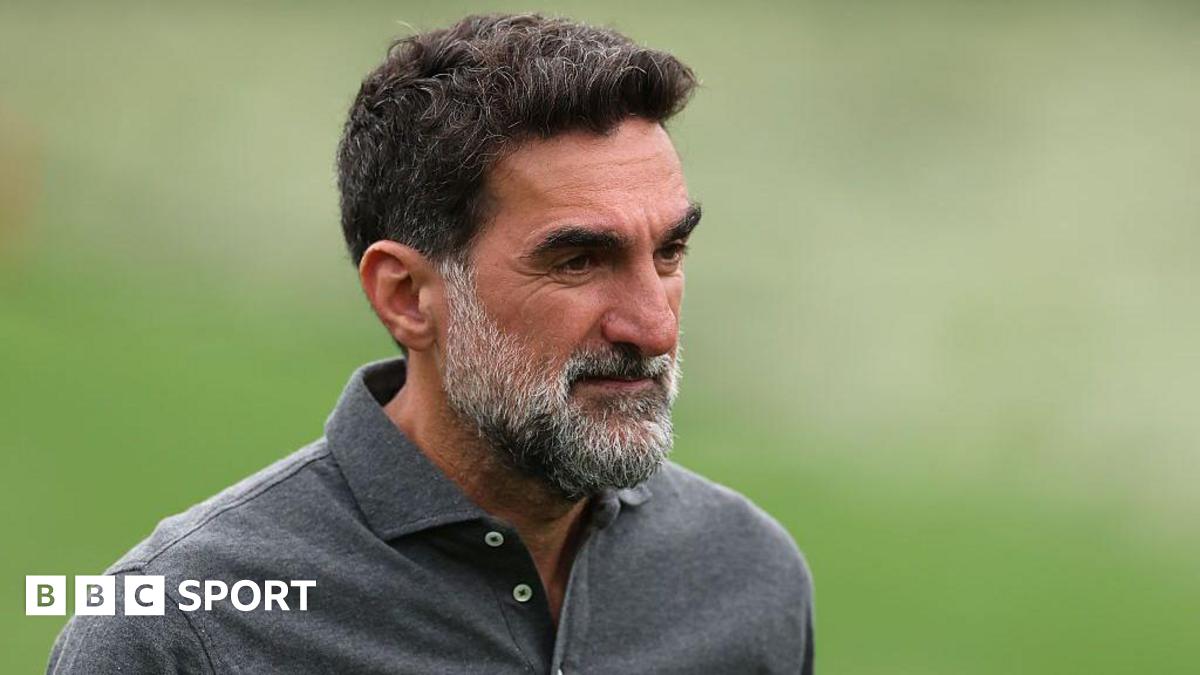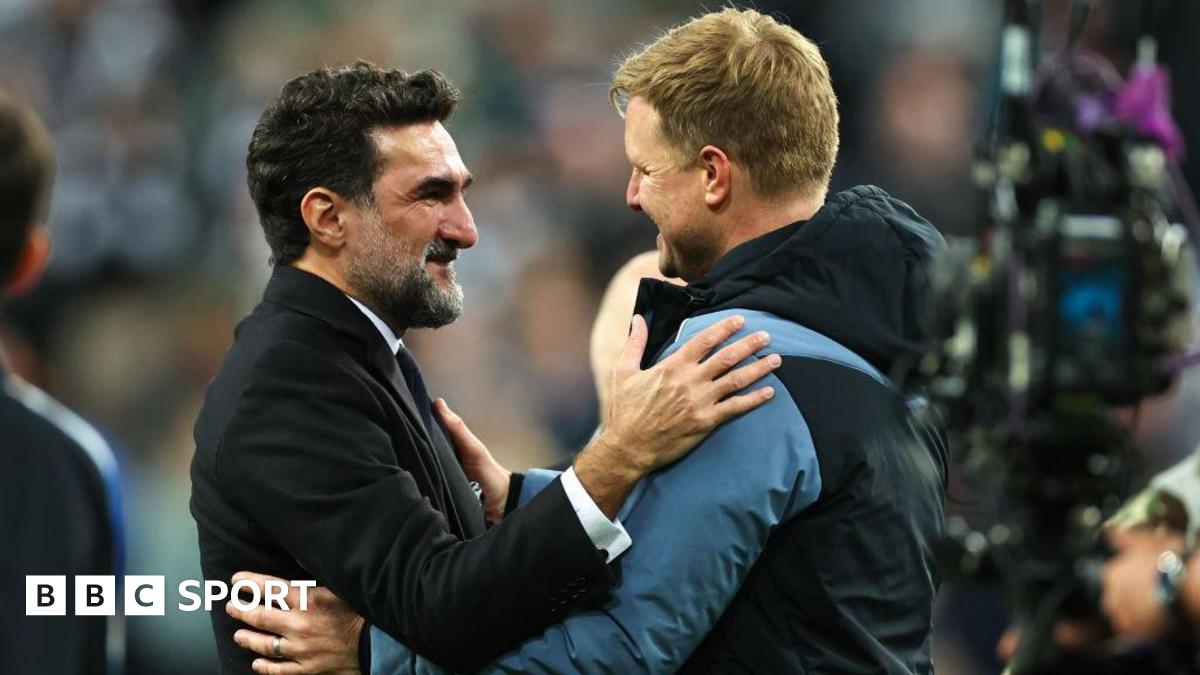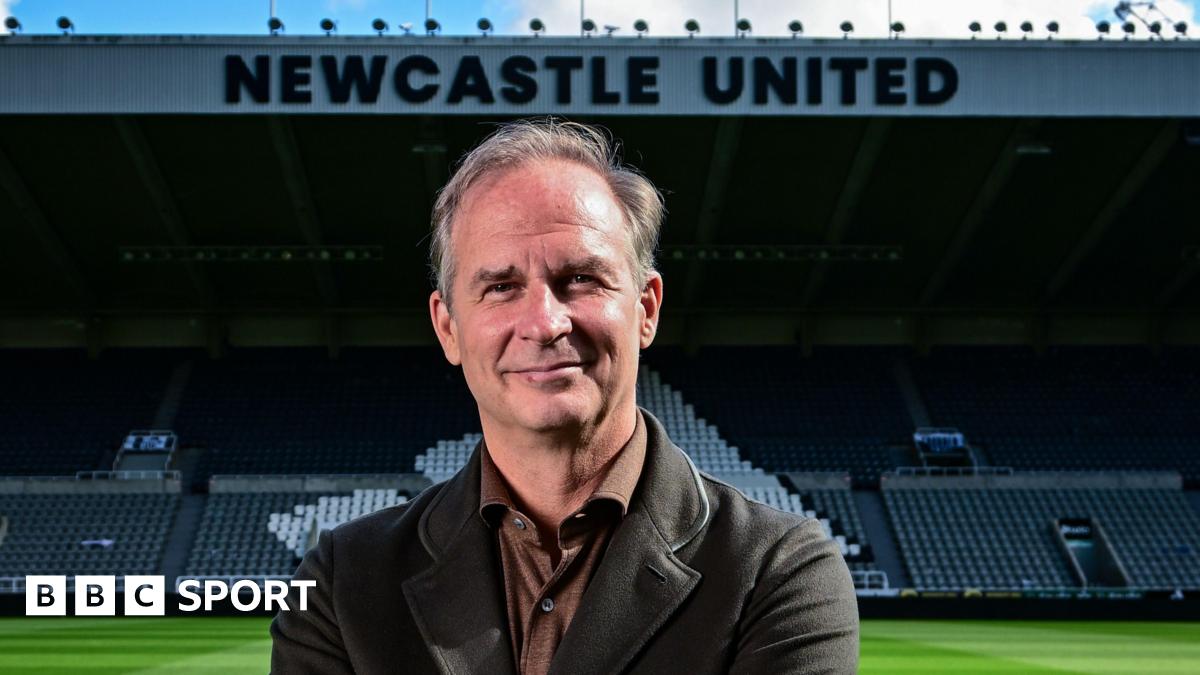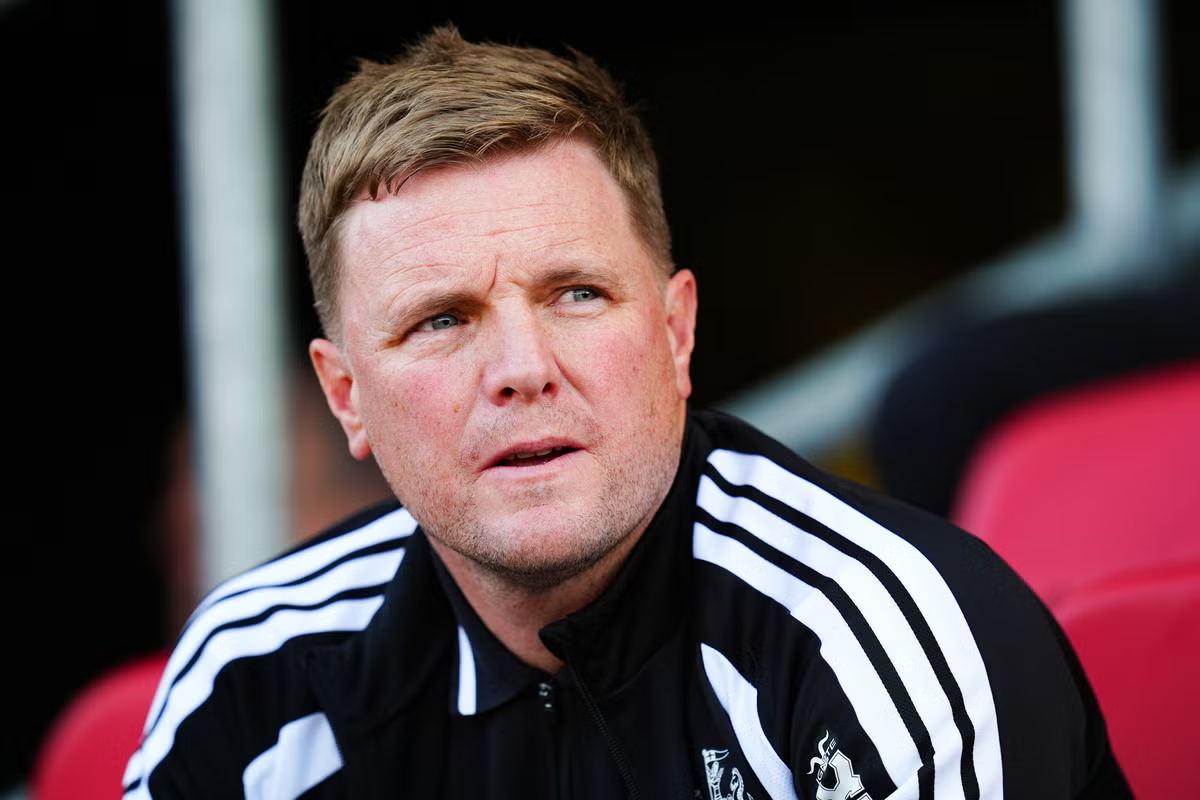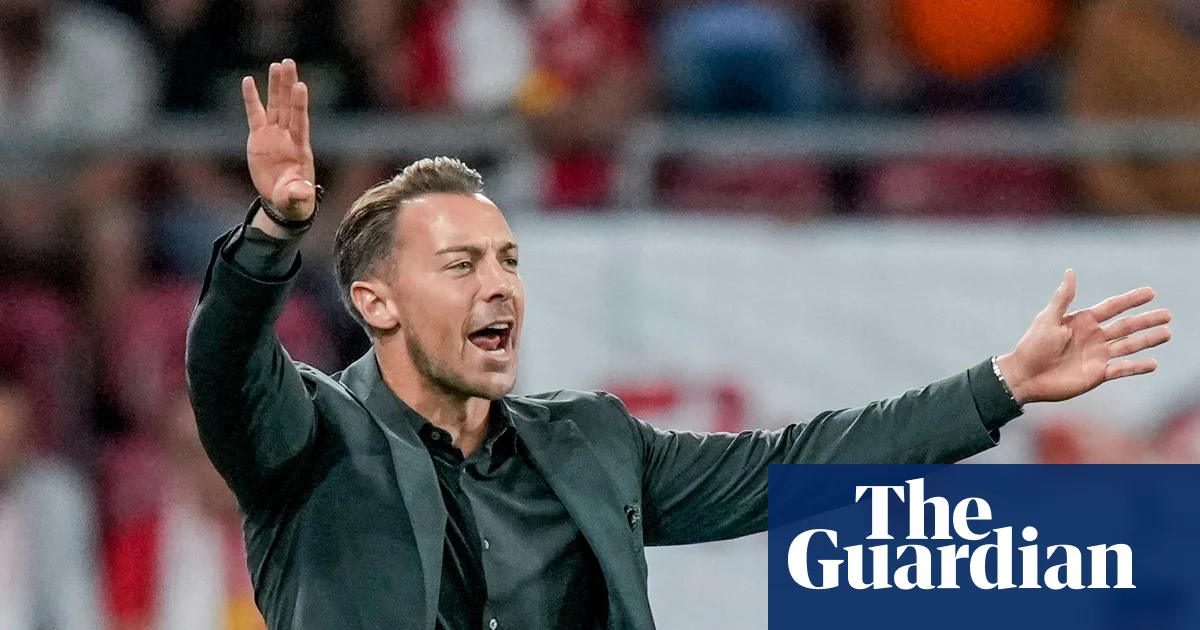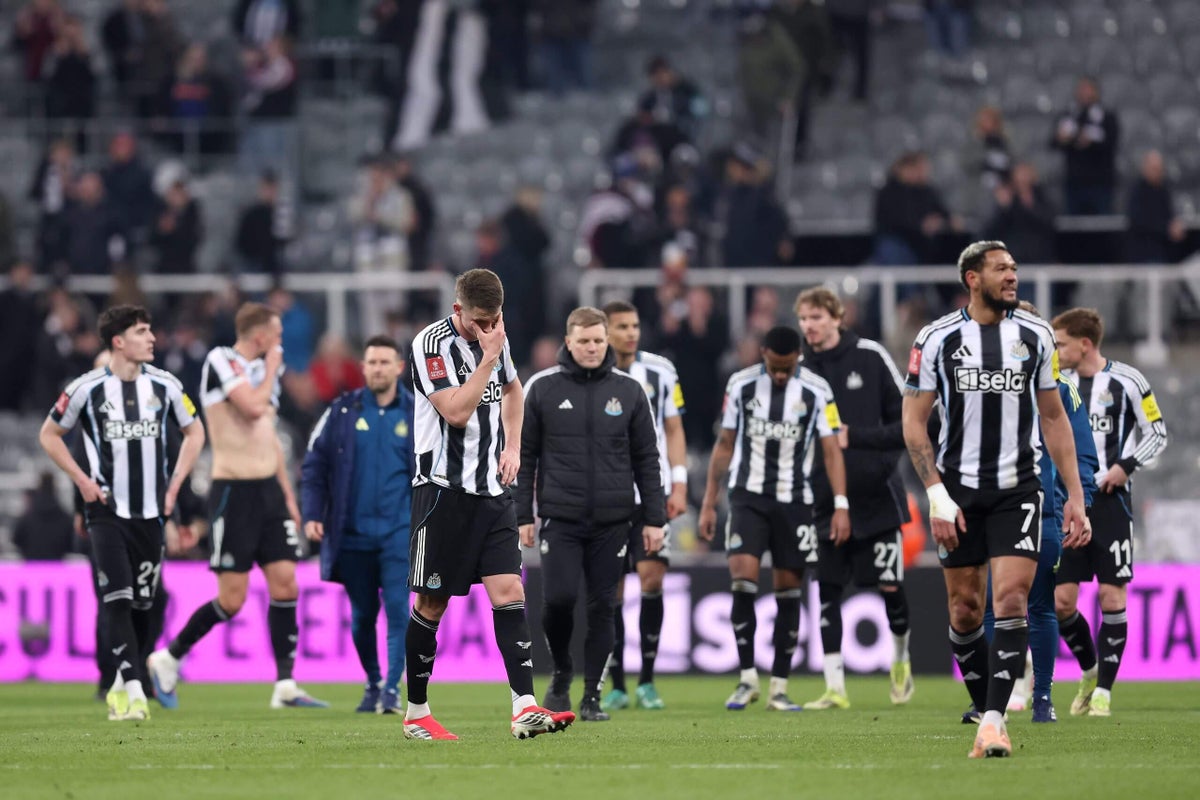
In late 2024, a few months before the high point of Newcastle United’s modern history, the club’s chairman Yasir Al-Rumayyan made a speech at the Future Investment Initiative Institute in Riyadh.It is fair to say Newcastle’s 2-1 defeat at Chelsea a couple of days earlier was not on the agenda. Al-Rumayyan spoke of the “infinite horizons” and many challenges facing Saudi Arabia and the world. He highlighted the opportunities presented by artificial intelligence and the threat of climate change.The most striking comments concerned a change of focus for Saudi Arabia’s Public Investment Fund (PIF), of which he has been governor since 2019. He said international investment had been a high priority for PIF over the previous decade, buying stakes in assets such as the Walt Disney Company, Uber, Facebook as well as Newcastle United, but “now we’re more focused on the domestic economy”.It didn’t get much exposure in sports pages at the time — and was largely forgotten as Newcastle embarked on an outstanding run that earned them Champions League qualification as well as the Carabao Cup, the club’s first trophy since 1969 — but it certainly resonated with some back on Tyneside.A few weeks before that, The Athletic had run an article appraising the first three years of PIF’s ownership of Newcastle. Chris Waugh and George Caulkin highlighted areas of progress, but there was also a line that, looking back, jumps off the page. They mentioned that some at the club were “worried that Saudi priorities have shifted towards internal investment”, adding there has been “frustration at the slow pace of their ‘process-driven’ structure”. Beyond that, PIF had suddenly and dramatically increased its focus on the Saudi Pro League. Could those two hyper-ambitious football projects really exist hand in hand? Yasir Al-Rumayyan has suggested PIF’s focus is turning to domestic investment (Stu Forster/Getty Images)To repeat, this was 2024, long before Alexander Isak, Anthony Gordon, Sandro Tonali and Bruno Guimaraes had decided their futures lay elsewhere, long before painful rejections from top transfer targets this summer (Johan Manzambi and Victor Munoz preferring Aston Villa and Liverpool respectively) and last (Liam Delap and Joao Pedro preferring Chelsea, Matheus Cunha, Bryan Mbeumo and Benjamin Sesko preferring Manchester United and Hugo Ekitike preferring Liverpool), long before the frustrations that left manager Eddie Howe wearied, feeling he had taken the club as far as he could before his departure was confirmed on Friday afternoon.When Newcastle appointed Howe in November 2021, a month after the PIF-led takeover, it felt like he would be the architect for the first phase of the new era: climbing from the lower reaches of the Premier League, building the foundations for whatever was to follow before — as invariably happens after a takeover on such a grand scale — the pace of progress was deemed insufficient and another, more high-profile coach was entrusted with phase two, delivering the type of success the owners demanded.It has played out differently. The initial post-takeover expectation of a Newcastle supercharged by Saudi wealth and ambition gradually gave way to the more mundane reality of a club constrained not just by financial regulations — which is undeniable — but by the lack of stability, focus, vision and real drive from the top.Some will take issue with that suggestion. They will point to the dramatic change in investment, commercial revenue and above all mood since the bleakness of Mike Ashley’s cold, stagnant, miserable ownership, which saw Newcastle relegated twice and firmly on course for a third until PIF arrived and hired Howe to lead them to safety and, ultimately, beyond. Anyone can see the difference between PIF-era Newcastle and the shell of a club they bought in 2021 after 14 years of stagnation under Ashley. But there is also a distinct difference between the bullishness of the immediate post-takeover period — the “super club” talk, the excited talk of stadium plans, training-ground plans and competing (and ultimately winning) all the big prizes — and the last two years, in which the project seemed to be slowing down, perhaps at risk of being blown off course, even before Isak’s bombshell last summer and the regression that followed on the pitch.Alexander Isak’s acrimonious departure disrupted much of last summer for Newcastle (George Wood/Getty Images)Cost-control regulations are a big part of the story, as is the fact that the Premier League’s established elite rushed to tighten those rules even as the Newcastle takeover was going through, bringing far tighter scrutiny of commercial deals with “related parties”. Unbridled spending at a level that blows competitors out of the water, as Chelsea and Manchester City did after takeovers by Roman Abramovich and Sheikh Mansour respectively in the 2000s, is simply not possible in the era of financial regulation.But the progress they have enjoyed has been based overwhelmingly on the moves made and foundations built in that immediate post-takeover period: the appointment of Howe, the signings of Kieran Trippier, Guimaraes, Nick Pope, Sven Botman, Isak, Gordon, Tonali and Harvey Barnes. Their hit rate across those first four transfer windows was all the more impressive when you consider that this is when new ownership regimes are often wildly erratic, particularly when under serious pressure to build fast from a difficult starting point.Eddie Howe set to leave Newcastle United after five yearsDavid OrnsteinAnyone looking at the progress Newcastle had made by the third anniversary of the takeover — indeed, The Athletic looking at the progress Newcastle had made by the third anniversary of the takeover — said the same things: that foundations had been built and now it was about moving onwards and upwards, not just on the pitch but in terms of growing the business, improving player recruitment, succession-planning and progressing plans for the stadium and the training ground.In late 2023, Newcastle began a feasibility study regarding the stadium issue, designed to work out whether to redevelop St James’ Park or build a new facility. In August 2024, chief operating officer Brad Miller said a report was imminent “in terms of next steps and what direction we’re going to be taking”. In October 2024, the club published its findings — the two options being carefully evaluated — and said it hoped to reach a “decision stage” in early 2025. It is now the second half of 2026, and there is still no clarity.Neither has work begun on a new training ground, which was another immediate priority post-takeover. The Athletic revealed in January that the club had finally identified a site for a new state-of-the-art facility in Woolsington, near Newcastle International Airport, but again it has taken years to get to that point. Nobody imagined when the first-team training facility at Benton underwent a long-overdue revamp in 2022 that it would be upgraded again in 2026, with a long-term solution still not settled upon. The momentum behind the women’s team, another much-trumpeted post-takeover priority, also seems to have slowed, with the club finishing mid-table in WSL2 last season.In early 2023, PIF held exploratory talks about investing in various other clubs across Europe, notably Belgium’s KV Oostende, with a view to establishing the kind of multi-club model employed by Red Bull, City Football Group, BlueCo and others. Again, it is yet to get off the ground.Loss of momentum can be put down in part to unwanted disruptions: the loss of chief executive Darren Eales for health reasons; the lack of continuity at strategic level with sporting director Dan Ashworth departing for Manchester United in 2024. In other circumstances, the Isak crisis might have been handled more calmly and more adeptly. As it was, the new chief executive (David Hopkinson) and sporting director (Ross Wilson) did not arrive until the damage of a chaotic summer transfer window had been done.There is misfortune in some of this, but it has been hard to escape the feeling of a project that has drifted. Hopkinson and Wilson have brought renewed focus to wider club projects and football strategy respectively, but so many of the projects that are said to be in the development stage now are things that were meant to have been priorities when that protracted takeover finally went through almost five years ago.In that context, it feels remarkable that the first phase of this Newcastle project was as successful as it proved to be. Like Aston Villa, they have ended a decades-long trophy drought and achieved Champions League qualification (twice) on what might be seen as a Europa League budget. Like Villa, they have been hugely frustrated by rules that put them at a competitive disadvantage to the Premier League’s established elite, as has been illustrated once more in this summer’s transfer market.Newcastle players celebrate their Carabao Cup win (George Wood/Getty Images)But those regulations — well, most of them — were in place when PIF bought the club. So what was the plan?The plan was to invest in and supercharge the club across a variety of areas (stadium, training ground, commercial, player recruitment, perhaps a multi-club ownership network with Newcastle at the top) and to arrive at a level where momentum became self-perpetuating.It was a wildly ambitious plan; the margin for error was so small in year one that they could very feasibly have been relegated. The progress made in that immediate post-takeover period, going from bottom of the Premier League in late 2021 to finishing fourth the following season and securing Champions League football, gave the project impetus, momentum and the feeling among their supporters that anything might be possible.Over the coming days, the club will attempt to reassure supporters that with a new long-term vision and a bold, youth-driven approach under a highly regarded young coach, Matthias Jaissle, that is still the case. Whatever the sadness surrounds Howe’s departure, the change was necessary; it would not have been tenable to go into the new season under a coach who felt he had nothing left to give.But the bold pronouncements that will accompany Jaissle’s appointment — and perhaps some long overdue stadium update sooner rather than later — will be met with a measure of caution on Tyneside.Looking back at what Al-Rumayyan said in late 2024, how it chimed with what some at the club were already feeling at the time, and how things have gone over the past two summers, it is hard to avoid the feeling that the Newcastle project is no longer the priority it was for him, for PIF and for Saudi Arabia. Where Newcastle are concerned, Saudi Arabia’s infinite horizons appear a little narrower these days.
What has happened to Newcastle’s big ambitions?
Saudi Arabia’s Public Investment Fund made bold statements about the future and achieved early success, but the project has started to drift
1,745 words~8 min read