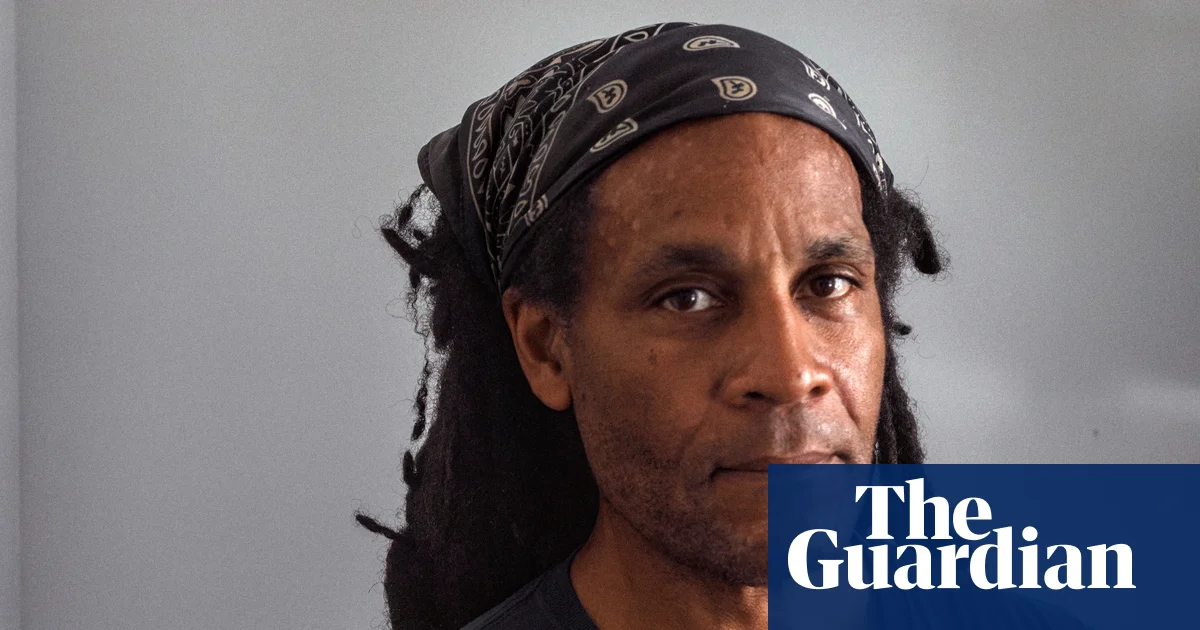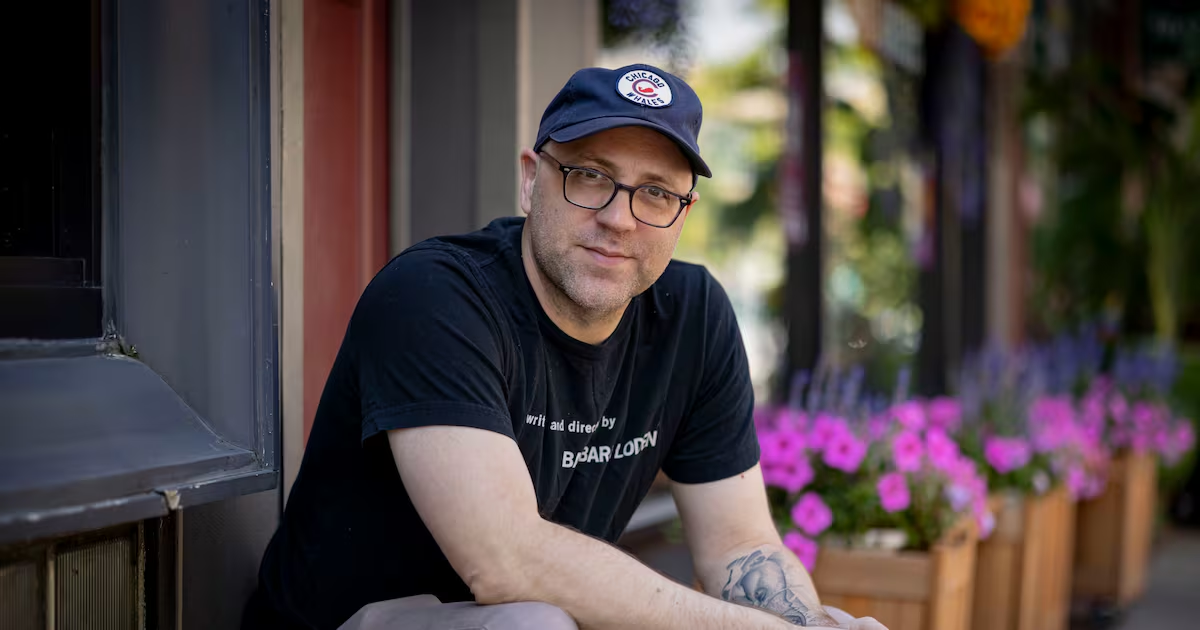
In Angel Down, the author adopted a single-sentence structure to reflect the uncertainty of warfareNovelist Daniel Kraus says he likes to take 'characters with whom readers would have no interest in sympathising and seeing if I can get them to do it anyway'. Photograph: TNS Sat Aug 01 2026 - 04:28 • 5 MIN READTell us about your Pulitzer Prize winning novel, Angel Down. Angel Down follows a group of American soldiers in the waning days of WWI, who encounter a downed angel on the battlefield. She represents an opportunity to change the global plight, but only if the men can work together and resist giving into their individual desires.What has changed in warfare since the war to end all wars?Well, nothing surprising. Only technology. Artillery and airplanes were the start of the distancing effect of those who pull the triggers and those who die. Once you don’t have to look your enemy in the eye, it gets easier and easier to kill. Drone warfare is the natural evolution.Angel Down is written in a single sentence. What inspired that and why do you think it works? Are you familiar with Mike McCormack’s Solar Bones, another award-winning novel-spanning sentence?I’m aware of a few other one-sentence novels, but I have yet to read any! I know they can be really daunting to the eye, which does repel some readers. I didn’t start with any intention of writing the book in one sentence, but once I got thinking about the central metaphor – warfare as a self-replicating wheel – I thought I might viscerally replicate it with the shape of the prose. I think it especially works for a book about war, because it has the side-effect of making everything feel like it’s tumbling toward some uncertain end.You’ve always been interested in testing readers’ sympathy. Tell us about your protagonist, Cyril Bagger.I need a challenge to write a good book, and a challenge that I often return to is taking characters with whom readers would have no interest in sympathising and seeing if I can get them to do it anyway. That’s one of the great magics and great uses of fiction – to open yourself up to empathies you could not previously imagine.Your previous novel, Whalefall (2023), has been made into a film starring Josh Brolin. It’s about ‘what makes a good life or a good death?’. Your sister was dying as you wrote the book. I’m sorry for your loss. Did that affect the writing?I’m sure it did. It was the backdrop to everything I was creating at that time. Consciously, I’m sure I was using writing as a distraction, but I doubt my mind can hold borders that stringently. I know that my metaphorical use of the phenomenon of the “whale fall” directly connected to my sister. It was something I clung to and something I know other readers have found comforting as well.The structure mimics the controlled breathing of a diver running out of air. Controlled panic is a good description of reading a thriller?It’s as good as any I’ve heard. The whale is also a sort of angel? You’re interested in religion?That’s definitely one interpretation. Although I’m not religious myself, nothing fascinates me more than religion, and my books are full of religious ideas and themes. Whalefall is a take on Jonah, of course, my Teddies Saga books are a retelling of the book of Genesis, and on and on.You worked posthumously with horror pioneer George R. Romero on The Living Dead and Pay the Piper. Tell us about that experience.The two posthumous Romero books were the two hardest books I’ve ever done. Collaborations are always the most difficult – but that’s why I did them, to push myself out of my comfort zone. When the collaborator is no longer alive, you might think that would make it easier, because there’s no one to disagree with. But Romero meant so much to me that it was the opposite, I was obsessed with using as much of his material as possible, even if it meant complicating reinterpretation or rearranging of it. What’s your take on the state of your nation?All is well in my writing universe, I suppose. I love being able to look back on any stretch of books and see how diverse it is. Life could dramatically change or end at any moment and I don’t want to have to look back and wonder if there was something I didn’t try in literature that I might have found exciting. I’ve got a western coming up and something that approaches a mystery novel, both of which are still new genres for me. After that, who knows what I will do. Actually, I’d love to do more nonfiction – Partially Devoured was one of the most satisfying things I ever wrote. Have you made a literary pilgrimage?No, I don’t think so. I know once I was in Los Angeles and accidentally realised I was close to the final home of the writer Herman Wouk, who is one of my biggest influences – Whalefall was partially dedicated to him. It’s not the same thing, but I do travel wherever I can to locations were my books are set. An aircraft carrier for The Living Dead, Monastery Beach for Whalefall, New Orleans for Pay the Piper, Pittsburgh for Partially Devoured, and so on. What is the best writing advice?Confidence. However you need to do it, build up an extreme well of confidence, even if part of you knows it isn’t earned. The only way I keep being able to tackle big new ideas is to convince myself – just for a few months, anyway – that I am going to nail this and [I am] the only one who can do it. That all falls apart after I hand in the book, of course, but that’s okay. As long as, when I write, I am soaring, then the charade is worth it. Which current book, film and podcast would you recommend?I’d recommend Luckiest Man by Jonathan Eig, Dear Stupid Penpal by Rascal Hartley, Outer Dark by Cormac McCarthy, No More Tears by Gardiner Harris, and The Word for World is Forest by Ursula K. Le Guin. The last great film I watched was We the Animals by Jeremiah Zagar. Lately I’ve really been enjoying the podcast Euphomet. A book to make me laugh?I always say that the one genre that scares me, as a writer, is humour. I have no idea if I could write a funny book. They are so hard to pull off and I appreciate it so much when I read a truly funny book. The three that really stick out to me when I think of it are Double Feature by Owen King, Then We Came to the End by Joshua Ferris, and Hyperbole and Half by Allie Brosh – a book I cannot read without breaking into tears of hilarity. Angel Down is published by Titan BooksIN THIS SECTION
‘Build up an extreme well of confidence’: Daniel Kraus on getting in the writing zone
In Angel Down, the author adopted a single-sentence structure to reflect the uncertainty of warfare
1,163 words~5 min read