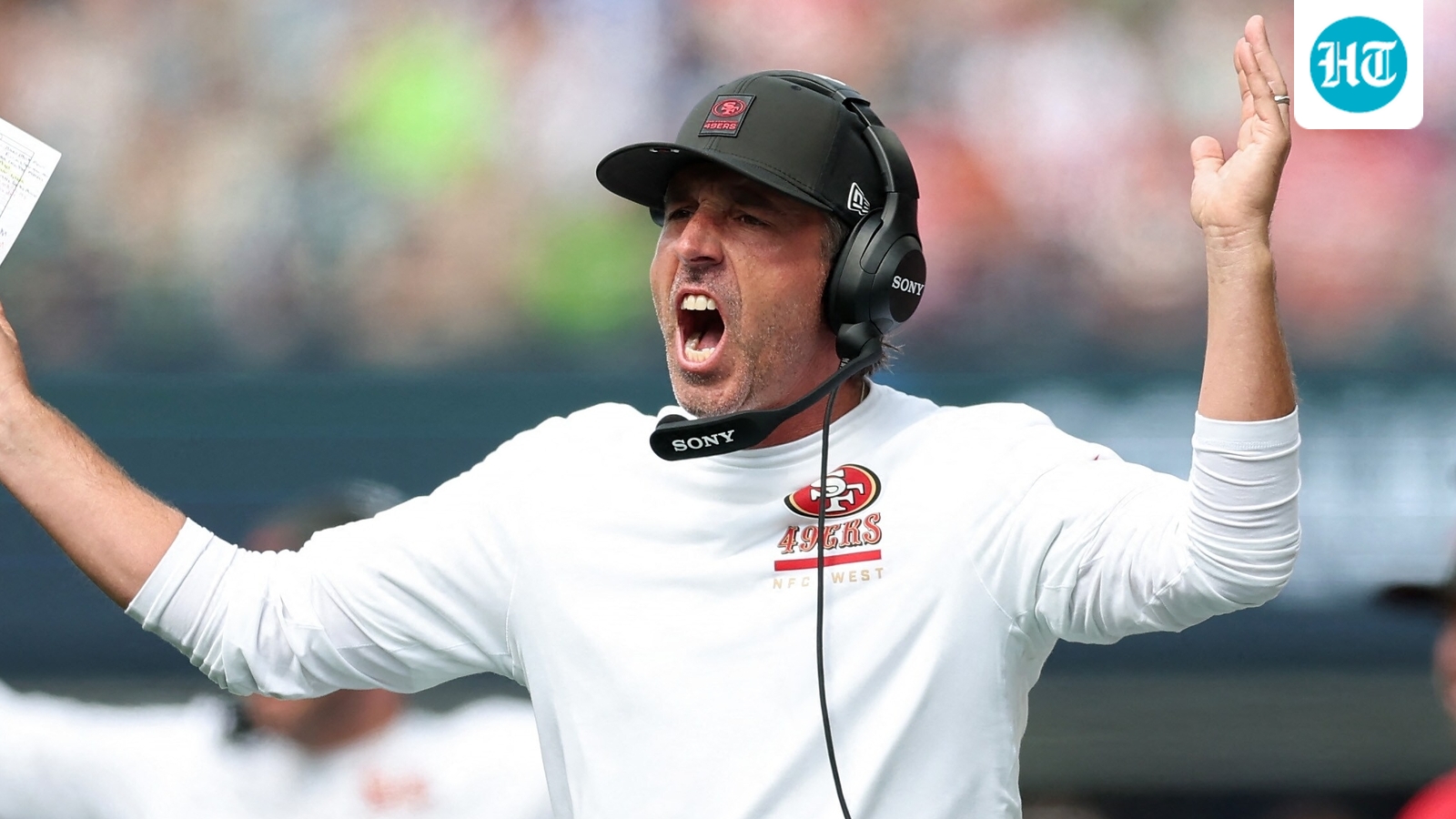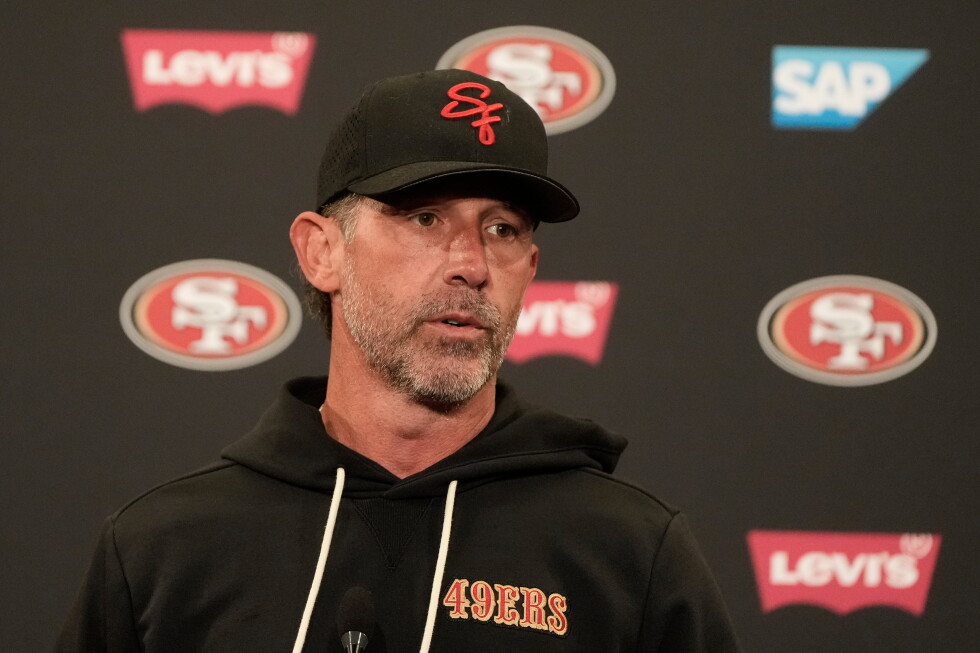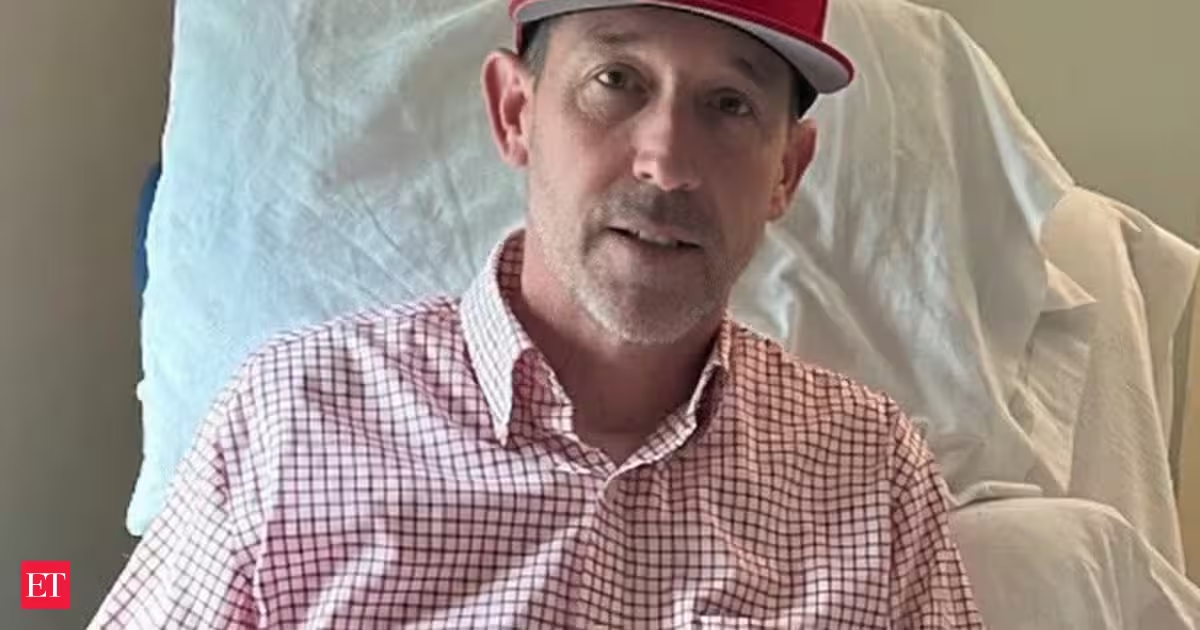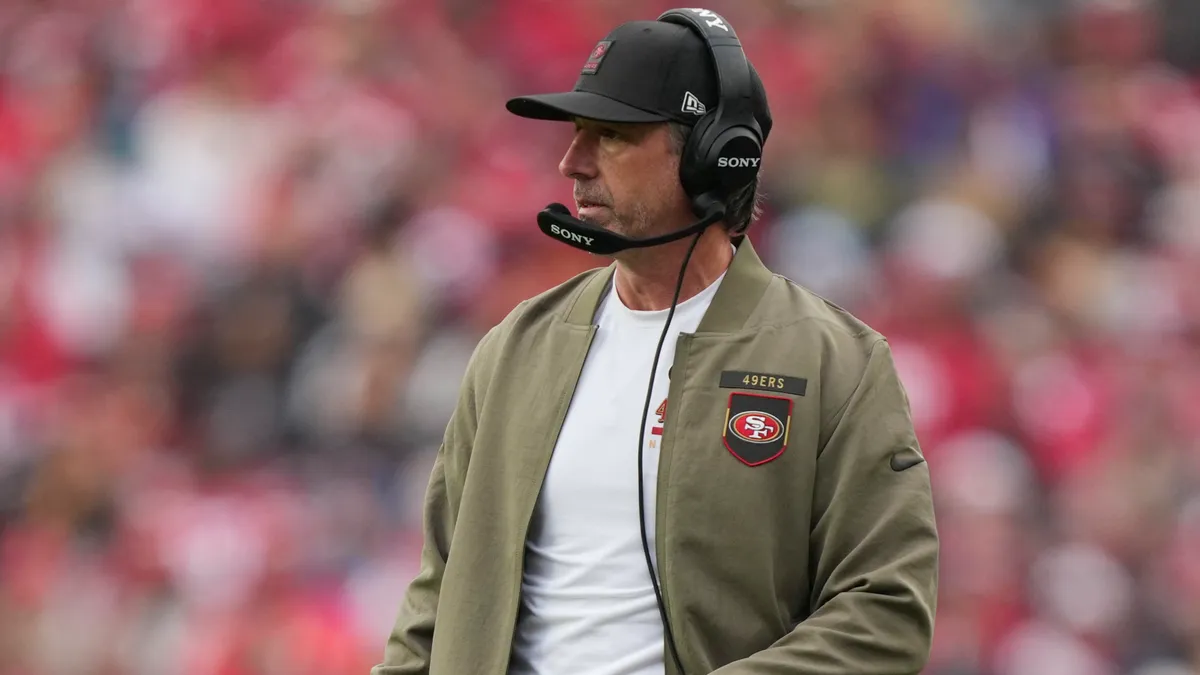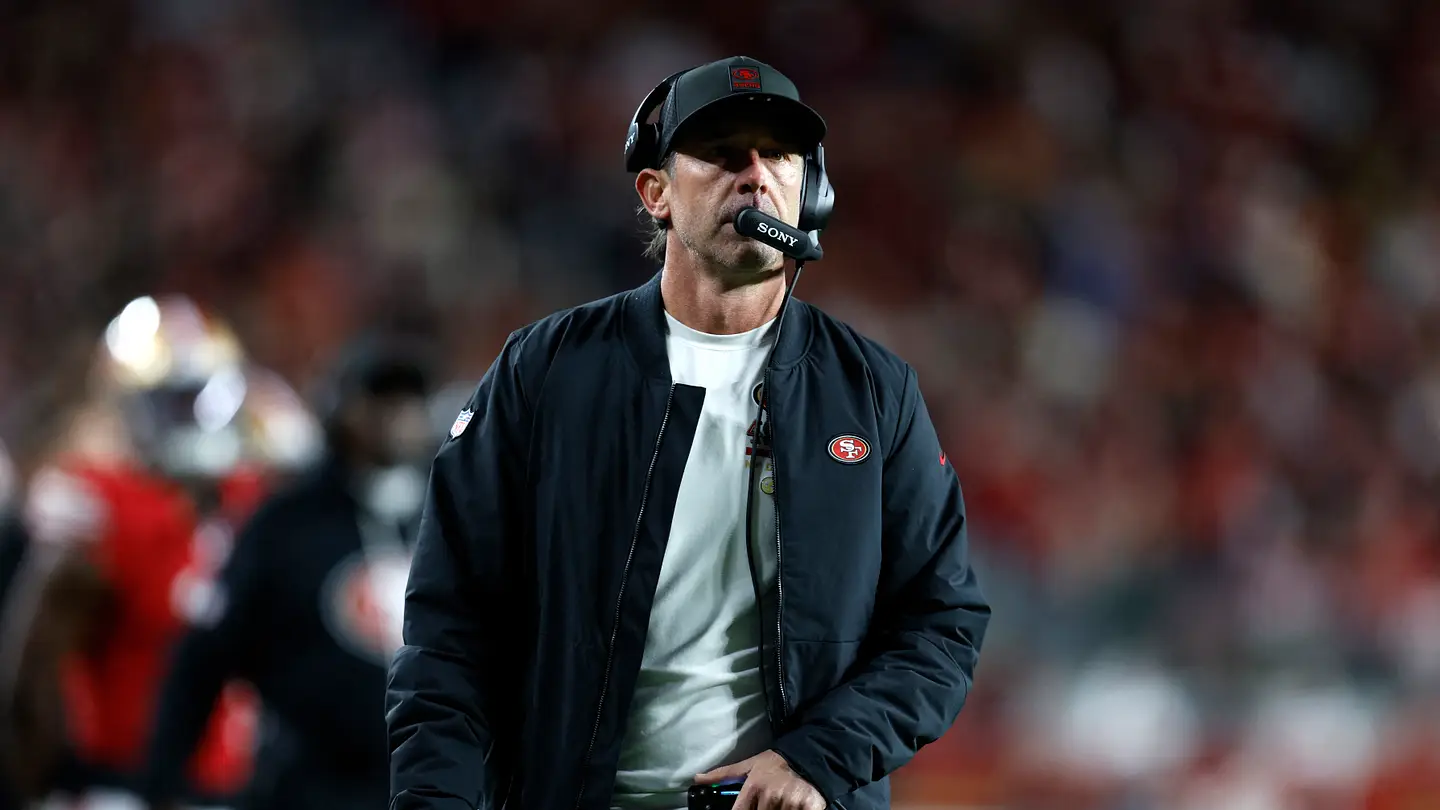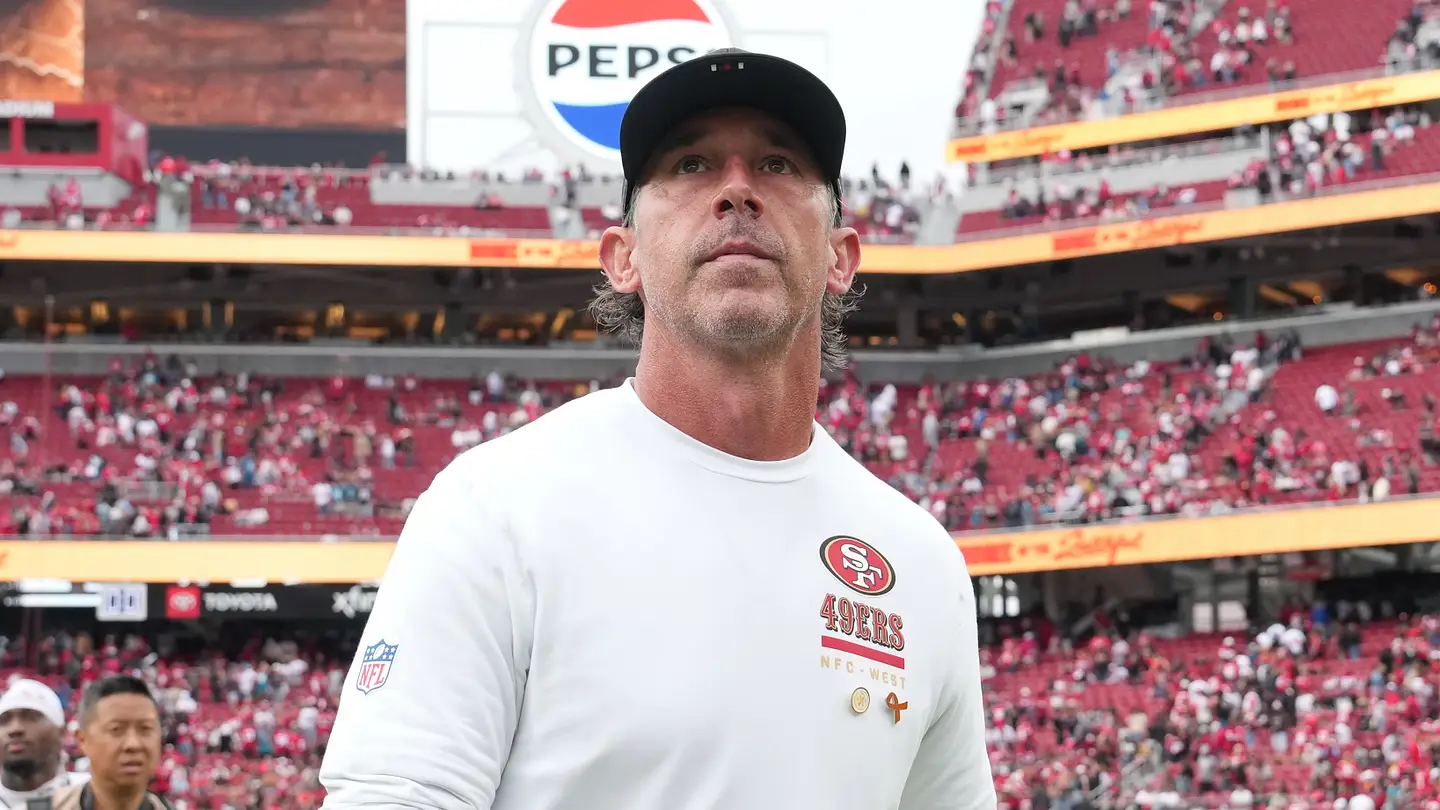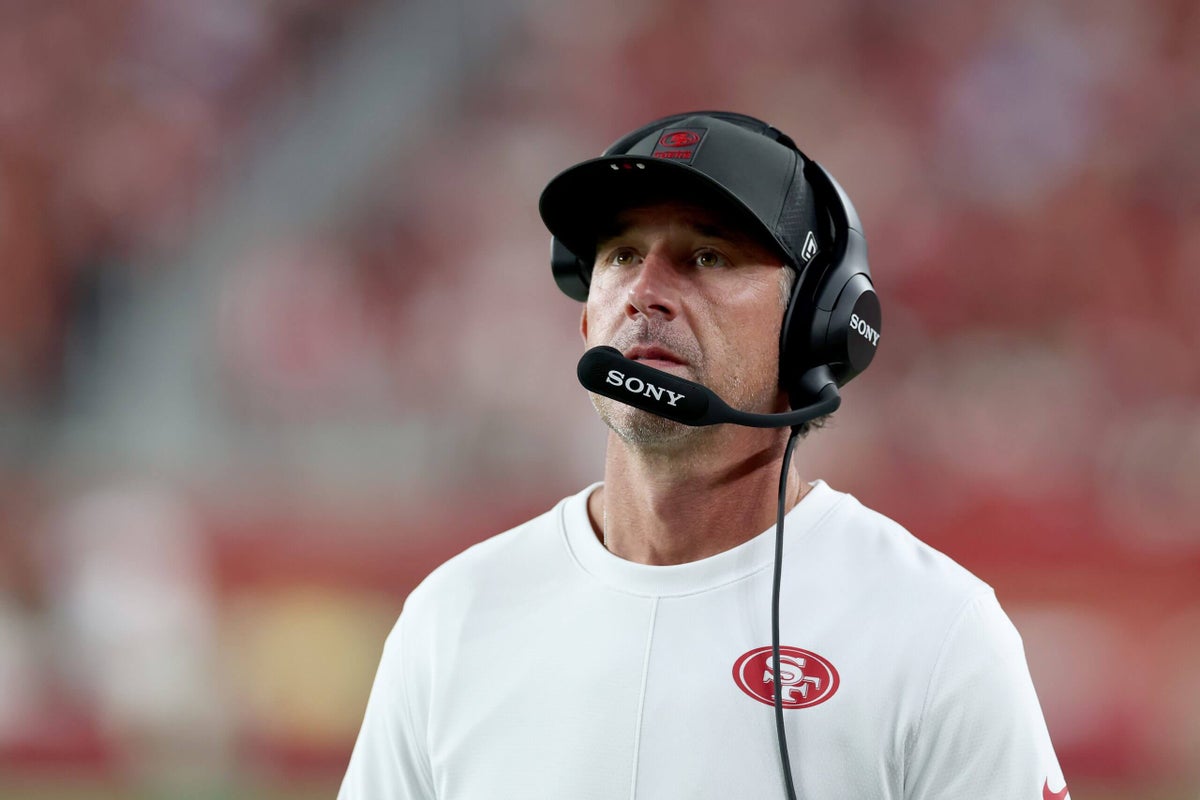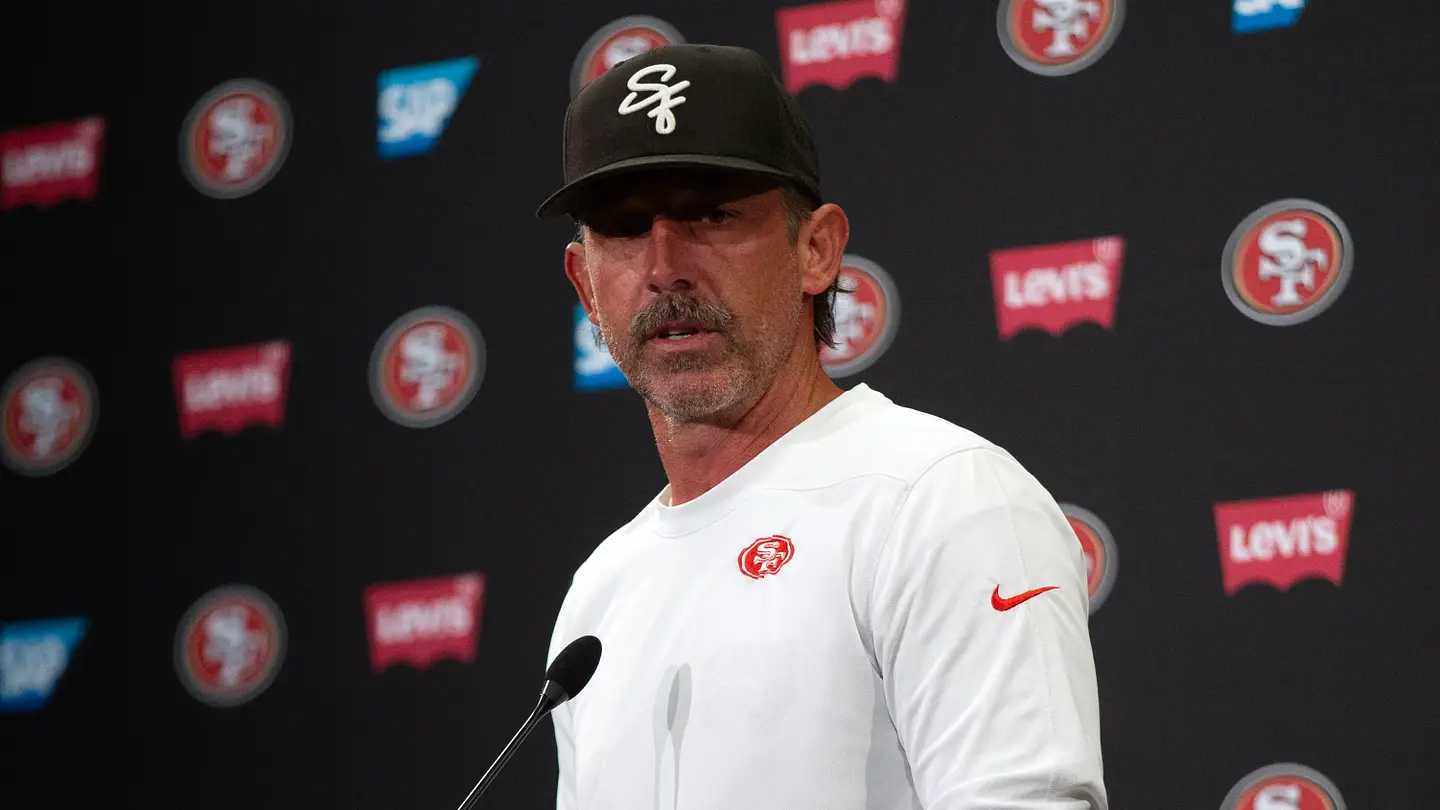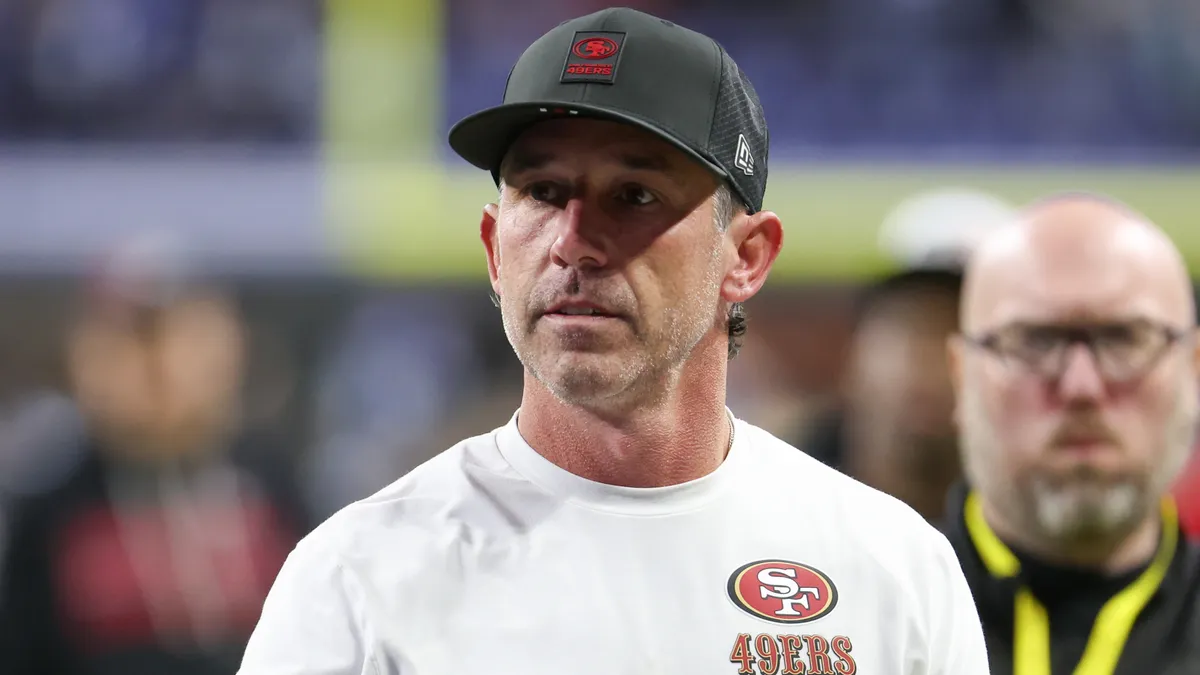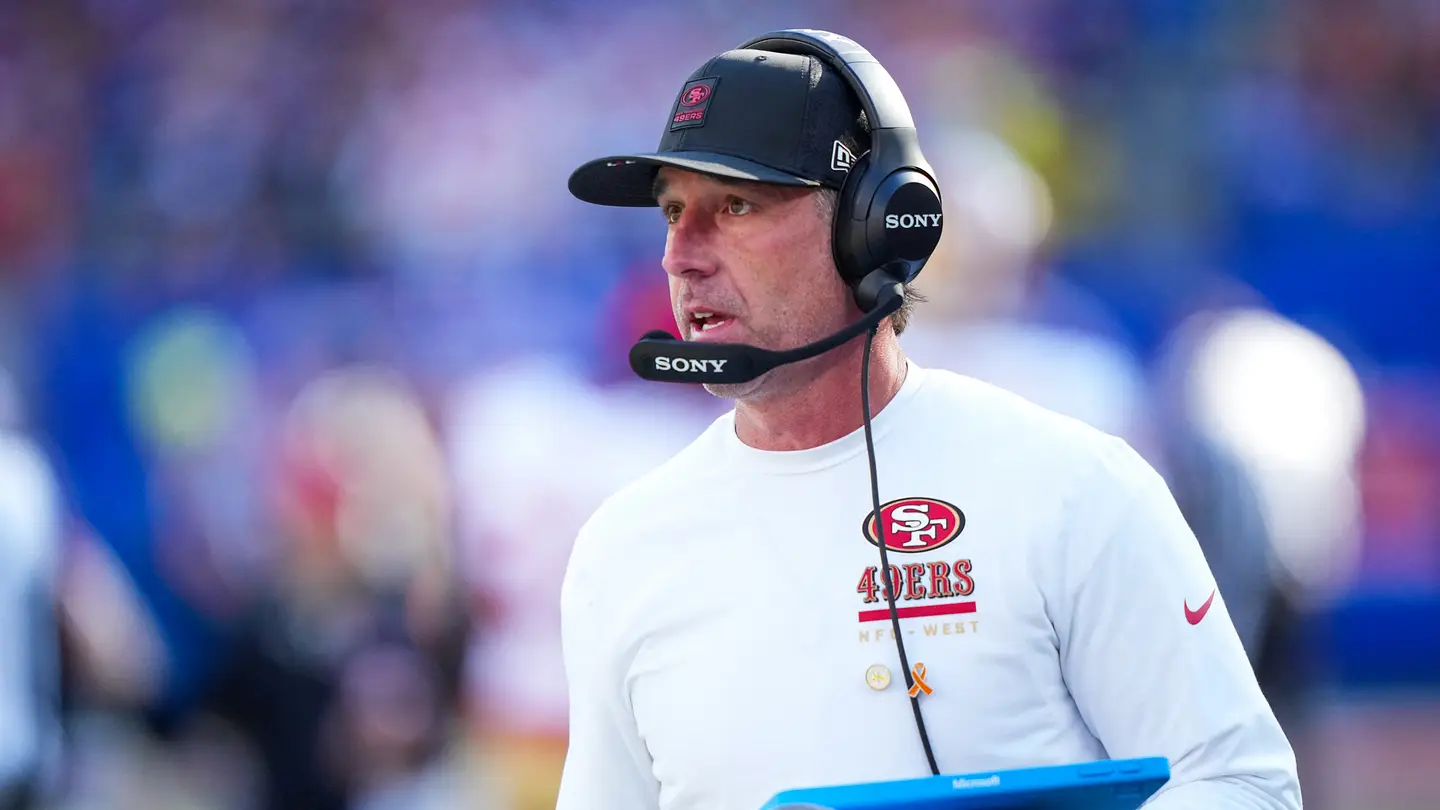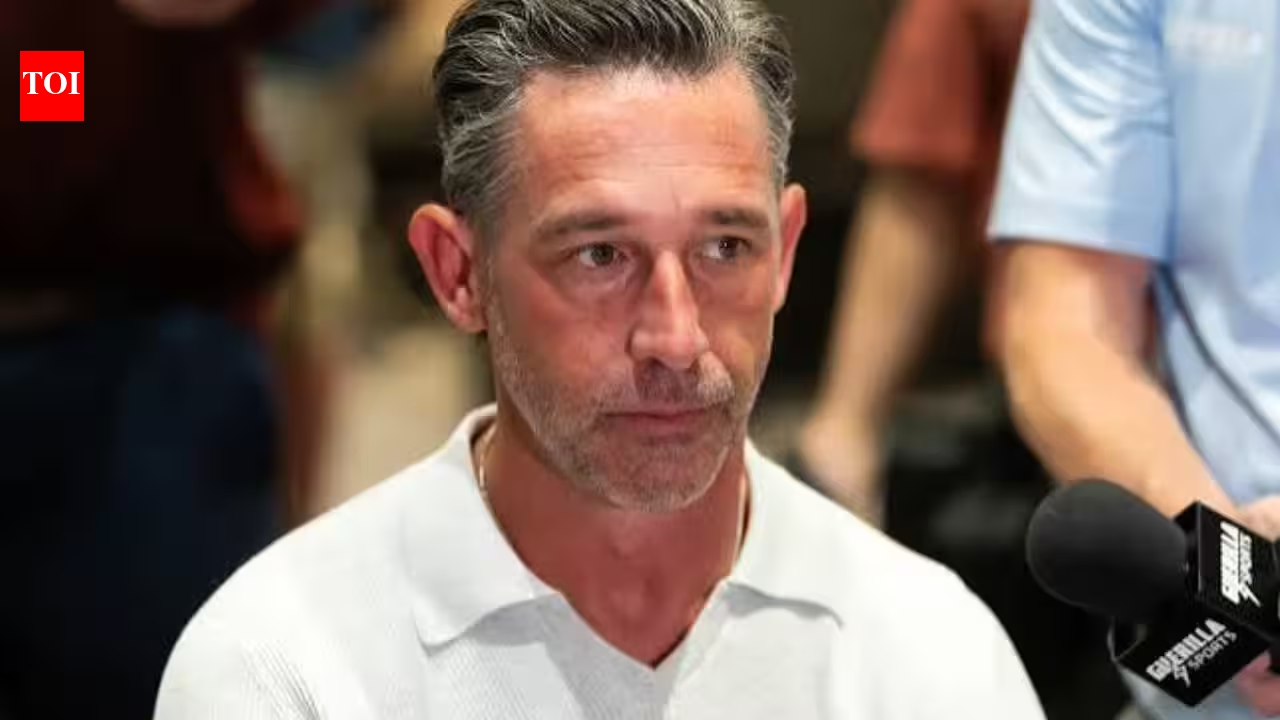
San Francisco 49ers head coach Kyle Shanahan is working in a limited role while recovering from injuries suffered in a July 14 car crash. (Image via Getty)San Francisco 49ers head coach Kyle Shanahan says he caused the July 14 head-on crash that left him with a concussion, broken bones and 40 stitches in his face. Palo Alto police still issued no citation.The department says the responding officer used discretion and denies Shanahan received special treatment. That explanation followed a state record that initially blamed the other driver, forcing police to correct one part of the story while defending another.Kyle Shanahan took responsibility after the crash record blamed the other driverESPN first reported the crash 11 days after it happened. Shanahan later told reporters that his cellphone slipped from his lap and fell between his seat and the center console. He looked down to retrieve it, lost control and veered into oncoming traffic.“I went down to look for it and took my eyes off the road for two seconds,” Shanahan said.“And as I was coming up, the airbags hit me in my face and they broke my nose and then they said the visor really gashed me.”Shanahan suffered three broken ribs, a broken hand, a broken nose and a concussion. A facial wound required 40 stitches, and NBC Sports analyst Chris Simms said his longtime friend nearly lost an eye. The other driver, identified in reports as a 21-year-old woman, did not suffer a serious injury.The first official account did not match Shanahan’s version. The San Francisco Chronicle reported that California collision data initially said the woman made an unsafe turn while driving her Mercedes SUV in the opposite direction. Shanahan rejected that finding and accepted responsibility.Palo Alto police called the incorrect entry a clerical error. The department said it was correcting the state database to show Shanahan caused the collision. ESPN also reported that collision data listed him in violation of a California law governing cellphone use while driving.Neither driver received a citation.Why Kyle Shanahan received no citation for causing the crash, explainedWhile public skepticism remains high, the decision to let Shanahan leave the scene without a ticket comes down to a rigid intersection of California traffic law and local police protocol, rather than VIP treatment.The "In-Presence" Rule: Under California Vehicle Code, a traffic infraction, including the state's hands-free mobile law, is legally classified as a petty offense. California law strictly dictates that an officer cannot issue an infraction citation unless they personally witness the violation occur. Because the Palo Alto traffic officers arrived well after the collision took place, they lacked the legal authority to write a ticket based solely on Shanahan’s retrospective admission.Civil Resolution vs. Criminal Charges: Distracted driving that causes a collision is handled as a civil tort, not a criminal misdemeanor, provided there is no driving under the influence or reckless evading. Because the incident resulted in property damage and injuries that did not meet the threshold of vehicular assault, department protocol dictates the state's role is to document the scene for insurance purposes, leaving liability settlement entirely to the drivers' insurance companies.The Routine Use of Discretion: Palo Alto police routinely decline to issue citations at major accident scenes where the vehicles must be towed. The department's baseline operating procedure prioritizes clearing traffic hazards and securing medical aid over penalising drivers. Once fault is determined for the official accident report, the financial penalties levied by insurance premiums are viewed as the primary consequence, rendering a traffic ticket redundant in the eyes of responding officers.Police deny preferential treatment, but the underlying records will stay privatePalo Alto police told ESPN that the officer at the scene had the authority to decide whether to issue a citation.“It is not uncommon for officers to elect to not issue a citation to either party involved in a collision,” a spokesperson said.“Neither party in this situation was provided preferential treatment.”Officer discretion explains how Shanahan left without a ticket. It does not explain why the first record blamed the other driver, why the crash went unreported for 11 days or why the public will not see the relevant records.TMZ requested the accident report and police bodycam footage. The department responded, “Nothing will be released related to this accident.” Police said both items are exempt from disclosure under the California Public Records Act.Shanahan appeared willing to share the report when reporters questioned him this week. Jeremy Jones, the 49ers’ head of security, intervened because the team did not want to release information that could identify the other driver. The 49ers also declined ESPN’s request for a redacted copy that protected her identity.“I think if I was in trouble with something, we’d have to F’ing explain more,” Shanahan said. “I get who I am. I get all that. I just thought once everyone saw that it was all right, that there was no tickets, that there was none of that stuff. I thought everyone would know that. And that hasn’t been the case.”The police statement defends the decision not to issue a citation. It does not erase the reporting error or make the unavailable records less relevant. Those gaps are why a crash Shanahan has already admitted causing continues to draw questions.Shanahan is working in a limited role while recovering. Assistant head coach Chris Foerster is leading the team in his absence. San Francisco opens its 2026 season against the Los Angeles Rams on Sept. 10.
‘No preferential treatment’: Why Kyle Shanahan received no citation after admitting he caused the crash
San Francisco 49ers head coach Kyle Shanahan says he caused the July 14 head-on crash that left him with a concussion, broken bones and 40 stitches in his face. Palo Alto police still issued no citation.
901 words~4 min read