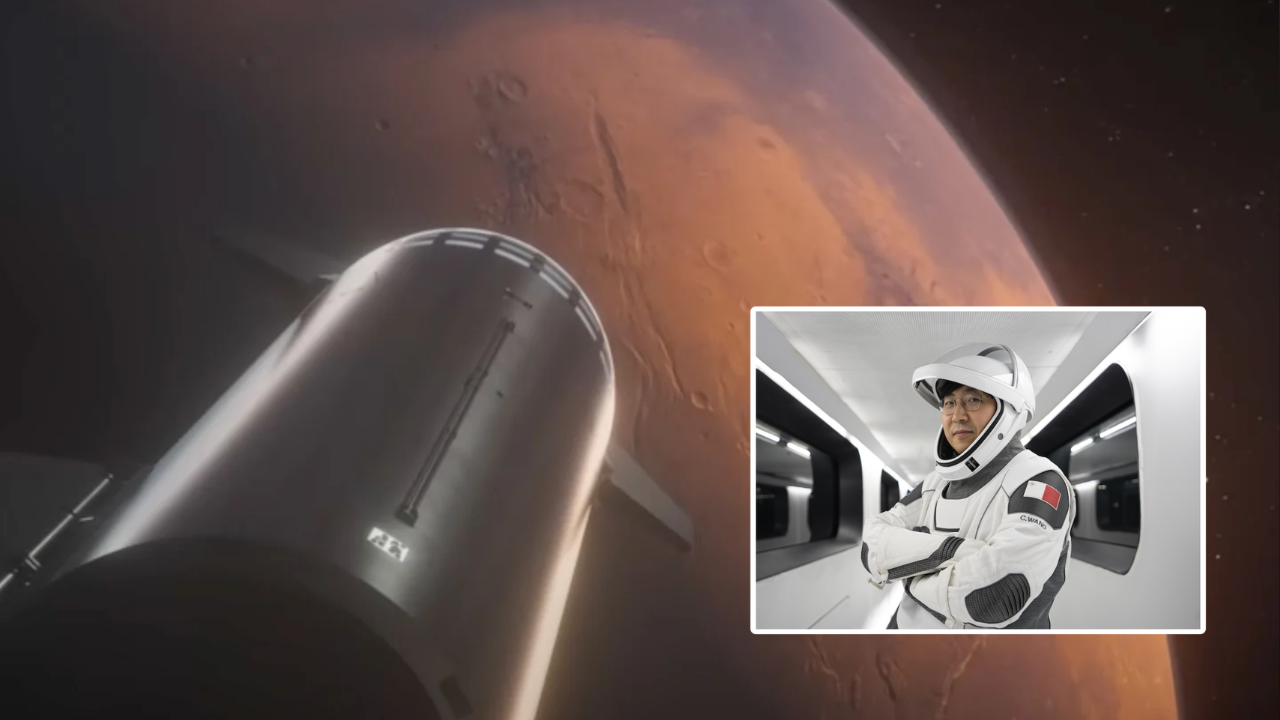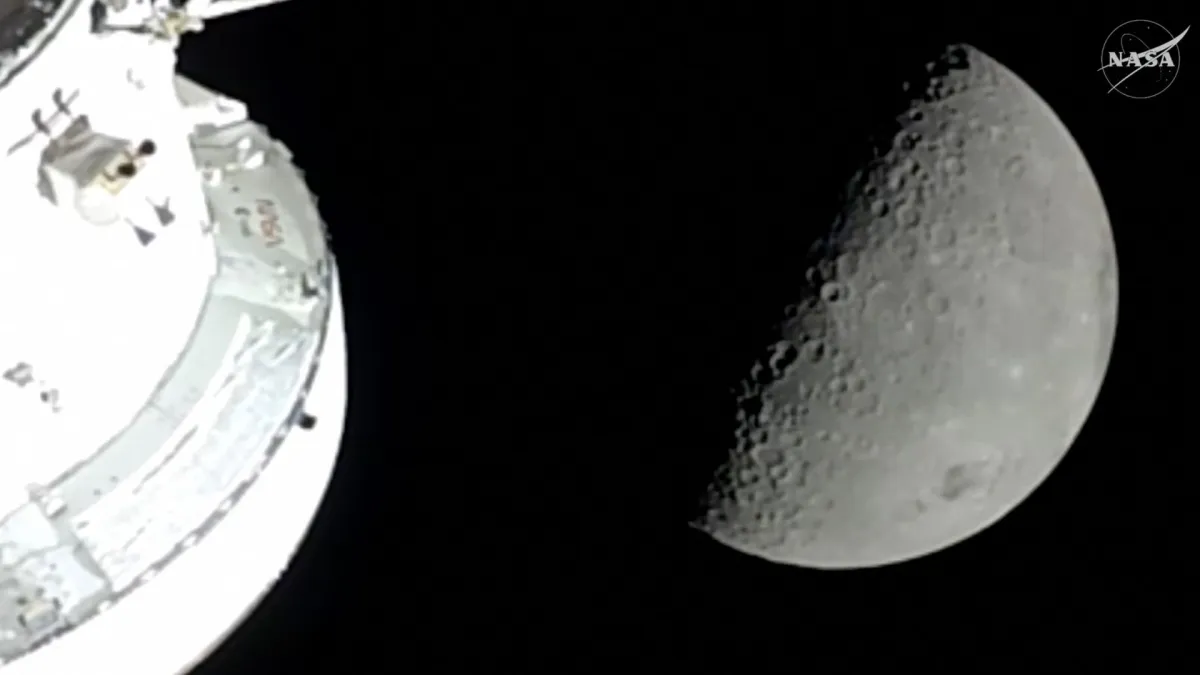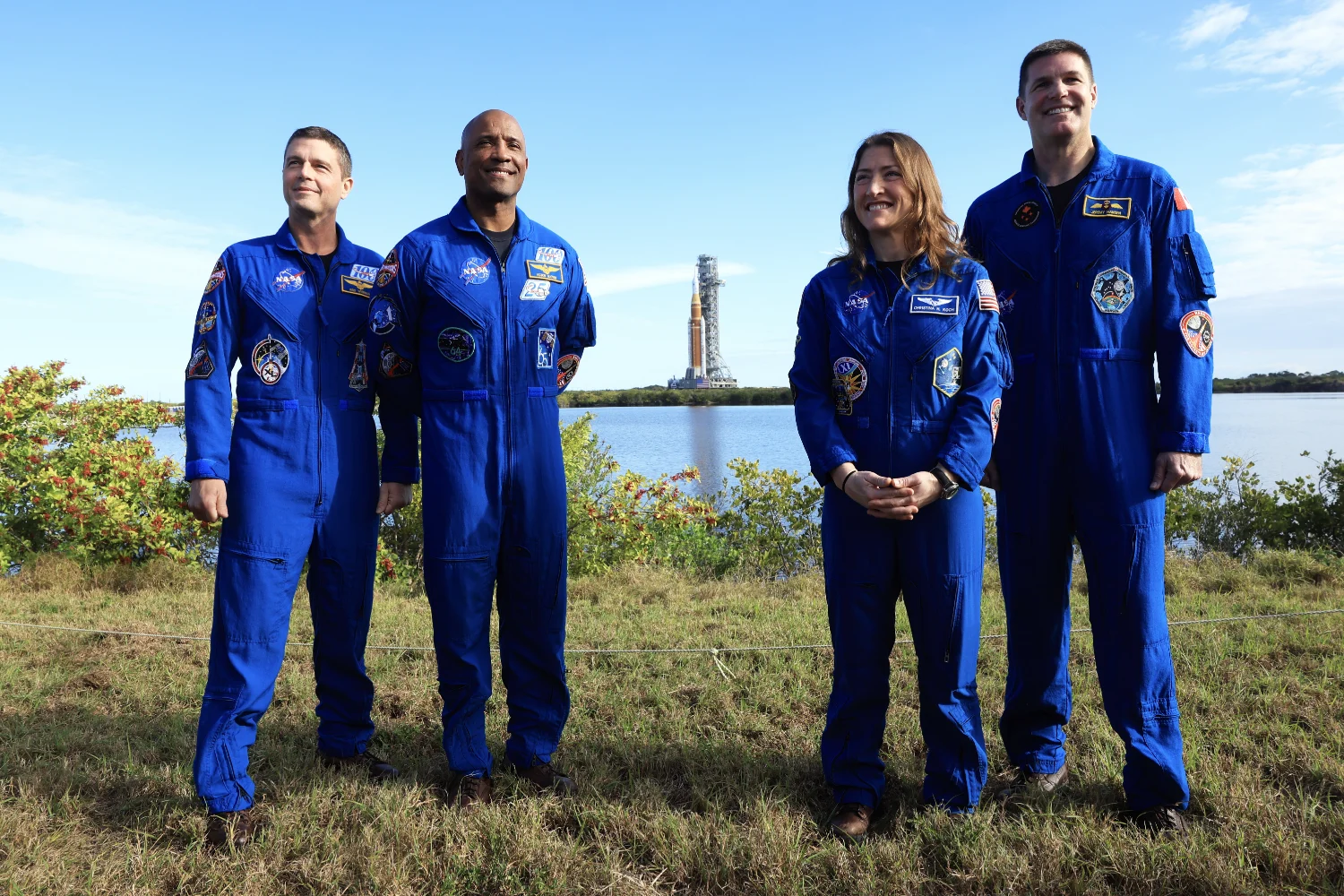
In April, a handful of humans boldly went where no one has gone before. The four-person crew of NASA’s Artemis II mission broke the record set by Apollo 13, back in 1970, traveling more than 406,000 kilometers from Earth. Billionaire-funded space missions have sent Katy Perry and William Shatner into space (courtesy of Jeff Bezos’s Blue Origin) and launched a flying car (Elon Musk’s SpaceX). NASA offered a more sober and heartfelt vision of what space could be: an earnest and representative crew; the commemoration of the commander’s late wife; the stark beauty of a total solar eclipse; the reminders of NASA’s rich heritage; the promise of future lunar surface missions. Sometimes, the slow, steady footage sent back to us seemed like communications from another world—the past, perhaps, or a future that we could still have.
It was like something from Star Trek, and there’s good reason for that. Few TV shows have been more influential on the way we see the universe—or more contested. If the current crop of moonshots reveals the deep ideological divide that has emerged over who should take on the exploration of space and what we should be doing once we’re out there, Star Trek has in turn been a battlefield for warring visions of the American dream. Sixty years since its first transmission, battles for intellectual control over both its cultural legacy and the futures it offers have become increasingly pointed.