If you've built anything with a coding agent, you've hit the wall: the task is too big for one prompt. You ask it to "find out what's causing this bug," and it starts strong — then drowns. Half its context is the raw output of files it dumped, it's lost the thread of which theory it was testing, and the answer it finally gives is confidently wrong.
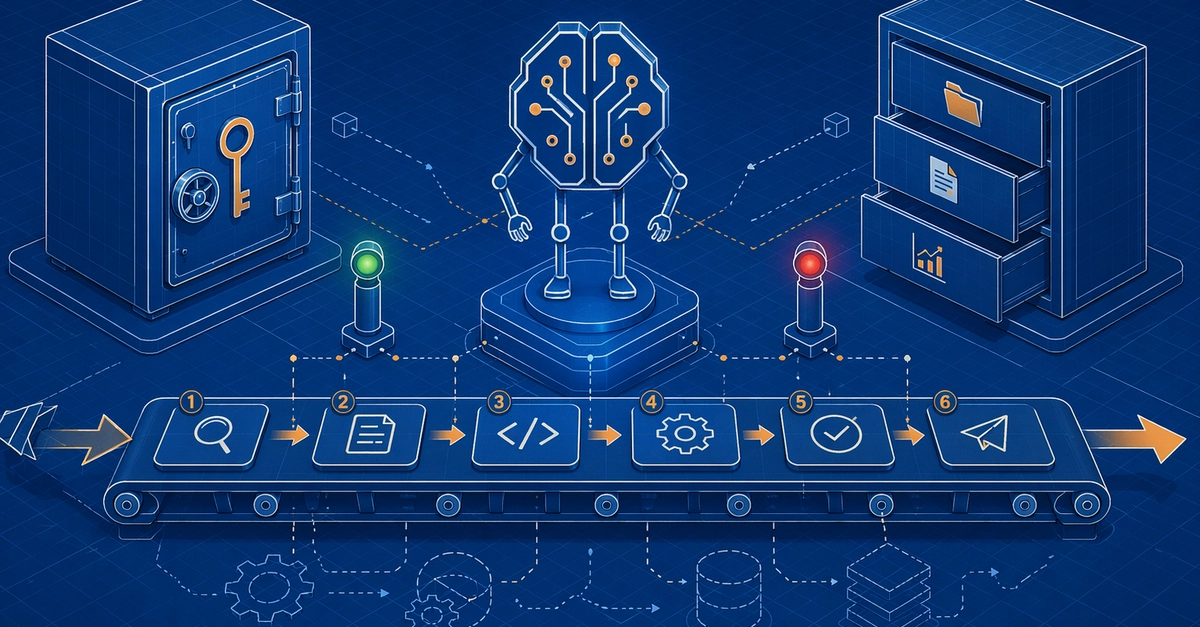
The problem isn't the model. It's that you asked one agent, with one context window, to do everything — gather evidence, hold it all in its head, and reason about it at the same time.
There's a cleaner pattern. Split the work into skills, and have one skill orchestrate the others as sub-agents. Let's walk through it.
New to skills or the agent loop? The one-line version: a skill is a packaged set of instructions on disk that the agent loads only when it's relevant. A sub-agent is a fresh agent instance with its own separate context window. This post is about combining the two.
The core idea: reasoning up top, work down below