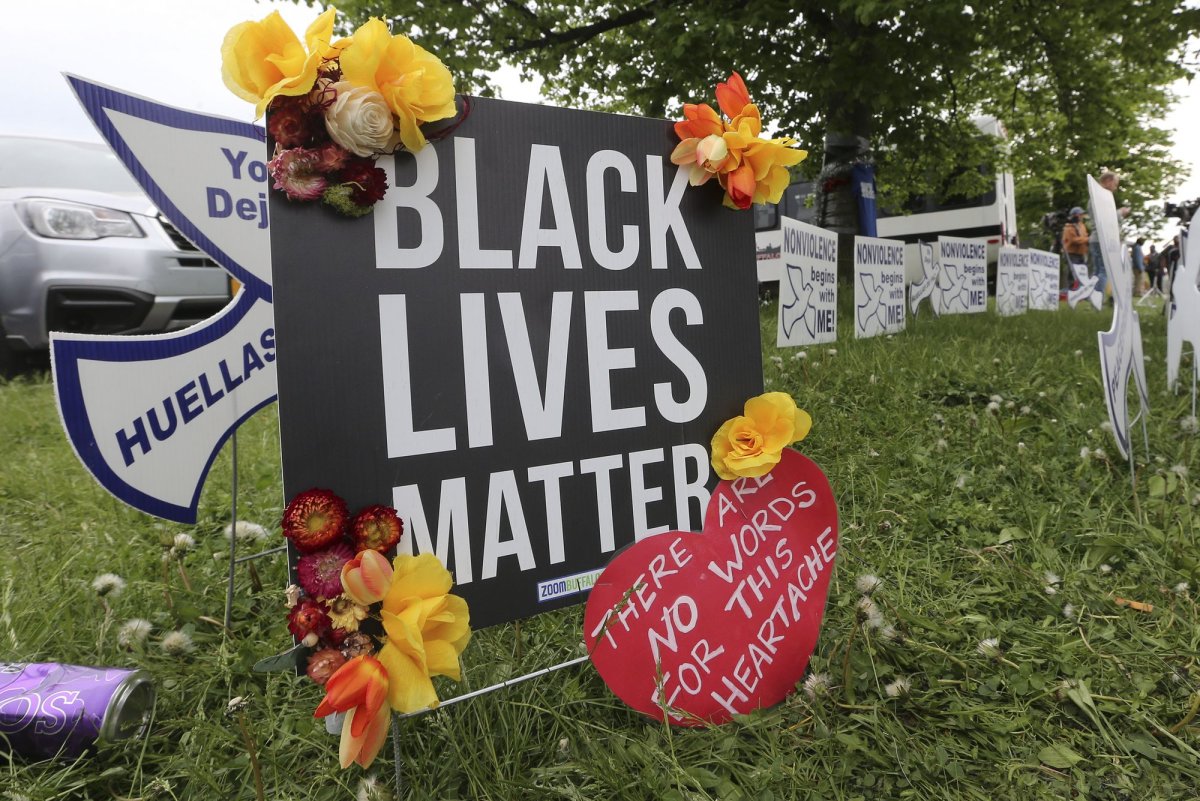
A Black Lives Matter sign is placed near the site of a mass shooting at a supermarket in Buffalo, N.Y., on May 16, 2022. Ten people were killed and three injured. File Photo by Aaron Josefczyk/UPI | License Photo
As the U.S. celebrates its 250th anniversary, its citizens commemorate a democracy more diverse, free and inclusive than it's ever been. The path to this milestone was imperfect and paved in blood and suffering. Still, few of the revelers will likely pay heed to the anniversary of another historic event: the 150th anniversary of the July 1876 Hamburg massacre.
The massacre, which took place in Hamburg, South Carolina, began as a dispute between a local Black militia and two white citizens over whether the latter could cross the group's centennial Fourth of July parade. The militia leader, Doc Adams, was later charged with blocking a public highway.
At his court hearing, Adams was met with a white militia -- part of the white supremacist Red Shirts -- which then pursued the Black militia on their retreat to their weapons arsenal. After a firefight, the Red Shirts captured several Black militiamen, marched them to a nearby site and executed at least four people.
South Carolina's Republican governor, Union veteran Daniel Henry Chamberlain, described the event as a "butchery of unoffending and unarmed colored men by a brutal and bloodthirsty mob of white men." Yet no one was convicted after the attack. In fact, several of the Red Shirts ringleaders would instead rise to the highest offices in the state.