Every year, the schools and hospitals my church runs in India open their books, and every foreign rupee is accounted for under the Foreign Contribution Regulation Act. We renew a license the state may refuse at will, and under the amendment before Parliament, we may lose the buildings themselves if it lapses. We file, we disclose, we submit to inspection, and I do not object. Public trust demands public scrutiny.There is another organization in India. It shapes the government’s education policy, supplies its ministers, and sets the ideological direction of the world’s largest democracy. It is registered nowhere.The Rashtriya Swayamsevak Sangh, the ideological parent of the ruling Bharatiya Janata Party, claims more than 83,000 branches and millions of members. It is not a society, not a trust, not a company. In the eyes of Indian law, it is a “body of individuals,” which is to say that on paper, it very nearly does not exist.
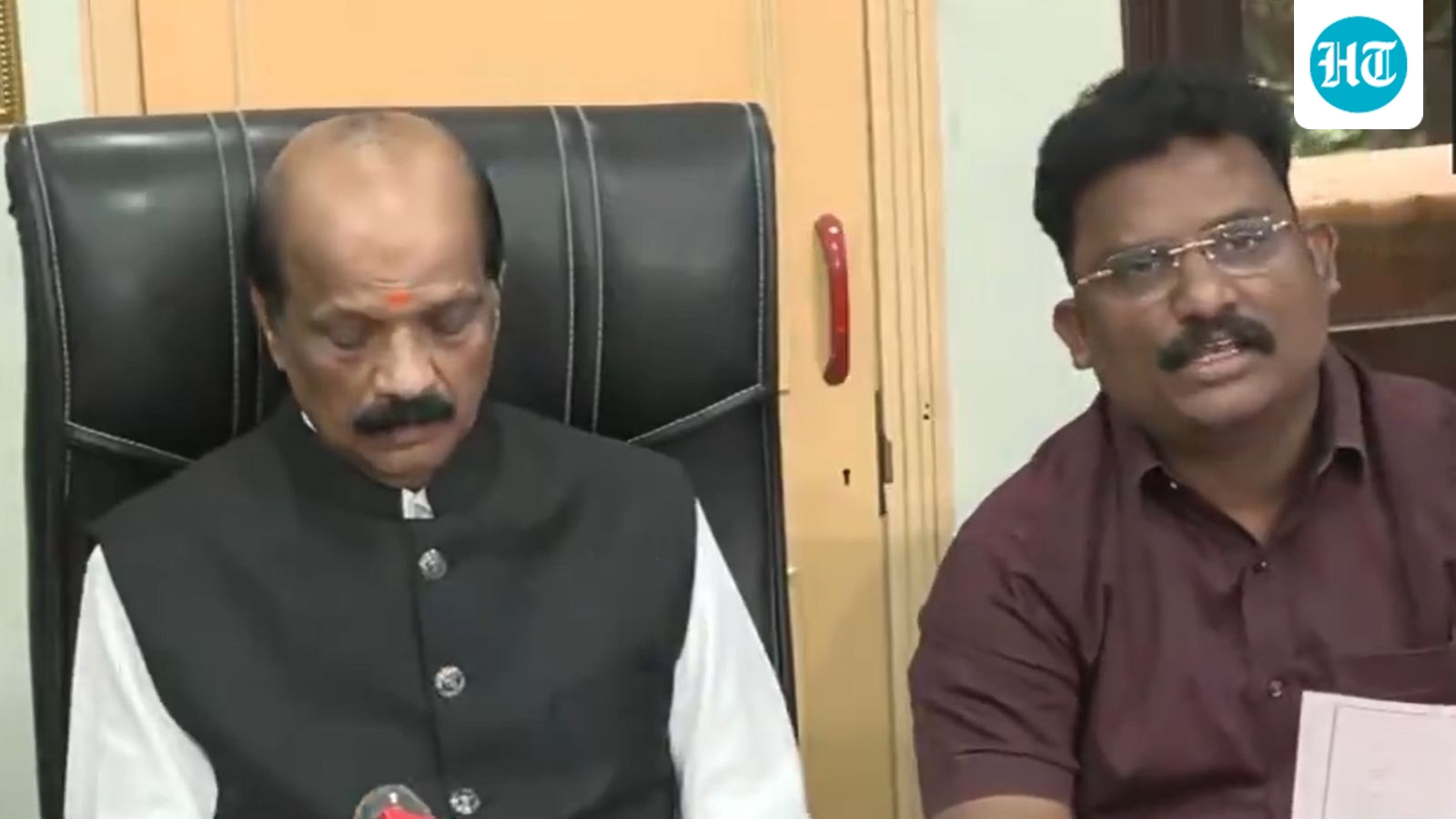
THEY LOST MILLIONS IN GOLD. NOW THEY WANT TO SEIZE FAITH-BASED CHARITIESLet me be fair, because fairness is the whole of my argument. The Sangh breaks no law. Indian statute does not compel every association to register, and the courts have long accepted “body of individuals” as a recognized category, a status its chief, Mohan Bhagwat, has defended directly. Those who allege criminal evasion are on weak ground.But legality is not accountability. Because no central legal entity exists, no body must publish audited accounts, keep a membership roll, or file the annual disclosures required of every registered company, society, and trust in India. Its vast work, which includes schools, service bodies, and properties, runs through a constellation of separately registered affiliates orbiting a center that is, legally speaking, empty. Registered minority institutions in India face ever-tightening control; the unregistered majoritarian movement faces almost none. Whatever one’s view of the Sangh, that asymmetry should trouble anyone who believes the law must fall evenly.The irony is available to any American who looks. Through its overseas wing, the Hindu Swayamsevak Sangh, the movement runs branches in some 39 countries, and in the United States, it operates as a registered nonprofit group that files public returns. U.S. law requires it. Abroad, where it is small, the movement discloses. At home, where its power is real, it does not.On June 15, 2026, Karnataka home minister Priyank Kharge wrote formally to Bhagwat, asking how a body of more than 83,000 branches can operate without registering at all, and calling on it to publish its funding, assets, and office-bearers. That is not a Christian complaint or a foreign one. It is an Indian official asking a plain question and receiving no meaningful answer.The influence is not abstract. Under the education ministry, recently vacated by Dharmendra Pradhan, himself a product of the Sangh’s student wing, vice-chancellorships at central universities have increasingly been filled by candidates from within the Sangh’s orbit. The complaint inside the academy is about competence more than politics. When loyalty to a worldview becomes the qualification for running a university, scholarship suffers, and the young, who need knowledge rather than catechism, are shortchanged.There is a graver memory here, and I raise it carefully. When Mahatma Gandhi was murdered in 1948, the government of which Sardar Patel (no enemy of Hindu sentiment) was home minister, banned the Sangh, judging the atmosphere it had helped create to be implicated in the crime. He could establish little more than that. The assassin, Nathuram Godse, had been formed in the Sangh before his work with the Hindu Mahasabha. The organization has always insisted he left cleanly. But that denial rests on the very fact at the heart of this essay: the Sangh keeps no membership records by which the claim could be tested. The ban was lifted, and I make no accusation the courts did not sustain. I observe only that this absence is not a new convenience. It reaches back to the republic’s most painful hour, and it is the same absence we confront today.So the question, plainly, from a man who loves his country: Is India secure, truly secure, as a constitutional democracy must be, when a movement of this scale holds this sway over its government, its universities, and its culture, while owing no disclosure, no audit, and no legal answer to anyone?The danger is not secrecy for sinister ends. It is more structural than conspiracy. A republic is a system of accountable power: every part of it, from the executive to the smallest parish charity, answers to something beyond itself alone. When an institution of this influence sits outside that web, the republic has a hole in it.IN WAR ON BIBLE, PASTOR CONVICTED FOR PREACHING GOSPELThe remedy is not a ban, which would be wrong and foolish. It is the one Kharge asked for, and the one the Sangh could grant tomorrow. Register. Disclose. Stand in the same sunlight required of the humblest mission school. An organization confident in its service to the nation should not fear the nation seeing it.Until then, the question remains, and it is not partisan. It is what a free people must ask of any power grown large in their midst: who watches this, and to whom does it answer? India has been given a body of individuals, and a great silence where the accounting should be.Archbishop Joseph D’Souza is an internationally renowned human and civil rights activist. He is the archbishop of the Anglican Good Shepherd Church of India and serves as the President of the All India Christian Council.