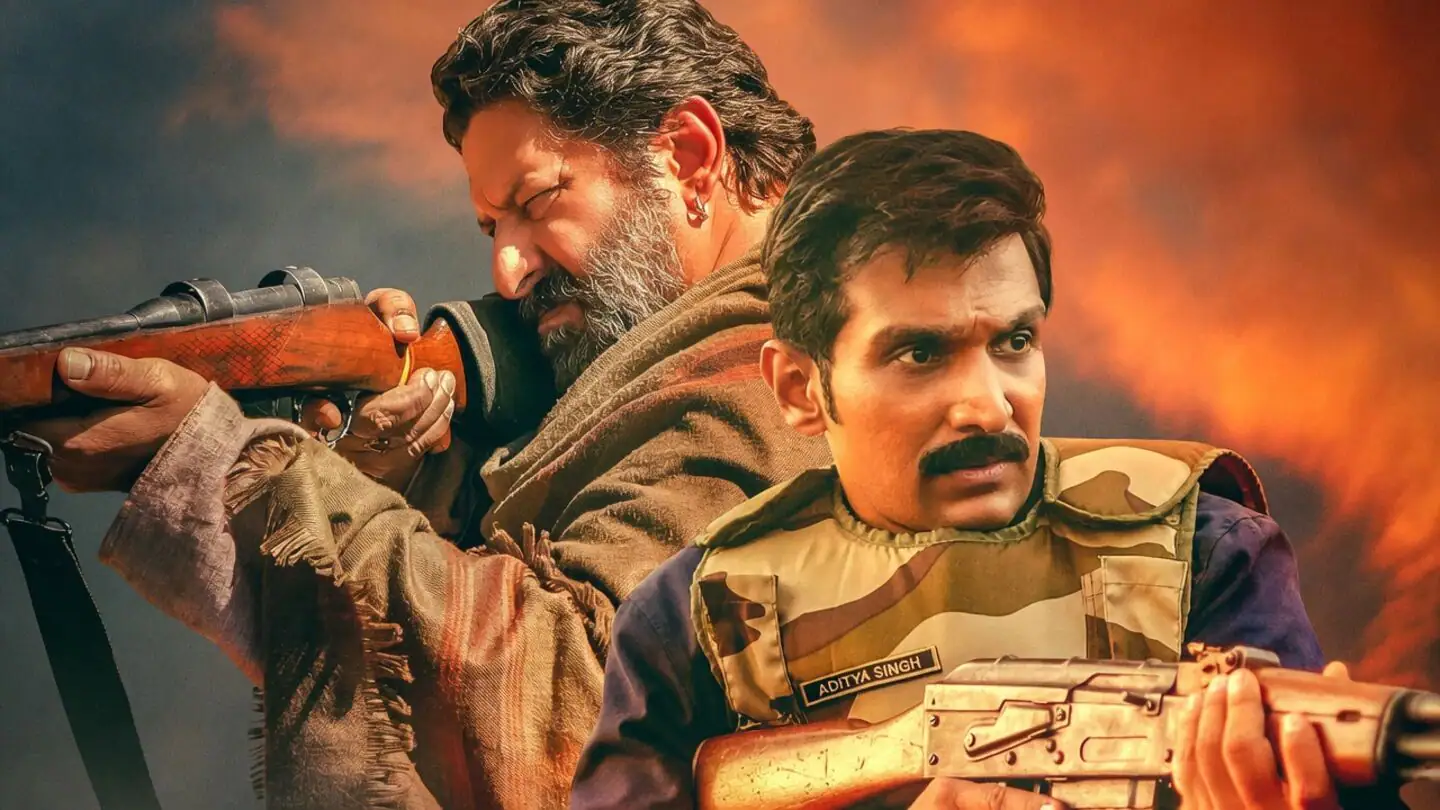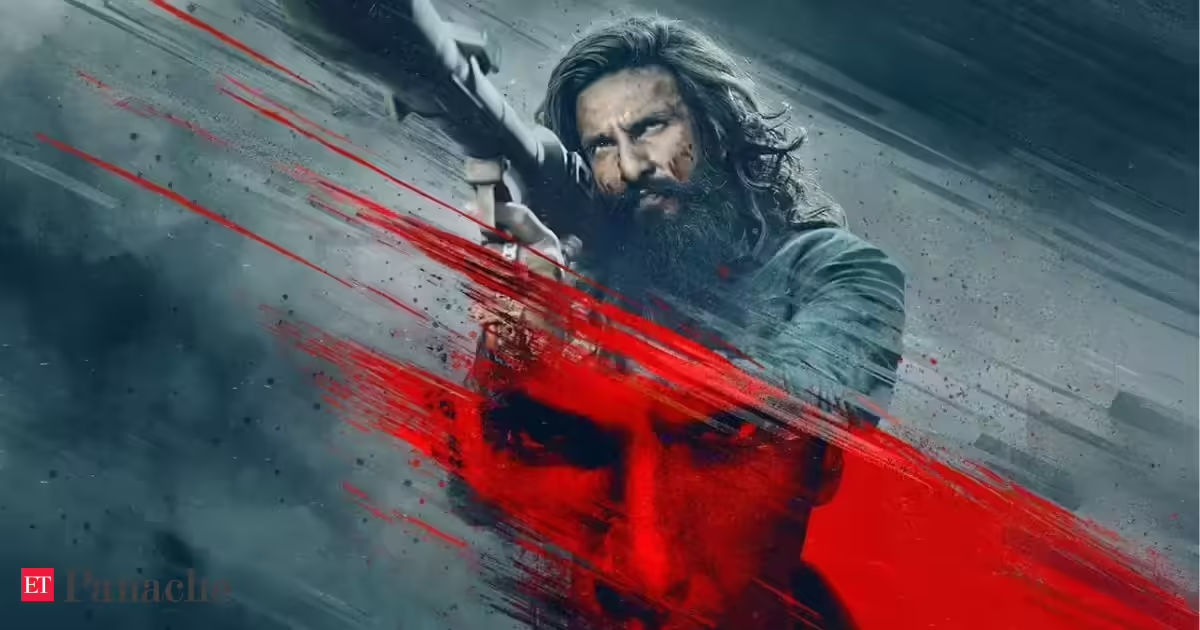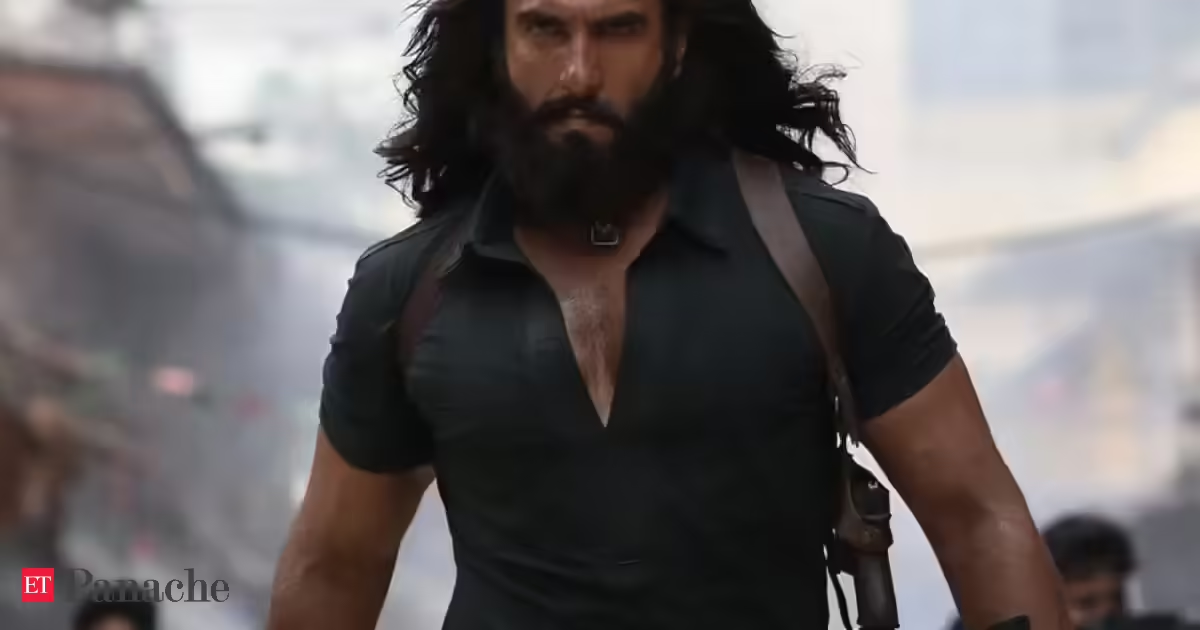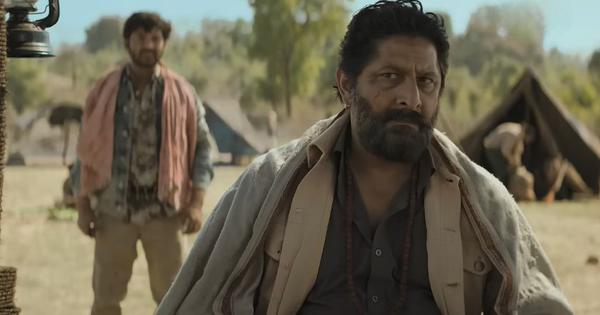
Tigmanshu Dhulia’s Ghamasaan takes him back to well-trodden territory: the world of dacoits. Dhulia was a casting director on Shekhar Kapur’s Phoolan Devi biopic Bandit Queen (1994). Dhulia directed his own film about a fugitive folk hero, the acclaimed Paan Singh Tomar (2012). Ghamasaan (Fierce) is very different from Paan Singh Tomar: it’s divided equally between the hunter and the hunted.The Hindi film stars Pratik Gandhi as the chief of a special task force that is pursuing the brigand Maharaj (Arshad Warsi) in Bundelkhand. The cast includes Rajpal Yadav in a key role and Ishita Dutta.Dhulia’s screenplay, based on a story by Piiyush Singh and Ram Yash Singh and inspired by an actual dacoit, is structured like a Western, which happens to be one of his favourite genres, Dhulia told Scroll.Ghamasaan was completed in 2023 and premiered at the Mumbai Film Festival in 2024. The action drama, which doubles up as a character study, will finally see light of day on the Zee5 streaming platform over the coming weeks.Delays, production challenges and runaway producers have all been regular features for 59-year-old Dhulia.After acquiring a degree in theatre from the National School of Drama, Dhulia assisted various filmmakers and worked in television. He made his feature debut in 2003 with Haasil, which boosted the careers of its actors Irrfan and Jimmy Shergill.Dhulia’s association with Irrfan continued in Charas, Paan Singh Tomar and Saheb, Biwi Aur Gangster Returns. The filmmaker’s bond with Irrfan is evident in Ranjeeta Kaur’s A Story That Refused to Die, a behind-the-scenes documentary about the making of Paan Singh Tomar.Dhulia’s last completed film was Yaara, which was also premiered on Zee5. He has written and directed or co-directed the streaming series Criminal Justice, Out of Love, The Great Indian Murder and Garmi. Dhulia is also a consummate actor, playing a variety of characters in such films and shows as Gangs of Wasseypur, Raat Akeli Hai, Black White & Gray and Pati Patni Aur Woh Do.In a wide-ranging interview, Dhulia discussed the making of Ghamasaan, the challenges faced by independent-minded filmmakers in Bollywood, and his abandoned projects. Here are edited excerpts from the conversation.How did Ghamasaan come about?This project came to me from the producer Piiyush Singh just before Covid. It wasn’t my idea, but I liked it. I hadn’t made a film on dacoits for some time. And I wanted to explore the terrain of Bundelkhand.I am a great fan of Westerns. I grew up watching Westerns and war films in Allahabad. Butch Cassidy and the Sundance Kid is one of my favourites. I like films with realistic action, of the kind that classic Westerns used to have.Tigmanshu Dhulia (wearing a cap) on the sets of Ghamasaan.Did Bandit Queen prepare you for both Paan Singh Tomar and Ghamasaan?Yes, Bandit Queen was a kind of training ground, especially since I was working with the cinematographer Ashok Mehta.We were shooting in Dholpur. There was only one cinema there, a lousy one with bad projection, where we would watch the rushes of Bandit Queen. That was my first experience of seeing something that had been shot being transformed into a visual for the big screen.Bandit Queen also helped in terms of handling locations. Paan Singh Tomar and Ghamasaan both have a Western feel to them, especially Ghamasaan. We have used anamorphic lenses and wide lenses to give the feeling of a Western. I really enjoyed making Ghamasaan.The Bundelkhand terrain seen in Ghamasaan is very interesting too. It’s different from the Chambal ravines. It is sparse and has a water shortage, unlike Chambal, where there is a river and fertile land.Also part of my learning experience was working on Mani Ratnam’s Dil Se [Dhulia wrote the film’s Hindi dialogue and appears in a scene]. I was there throughout the shooting and dubbing of Dil Se. Mani sir had a great impact on me.Having previously made Paan Singh Tomar, what were you looking to do in Ghamasaan?While the idea of a film about a dacoit and a cop excited me, it wasn’t enough. I wanted to add something extra. I wanted to answer the question, why am I making this film?This was a major point of conflict. When I got the track of the kids that you see in the film, it fell into place.The film is very simple, black and white and straight. The dacoit isn’t Gabbar Singh, but he’s cruel. He likes to watch people die.It’s a structured screenplay. I cut a lot out. It was originally three hours long. I changed the track of the police officer’s wife, who was originally meant to be a forest officer. I simply cut that out, and now the relationship works.Pratik Gandhi in Ghamasaan (2026).Arshad Warsi has played principled cops in the past. In Ghamasaan, he’s a ruthless outlaw. What made you pick him for the role, and Pratik Gandhi as the cop?Casting the villain took a lot of time.I knew Arshad from the time of his debut film Tere Mere Sapne [1996]. The film had stalled midway, and I was brought on to write the second half of the screenplay. I met Arshad at the shoot.I have been watching him over the years. I have always liked him as an actor. He is very free, very confident.I had previously worked with Pratik in The Great Indian Murder. He is very flexible and can become anybody. He is an excellent vessel. In an earlier version of the script, his character was supposed to be a drunk, but it was becoming too dark and long.The funny thing is that Arshad and Pratik never shot for a single day together. Even in the film, their characters don’t meet.Rajpal Yadav plays a pivotal part in Ghamasaan, something different from his usual comedic roles.I had previously worked with Rajpal too, in television. He also had a very good role in Haasil that didn’t have the typical buffoonery. I knew what a good actor he was. Rajpal has always been hungry for different type of roles.Rajpal Yadav features prominently in the film’s epilogue. Was that sequence always there?It wasn’t at first. I tend to revise and improvise a lot, even while I am on the set.Ghamasaan (2026).What are your memories of the Hindi film industry when you arrived in Mumbai in the early 1990s?After I graduated from the National School Drama in 1989, I did a couple of plays, but I was a bad actor. I guess films were in my destiny.Luckily, I got a film project three months after passing out. I was the assistant art director in Ketan Mehta’s biopic Sardar. The art director was Robin Das, who is also a wonderful theatre director apart from being an actor.However, Robin and Ketan didn’t gell, and Robin was removed from the production after the first schedule. I was asked to continue since I had done a lot of the research. But I was very bad at art. I can’t draw a straight line even today.I was the worst in carpentry, the worst in make-up. Although I was asked to continue, I was loyal to my boss, so I left the film too. Then, Pradip Krishen was starting Electric Moon. Habib Faisal and I were assistants for that film. Immediately afterwards, Bandit Queen happened.After I came to Bombay, I continued as an assistant director. The deal at that time was that during a shoot, you would approach the film’s actor and kind of convince him between takes to do your own film. That’s how films were made in those days.Shekhar Kapur was going to make Tara Rum Pum Pum, but then he went off to Hollywood to make Elizabeth. I started doing television to survive.It was very difficult to make your own film. I shot the climax of Haasil at the Kumbh Mela first to impress the producers.Is it any easier today? How have you seen the filmmaking scene change over the years?I think it is the same. I don’t see much change. It’s just that younger filmmakers have more avenues now. In our time, nobody made short films, for instance.But it’s difficult even today to make a film. Whenever you want to do something different, when you decide to do against the tide, there will be problems. But then, that is a choice you have made.
Tigmanshu Dhulia on playing the waiting game: ‘When you go against the tide, there will be problems’
The director’s crime thriller ‘Ghamasaan’ from 2024, starring Pratik Gandhi and Arshad Warsi, is finally being released on Zee5.
2,139 words~10 min read