Registrations increased from 1,08,522 units in July 2025 to 1,91,614 units in July 2026, representing a 76.6 per cent increase.
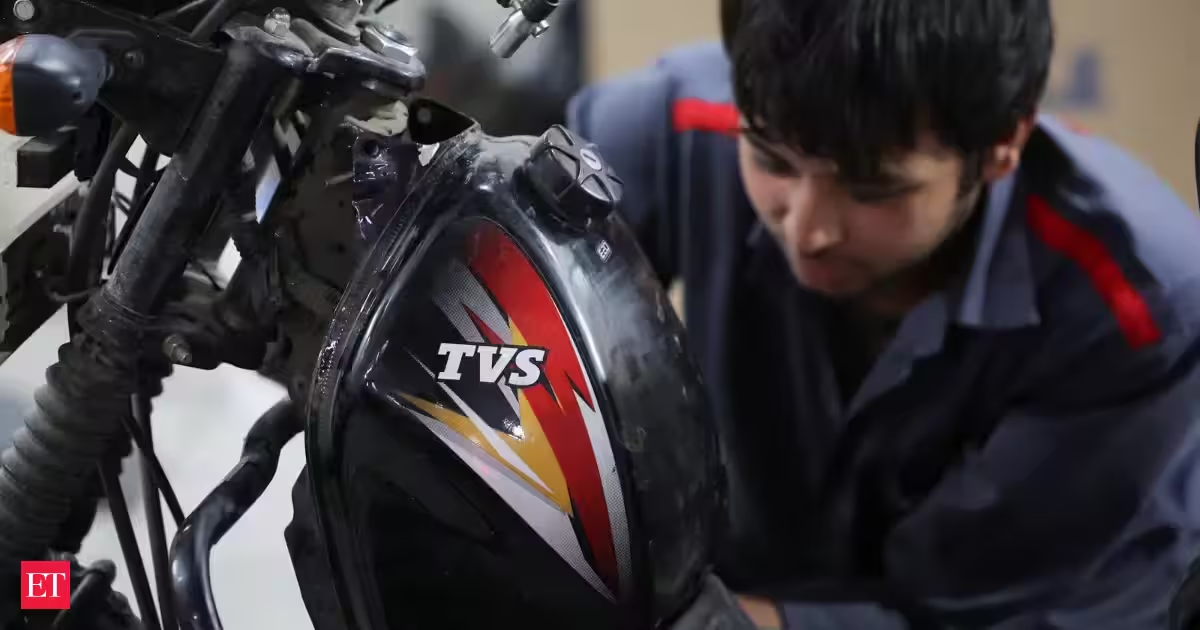
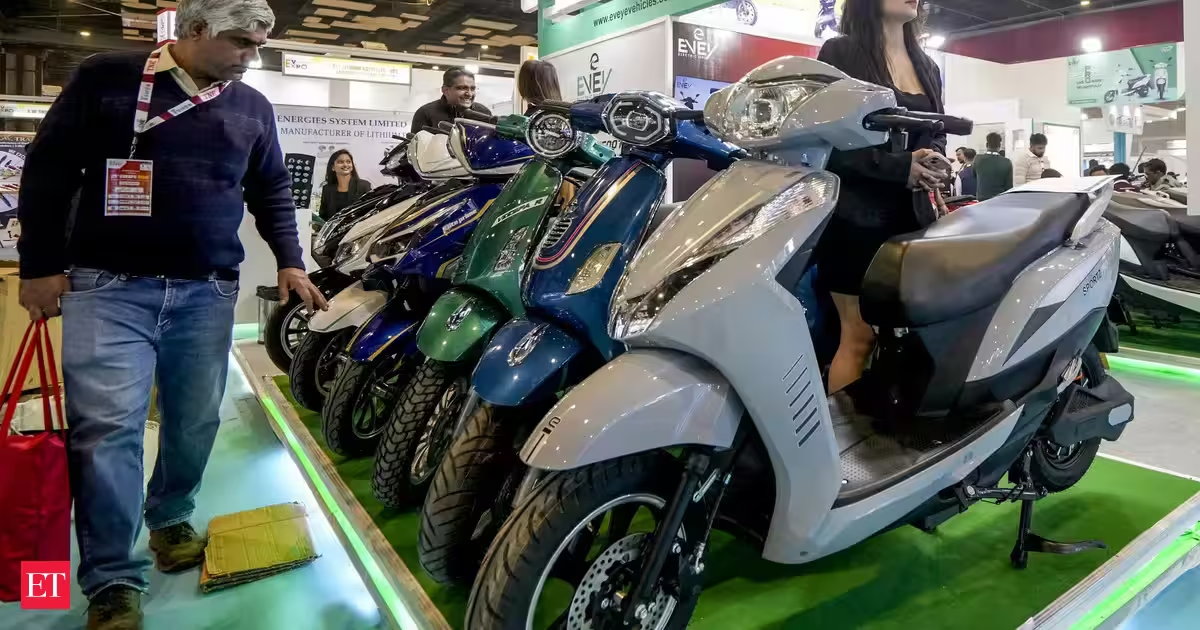
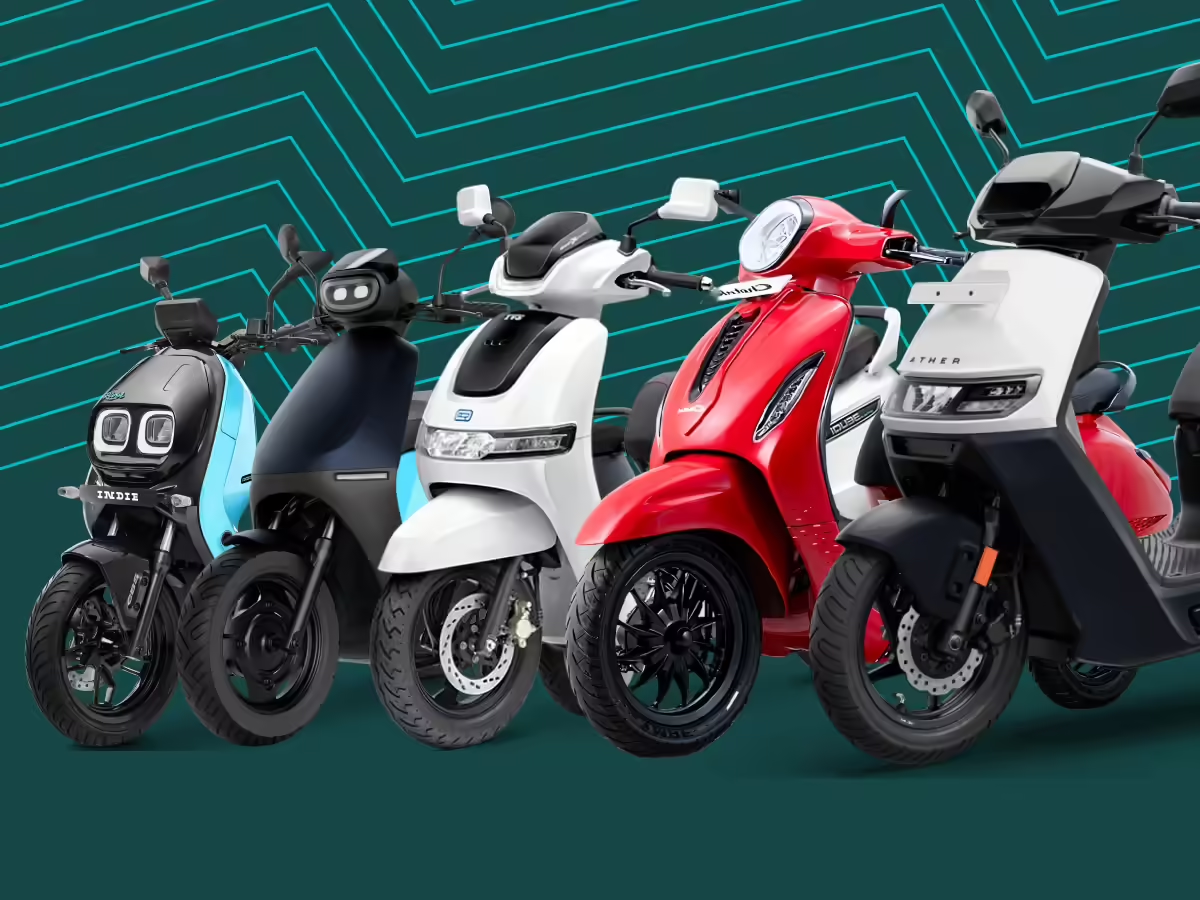
TVS Motor topped India’s electric two-wheeler retail registrations in July with 52,035 VAHAN registrations as the industry recorded another month of robust growth, with overall electric two-wheeler registrations rising 76.6 per cent year-on-year to 1,91,614 units.The sharp expansion lifted EV penetration to nearly 11 per cent, up from 7.6 per cent a year earlier, even as registrations eased 1.7 per cent from June’s 1,94,966 units amid normal seasonal moderation.The July performance showcases the continued structural shift towards electric mobility, with the EV segment growing nearly three times faster than the broader two-wheeler market. Crisil Intelligence estimates overall two-wheeler retail sales at more than 1.8 million units in July, up 26-27 per cent year-on-year.Market leadership reshufflesTVS Motor retained the top spot with 52,035 registrations, up 120.5 per cent year-on-year, followed by Bajaj Auto with 43,137 units (up 109.8 per cent), Ather Energy with 28,540 units (up 60 per cent) and Hero MotoCorp with 20,913 units (up 93 per cent). Ola Electric remained fifth with 13,085 registrations, the only major manufacturer to report a year-on-year decline, with volumes falling 29.1 per cent.Greaves Electric Mobility was among the fastest-growing players, with registrations surging 124.8 per cent to 9,590 units from 4,266 a year earlier, comfortably outpacing the industry’s 76.6 per cent growth.The divergent growth rates underline the ongoing reshaping of India’s electric two-wheeler market. Established manufacturers such as TVS, Bajaj and Hero continued to strengthen their positions, while Greaves gained traction with triple-digit growth. In contrast, Ola Electric’s declining registrations point to continued market-share erosion as competition intensifies.Industry momentum intactIndustry registrations increased from 1,08,522 units in July 2025 to 1,91,614 units in July 2026, representing a 76.6 per cent increase. On a sequential basis, registrations moderated 1.7 per cent from 1,94,966 units recorded in June.Industry participants said the month-on-month decline reflected a normalisation after June’s strong performance rather than any deterioration in underlying demand. Monthly registrations remaining close to the 2 lakh mark indicate sustained consumer adoption and a maturing electric two-wheeler market.“The EV two-wheeler market continues to witness strong structural growth, with July volumes nearly 77 per cent higher than the corresponding month last year. While July saw a marginal sequential decline of 1.7 per cent, this appears to be a normalisation after June’s strong performance rather than any slowdown in demand,” a Greaves Electric Mobility spokesperson said.Analysts’ viewHemal Thakkar, Senior Director and Senior Practice Leader at Crisil Intelligence, said electric two-wheeler retail sales are expected to touch around 2 lakh units during July, growing 82-84 per cent year-on-year and substantially outperforming the overall two-wheeler industry.“The industry’s electrification journey continues to gather pace, with EV penetration expected to rise to nearly 11 per cent in July 2026 from 7.6 per cent in July 2025 and 10.6 per cent in June 2026,” he said.According to Thakkar, favourable ownership economics, lower operating costs, an improving charging ecosystem and a wider range of products across price points continue to support consumer adoption. While internal combustion engine two-wheelers continue to account for the bulk of industry volumes, electric models are contributing an increasing share of incremental growth, reinforcing the long-term shift towards electrification.Overall OutlookWith monthly registrations continuing to hover around the two-lakh mark and EV penetration approaching 11 per cent, the electric two-wheeler segment is widening its contribution to overall industry growth.While the July moderation reflects seasonal factors, industry executives expect electrification to remain one of the strongest long-term growth drivers for India’s two-wheeler market.Published on July 31, 2026