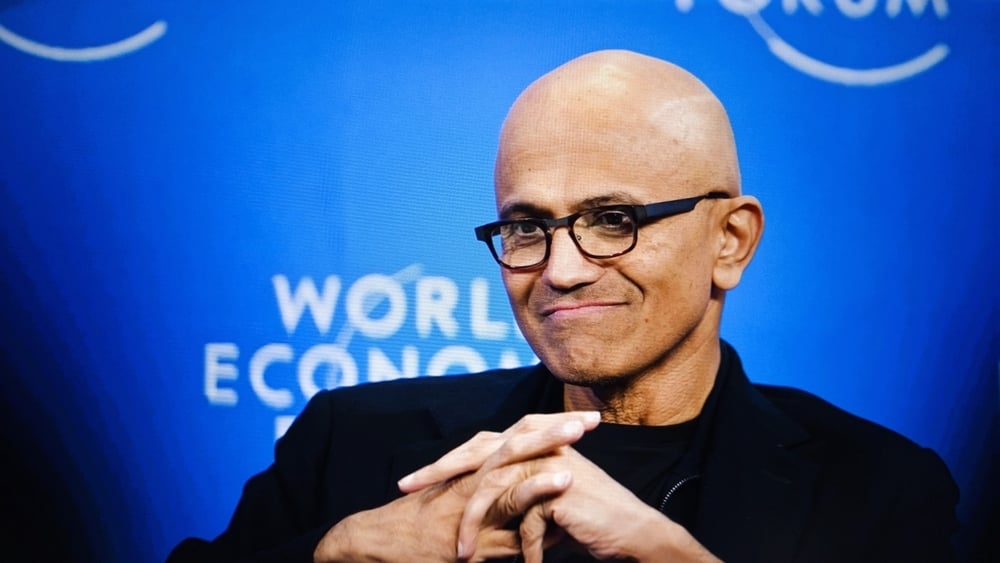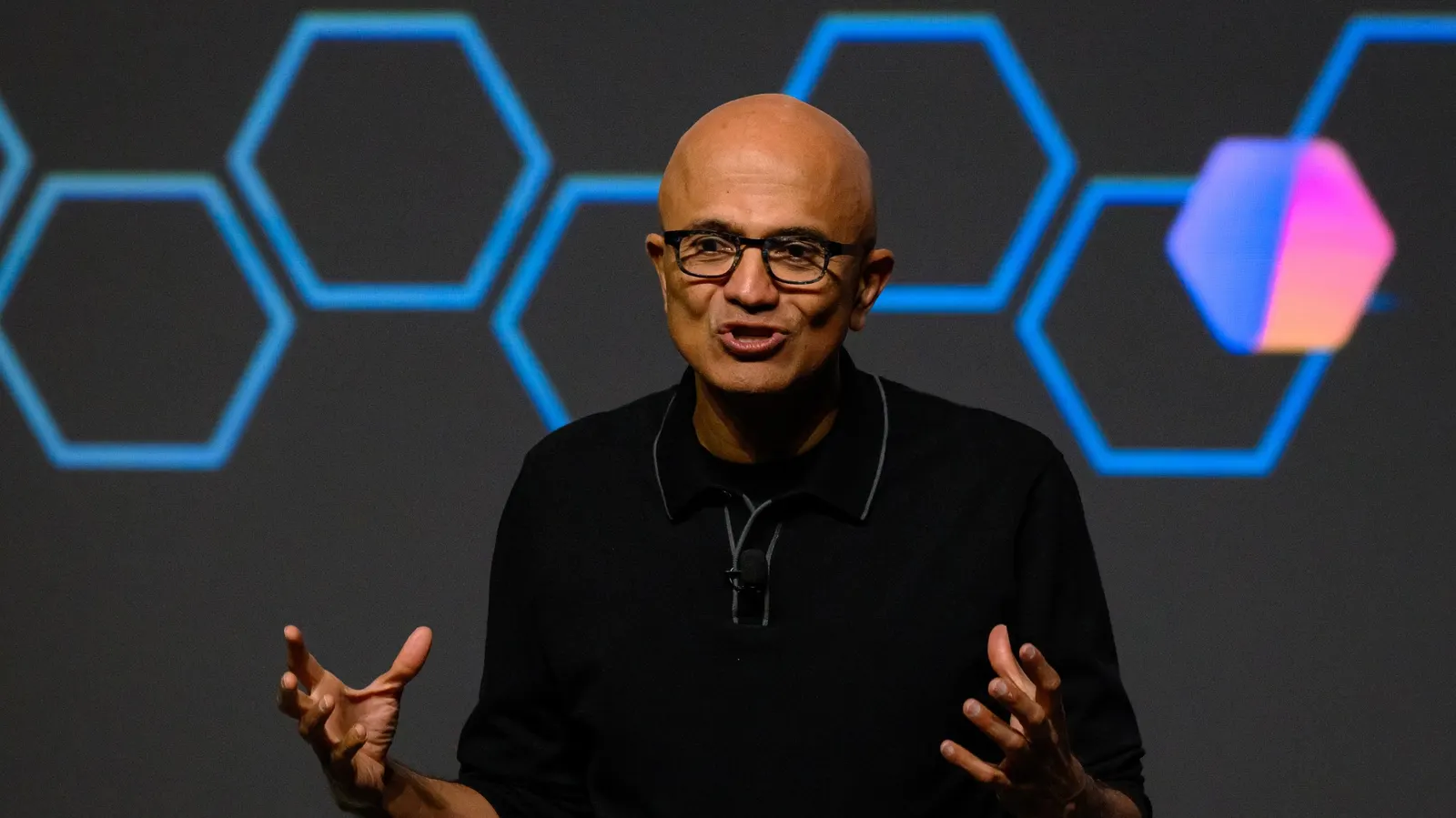
Microsoft now has 40 million AI agents deployed in organizations from Agent365, and 30 million paid Copilot seats, demonstrating how context-specific cognitive work is highly relevant to organizations todayGetty Images“Just two months in, Agent 365 now has nearly 40 million agents registered across tens of thousands of companies,” Satya Nadella said in Microsoft’s latest earnings call this week.You read that right. Millions of AI teammates are now outnumbering their human counterparts.“When it comes to knowledge work, we now have over 30 million paid Microsoft 365 Copilot seats.”Approximately one in three pull requests in GitHub involve requests for an agent. Even more interestingly, Microsoft is building a commercial model where instead of pricing per employee or per seat, they are changing to the pricing per consumption, which obviously is more profitable when it comes to generative AI consumption, and ensures that they're able to keep up with the number of requests and token usage as compute as well.One employee is now accompanied by multiple AI agents. Each professional has their own agentic team working with them in addition to their human teammates. What Are The 40 Million AI Agents Doing?The question is, what are the smartest professionals using their AI agents for? Fortunately, Microsoft did shed some light on agentic AI and multi-step usage in their latest report on AI agents and human agency.For about half of Copilot use cases (49%), AI is used for supporting cognitive work, Microsoft’s Work Trend Index 2026 reports.Cognitive work includes functions and tasks such as: Performing calculations (such as estimated and totals from spreadsheets)Evaluating options and decision-makingSupporting human judgement and analysisThe remaining use cases are distributed across collaboration and communication with others (19%), producing work such as drafts and outputs (17%), and locating knowledge, resources, or information (15%).This shows us that the clearest use case for agentic AI within enterprises lies within cognitive work--that which involves creative problem solving and strategy, and synthesizing knowledge--rather than the initial surface use cases like summarizing a meeting or responding to team messages and emails. But the benefit of agentic AI is even greater for what the report terms “frontier professionals.” Frontier professionals are those at the edge of innovation. They’re empowered by their organizations to use AI impactfully, and, according to Microsoft's report, they use AI agents for multi-step workflows and build multi-agent systems. They are also advanced in understanding which work requires AI and which work requires human input, and they are heavily focused on doubling down on their human skills by performing some tasks on their own, independently, to ensure their cognitive functions still remain independently sharp.When asked which skills were critical in an AI-era workplace, respondents to Microsoft’s survey noted that quality control and critical thinking are the two most essential skills for professionals today.Human agency and AI agency are both needed, and when humans control the agent and manage the final output, it enables humans to have greater capacity for more meaningful work that previously would have been considered unrealistic or unachievable.Quality control and critical thinking are the top skills required to lead agentic AIgettyDoes It Need An AI Agent?So if you’re still using agentic AI to perform functions that a quick, simple Gen AI chat can deliver, you’re wasting your resources. Instead, here’s how to structure your work week around the power of AI so you can get the best results:Run your next task through this test: Is it a multistep workflow? Use an AI agent (or multiple agents). Is it a one-time task? Better to use ChatGPT, Claude chatbot, or Copilot.Is it a quick question that you need answering? Or is it a process that requires deeper research or repeated actions on a scheduled frequency?As AI agents move into teammate territory and every employee is equipped with them, these questions need to be answered by every leader, middle manager, and individual contributor at work, because these are the factors that help decide just how far your agentic AI spend will go, and where to tighten usage if your budget lacks capacity.
Microsoft Deployed 40 Million AI Agents. What Are They Being Used For?
Microsoft's Satya Nadella reports 40 million AI agents being deployed across thousands of organizations. Here's how the smartest professionals are using them.
TL;DRAI
Microsoft deployed 40 million AI agents via Agent365 in two months, moving to consumption-based pricing instead of per-seat licensing. 49% of usage is cognitive work—analysis, decisions—not automation, showing AI ROI hinges on human oversight and quality control.
669 words~3 min read