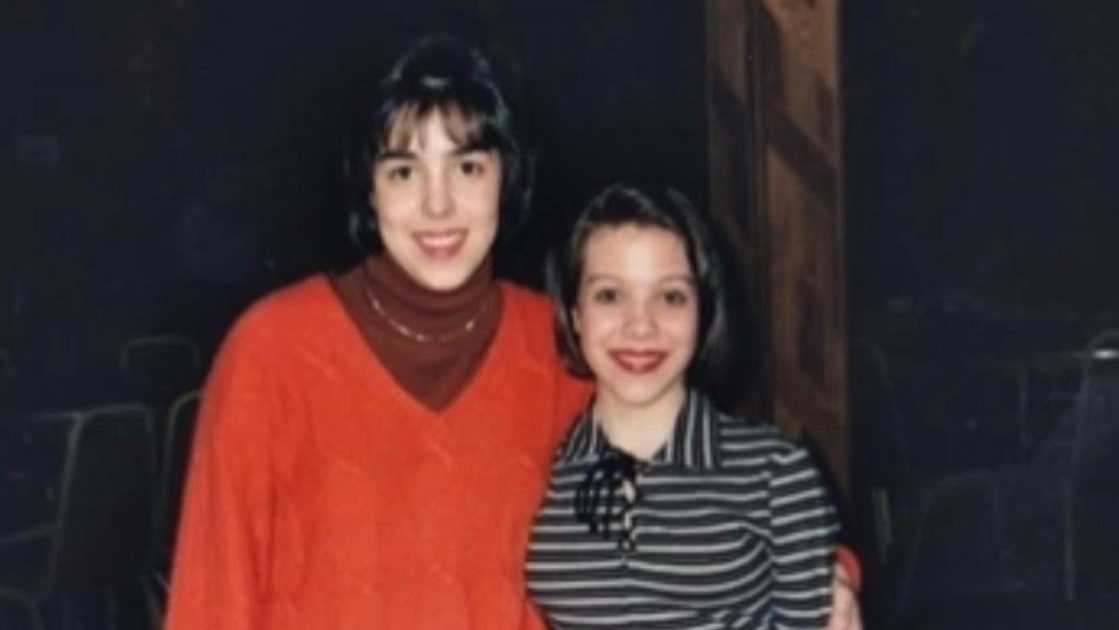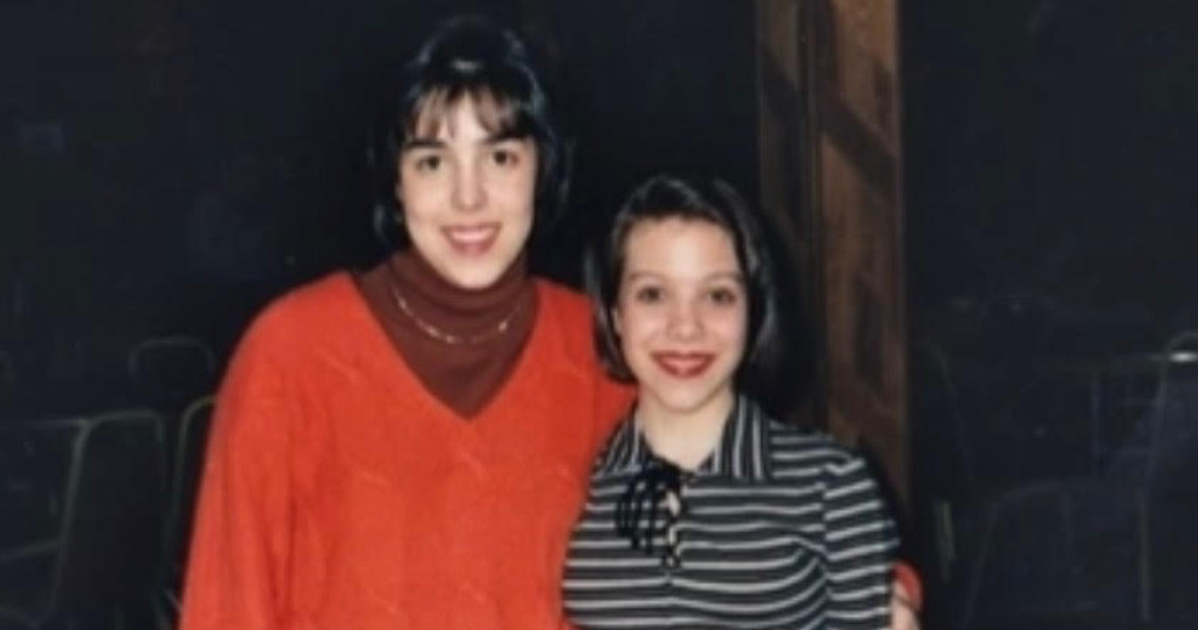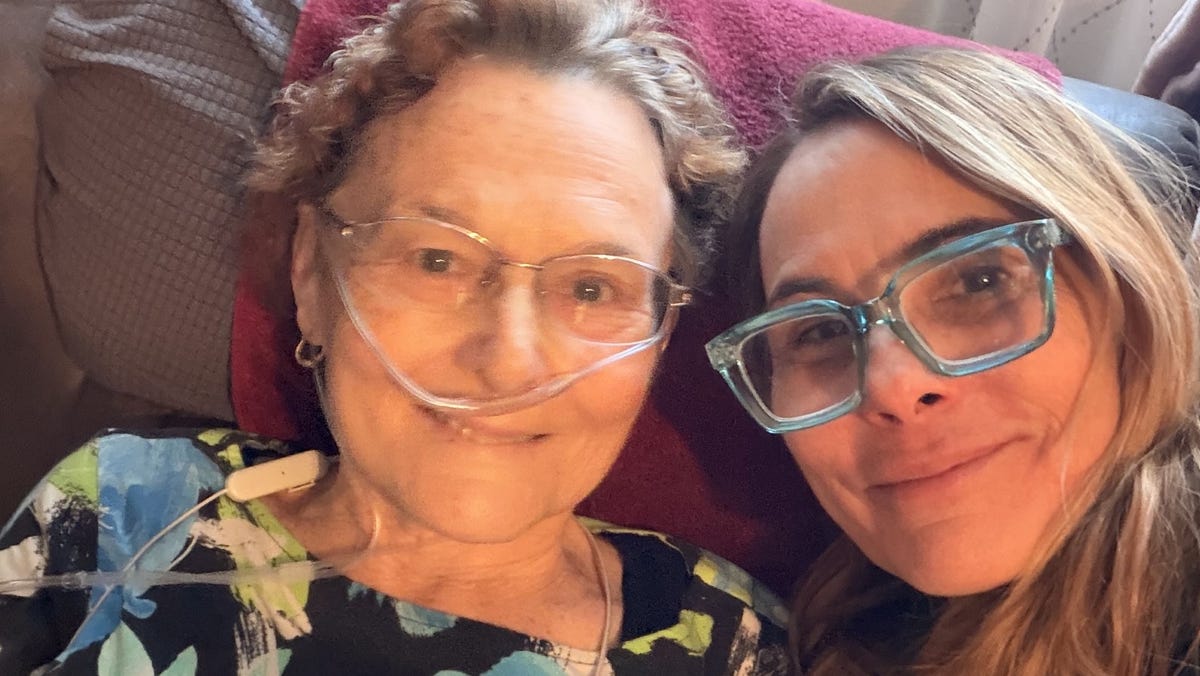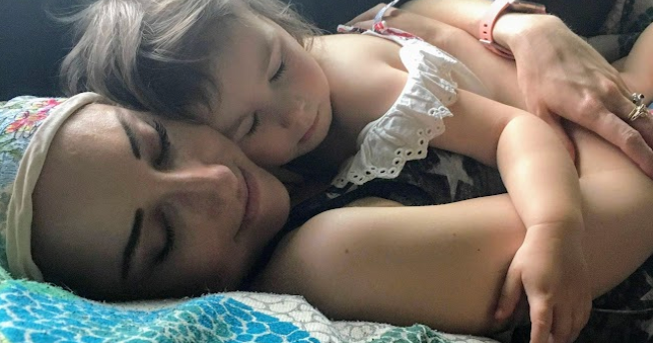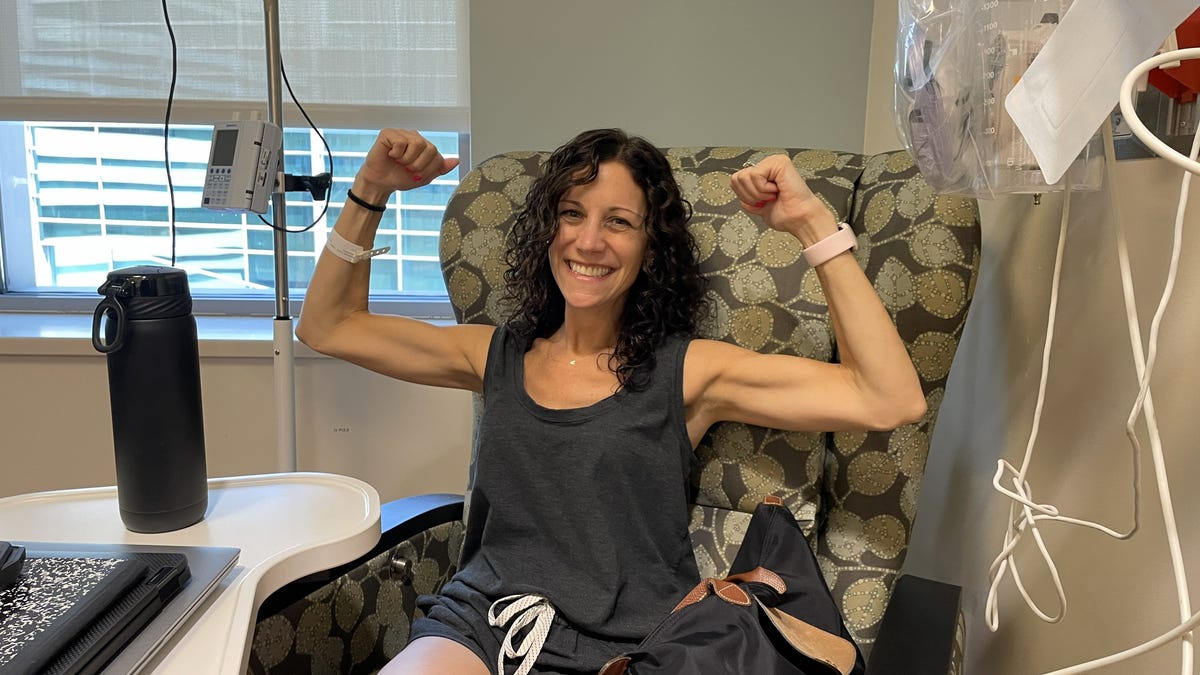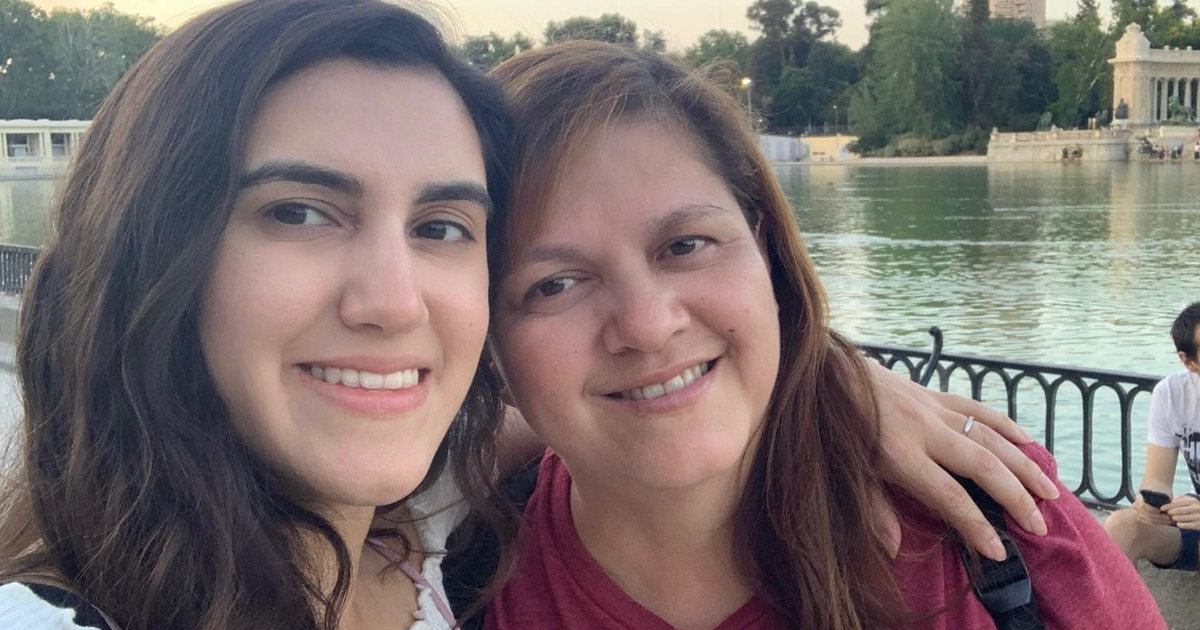
My mother-in-law Karla told me she had a brain tumor before she told my wife Michelle. Karla and Michelle were inseparable. Karla had Michelle at just 18, so in many ways, they grew up together. Michelle shared everything with her mom because Karla was her best friend.There wasn’t anything Karla wouldn’t do for her daughter. Even after learning there was a mass in her brain, her first thought wasn’t herself — it was Michelle. She wanted to wait until the next day, hoping to have more answers, before telling her. She confided in me.It was one of the hardest promises I’ve ever kept.I remember sitting with that information, carrying it alone, trying to act normal while everything underneath me had shifted. I didn’t know what this meant yet. I didn’t know how bad it was. I didn’t know how quickly things were about to change.The author's wife, Michelle, with her mom, Karla, at one of 5-year-old Michelle’s dance performances in 1996.Courtesy of David RoblesA few days earlier, Karla had gone in for what we thought was a routine physical therapy appointment for carpal tunnel pain. The clinic was busy and almost turned her away. Only because she insisted that something felt wrong did they send her to the emergency room.That’s where we learned there was a mass in her brain. It was glioblastoma, the most aggressive form of brain cancer. From that moment on, everything moved quickly. And somehow, at the same time, not at all in the ways that mattered.Karla Lara emigrated from Honduras as a teenager. She learned English, put herself through college, and spent her career in education supporting underserved children and families in Los Angeles. She was the kind of person who always showed up for the people who needed her most. She was just 50 years old. She had employer-sponsored health insurance. She lived in California, home to some of the best cancer centers in the world. She did everything right.From the moment Michelle found out, she became everything her mother needed. She prepared Karla’s meals, helped her through the routines of daily life, took her to every appointment and treatment, and became her voice when she needed one. The changes came at a terrifying speed. Because Karla’s tumor was located near her cerebellum, it quickly stole her coordination, mobility, and independence. The disease and its treatments left her weak and sick, while also taking an emotional toll. Michelle adapted without being asked. She did this while working, while grieving, while trying to hold her own life together. Karla had spent a lifetime showing Michelle what unconditional love looked like. Being there for her was never a question.My wife became Karla’s caregiver almost overnight. I saw the physical and emotional weight she was carrying, and I wanted to be there for her in whatever ways I could. That meant helping carry Karla down the flight of stairs from our second-floor apartment, from the wheelchair to the exam table, through every appointment and every waiting room. I know Karla would have done the same for me.Michelle (left) at her bridal shower with her mom, Karla, in 2017.Courtesy of David RoblesI know what some people will say when they read this. That we should have pushed harder. Asked more questions. Advocated louder. And I understand that instinct. The advice to be your own advocate is not wrong. It’s just brutally incomplete. Because advocacy requires information you don’t have, time you’re not given, money you may not possess, and the emotional bandwidth to be confrontational with experts while your loved one is sitting beside you losing ground.Michelle was Karla’s advocate every single day. She fought for every appointment, every referral, every conversation a doctor didn’t volunteer. The problem was never Karla’s willingness to fight. The problem was that she was handed a terminal diagnosis and then largely left to figure out the landscape alone.That’s what I mean when I say caregiver. I’m not talking about just family members or paid professionals. I mean everyone who refuses to let someone go through it alone. And with a disease like glioblastoma, which can cause a patient to lose their cognitive function faster than they lose their life, the caregiver doesn’t just provide comfort. They become the patient’s voice, their memory and their ability to ask the next question. When that voice is dismissed in research, when the experience between appointments is treated as anecdotal rather than data, what gets lost is the only complete record of what actually happened to that person.Nobody told us to ask about clinical trials. Nobody encouraged a second opinion. Nobody told us about all the FDA-approved treatments available, including tumor treating fields, a noninvasive therapy worn on the scalp that has been shown to extend survival in glioblastoma patients. We had never heard of it. Nobody on her care team mentioned it. We found out later, after it was too late to matter.Nobody offered palliative care as Karla’s condition worsened — we had to ask for it ourselves, late, after her suffering had become unbearable to watch. When we finally reached one of the country’s top cancer centers, we learned that the location of Karla’s tumor made her ineligible for their primary trial. A door that might have existed had quietly closed before anyone thought to tell us it was there.Michelle and Karla in Madrid in 2019. "This was one of many trips they took together," the author writes.Courtesy of David RoblesThe treatments Karla received — surgery, radiation, chemotherapy, then harsher chemotherapy when the first round failed — we pursued because no one told us there was reason to pause.I know now, through the work I do at OurBrainBank, a nonprofit created by and for families struck by glioblastoma, that for patients with Karla’s tumor profile, the standard of care can cause serious harm with limited benefit. We didn’t know that then. We were following the only path anyone showed us. And Michelle watched her mother suffer through treatments that may have shortened the very life they were meant to extend.When the end arrived, it arrived fast. At that point, we were told Karla had about a month to live. She died a week and a half later.She couldn’t speak. She couldn’t eat. Michelle held her hand.Michelle still carries the guilt of feeling like she couldn’t save her mom. Losing Karla left an emptiness she will carry for the rest of her life, and she still wonders if there was more she could have done.I hear those words, and something in me breaks every time, because I know what she gave. I know every question we didn’t know to ask until it was too late, every door that closed before we found it, every option that existed somewhere just outside what our family could access. The guilt isn’t hers. It belongs to a system that left us to navigate a terminal diagnosis with no map, no guide, and no one whose job it was to make sure we understood what was possible.I’ve sat in rooms with physicians from around the world who point out, correctly, that the United States has scientific resources most countries can only imagine. I don’t dispute that. But access to science and access to care are not the same thing.What our family experienced wasn’t a failure of American medicine. It was a failure of the space between the medicine and the patient, the communication, the navigation, the equity of who gets told what and when. That gap exists everywhere, but it is not inevitable. It is a choice.This is not an exceptional story. It is the pattern.The author with colleagues from OurBrainBank at the Society for Neuro-Oncology annual meeting in 2025. "We presented research on disparities in glioblastoma care shaped by patient and caregiver experiences like Karla’s," the author writes.Courtesy of David RoblesThrough OurBrainBank, we surveyed glioblastoma patients and caregivers across the country — people with insurance, people without, people in major cities and rural areas alike. Two-thirds were never offered a clinical trial. More than half were never encouraged to seek a second opinion. Nearly 9 in 10 were never adequately informed about tumor testing or tissue preservation. More than 70% had no meaningful involvement with palliative or hospice care as their loved one was dying.These are not failures of science. The science exists. These are failures of communication, access and equity, and they are documented not by researchers observing from a distance, but by the patients and caregivers who lived them. That distinction matters. Because giving the system information isn’t enough. The patient’s voice has to be impossible to ignore.“I know every question we didn’t know to ask until it was too late, every door that closed before we found it, every option that existed somewhere just outside what our family could access.”OurBrainBank was built by and for GBM patients and everyone who refuses to let them go through it alone. We collect real-world data not just from clinical settings, but from the silence in between — between appointments, after discharge, in every decision a doctor never asked about. We exist because of Karla’s experience, and Michelle’s, and the experiences of thousands of families like ours that deserve to be counted. Not just mourned.Glioblastoma is where my work lives, but the gap it exposed isn’t unique to brain cancer. I’ve come to realize that families across all kinds of diseases and diagnoses find themselves in the same silence — handed a prognosis and left to navigate a system that was never designed to guide them through it. The distance between what research uncovers and what patients actually access can be enormous, and in moments like this, it’s where so much is quietly lost.Four months after Karla passed away, Michelle found out she was pregnant with our first son. Our second son came a year later. In between, I bought Michelle a painting of Mirabel from the film Encanto as a gift to honor her mom. It was Karla’s favorite movie, a comfort she returned to again and again as her condition worsened, and it still played softly in the background on the days she could no longer speak. The painting hangs in our home where the boys can see it. Sometimes my eldest son reaches for a Spanish song I never taught him, and we can’t help but wonder if, somehow, he’s drawn to his grandma Karla. I watch Michelle watch him, and neither of us says what we’re both thinking. We don’t need to. Karla is here. She is in this house, in our boys, in the work we do to make sure the next family gets the map we never had.The author with Michelle and their two sons, in 2026.Courtesy of David RoblesSomewhere in those eight months — in between the appointments and the waiting rooms and the things nobody told us — Karla said something I have carried with me ever since. She said that if she could get better, she would want to help people in her position. She was fighting for her own life and already thinking about the person behind her. That’s who she was.She trusted me with the hardest thing in her life. This work — the surveys, the data, the pushing and the advocating and the refusing to let these stories disappear — this is how I carry what she gave me. This is how I try to make sure the next family doesn’t have to figure it out alone.I’m still trying to be worthy of that.David Robles is the lead researcher at OurBrainBank, a nonprofit dedicated to turning glioblastoma from terminal to treatable, powered by patients. He lives in Southern California with his wife Michelle and their two sons. Do you have a compelling personal story you’d like to see published on HuffPost? Find out what we’re looking for here and send us a pitch at pitch@huffpost.com.
My Mother-In-Law Had A Brain Tumor. What She Said Before She Died Changed Me Forever.
“What our family experienced wasn’t a failure of American medicine. It was a failure of the space between the medicine and the patient.”
1,977 words~9 min read