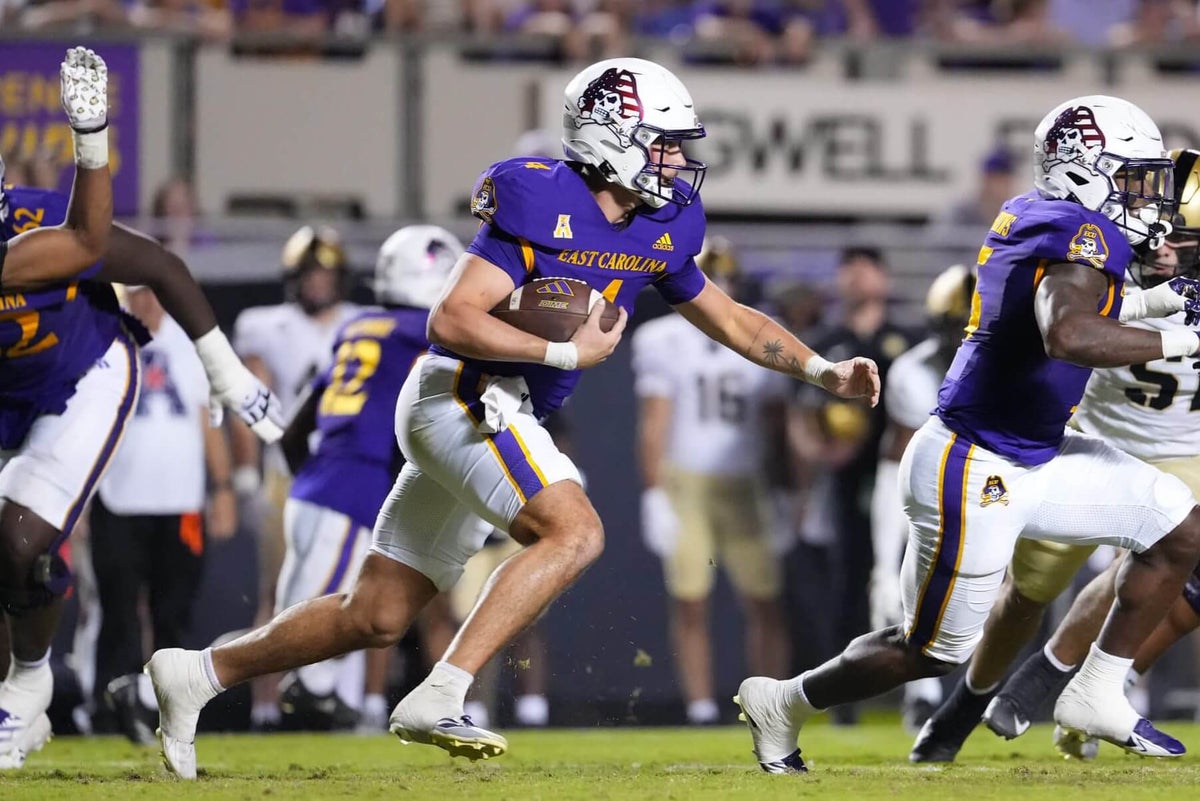
ST. PETERSBURG, Fla. — Jeff Traylor is as old school as they come. The Texas-San Antonio coach believes in player development, loyalty and relationships. But he also knows he must adapt and can no longer be offended when a player opts to leave his program.“You say you are their coach forever,” said Traylor, entering his seventh season at UTSA. “You say your lifelong record is not your win-loss record. Your lifelong record is how many men out of how many boys. But yet, the moment they don’t give you what you want, you’re done with them?”Traylor has taken a new approach to roster management.“They’re all seniors to me,” Traylor said. “Every one of them are one-year players.”If players return, the 58-year-old coach considers it a bonus. He’s hardly alone in that sentiment these days.Traylor’s evolution reflects a larger shift among coaches outside college football’s wealthiest conferences. Many initially condemned the transfer portal and the feeder system it created. Coaches still don’t like the arrangement, but most are no longer complaining about it — at least publicly.“If somebody’s not taking your players, you’re probably not doing the right thing,” East Carolina coach Blake Harrell said. “You can’t complain about it. You can’t bitch about it. You can’t fight it. You’ve got to embrace it and embrace what’s next.“We act like tampering is new. It’s not. It’s been here forever.”College QB Tiers: Which quarterback has the highest ceiling?Antonio Morales and Sam Khan Jr.The migration of players from the Group of 6 ranks to Power 4 programs began in earnest with the implementation of the one-time transfer rule in 2021, and the floodgates opened in 2024 when the NCAA allowed unlimited transfers with immediate eligibility.The American Conference, as usual, was hit hard this offseason. Of the league’s 51 players who earned all-conference honors in 2025 and had eligibility remaining, 29 are now playing at Power 4 programs.UTSA lost two all-league honorees: receiver Devin McCuin (Ohio State) and tight end Houston Thomas (Texas A&M). Conference champion Tulane, which reached the College Football Playoff last season, lost seven players who earned all-conference recognition to P4 schools. East Carolina and North Texas lost five each.Tim Pernetti, the league’s commissioner, embraces the positives of the situation.“We identify, we invest in talent, we develop student-athletes, and the results are the life-changing opportunities it opens up for them,” Pernetti said last week at the American Conference media day. “We’re proud of this.”The American coaches are also aware these opportunities are not restricted to players. In the offseason, four of the league’s coaches were hired by Power 4 programs — Ryan Silverfield (Memphis to Arkansas), Eric Morris (North Texas to Oklahoma State), Alex Golesh (South Florida to Auburn) and Jon Sumrall (Tulane to Florida).First-year North Texas coach Neal Brown, who spent six seasons at West Virginia, has worked on both sides of the talent divide. His new school lost 70 players this offseason, including 20 who followed their coach, Morris, to Oklahoma State.
American Conference coaches are (mostly) embracing college football’s feeder system
“If somebody’s not taking your players, you’re probably not doing the right thing,” East Carolina coach Blake Harrell said.
1,484 words~7 min read