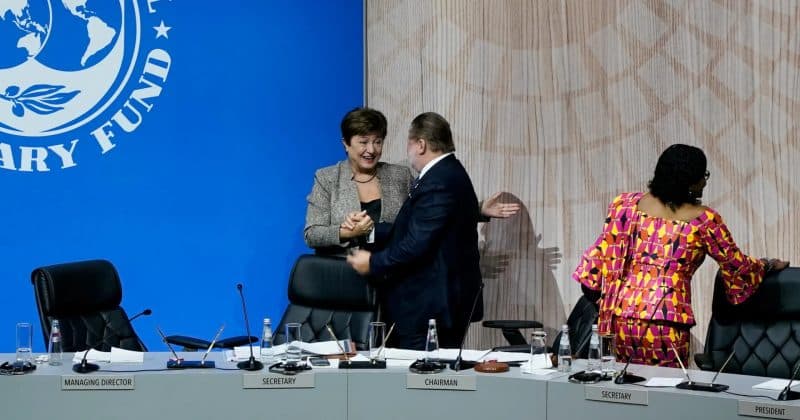
The IMF approved $1.8 billion in funding to Egypt following a review of two reform programmes, bringing total disbursements to $7.3 billion.
Egypt's economy grew 5.2 per cent in the first nine months of fiscal year 2025/26, with headline inflation falling to 14.3 per cent in June.
Record remittances, strong tourism receipts and recovering Suez Canal revenues helped shield Egypt from the impact of higher oil and gas prices.
Growth is expected to moderate to 4.4 per cent in 2026/27, reflecting weaker investment and higher input costs from the regional conflict's lagged effects.
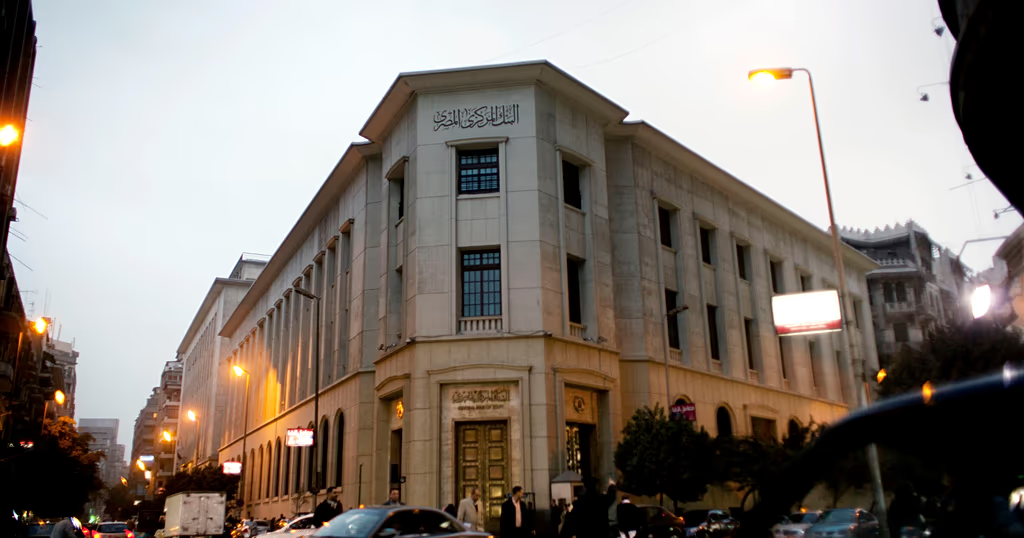
"Egypt entered the period of the war in the Middle East from a solid macroeconomic position," IMF Deputy Managing Director Nigel Clarke said, cautioning that elevated public debt and financing needs remain key vulnerabilities.Egypt has secured access to about $1.8 billion in fresh IMF funding, taking total disbursements under two reform programmes to about $7.3 billion, as the lender said the economy had weathered the Iran war relatively well.The Arab world's most populous country will be receiving $1.5 billion as part of a 48-month Extended Arrangement under the Extended Fund Facility and about $272 million under the Resilience and Sustainability Facility (RSF) arrangement.The Washington-based lender said Egypt had weathered the economic fallout from the Middle East war relatively well, helped by timely policy measures including exchange-rate flexibility, energy price adjustments and spending controls.“The economic impact of the war in the Middle East on the Egyptian economy has remained relatively contained, reflecting the authorities’ timely and decisive policy actions, including exchange rate flexibility, energy price adjustments, and measures to contain budget spending," the lender said.As the Arab world’s most populous country and a net energy importer, Egypt was forced to introduce energy-saving measures as the war drove up oil and gas prices, adding to inflationary pressures and the cost of living.The IMF and Egypt agreed to an expanded $8 billion, 46-month loan in 2024 after first agreeing to a programme in 2022. At the time, the Arab world's most populous country faced high inflation and a shortage of foreign currency reserves.Significant investment pledges from the UAE, as well as capital injections from the World Bank and Europe that year, had also helped to prevent an economic crisis in the country.Egypt's economy continued to recover, with growth reaching 5 per cent in the third quarter of fiscal year 2025/26, and 5.2 per cent for the first nine months. The economy is projected to expand by 4.6 per cent for the whole fiscal year, only 0.1 percentage point lower than at the time of the fifth and sixth reviews, according to the IMF.Egypt's economy is projected to expand by 4.6 per cent for the 2025/26 fiscal year. Getty ImagesInfoHeadline inflation fell to 14.3 per cent in June from 15.2 per cent in March as oil prices fell following a ceasefire agreement between the US and Iran.Record remittance inflows, robust tourism receipts and a gradual recovery in Suez Canal revenues also helped in containing the impact of higher oil and gas prices on Egypt's current account, the IMF said.Fiscal performance has also remained strong, with tax revenue exceeding targets by the end of March.However, heightened uncertainty continues to weigh on growth in the near term, with growth projected to moderate to 4.4 per cent for the 2026/27 fiscal year as a result of lagged effects of the war, including weaker investment and higher input costs.A renewed escalation of regional tensions could also weigh on growth, raising inflation and tightening financial conditions.On the upside, a renewal of the US-Iran ceasefire agreement may help lower energy prices and improve investor sentiment. The US and Iran reached an agreement in June to stop fighting for 60 days. However, the ceasefire broke down after Iran and the US exchanged missiles and drones over the past two weeks, with shipping traffic across Hormuz strait and Bab Al Mandeb strait remaining disrupted.“Egypt entered the period of the war in the Middle East from a solid macroeconomic position, reflecting substantial progress in restoring stability and rebuilding buffers under the Fund-supported program," Nigel Clarke, Deputy Managing Director and Acting Chair of the IMF, said.“However, important vulnerabilities remain, reflecting elevated public debt, large gross financing needs, and a sizable state footprint."Mr Clarke underscored the importance of continued fiscal discipline and accelerating reforms, including implementation of the State-Ownership Policy and the divestment agenda, to maintain macroeconomic stability and strengthen resilience in Egypt.