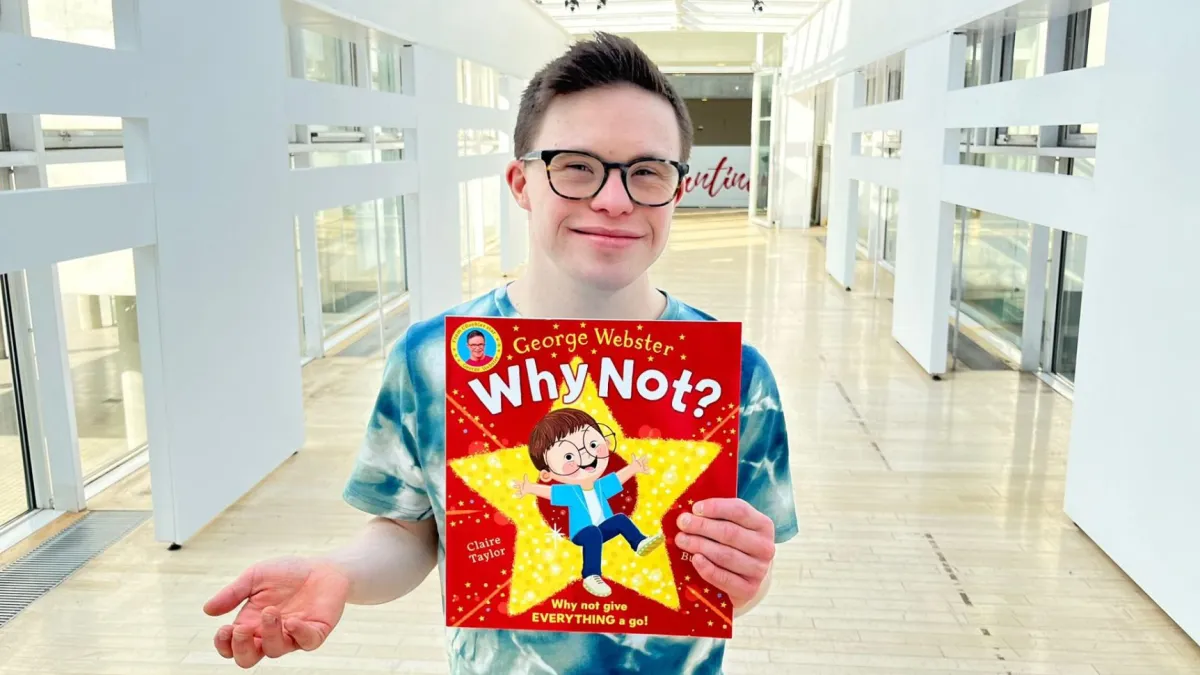
When I became the BBC’s first presenter with Down syndrome, it was a proud moment – not just for me, but for what it said about what people with a learning disability can achieve.
I became one of a handful of people who represented one of the most beloved channels not just on the BBC, but anywhere. I was beamed into the homes of millions of people. As a presenter in the CBeebies House I film links, dance, host festivals, do live TV and live shows. I became an equal part of a team that feels like a family. One of the key things was the BBC saw me for me, not my disability, which helped make sure that people saw “George” not “Down’s George” – their stereotype of a person with a learning disability.
I’ve gone on to work as an actor, dancer and author, and even won a Bafta. But I know I didn’t get here on my own. I had support. I had people who believed in me. Most importantly, I was given a chance.
Growing up, I had lots of amazing support from my family, friends, teachers at school, the NHS, Asas, Holiday Playscheme, the council and charities like Leeds Mencap, and local Down syndrome support groups. They helped me with things like my speech and language skills, physical development, communication, reading and developing independence.