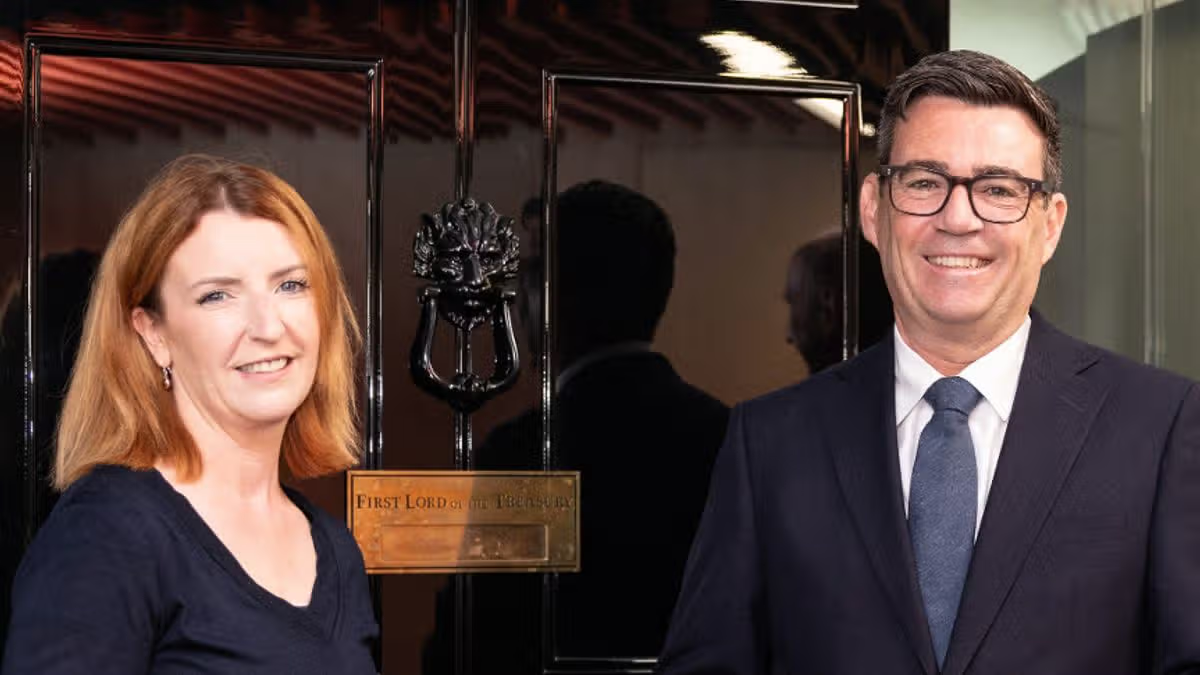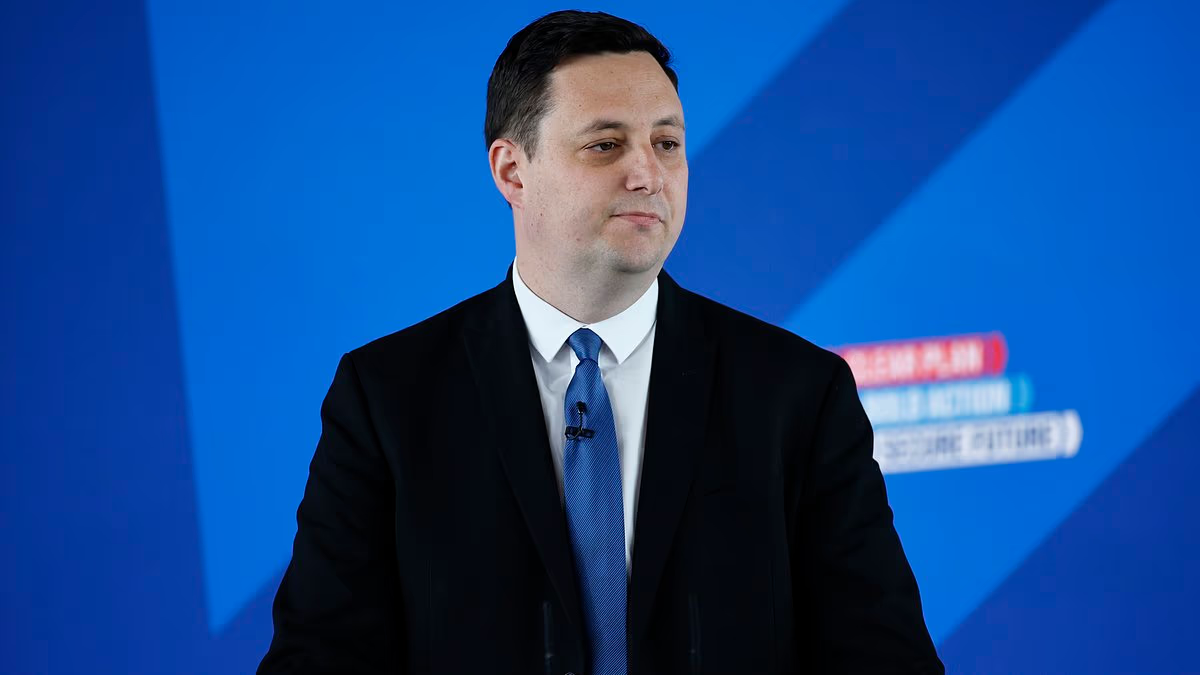
Andy Burnham's top Cabinet ally today attempted to shut down a Tory mayor's plan to give local residents a tax rebate under new powers.Louise Haigh, who is the Prime Minister's de facto deputy, told Tees Valley mayor Ben Houchen she was 'not convinced' by his proposal to ease the burden on households in his region.As part of his devolution drive, Mr Burnham has announced English mayors will be allowed to keep a share of the taxes collected in their area.He said by letting local leaders keep a slice of income tax and business rates, he will 'make good' on his pledge to 'take power out of Westminster and carry it into every postcode in the country'.The Government has sold the idea as a means of giving mayors greater power to boost investment on local infrastructure and public services.But Mr Houchen had instead set out plans to use the new freedoms to create a rebate scheme to 'put money back into people's pockets and let families keep more of the money they earn'.The Conservative politician said he wanted to make his region 'a more attractive place and a more competitive place to invest in than Manchester and London'. Reform UK mayors Luke Campbell (Hull and East Yorkshire) and Andrea Jenkyns (Greater Lincolnshire) are also said to be exploring similar proposals.Yet Ms Haigh, the First Secretary of State, on Friday dismissed Mr Houchen's scheme, saying 'that's not how these powers and resources are intended to be used'.Andy Burnham's top Cabinet ally Louise Haigh has attempted to shut down a Tory mayor's plan to give local residents a tax rebate under new powers Tees Valley mayor Ben Houchen had set out plans to use new freedoms to create a rebate scheme to 'put money back into people's pockets''I'm not convinced that it would be possible for him to set up a rebate scheme,' Ms Haigh told Times Radio on Friday.'We'd have to see the details of that, but it certainly isn't possible at the moment. Those kind of schemes necessitate HMRC to set up full schemes, that's just not possible at the moment.'The way that the mayors are set up and work is to reinvest the money into their public services, into their local economies. It's not possible at the moment.'We'd have to see, obviously, plans and a scheme put forward by Ben Houchen, but that's not how these powers and resources are intended to be used.'Responding to Ms Haigh's comments, Mr Houchen posted on X: 'So devolution means getting people's taxes to spend but not being allowed to give it back to them.'Last time I spoke to the PM, devolution was about Whitehall not dictating what areas can or can't do. Doesn't sound much like devolution to me? Just an excuse for a tax grab.'Senior Tory MP James Cleverly, the shadow local government secretary, said Ms Haigh's comments showed the 'problem with Burnham's faux-devolution'.'He doesn't want to give local leaders the power to do things differently,' Sir James said.'He wants them to be local avatars, implementing his agenda but with a regional accent. It's window dressing for greater centralisation.'Earlier this week, Mr Houchen had revealed he was in discussions with the Treasury over how best to structure his planned tax relief.'Every mayor is backing fiscal devolution because they want more money to spend in their area,' he told The Times.'However, if the Tees Valley is handed a slice of local income tax and business rates generated locally, I'll create a new rebate scheme to put money back into people's pockets and let families keep more of the money they earn.'Fiscal devolution must be about giving places like Teesside the power to do things differently, back growth and reward the people that drive our local economy instead of squeezing every last penny out of them.'Full details of the Government's reforms are expected to be announced in a white paper, published when Chancellor John Healey presents his first Budget in the autumn.Mr Burnham, who was mayor of Greater Manchester for about nine years, said the policy would be designed so that 'every local leader will have the power and resources to improve public transport, build homes and create jobs'.The rate of income tax which billpayers face will not change as a direct result of the reforms, according to the Government.Ministers will retain an equalisation system, so areas where less tax is collected continue to receive financial support.
Burnham ally shuts down Tory mayor's plan to give locals a tax rebate
Louise Haigh, who is the Prime Minister's de facto deputy, told Tees Valley mayor Ben Houchen she was 'not convinced' by his proposal to ease the burden on households in his region.
733 words~3 min read