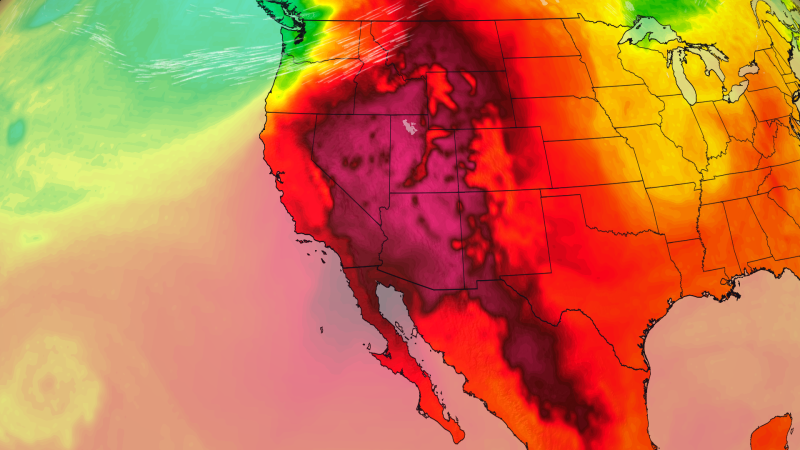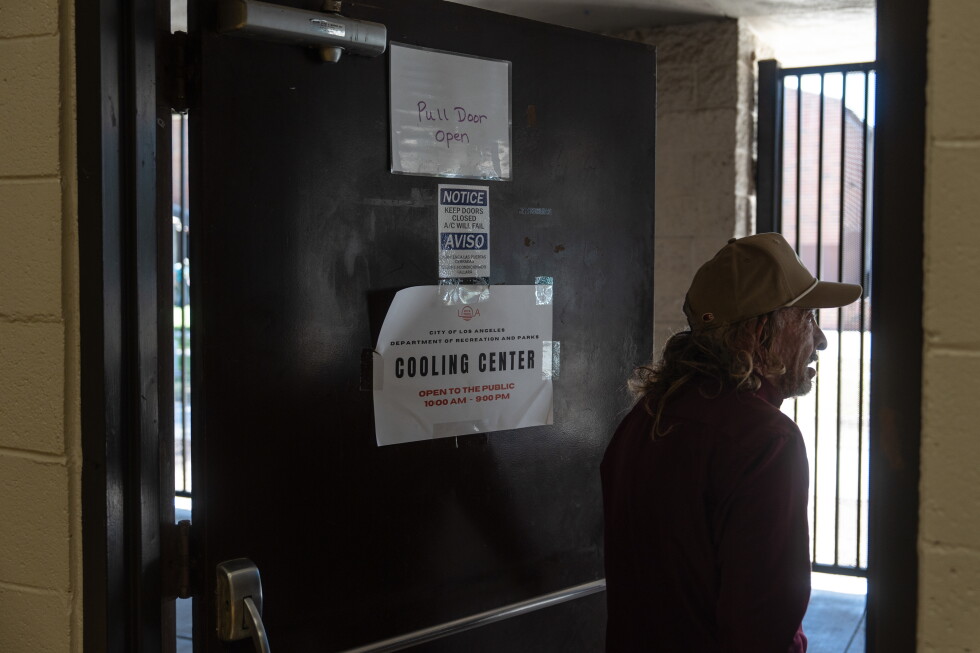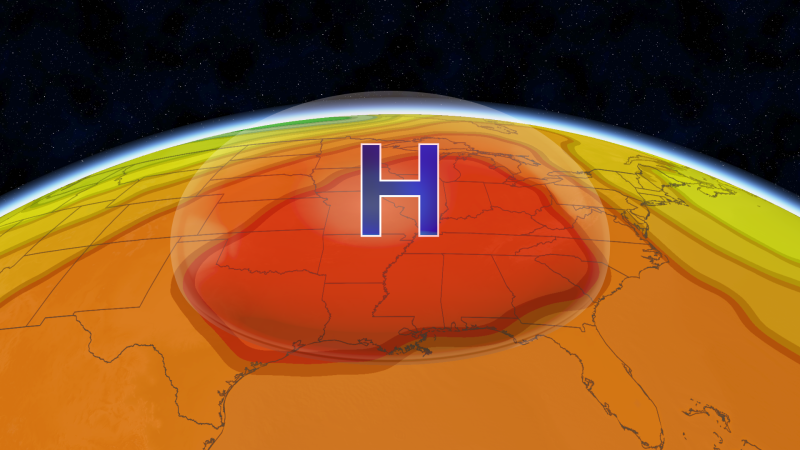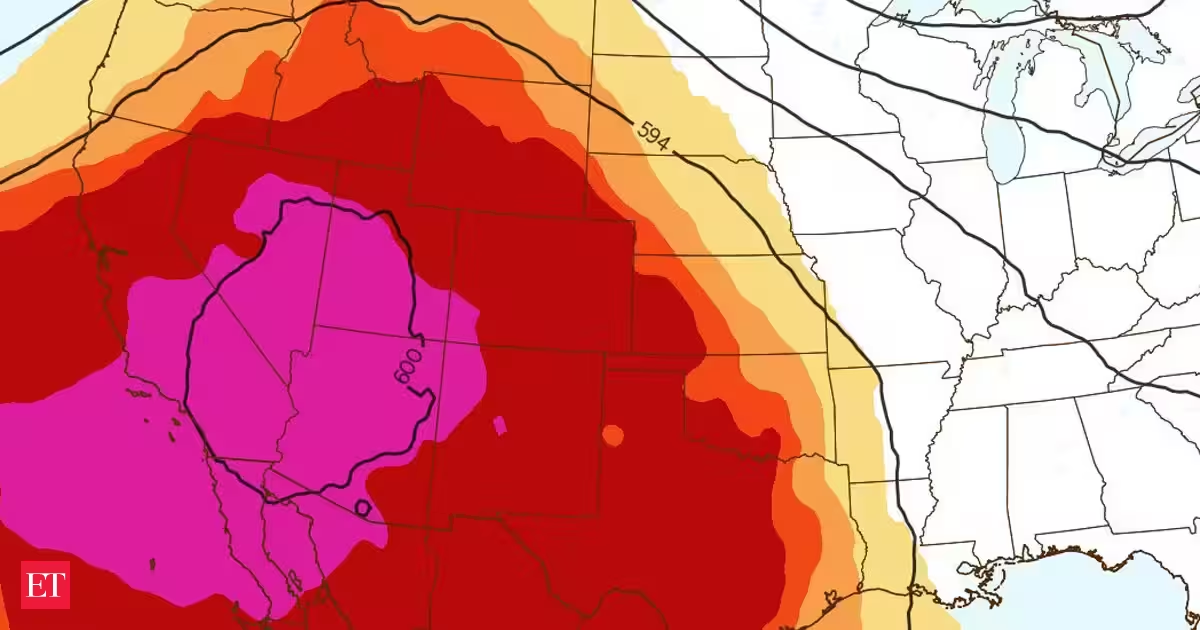
A powerful heat dome is intensifying over the western United States, setting the stage for a prolonged spell of dangerous heat that is expected to bring the hottest temperatures of the year so far to tens of millions of people from California to Canada, according to a CNN report. Forecasters expect temperatures across much of the interior West to rise above seasonal norms, while some locations could experience readings 10 to nearly 20 degrees higher than average for early August. The scorching conditions are expected to affect tens of millions of people, with heat alerts covering large sections of the region and numerous daily temperature records likely to be broken across at least a dozen western states.Among the hardest-hit locations will be Death Valley, California, where temperatures could soar to around 126 degrees Fahrenheit, making it one of the hottest places on Earth during the event. Meteorologists say this heat dome is unusually strong because it extends higher into the atmosphere than most similar systems. Like a tightly sealed lid on a pot, the high-pressure ridge traps warm air near the surface, preventing it from escaping and allowing temperatures to climb even further. This atmospheric setup also suppresses cloud formation, leading to prolonged sunshine and intensifying the heat.As per the report, the current outbreak may not be short-lived. Forecast models suggest the heat dome could remain in place into next week, with another surge of extreme temperatures expected to develop across large parts of the western United States beginning around August 6. By August 4, nearly 10% of the continental United States is expected to experience its hottest day of the year so far.Temperatures in Phoenix and Tucson, Arizona, as well as Las Vegas, are forecast to soar well above 110 degrees Fahrenheit. In Arizona's Maricopa County, which includes Phoenix, officials have confirmed 40 heat-related deaths so far this year, according to county data, with several more weeks of intense summer heat still ahead, reported the outlet.Health experts recommend limiting outdoor activity during the hottest hours of the day, typically from late morning through the afternoon, when temperatures and heat stress are at their peak. Drink water regularly, even if you don't feel thirsty, and spend time in air-conditioned buildings or cool, shaded areas whenever possible.In the dry climate of the western United States, sweat evaporates rapidly because of the low humidity, making it less noticeable even as the body loses significant amounts of fluid. As a result, dehydration can develop faster than many people realize, increasing the risk of heat exhaustion and, in severe cases, life-threatening heatstroke if precautions are not taken.Older adults, young children, people with chronic medical conditions and those who work outdoors face the greatest risk during prolonged heat waves. Wear lightweight, loose-fitting, light-colored clothing, take frequent cooling breaks, and avoid leaving children, older adults or pets inside parked vehicles under any circumstances.
Heat dome set to scorch western US - Here's how to stay safe and protect yourself during the blistering heat
A powerful heat dome is intensifying over the western United States. This system is expected to bring the hottest temperatures of the year so far. Forecasters predict readings significantly above seasonal norms across much of the interior West. Heat alerts cover large sections of the region, and numerous daily records may be broken. The extreme conditions are anticipated to persist into next week, affecting millions.
477 words~2 min read