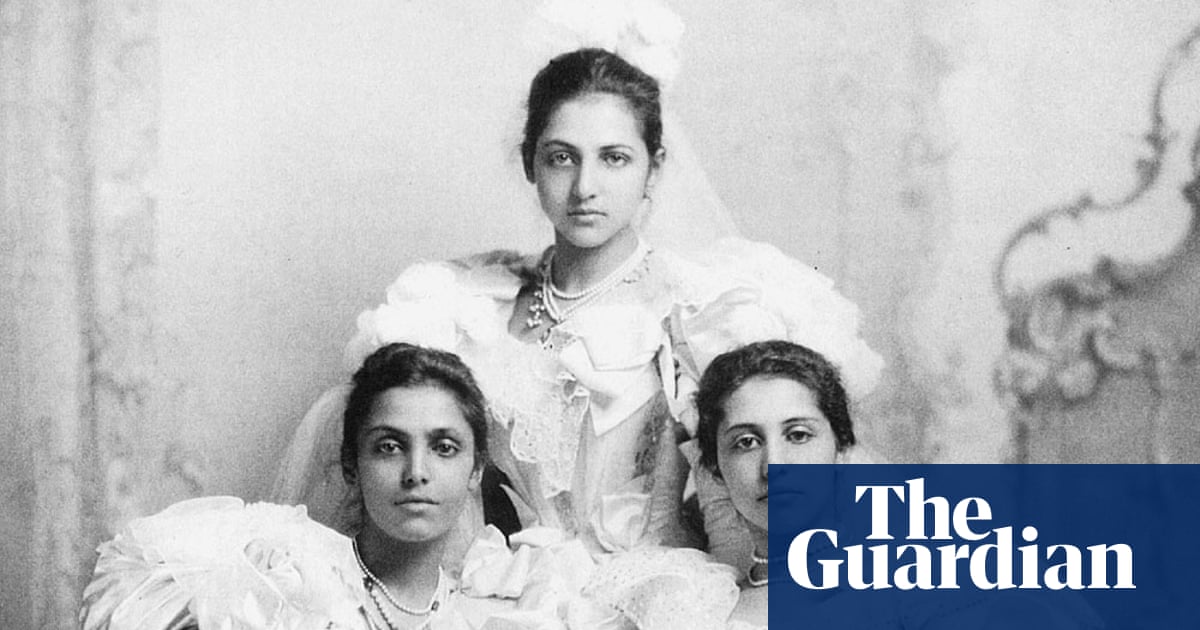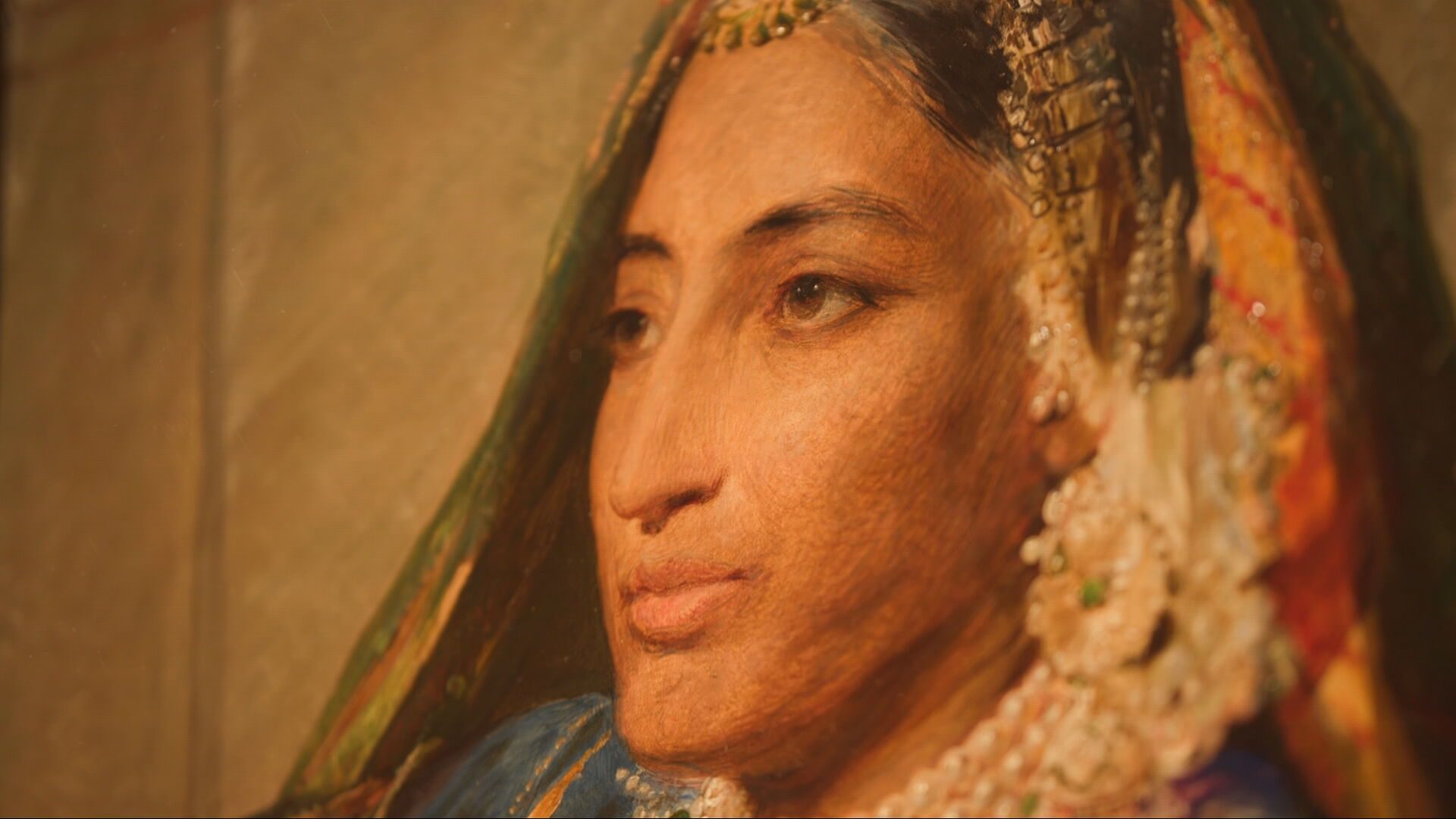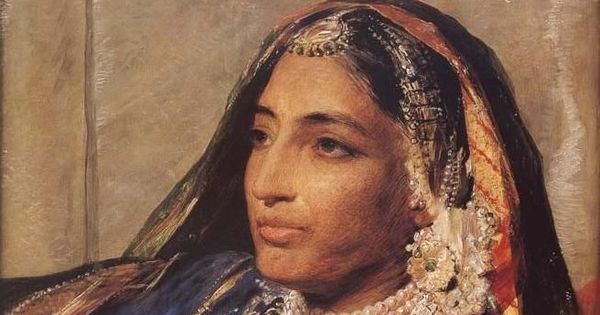
On the front cover of Sikh historian Peter Bance’s The Last Royals of Lahore, Princess Catherine is captured in a studio portrait of quiet, distant contemplation. Her head is draped loosely in shimmering silk; her necklaces and pearls radiate an old-world opulence that seems to weigh heavily upon her.At first glance, these are the standard accoutrements of Indian royalty. But look closer: her earring is not pierced through the ear, but held by a fine, looped thread. It is a silent act of defiance, a sartorial compromise that allowed her to inhabit her South Asian identity without transgressing the Victorian social norms that deferred ear piercing for young girls. It is an almost invisible detail, yet it reveals the deep tensions of a lost empire surfacing through the fault lines of adornment.
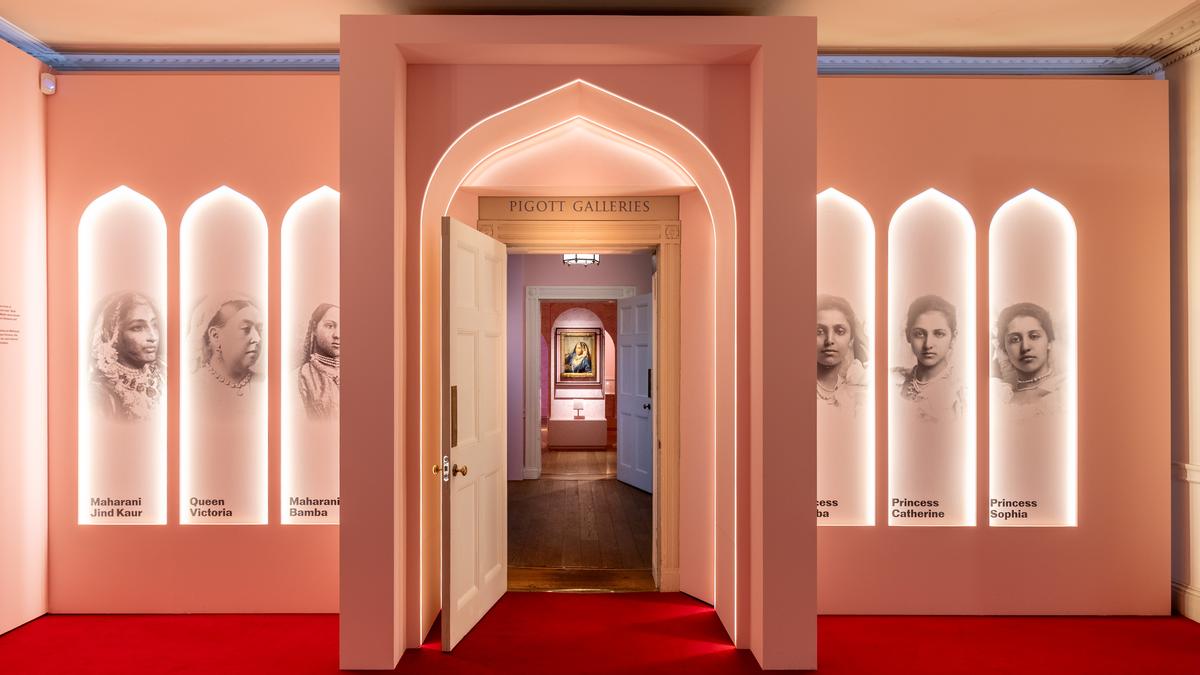
Princess Catherine on the front cover of historian Peter Bance’s The Last Royals of LahoreThere is a profound, perhaps bruising, irony in Kensington Palace hosting an exhibition on three sisters who grew up in exile. It was within these gilded rooms that the British Crown once charted the very empire that forcibly removed their father from his homeland. Daughters of Maharaja Duleep Singh, the last deposed Sikh ruler of Punjab (who ruled from 1843-1849), and raised within the orbit of Queen Victoria, the sisters — Sophia, Catherine and Bamba — occupy a complex historical position.