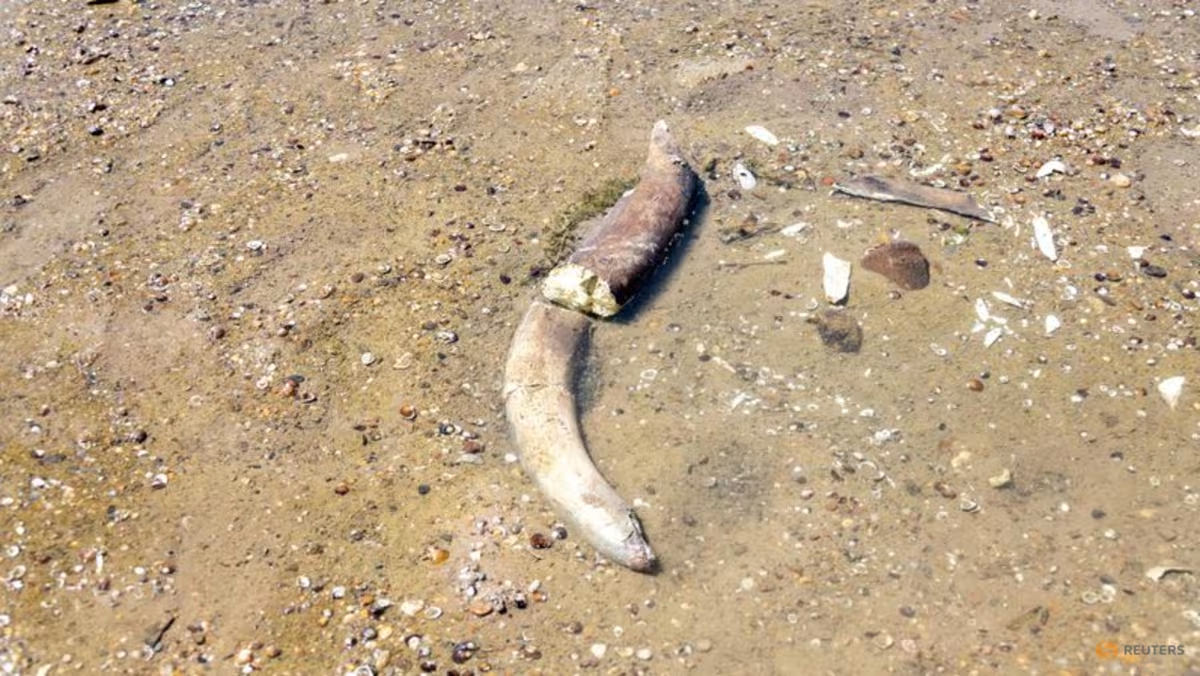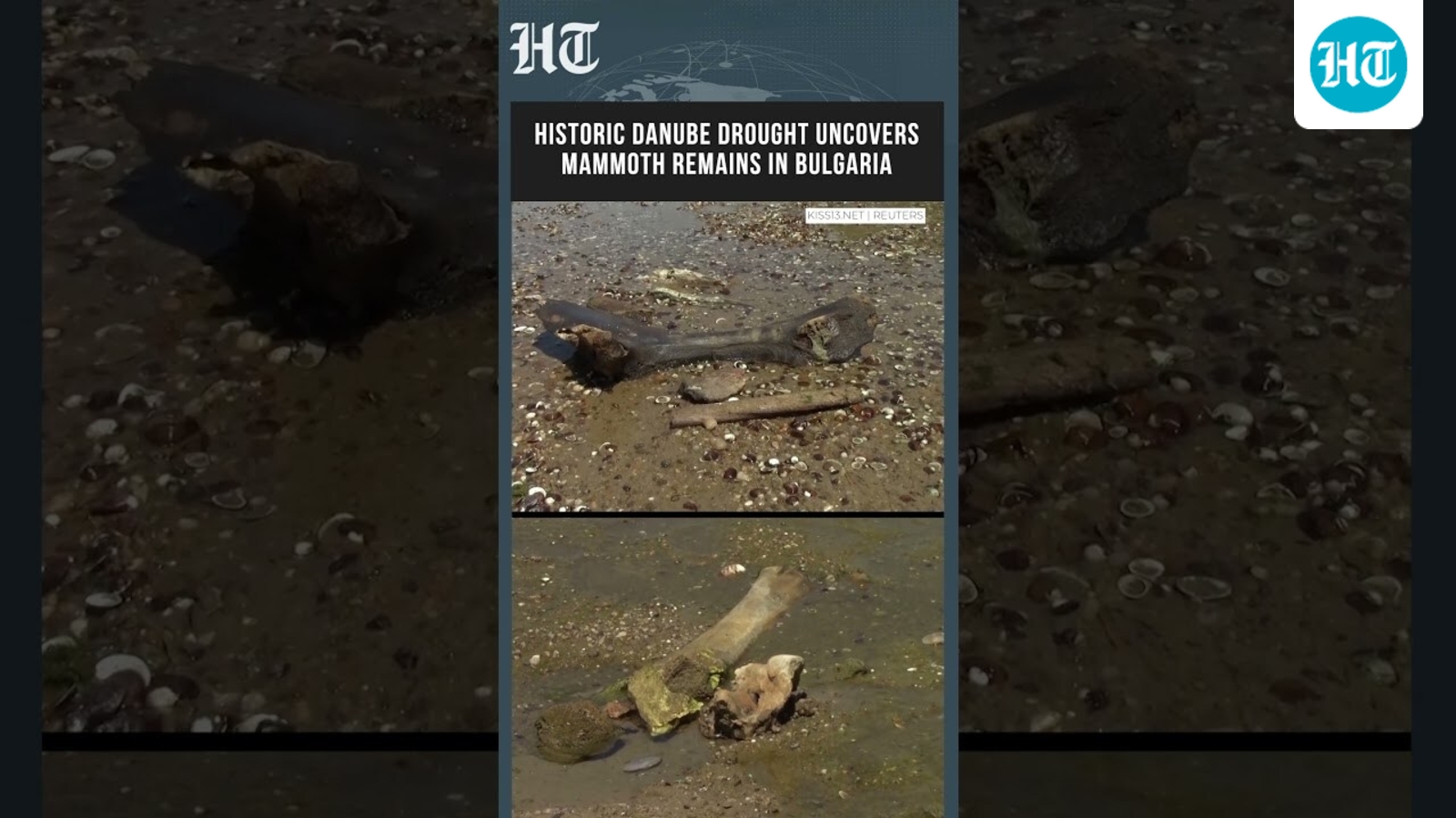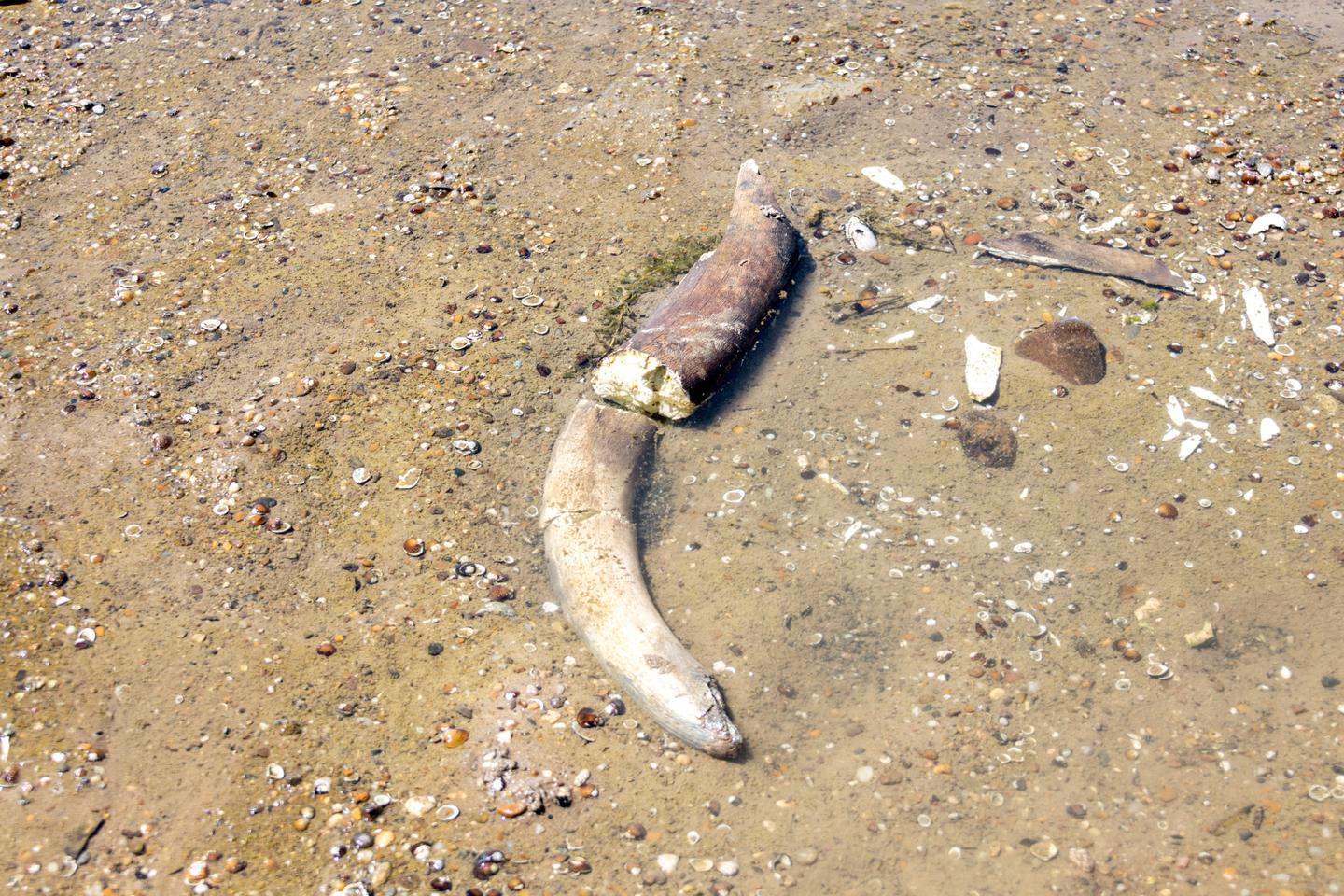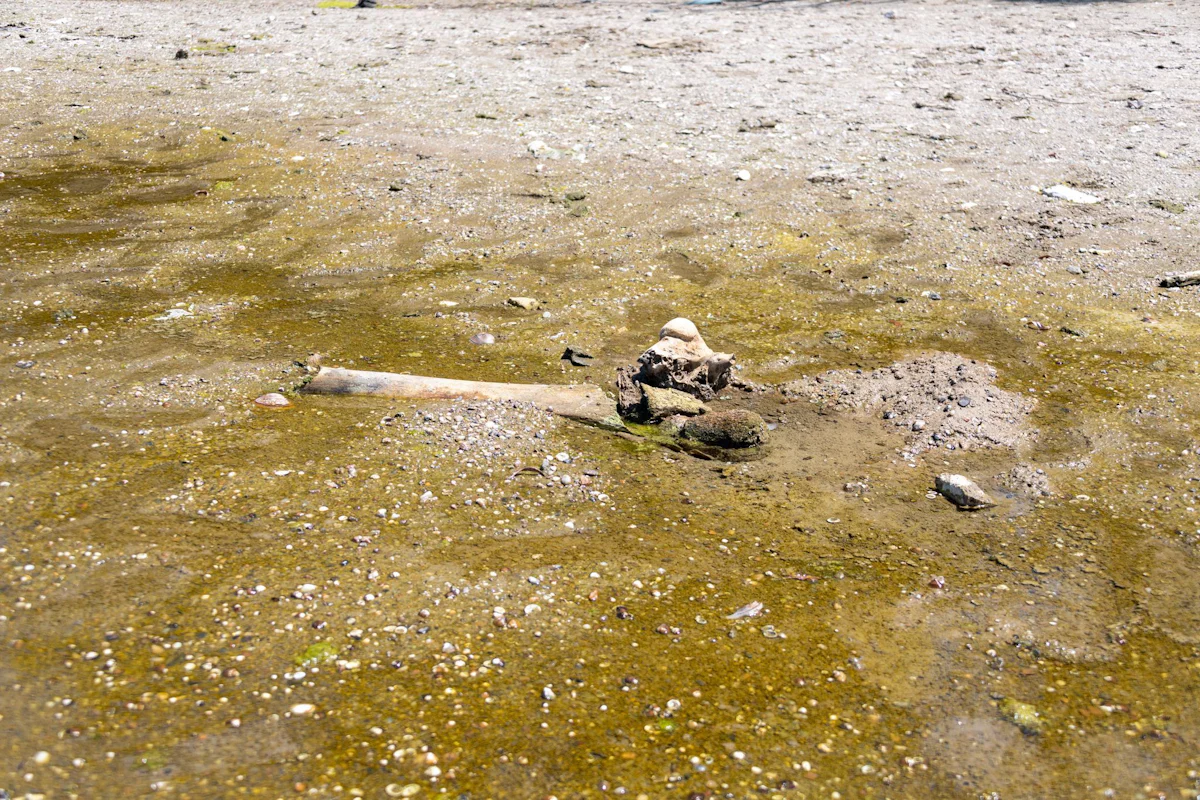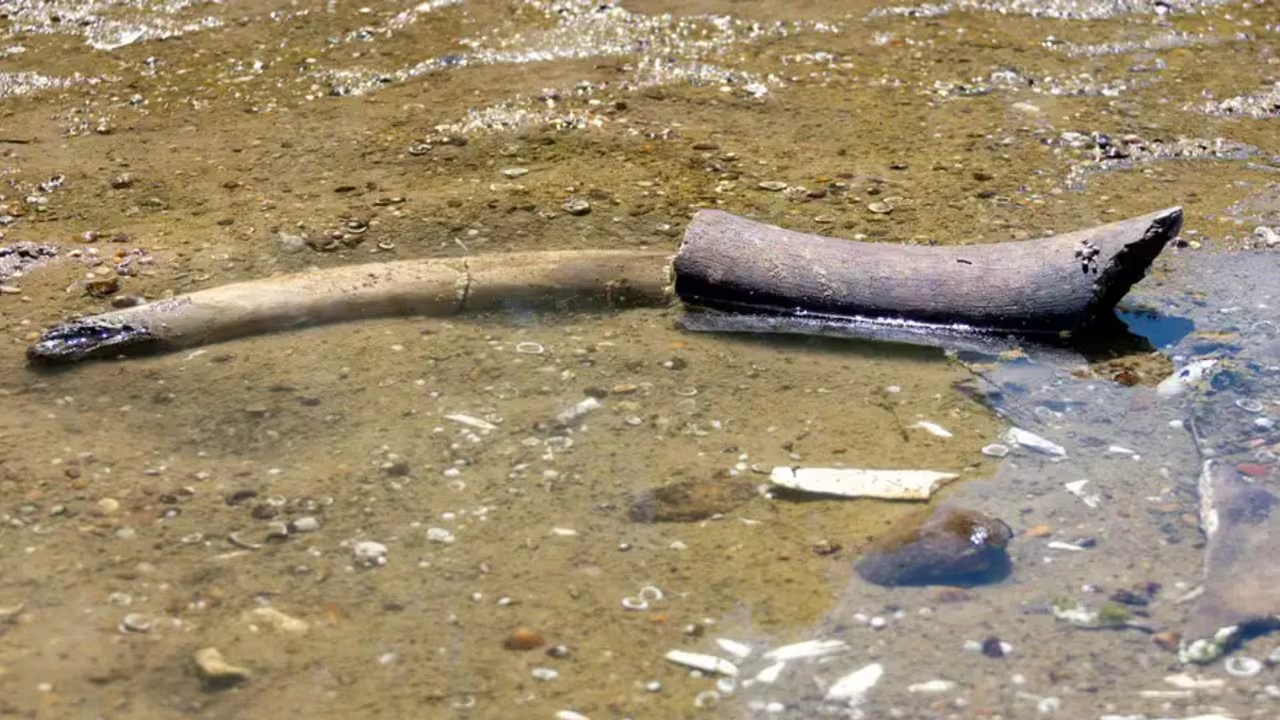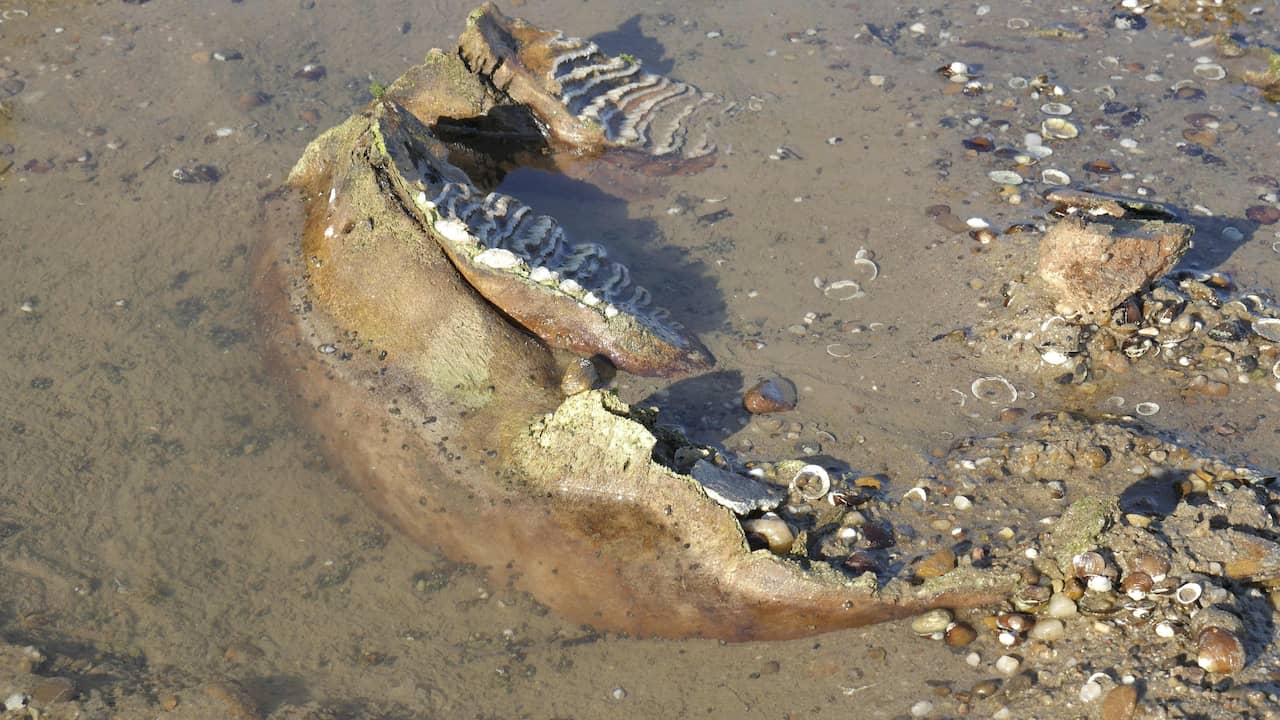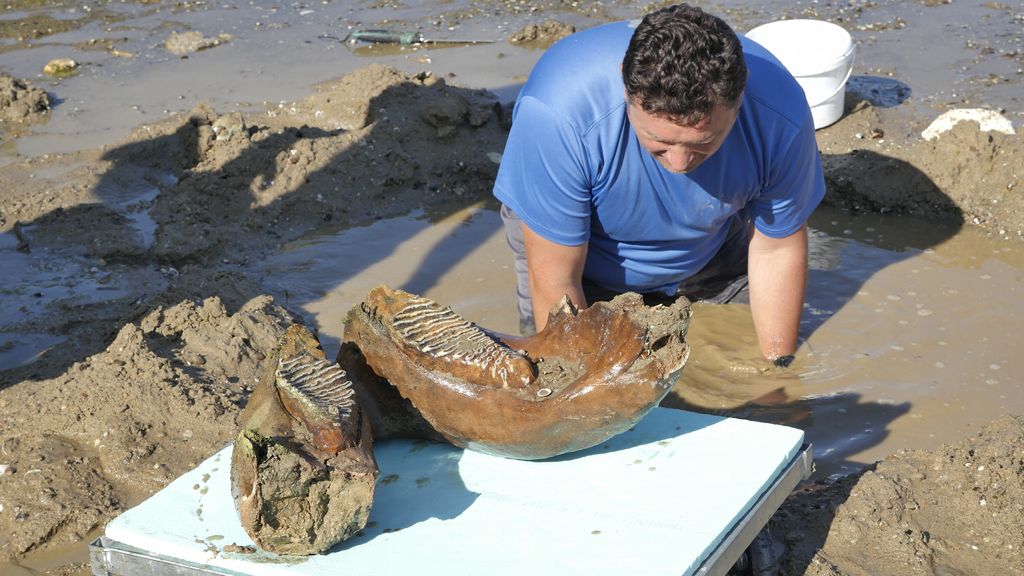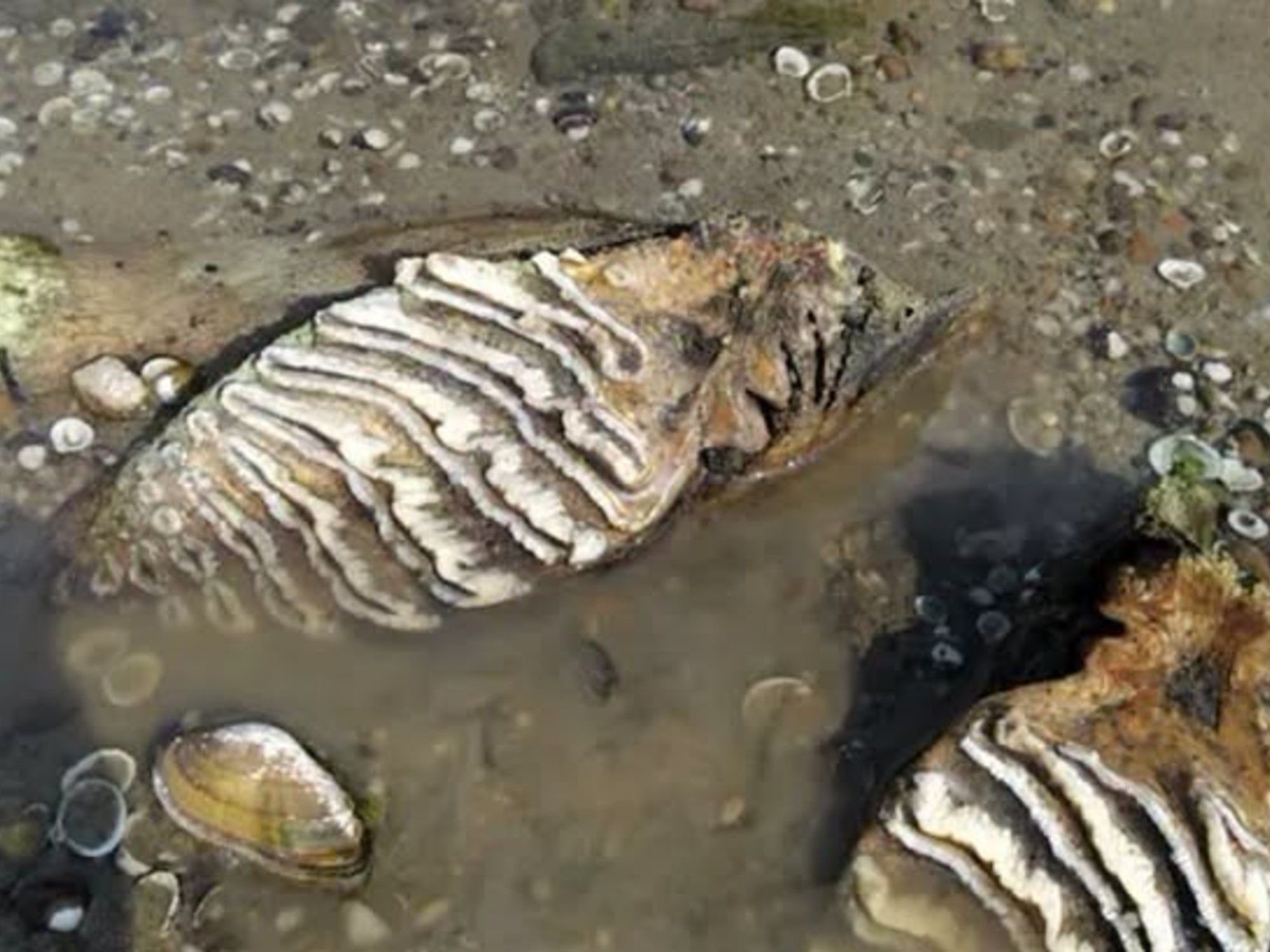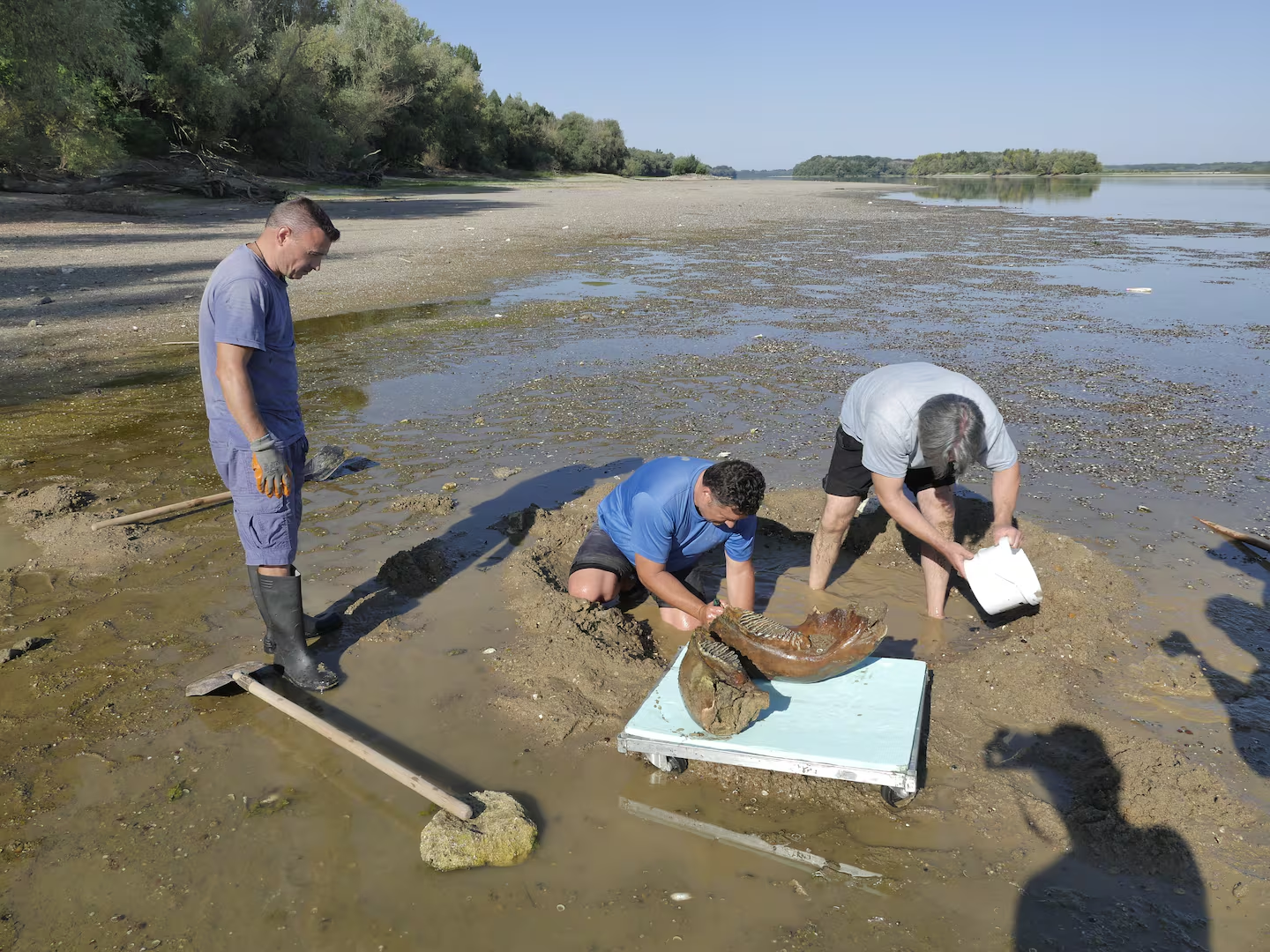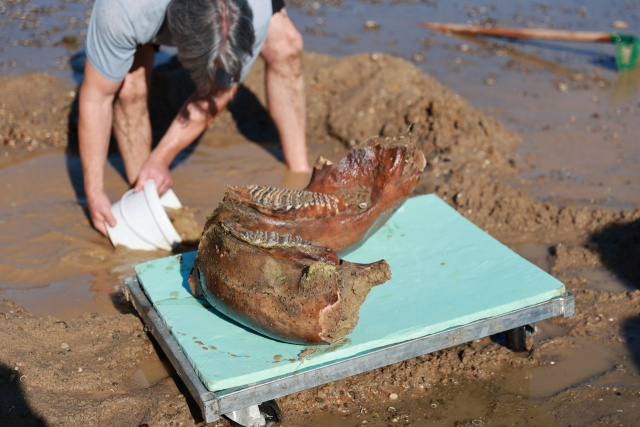
The remains discovered on the bottom of the Danube River near the village of Ryahovo in the Bulgarian Ruse region have been identified as belonging to a young woolly mammoth, scientists from the Regional History Museum in Ruse said.
The discovery was made after the river’s water level dropped to record lows, exposing areas that are normally underwater. According to Krasimir Kirov, an expert from the museum’s ecomuseum, the remains most likely belong to a young Mammuthus primigenius that had not yet reached full maturity.
Scientists’ preliminary assessment suggests that the most significant find is a lower jaw from the animal, which is in relatively good condition, especially the teeth. Along with the jaw, researchers also found a femur, fragments of bones, an almost complete tusk and parts of ribs.
Kirov explained that one possibility is that the mammoth lived in a swampy environment, as thousands of years ago the area around what is now the Danube River was covered by wetlands. Another theory is that the remains could have been transported by the river from another location.
However, the concentration of the bones in one place has led researchers to believe that the animal may have died in the area where it was discovered.