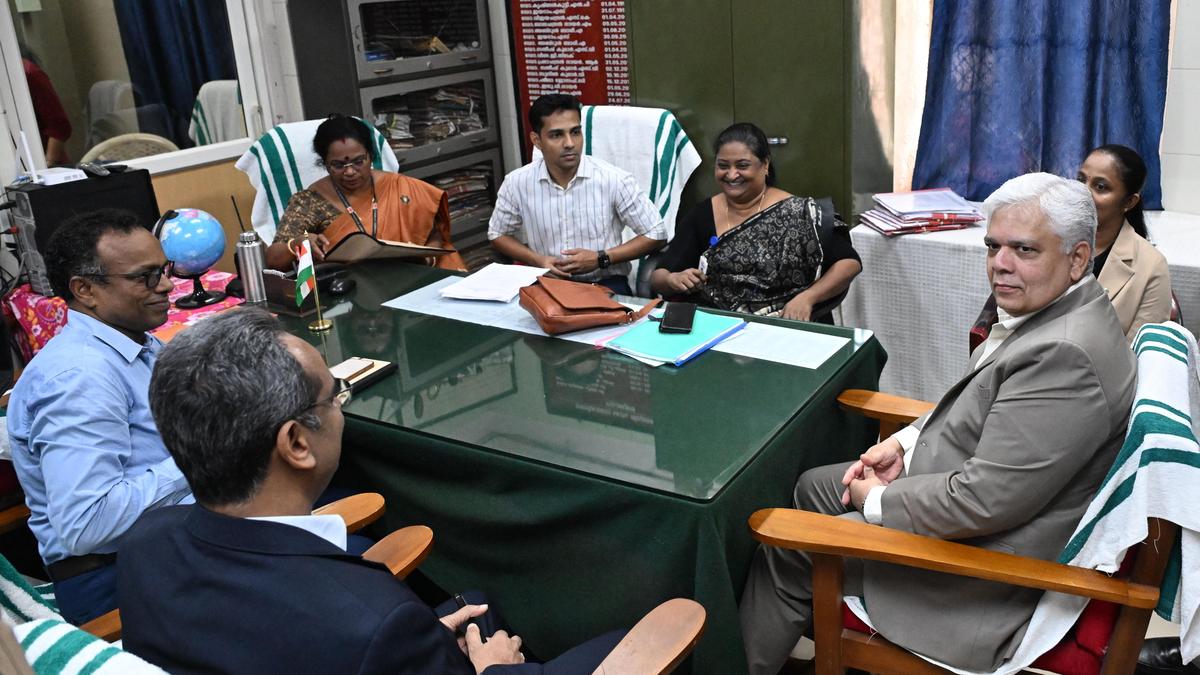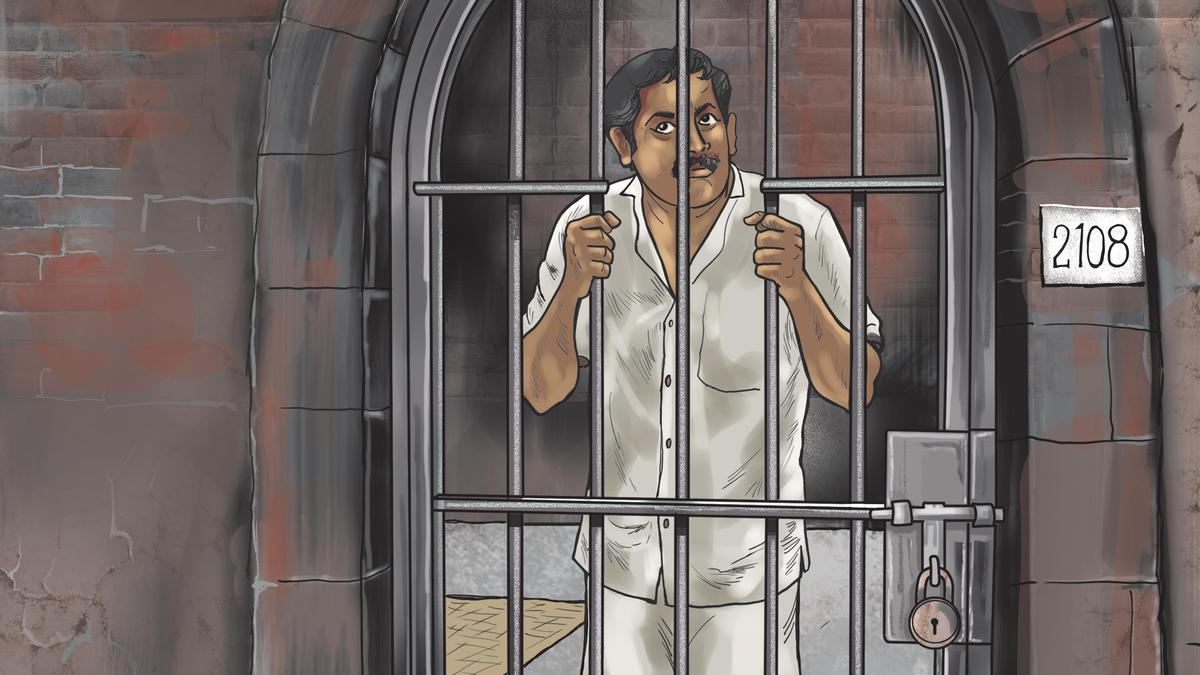
Standing nonchalantly behind the double-paddled, heavy iron gate of the forensic ward of Government Mental Health Centre, Thrissur, Thomas Kutty* looked out. His gaze momentarily wandered across the faces of the visitors and then to the space beyond them.Hearing someone calling his name, Thomas, dressed in a shabby T-shirt and shorts, looked up. The doctor, who had been attending to him, signalled him towards the gate.He, however, gave the doctor a blank look before turning towards the grimy wall of the dingy cell. The doctor’s repeated attempts to strike up a conversation with the frail, greying man failed as he dragged himself towards the farthest corner of the cell, away from the world outside.
Government Mental Health Centre, Thrissur.
| Photo Credit:
K.K. NAJEEB
For the past 25 years, Thomas had been confined to this ill-lit cell. The world outside has changed much during this period, but not for him.Booked for murder, he could not be put on trial as he was found to be of unsound mind. Had he been convicted, he could perhaps have walked out free by now, after completing his jail term.“He is a silent guy, with no aggression and never gets into any issues with others. Prisoners of unsound mind are admitted to the forensic ward, which is guarded by the police,” says Ajeesh Ramachandran, consultant psychiatrist.The block is under constant surveillance using a heavy-duty dome camera, mounted on the iron grill ceiling of the courtyard of the building. Stainless steel hand-cuffs could be seen chained to the iron cots lined up on the verandah.“The highly dependent psychiatric patients need to be restrained during medical treatment. Hence, the hand-cuffs,” explains Dr. Ajeesh.A huge tamarind tree, with its canopy spread wide, stands tall on the campus, overlooking the buildings of the centre. Weeds have overgrown in many areas of the 12-acre campus. The white patches of bleaching powder sprinkled on some parts of the yard have started dissipating in the overnight rain. It appears all serene on the campus, except for the occasional shrieks of some inmate.“Please let me go,” pleaded a squeaky voice from a distant cell, as a group of volunteers of the Victim Rights Centre (VRC), an initiative of the Kerala State Legal Services Authority (KeLSA), led by its chairperson Shoba Annamma Eapen, also a judge of the Kerala High Court, passed by.The unfair lifeLife has been really hard for Thomas and his fellow inmates like Joseph,* who has been sentenced for a triple murder. He was shifted to the centre after developing signs of mental illness some 12 years ago.“The incident took place following an altercation. As I have completed my jail term, I want to go back to my home, where my aged parents are waiting,” demands Joseph.There are several others with deranged minds and abandoned by their relatives and society. Family members shut the doors on some others who have been cured of their illness. Relapses have forced some others to return to the cells.Limited facilitiesThe centre, with its ageing buildings and limited infrastructure, is yearning for help, just like its inmates. Long vines run through the walls and abandoned buildings. Protective nets are fixed around some of the buildings to prevent the entry of snakes into the cells. A derelict multi-storey building, with its mossy walls, stood on one corner of the campus.Most of the inmates are made to sleep on cold cement floors, sans cots, pillows, bed sheets or ceiling fans. Some were seen lying on grass mats. A toilet, with a pony wall, has been provided in each cell.“Fans were not installed in the old buildings with low roofs on safety grounds. However, exhaust fans have been provided. It’s risky to provide them with bed sheets as some of them may try to end their lives with them,” explains Ramesh Chandran, consultant psychiatrist.Abandoned by lifeThe pungent smell of sanitising agent emanated from the women’s cell where six elderly women lay curled on their beds, oblivious of the world outside.“Most of these women have been abandoned by their relatives. Recently, I had to sign the consent form for an inmate, in place of her close relatives, for her hip replacement surgery,” says Baby Lakshmi, Superintendent of the centre.