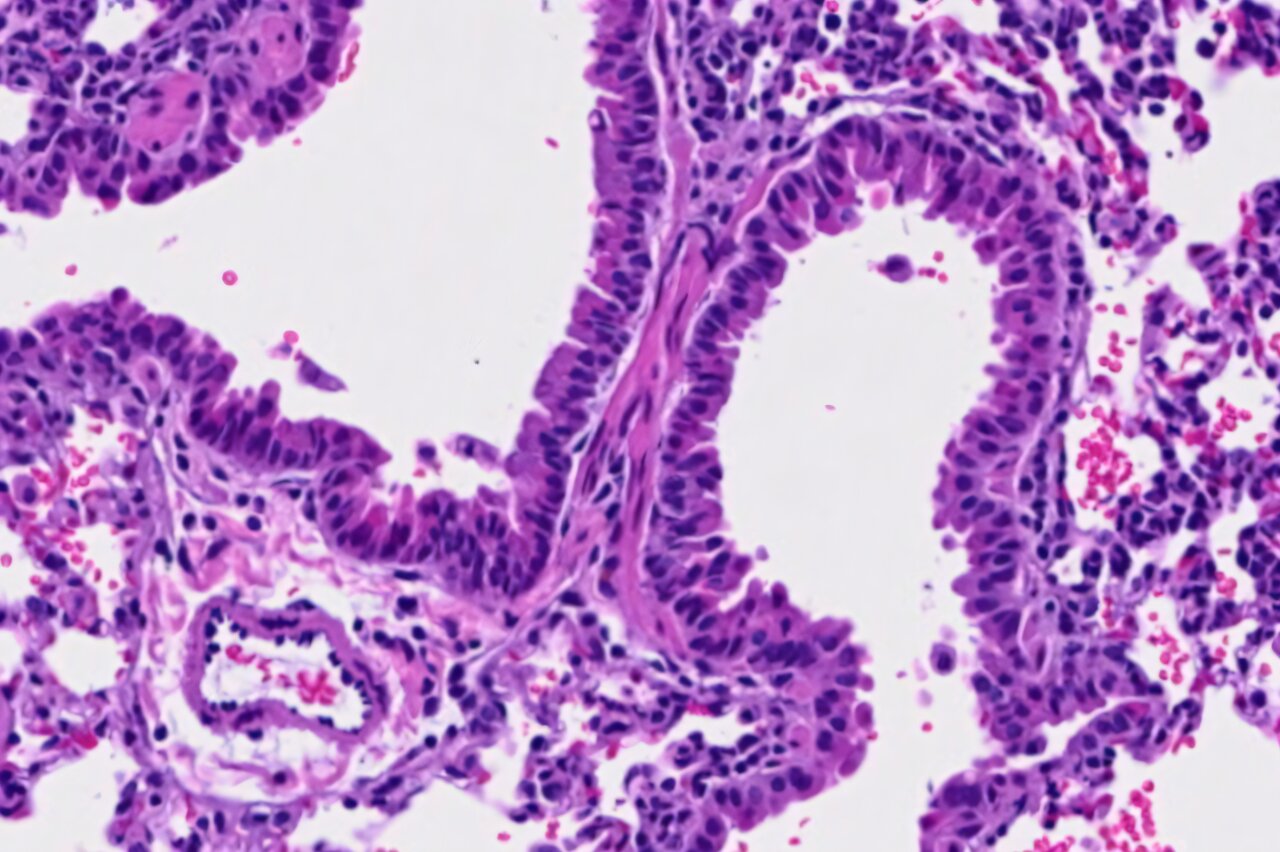
Histological image of lung tissue from a SARS-CoV-2–infected mouse fed an arginine-restricted diet. Credit: Tavazoie lab
The amino acid arginine helps keep the human body humming, most notably by synthesizing proteins that carry out a range of cellular processes. It's produced by our bodies and found in common high-protein foods. Low levels of arginine are associated with a number of diseases, including colon cancer.
Sohail Tavazoie, head of Rockefeller University's Elizabeth and Vincent Meyer Laboratory of Systems Cancer Biology, has been investigating that connection for years. In 2023, Tavazoie's team found that starving colon cancer cells of arginine increases the number of mutations they accumulate. Now they've discovered that an arginine-deficient diet also affects the immune system by stalling the production of the MHC-I protein, which alerts the immune system to dangers such as a mutating cell or an invading virus.
Intriguingly, they also found that a moderate dose of arginine—about as much as is found in a couple of over-the-counter tablets—could potentially restore expression of the genes responsible for MHC-I production. They published the results in the journal Cell.
"Our work reveals how a lack of arginine interferes with the immune system and suggests that upping arginine intake could prove beneficial," says first author Qiushuang Wu, a postdoc in the lab. "Perhaps that means it could be used in combination with other therapies to treat both cancer and viral infections."