There’s no one perfect way — or reason — to keep a travel journal. But no matter how or why you do it, future you will probably be happy you did. Writing things down gets the synapses firing on several fronts, including memory and engagement with your surroundings.Even bad days can be good journal fodder, making for terrific dinner party stories, or just serving as a reminder of why it’s best never to take that train from Point A to B again.And imagine the joy of looking up at your bookshelf in a decade: thick notebooks barely contained by their elastic bands, with tickets and other ephemera spilling out. Inside, you can revisit details of days exploring Tokyo neighbourhoods, a birding life list, maybe a messy inventory of the best burger spots recommended by that bartender in Boston.So, before setting out on your next trip, consider these tips for maintaining a travel journal you’ll page through for years to come.KEEP IT LIGHT
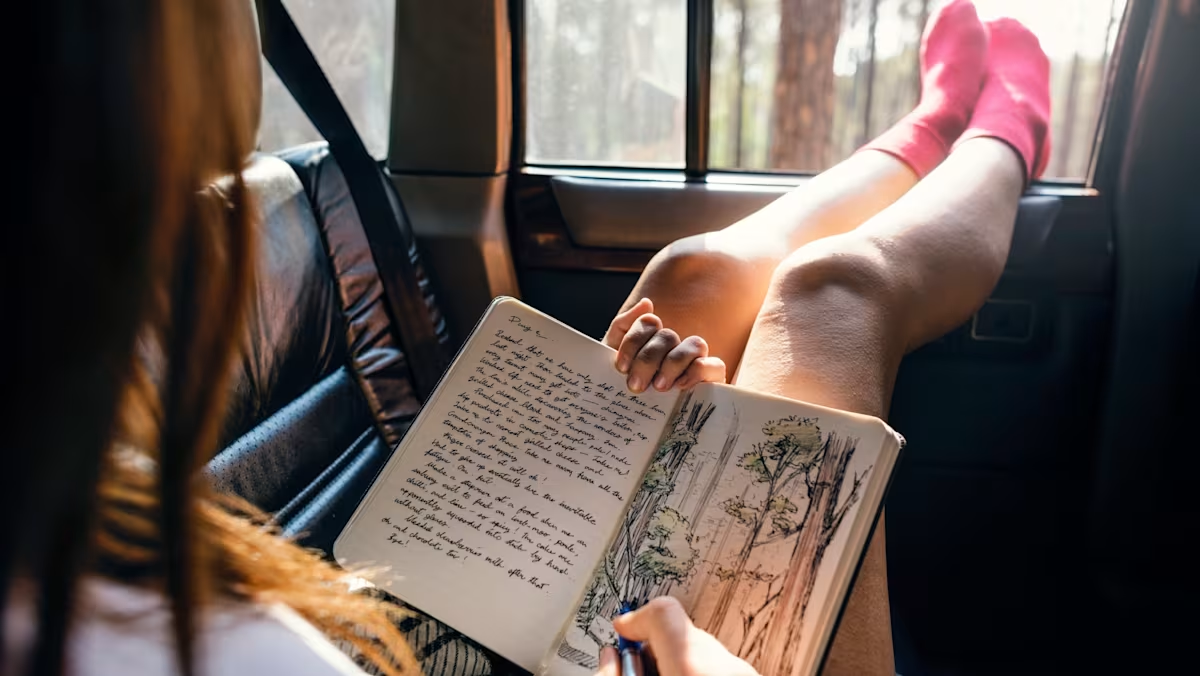
A notebook that fits your bag is more likely to make the journey with you. (Photo: iStock)
Choose a notebook that fits in the bag you’re carrying or the pocket of the coat you’re wearing most often. If you prefer softcover notebooks, pop a pencil board inside so you’ll have a hard surface on the go. Refillable notebooks make it easy to add organiser inserts so you won’t lose important papers.Bringing too many pens and coloured pencils could leave you overwhelmed when it comes time to write or draw. “Simplifying as much as possible decreases the barrier to entry,” said the artist Kristin Link, author of Discover the Art of Field Sketching. Keep your tools together in a small kit so you won’t waste time searching for your pen. Pack intentionally, Link added. She fills the slots of a small case for art supplies with a pencil, two or three pens, measuring tools and a portable watercolour palette.BE CONSISTENT. STAY ORGANISED.Overcome the fear of the blank page and get organised by starting every journal entry with some metadata, including the date, time, weather and location. (A note about your mood can help you later recall context for your mind-set.) The practice is a cornerstone of scientific field journaling. Once you finish an entry, consider adding page numbers to an index on the first two pages as well as the location and keywords like museum names or the food you ate.SET TIME ASIDE TO WRITEWhile out on the town (or mountain or beach), write quick notes under the metadata as you go about your day. Take note of sounds and scents you might forget. If you really want to relive a place once you’re back at home, put your phone’s recording app to work. “The sounds of a fish market, a crowded bus or a city sidewalk can often evoke a place even more vividly than a photograph,” said the photographer Rob Stephenson, who writes The Neighborhoods, a Substack newsletter about New York City’s boroughs.Save your recap of the full day’s experience for a 15-minute block each night. Set a timer. Write freely (and don’t edit) until it goes off. You’ll be surprised how much writing you can do in such a short time.GET COLOURFUL